Number Sequencing Normal Addition & Subtraction Worksheets for Ages 4-7
4 filtered results
-
From - To
Discover our engaging Number Sequencing Normal Addition & Subtraction Worksheets, designed specifically for children aged 4-7! These worksheets aim to build foundational math skills through the essential concepts of number sequencing, addition, and subtraction. Fun and interactive, they help young learners develop critical thinking and problem-solving skills while enhancing their understanding of numbers. Perfect for parents and educators, our resources provide varied exercises to stimulate curiosity and boost confidence in early math learners. Encourage your child's educational journey with these thoughtfully crafted worksheets that make learning subtraction and addition fun and accessible. Start nurturing your little one's math abilities today!
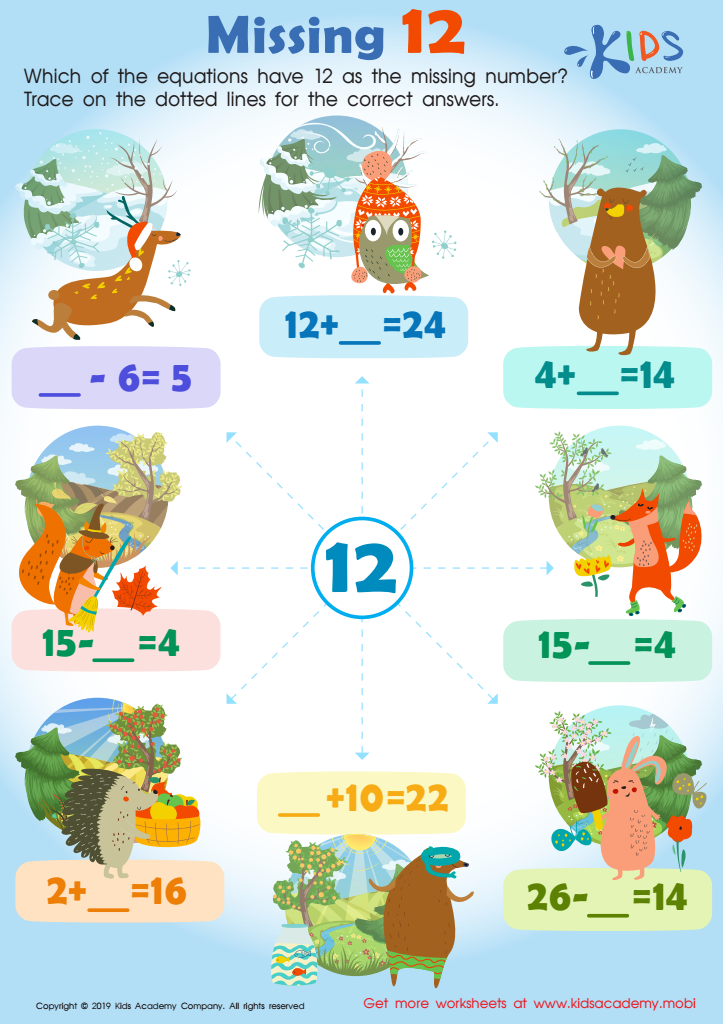
Missing 12 Worksheet
 Assign to My Students
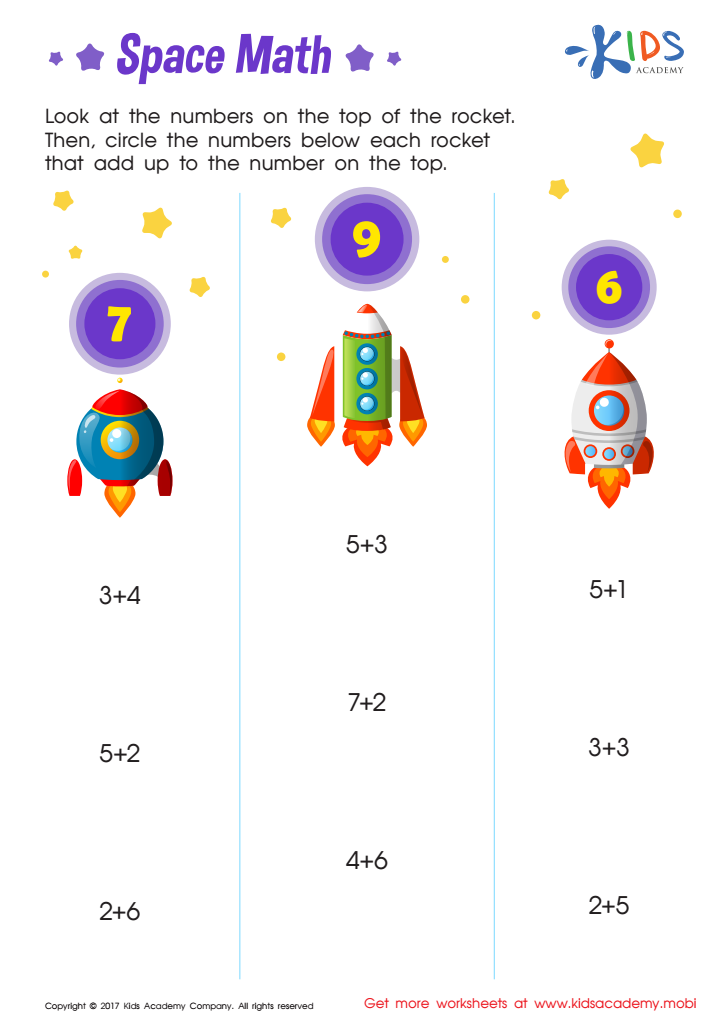
Addition: Space Math Worksheet
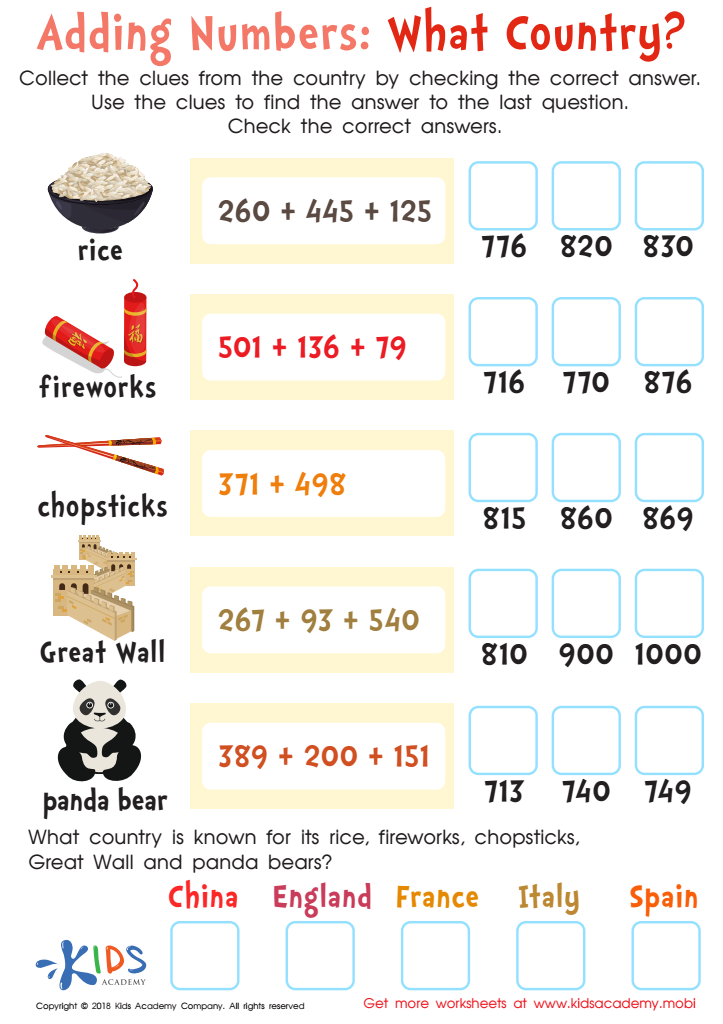
Adding Numbers: What Country Worksheet
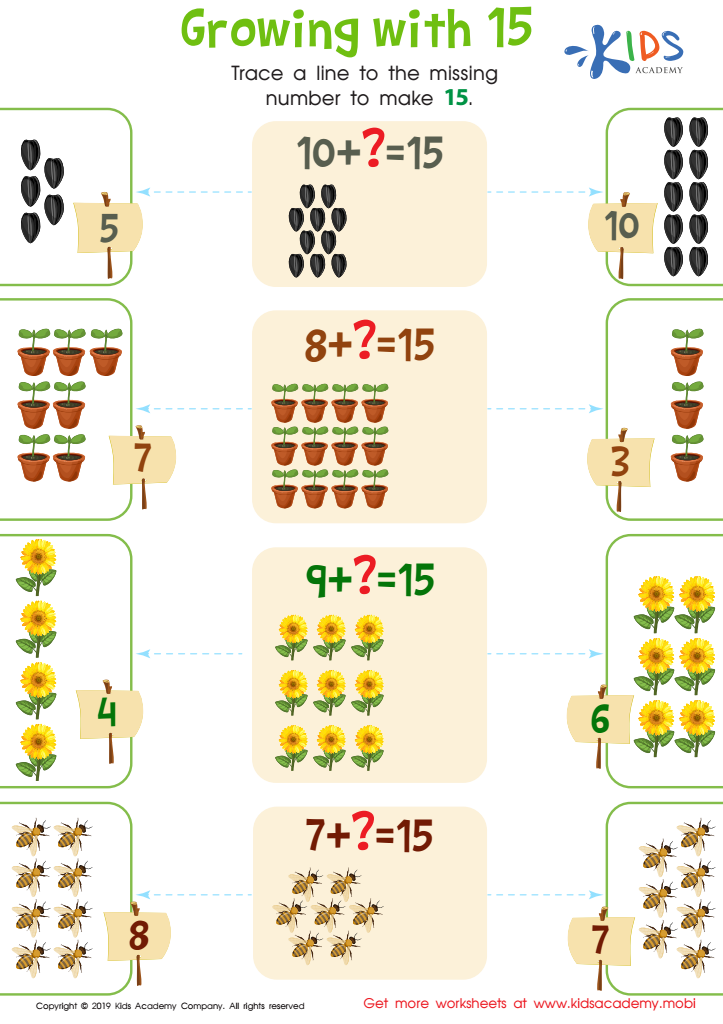
Growing with 15 Worksheet








Number sequencing, as well as normal addition and subtraction, are fundamental skills for children aged 4-7 that lay the foundation for their future mathematical understanding. During these critical early years, children develop their cognitive abilities, and engaging them in number sequencing helps to enhance their problem-solving skills and logical thinking. It trains their brains to recognize patterns and order, creating a strong framework for more complex mathematics they will encounter later.
Moreover, mastering basic addition and subtraction is essential not only for math fluency but also for everyday life situations. Knowing these processes enables children to handle simple real-world problems, such as sharing candies or counting breakfast items. When parents and teachers emphasize these skills, they promote a conducive learning environment, fostering confidence and a positive attitude towards math as children grow.
Additionally, encouraging these practices supports social development, as collaborative activities centered around numbers can enhance communication, sharing, and teamwork among peers. Ultimately, understanding number sequencing and basic arithmetic equips children with essential life skills and shapes their academic trajectory, making it crucial for both parents and teachers to prioritize these concepts in early education.








