Filters

10 filtered results

Clear all filters
Favorites
With answer key
Interactive

10 filtered results

Difficulty Level

Grade


Enhance your child's math journey with our "Counting Skills Normal Addition Worksheets," designed specifically for ages 4-7. These engaging worksheets introduce essential counting concepts while incorporating fun visual elements to keep young learners motivated. As children explore addition through relatable, age-appropriate activities, they build confidence and a strong foundation in numeracy. These resources foster essential skills, enabling kids to grasp early mathematics through interactive practice. Perfect for homeschooling or classroom use, our worksheets promote active learning and critical thinking. Download now to spark a love for numbers and help your child become a proficient mathematician from an early age!

Check out this FREE Trial Lesson on Addition for age 4-7!

Addition with Arrays - Part 1

Favorites
With answer key
Interactive
  • 4-7
  • Counting skills
  • Addition
  • Normal
Math PDF Worksheet: Count Funny Animals

Count Funny Animals Worksheet

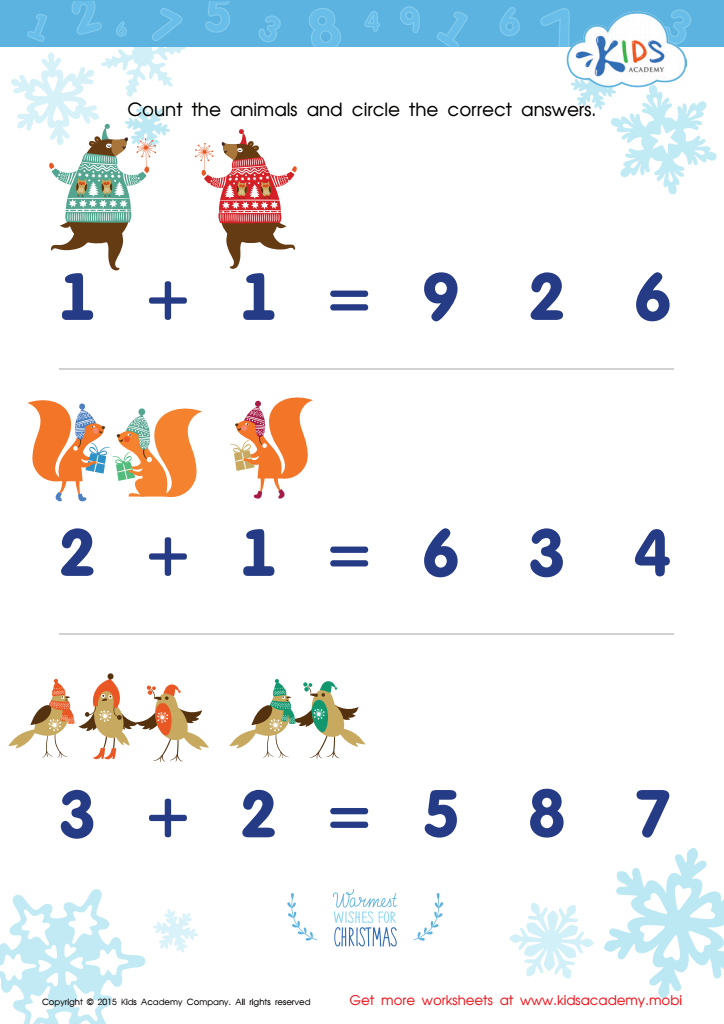
Get your kid in the Christmas spirit with this festive addition worksheet! They'll have fun counting the colorful animals and writing in the numbers. Our graphic layout makes it easy for them to visualize and solve the task. Print it out and help your kid keep their math skills sharp this winter with Kids Academy!
Count Funny Animals Worksheet
Worksheet
Easter Arrays Worksheet

Easter Arrays Worksheet

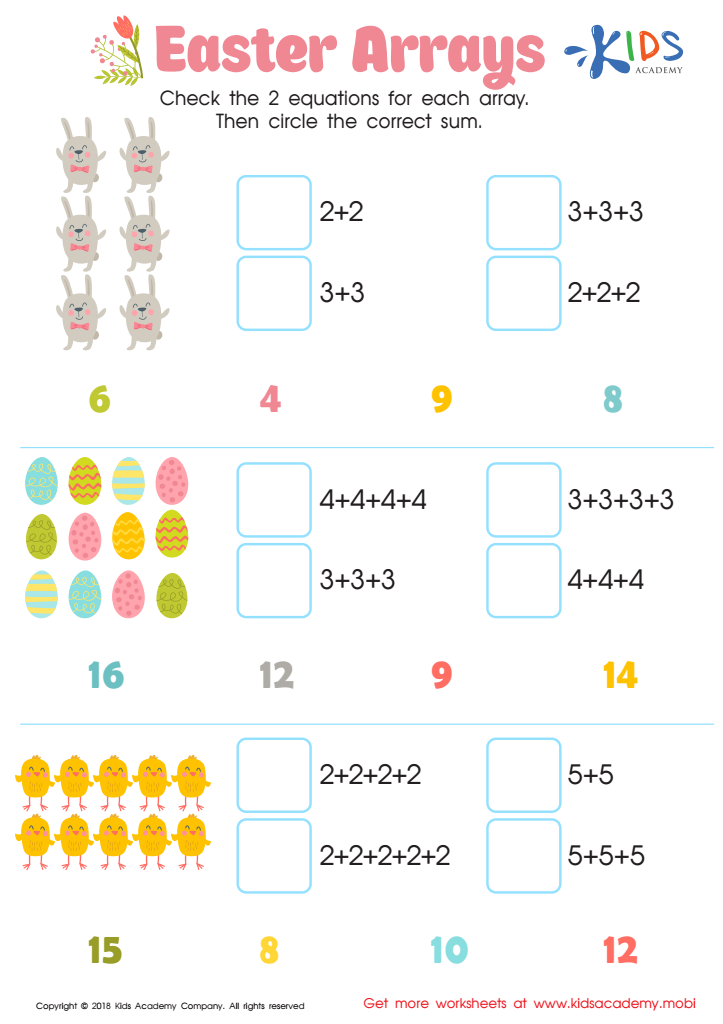
Does your child love Easter? Do they adore the Easter bunny and egg hunts? Help them have fun with this worksheet! Go through it with them and check the equations for each array. Then, have them circle the correct sum. It's a great way to make the holiday extra exciting!
Easter Arrays Worksheet
Worksheet
Adding Flower Petals Worksheet

Adding Flower Petals Worksheet

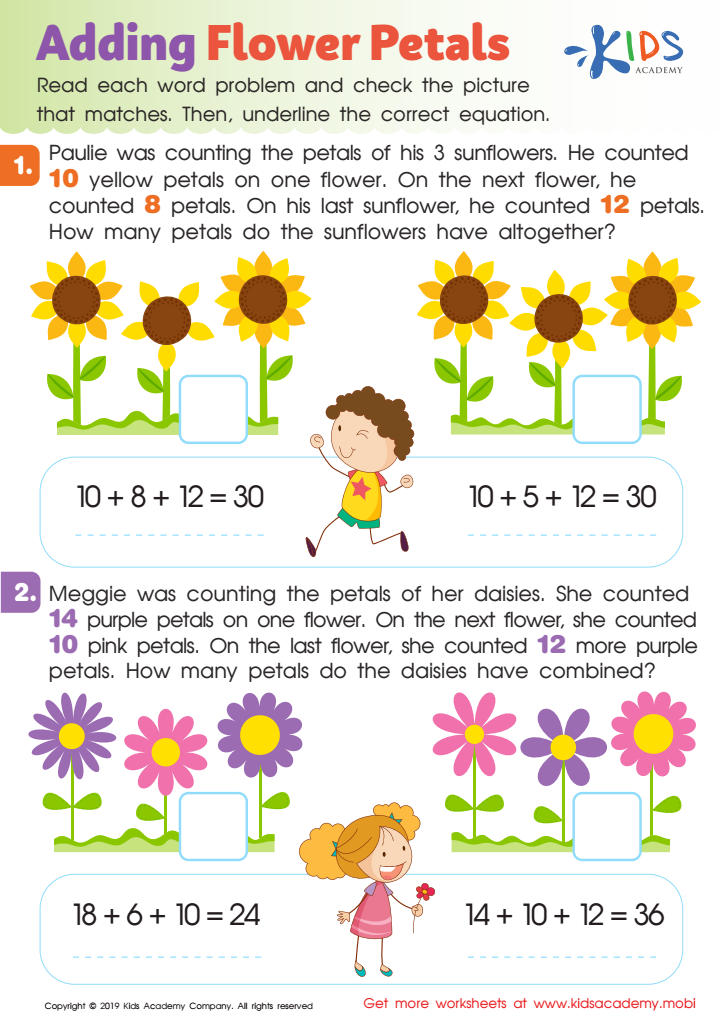
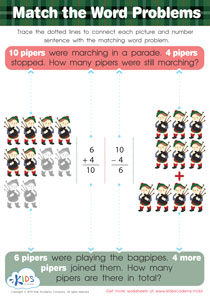
This free worksheet helps little mathematicians learn to understand word problems. They'll read each one and match it to the corresponding picture. Important info is highlighted, teaching kids to look for key info when solving problems. Then they'll underline the correct number equation that matches the picture. A great way to practice problem-solving skills!
Adding Flower Petals Worksheet
Worksheet
Help the Warthog Count the Grubs Worksheet

Help the Warthog Count the Grubs Worksheet

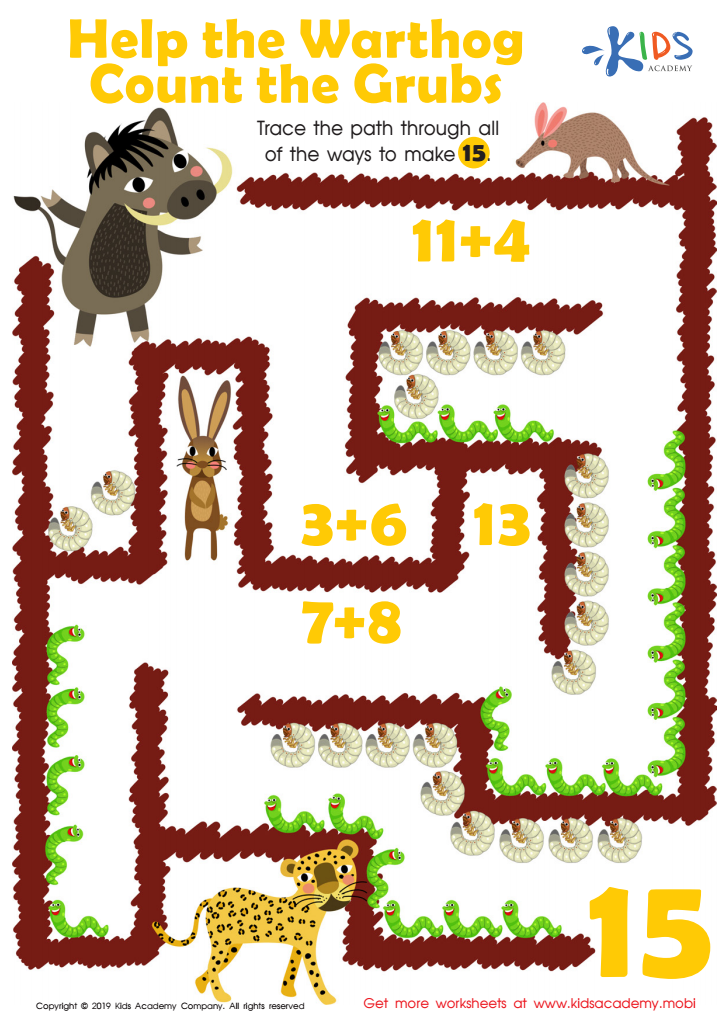
Test your kids' knowledge of wild animals. Ask them to name some they know, then have them identify the animals on this worksheet. If they can't, take the time to tell them the names. Finally, trace the warthog's path through the maze by solving the equations and going through paths that make 15.
Help the Warthog Count the Grubs Worksheet
Worksheet
Fact Families: Easter Math Worksheet

Fact Families: Easter Math Worksheet

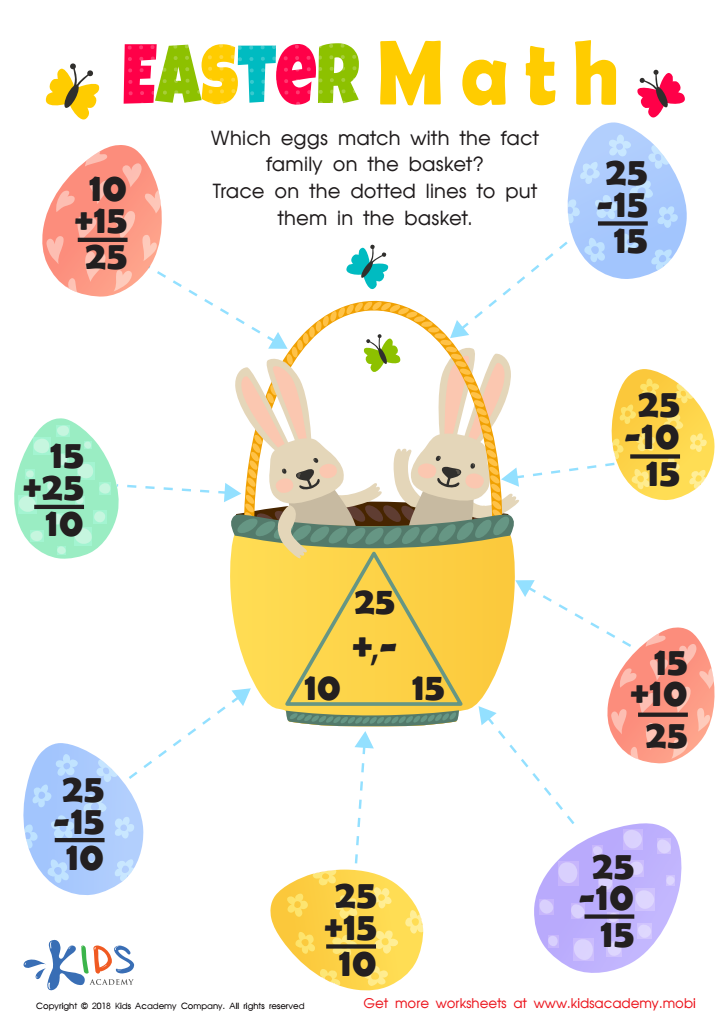
Kids will love this vibrant PDF packed with Easter math fun! Match facts with the colorful eggs, add and subtract multiples of five to boost automaticity, and have a blast with the bunny friends!
Fact Families: Easter Math Worksheet
Worksheet
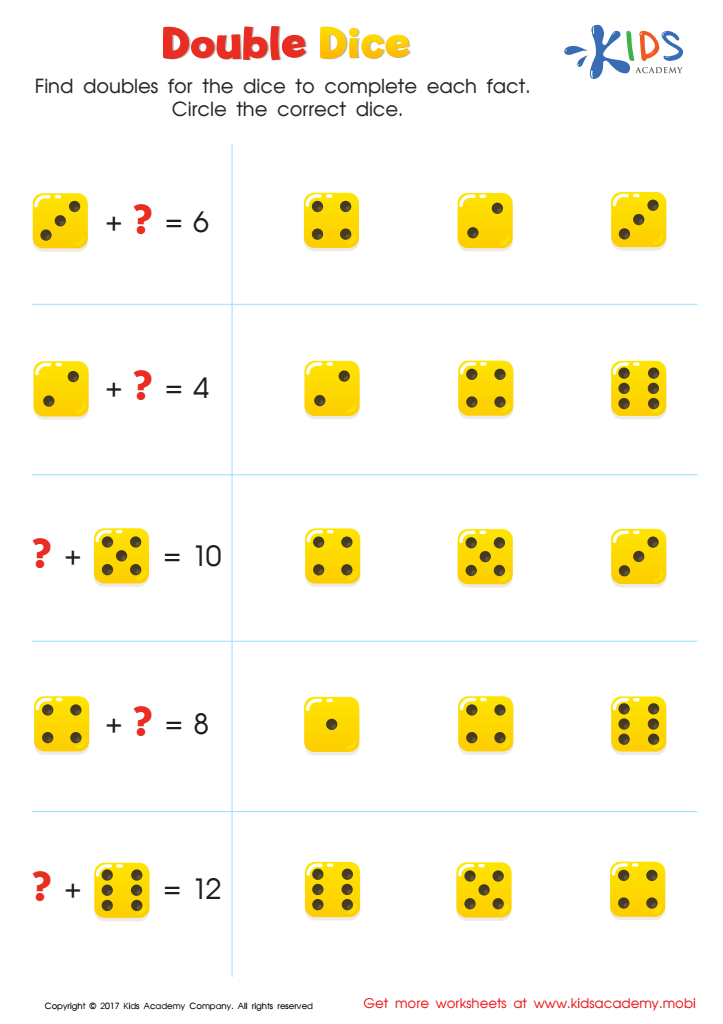
Addition Facts: Double Dice Worksheet

Addition Facts: Double Dice Worksheet

Are you looking for ways to make maths more engaging for kids? Maths can be a bore, but by teaching kids from an early age that it can be fun, they won't struggle with it. This worksheet is a great way to start: your child needs to identify the number on the left dice and find its double on the right. The sum of the two dice is also given.
Addition Facts: Double Dice Worksheet
Worksheet
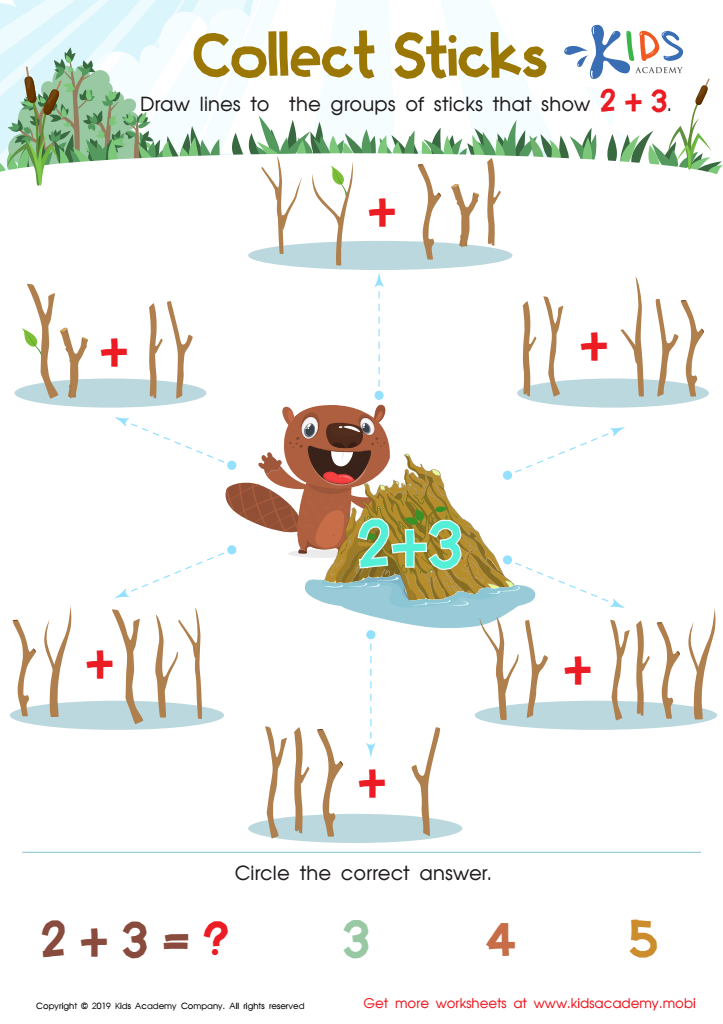
Collect Sticks Worksheet

Collect Sticks Worksheet

Let math be fun for your kids with a simple and colorful worksheet exercise. Addition and subtraction can be daunting, but you can make it enjoyable with exercises like this one. Get them to draw lines to the groups of sticks that show 2+3 and watch them light up.
Collect Sticks Worksheet
Worksheet
Help the Bee Find 16 Flowers Worksheet

Help the Bee Find 16 Flowers Worksheet

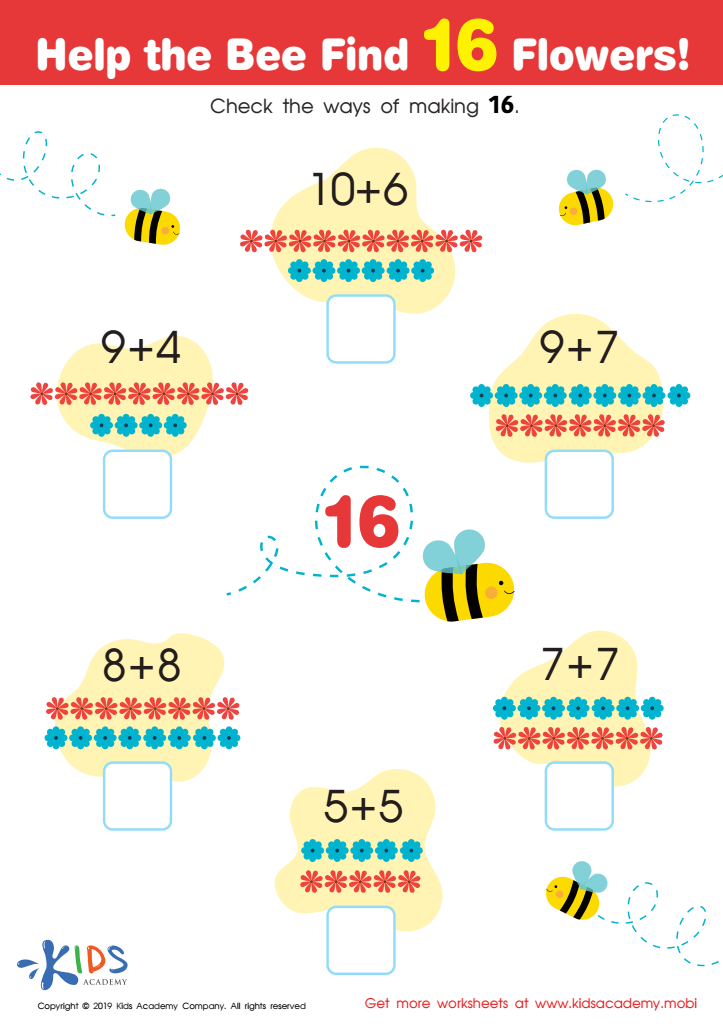
Ask your students to count as high as they can. Show them that different numbers can equal the same figure with examples like 2+2=4 and 3+1=4. Ask for more examples, then help the bees find 16 flowers by checking the ways of making 16.
Help the Bee Find 16 Flowers Worksheet
Worksheet
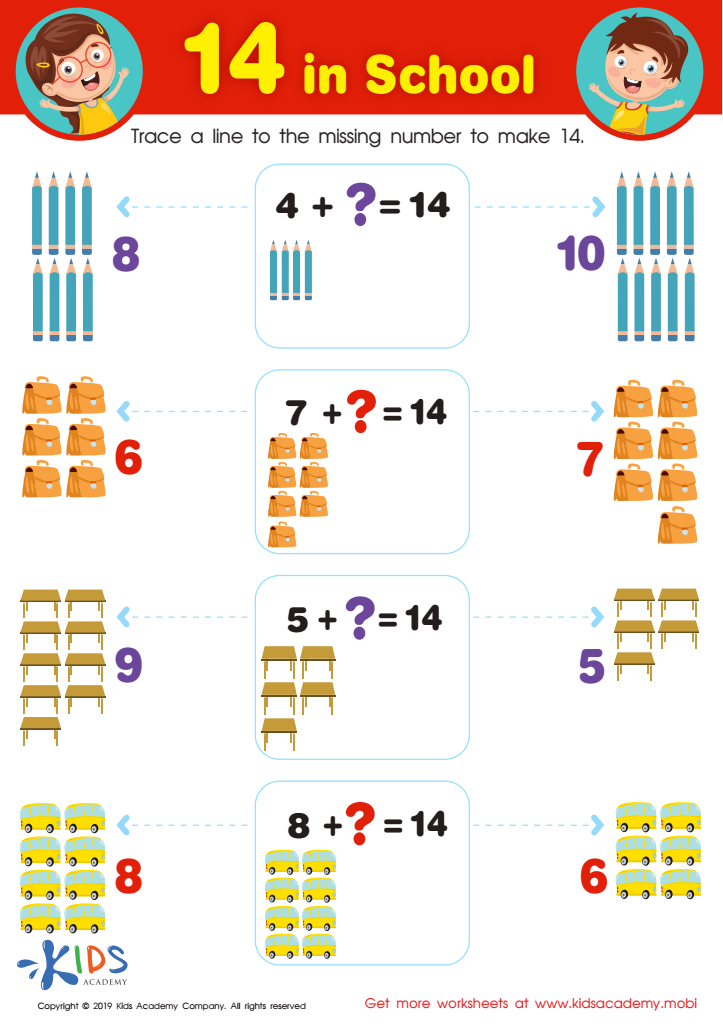
14 in School Worksheet

14 in School Worksheet

Remind your kids that adding different sets of numbers can give the same total (e.g. 2+3=5, 4+1=5). Ask them for more examples. Afterwards, work through the exercise. Help them count the objects and trace a line to the missing number that makes the total 14.
14 in School Worksheet
Worksheet
Growing with 15 Worksheet


Growing with 15 Worksheet

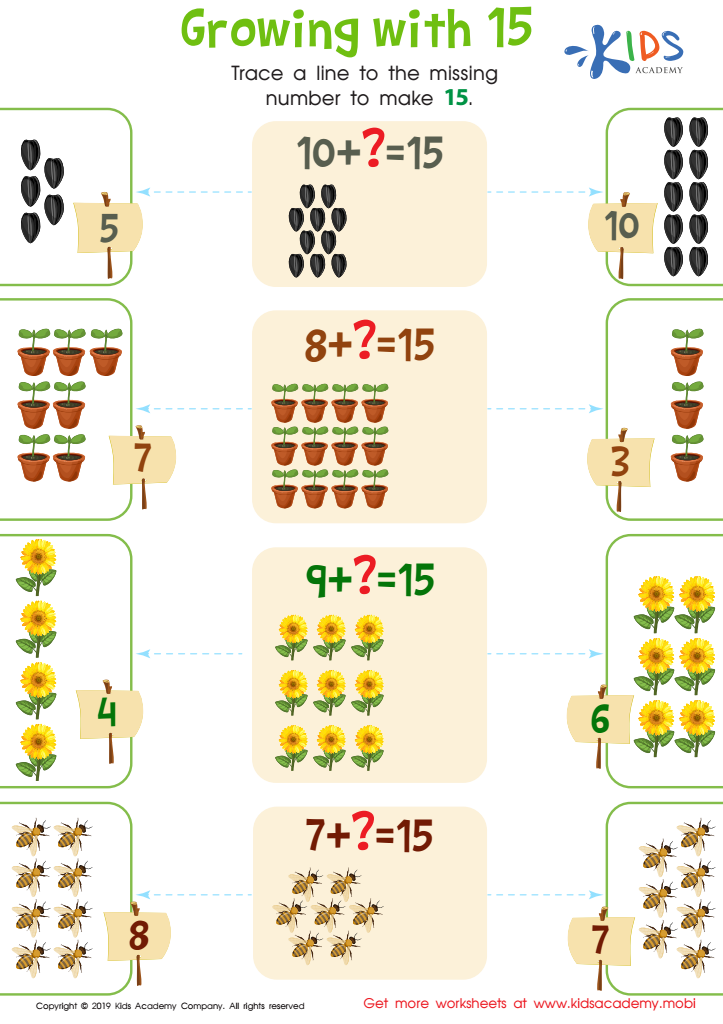
Remind your kids that adding different sets of numbers can give the same total (e.g. 2+3=5, 4+1=5). Test their understanding by asking them for more examples. Move onto the worksheet: count objects, then trace the line to the number making a total of 15.
Growing with 15 Worksheet
Worksheet


Counting skills and normal addition are foundational elements of early mathematics that significantly impact a child's overall academic development. For ages 4-7, these skills are critical because they lay the groundwork for more advanced mathematical concepts that will be introduced in later grades. Understanding counting helps children develop number sense, which is essential for navigating everyday tasks, such as measuring ingredients for cooking or understanding time.

Teaching normal addition within this age range fosters problem-solving abilities and critical thinking skills. When children engage in addition exercises, they learn how to analyze and manipulate numbers, encouraging a deeper understanding of the relationships between them. Furthermore, mastering counting and addition helps to enhance a child’s confidence, promoting a positive attitude towards math as they experience success.

In addition, strong counting and basic addition skills provide children with essential tools for success in subjects beyond math, contributing to improved cognitive function and memory retention. For parents and teachers, fostering these skills is an investment in a child’s educational journey, ensuring they are prepared for future academic challenges and equipped with essential life skills. Emphasizing these early skills can shape a child’s lifelong attitude towards learning and problem-solving.