
Visual discrimination Normal Geometry Worksheets for Ages 4-7
3 filtered results
Difficulty Level
Grade
Age
-
From - To
Subject
Activity
Standards
Discover our engaging Visual Discrimination Normal Geometry Worksheets designed specifically for children ages 4-7! These worksheets promote essential visual skills by helping young learners recognize shapes, patterns, and spatial relationships. Perfect for early grade education, these activities encourage critical thinking and improve problem-solving abilities. Featuring colorful illustrations and fun exercises, our worksheets make geometry enjoyable and accessible for preschoolers and kindergarteners. Parents and educators can seamlessly integrate these resources into their teaching routines for effective learning. Empower young minds to boost their geometry skills while enhancing their visual discrimination in a fun and interactive way! Explore our creative worksheets today!
Favorites
With answer key
Interactive
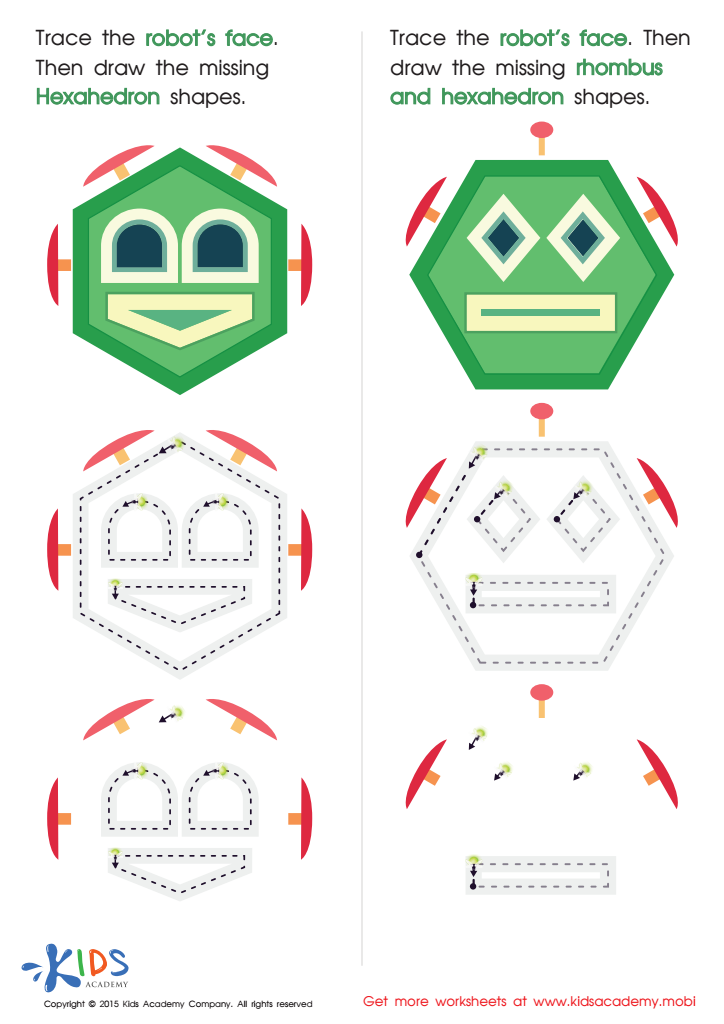
Practice Drawing Hexahedrons And a Rhombus Worksheet
Trace the Robot's face, draw hexahedron and rhombus shapes, then trace again. Our tracing shapes worksheets make it easy for kids to learn geometry. Get more materials from Kids Academy to practice all the shapes.
 Assign to My Students
Practice Drawing Hexahedrons And a Rhombus Worksheet
Worksheet











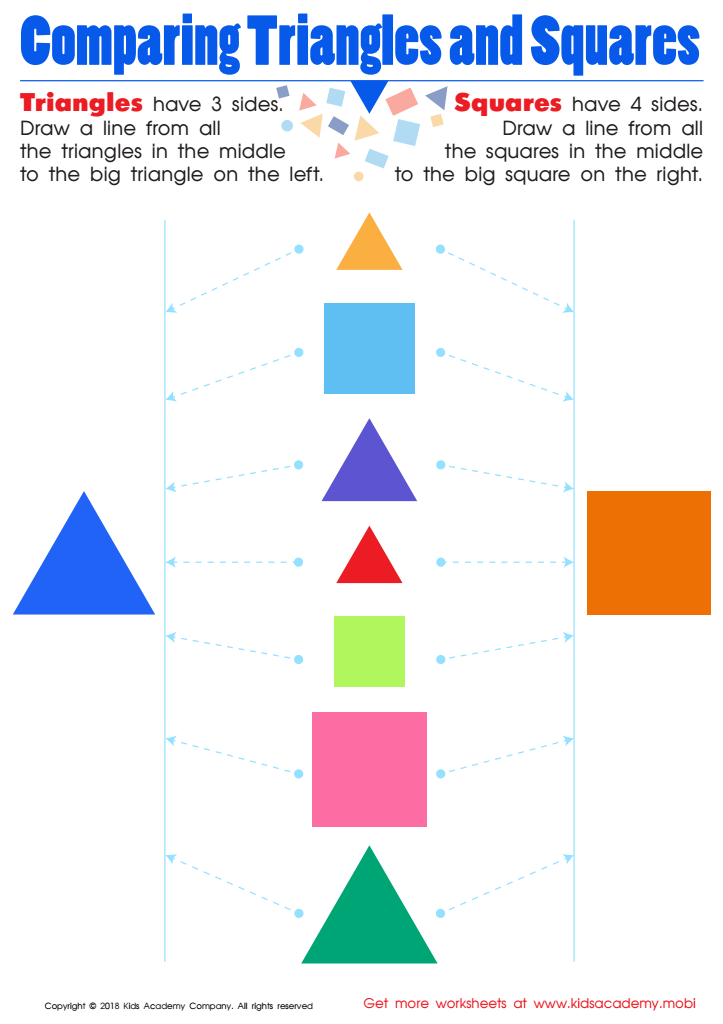
Comparing Triangles Squares Worksheet
Squares and triangles are different in the number of sides they have. Challenge kids to compare them with this fun worksheet! Read the descriptions at the top, then use the left and right shapes to match up the middle ones. Go down the page, joining the middle shapes to the side using the dotted lines!
Comparing Triangles Squares Worksheet
Worksheet
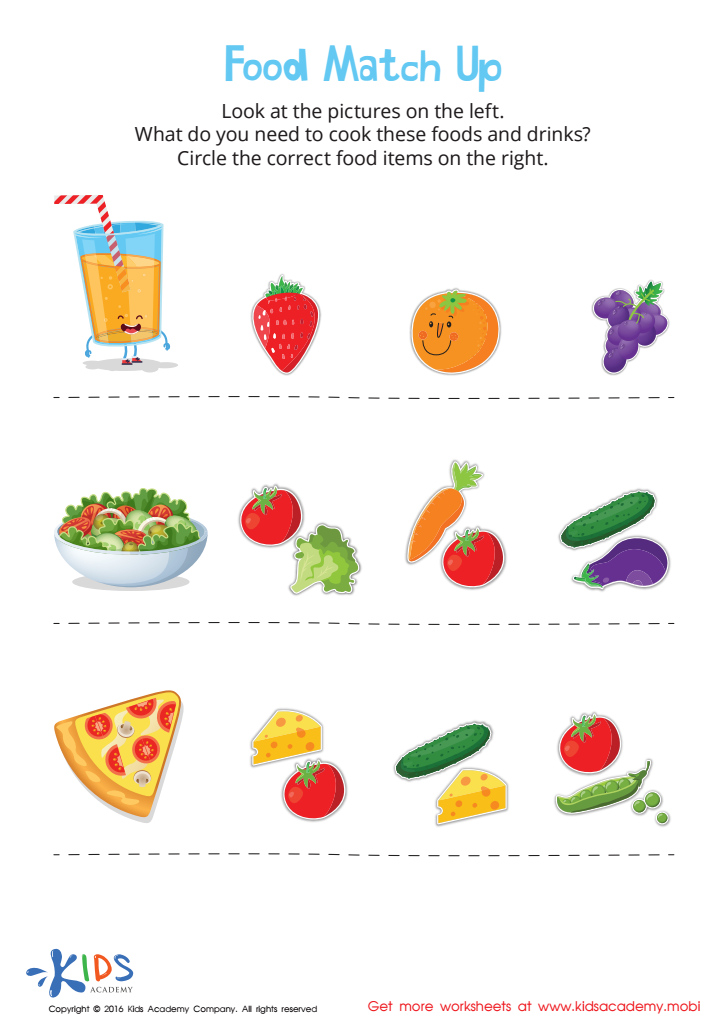
Food Match Up Worksheet
This worksheet will help your preschooler develop early math and cognitive skills. It challenges them to pay attention to details, understand how smaller parts make a whole, and increase important matching skills. Use it to give them a hands-on learning experience in the kitchen, and watch them understand how ingredients come together to make something delicious!
Food Match Up Worksheet
Worksheet
Join Kids Academy for Free
Who is primarily going to use this learning content?








Visual discrimination—an essential skill for young learners—refers to the ability to differentiate between various shapes, colors, sizes, and patterns. For children ages 4-7, mastering visual discrimination is crucial as it lays the foundation for understanding geometry and overall academic success. Parents and teachers should care about this skill because it directly impacts critical areas of cognitive development, including problem-solving, spatial reasoning, and mathematical concepts.
Engaging in activities that promote visual discrimination helps children recognize and categorize geometric shapes, fostering their ability to visualize relationships between different objects. This skill does not only pertain to geometry; it transcends into reading, where distinguishing letters and words is vital for literacy development.
Additionally, early mastery of geometric concepts can enhance a child’s confidence and motivation, making learning more enjoyable. In a competitive academic landscape, these skills serve as building blocks for STEM learning, where spatial reasoning is increasingly recognized as vital for success.
By prioritizing visual discrimination, both parents and educators contribute to developing a well-rounded skill set that positively influences children's independence and creativity, ultimately boosting their lifelong learning aspirations. Encouraging exploration and practice in geometry at an early age can inspire future interest in math and science.








