Comparing sizes Normal Math Worksheets for Ages 4-7
3 filtered results
-
From - To
Explore our "Comparing Sizes" Normal Math Worksheets designed for ages 4-7! Perfect for early learners, these engaging, printable resources help children understand size comparison concepts through fun, interactive activities. With a variety of exercises that include visual aids and hands-on tasks, students will strengthen their skills in identifying and comparing large, medium, and small objects. Our worksheets encourage critical thinking and fine motor development while making learning enjoyable. Ideal for classwork or at-home practice, these worksheets are aligned with early education standards and enhance foundational math skills. Get ready for an exciting learning adventure focused on comparisons and measurement today!
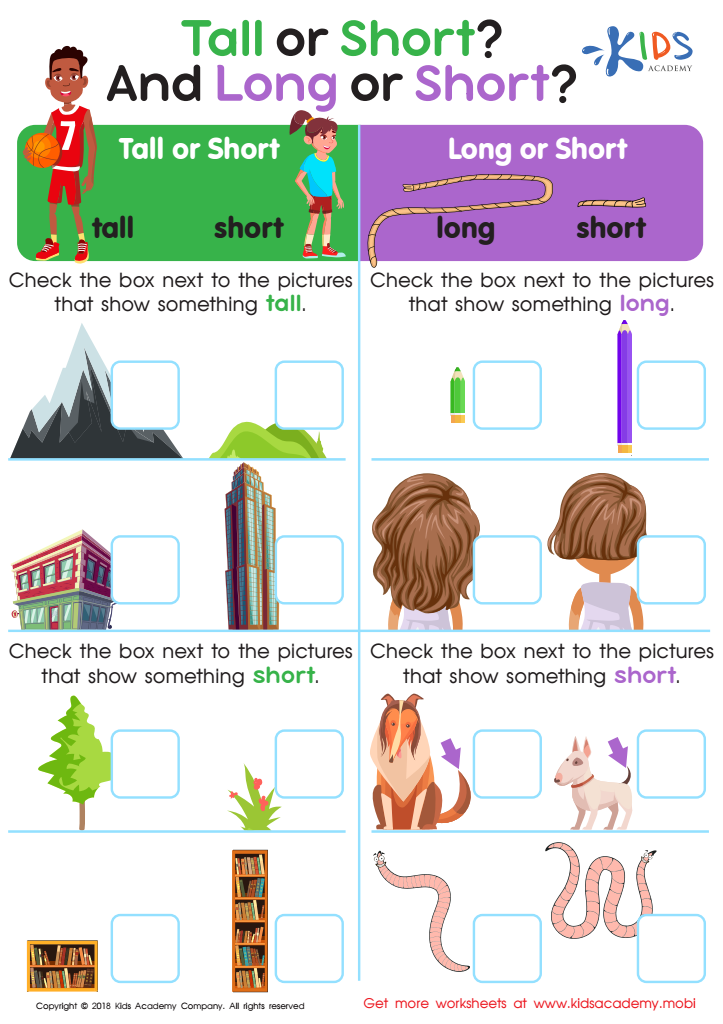
Tall or Short and Long or Short? Worksheet
 Assign to My Students
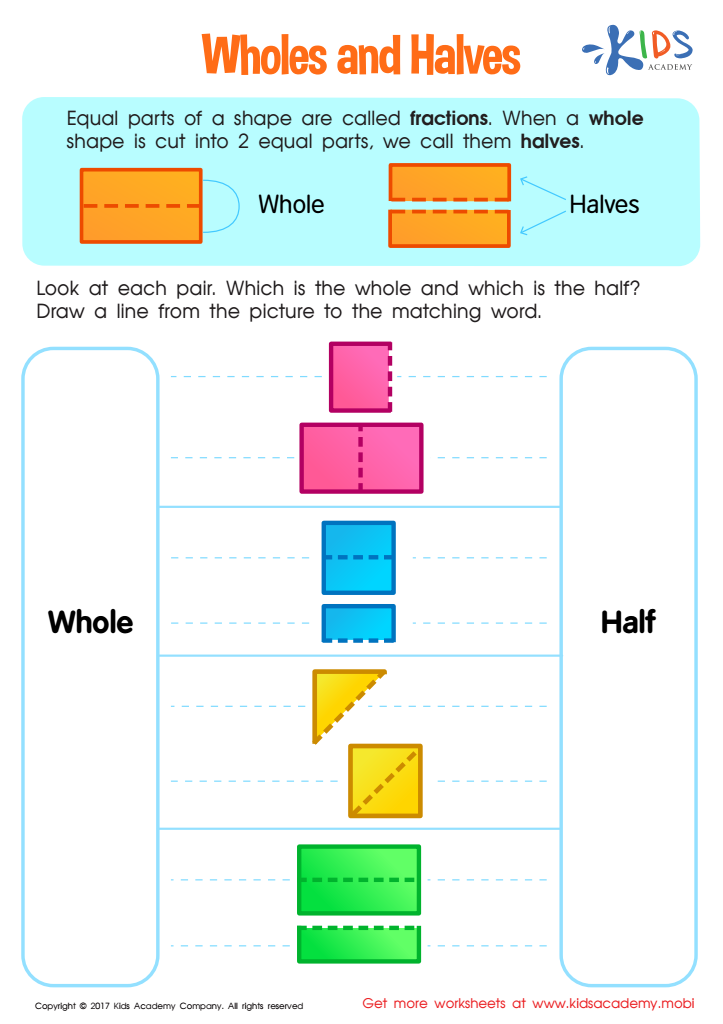
Wholes and Halves Worksheet
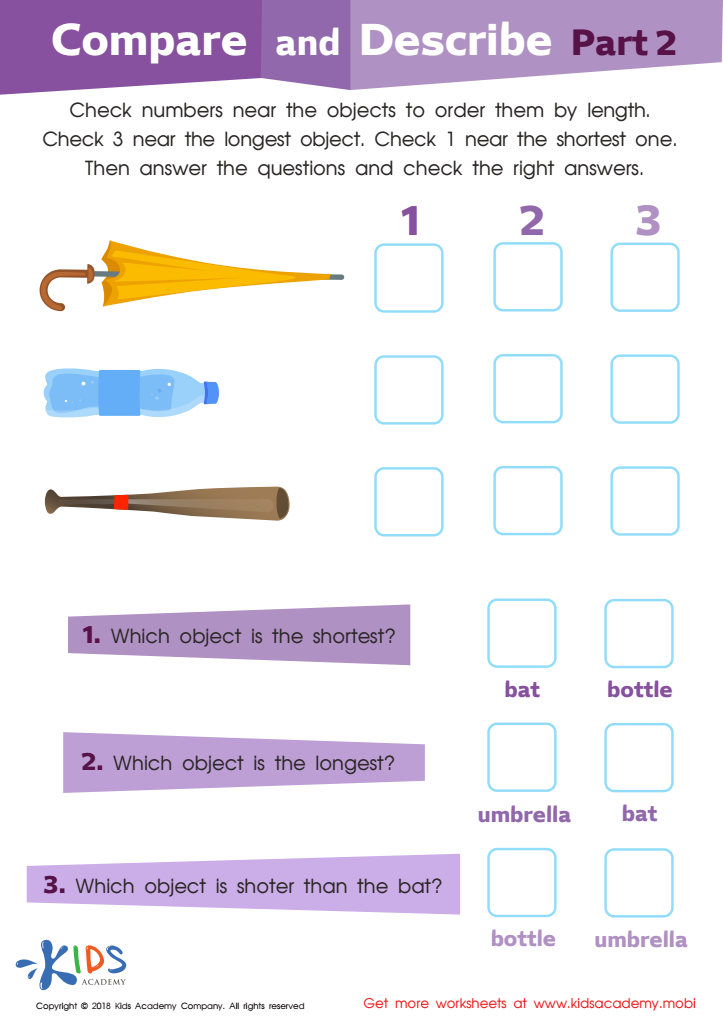
Compare and Describe: Part 2 Worksheet








Caring about comparing sizes in normal math for ages 4-7 is crucial for several reasons. First, it lays the foundation for mathematical concepts that children will encounter later in life. Understanding size comparisons – such as bigger, smaller, taller, or shorter – develops logical reasoning and critical thinking skills. It also encourages observational skills; children learn to notice and describe differences in their surroundings.
Moreover, comparing sizes fosters language development. As children learn to articulate their observations using descriptive words and comparative terms, they enhance vocabulary and communication skills. These discussions can ignite curiosity and foster engagement in the classroom or home.
Additionally, grasping concepts of size is practical for everyday life. Whether measuring ingredients for a recipe or organizing their toys, children equipped with size comparison knowledge become problem solvers who can navigate tasks effectively.
Furthermore, it nurtures a sense of confidence. As children recognize their ability to understand and express concepts, they build self-esteem and interest in math. By prioritizing size comparison learning, parents and teachers can inspire a love of learning and set young learners on a path to ongoing success in mathematics and beyond.








