Normal Numbers 0–10 Worksheets for Ages 4-7
34 filtered results
Difficulty Level
Grade
Age
-
From - To
Subject
Activity
Standards
Discover our engaging "Normal Numbers 0–10 Worksheets for Ages 4-7," designed to help young learners master basic number recognition and counting skills. These worksheets offer a variety of fun activities that reinforce foundational math concepts through colorful visuals and interactive exercises. Perfect for preschool and early elementary students, our resources include tracing, matching, and coloring activities that make learning intuitive and enjoyable. Foster a love for math while building confidence in number skills! Explore the collection today and watch your child thrive as they practice recognizing and working with numbers from 0 to 10 in an exciting way!
Favorites
With answer key
Interactive
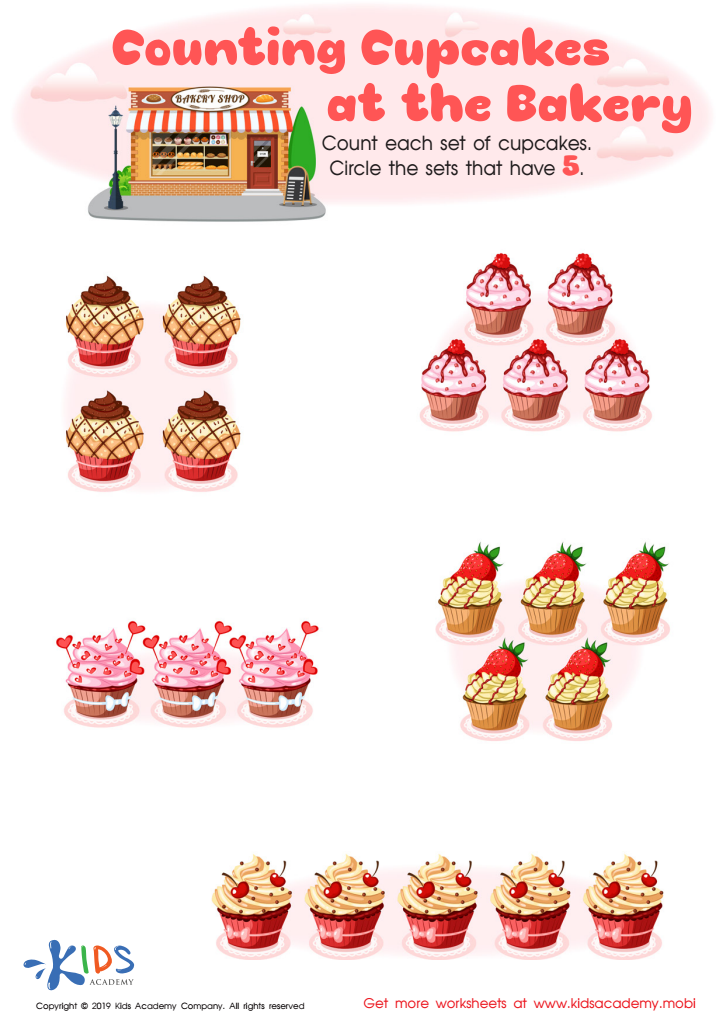
Counting Cupcakes Worksheet
This fun worksheet for preschoolers uses cupcakes to teach counting. Kids must circle the groups of cupcakes that add up to 5. The delicious treats make learning fun and engaging!
 Assign to My Students
Counting Cupcakes Worksheet
Worksheet
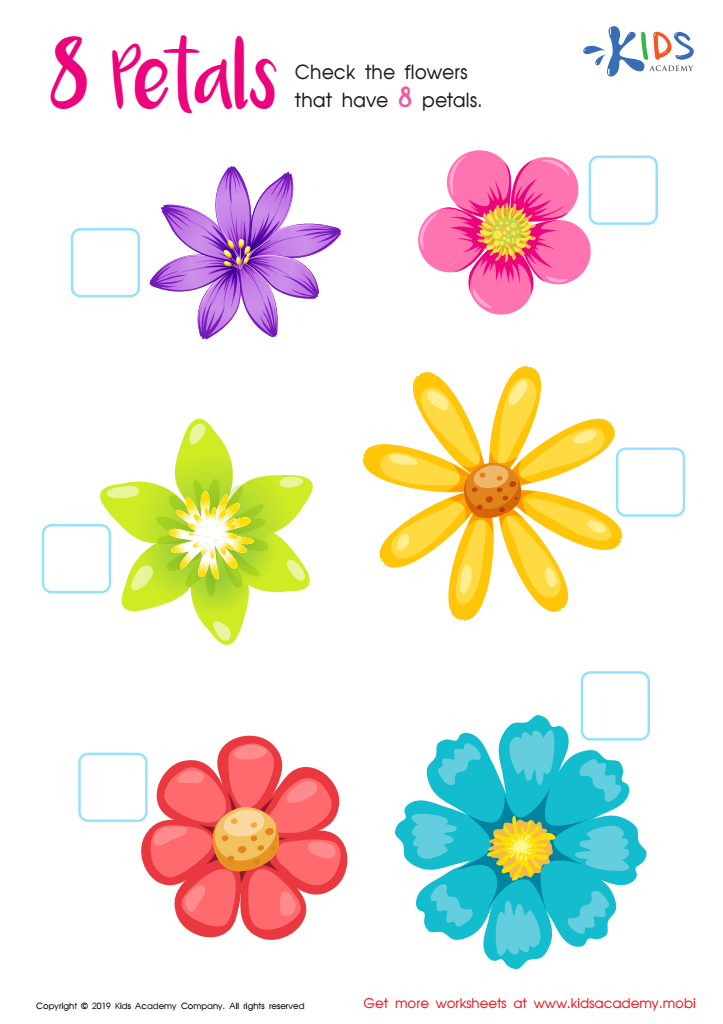
8 Petals Worksheet
Help your children master counting with this fun worksheet. It's filled with colorful flowers and they must count the petals and check the flowers with 8 petals. It's a great way to practice their counting skills and have some fun too!
8 Petals Worksheet
Worksheet
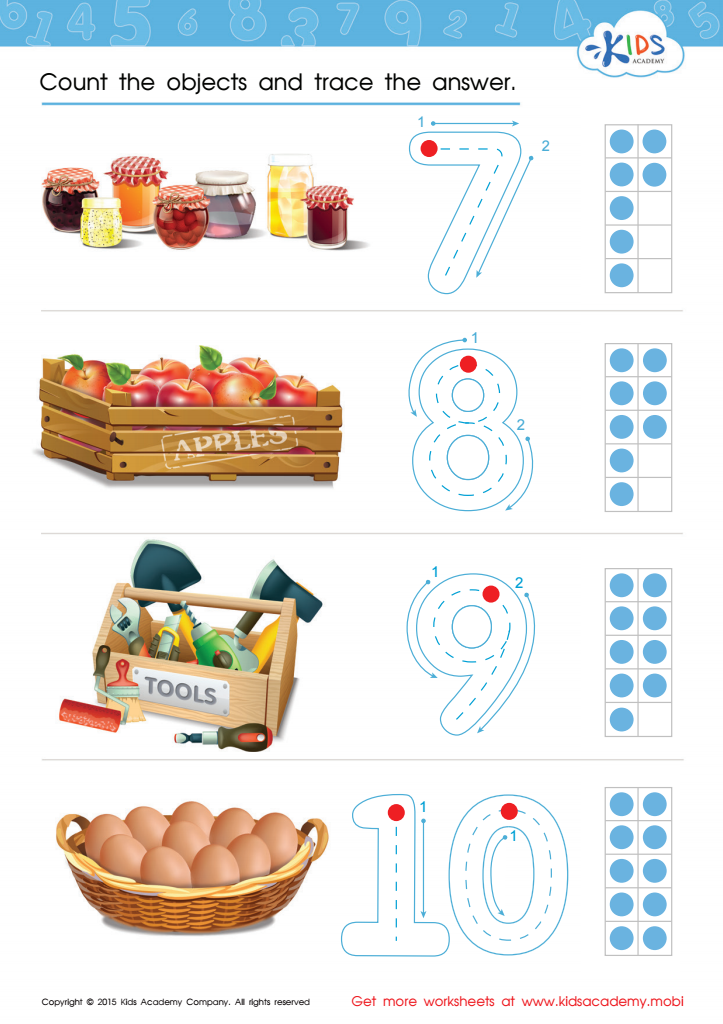
Count and Trace 7 – 10 Worksheet
Let your child develop a lifelong love of math with Kids Academy's printable math worksheet based on the innovative Singapore Math method. It uses funny pictures and graphs to help solve math problems. Check out our amazing collection of free printable math worksheets now!
Count and Trace 7 – 10 Worksheet
Worksheet
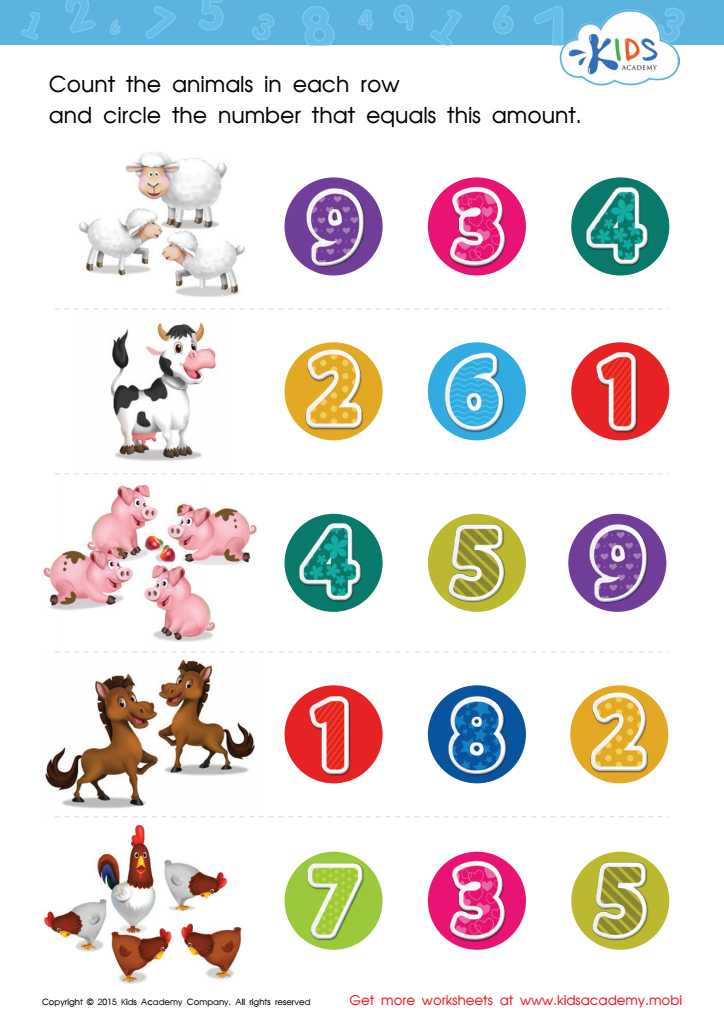
Count and Match 1 – 5 Math Worksheet
Find the colorful worksheet aimed to help your little learner develop their math skills. Count the cute animals and identify the correct numbers based on the Singapore Math method. This worksheet is a fantastic way to start your kid on their mathematical journey.
Count and Match 1 – 5 Math Worksheet
Worksheet
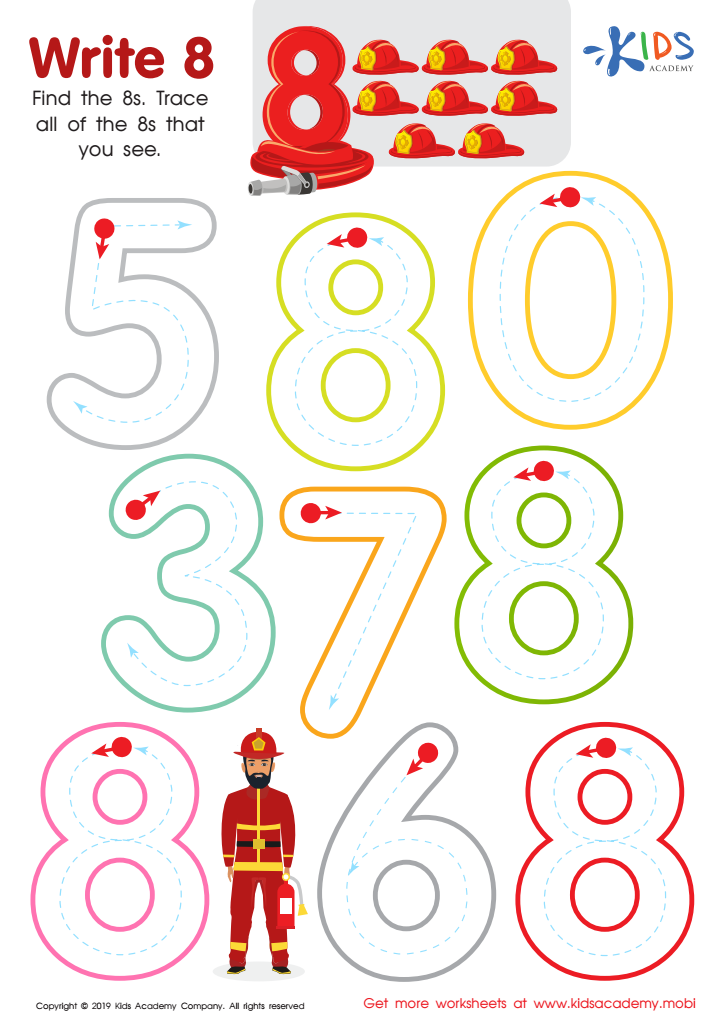
Write 8 Worksheet
Once your kids can count small numbers, it's time to learn how to write them. With your help and patience, they will soon be pros! This worksheet will make learning easier. Help them spot the 8s in the picture, then help them trace them.
Write 8 Worksheet
Worksheet
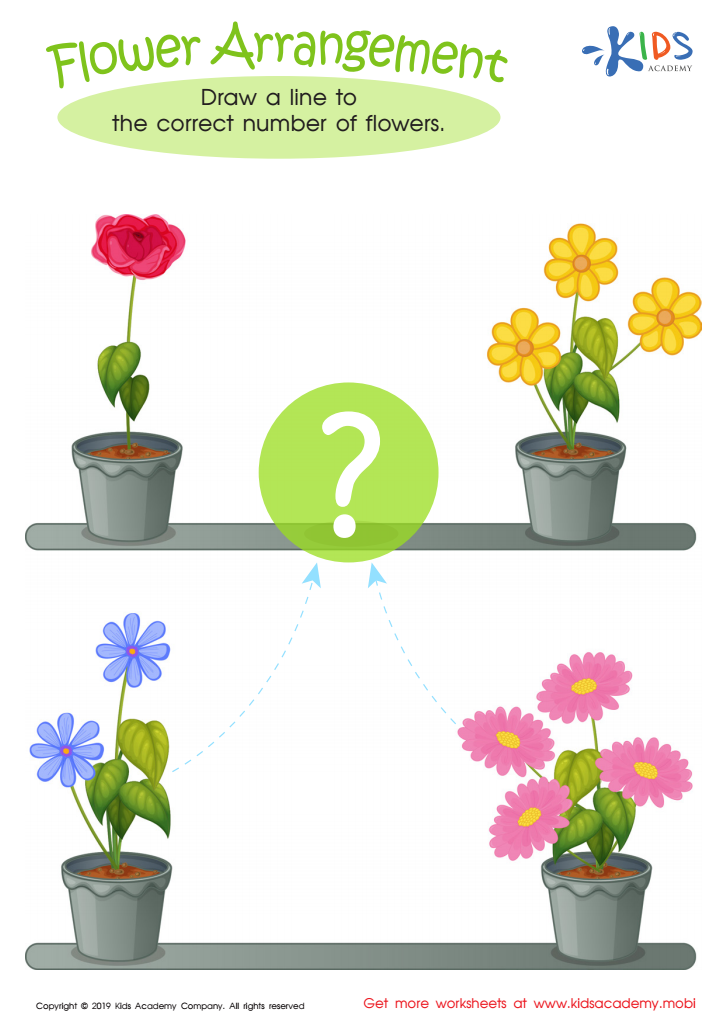
Flower Arrangement Worksheet
Your math whizzes can use flower power to showcase their counting skills with this bright PDF! One-to-one representation in pictures helps children build number sense, which leads to better math and computation efficiencies. This PDF features traceable lines for kids to draw to the correct number of flowers, all while practicing their counting with pretty pictures.
Flower Arrangement Worksheet
Worksheet
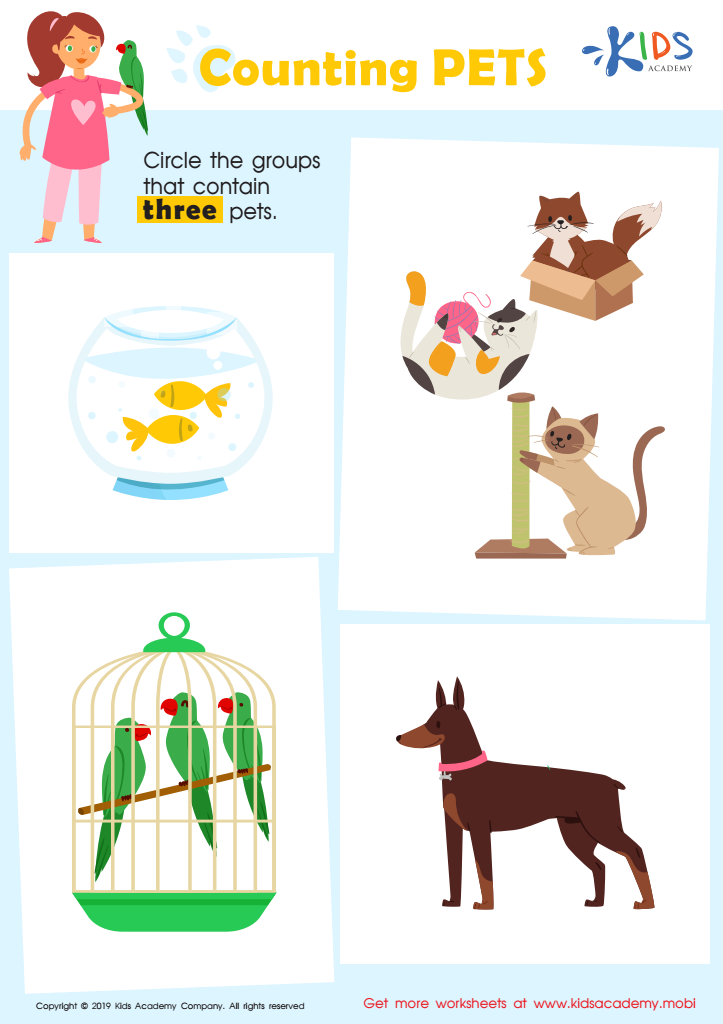
Counting Pets Worksheet
Kids adore their pets, making this free pet counting worksheet the perfect way to combine something they love with math skills. They'll count the number of pets, circle the pictures with three pets, and use one-to-one picture representation to help. This exercise will cultivate their learning and reinforce their love of animals!
Counting Pets Worksheet
Worksheet
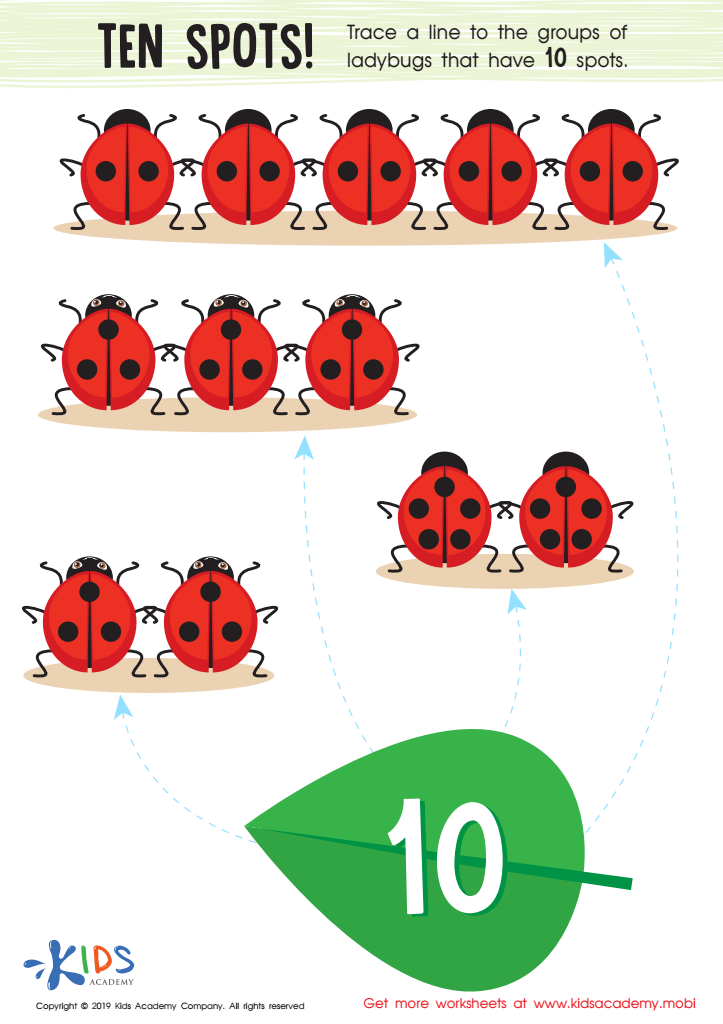
Ten Spots Worksheet
Kids love ladybugs! Ask them to tell you what stands out most--the spots. Show them a picture and help them count the spots. Trace a line to the group with 10 spots for a fun counting lesson.
Ten Spots Worksheet
Worksheet
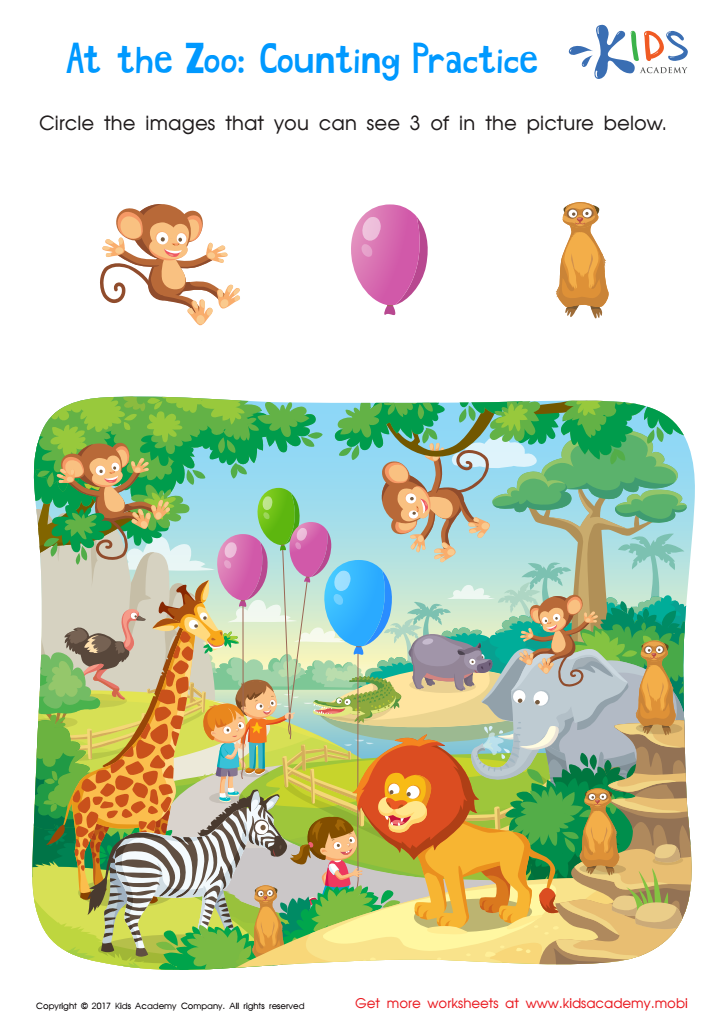
At the Zoo: Counting Practice Worksheet
This zoo-themed worksheet is perfect for practicing early counting skills and following directions. Your child will rule out incorrect answers and use problem solving to find images with duplicates. Fun and educational, this worksheet will get your preschooler ready for early math!
At the Zoo: Counting Practice Worksheet
Worksheet
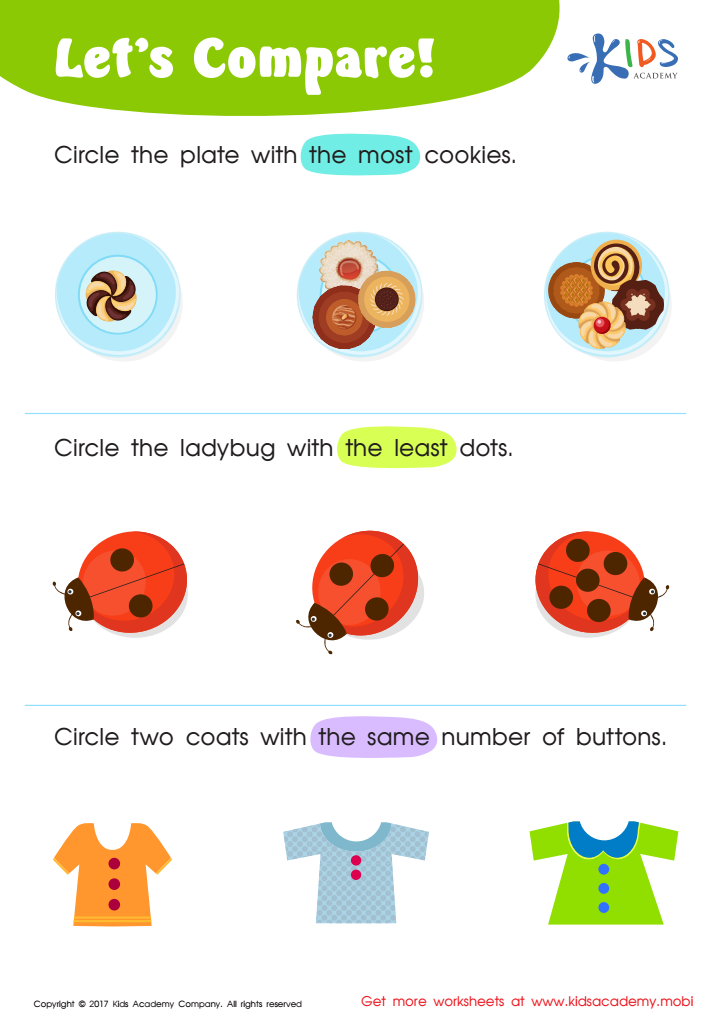
Matching: Classifying Toys by Size Worksheet
.
Have your young one's observation and counting skills ready for this worksheet; carefully look through the images and count the objects, then circle the plates with the least, most or equal number of patterns. Pay attention and have good counting abilities to make this task easy.
Matching: Classifying Toys by Size Worksheet
Worksheet
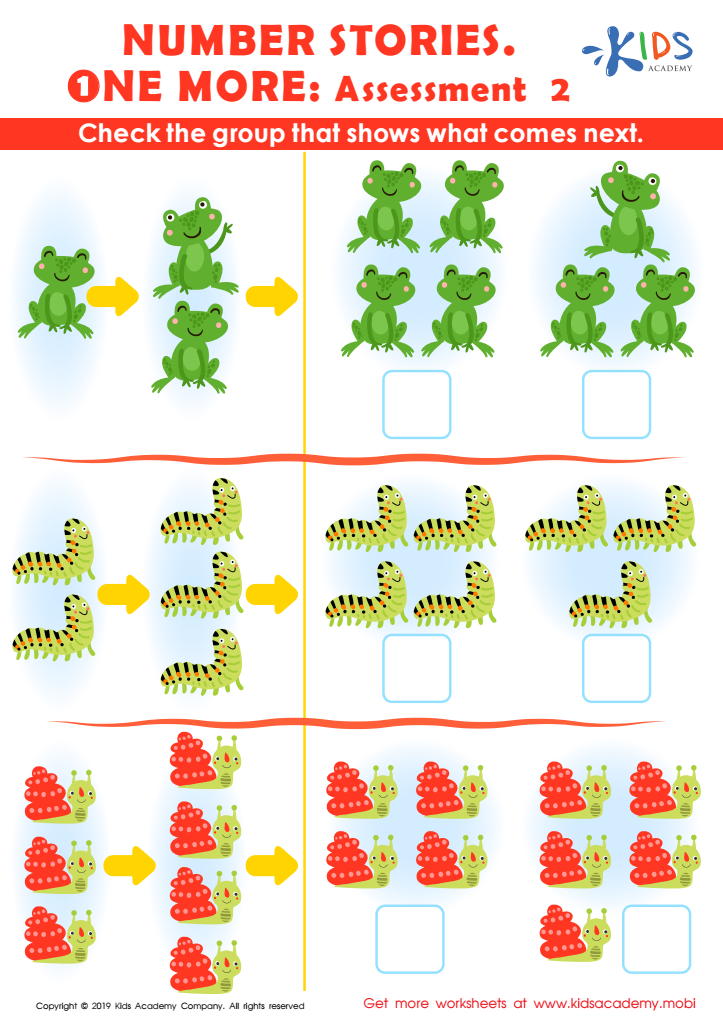
Number Stories One More – Assessment 2 Worksheet
Tracing is a great activity for kids. They can count and trace numbers, recognize animals, and practice drawing on dotted lines. It's entertaining and educational, helping children learn valuable counting skills.
Number Stories One More – Assessment 2 Worksheet
Worksheet
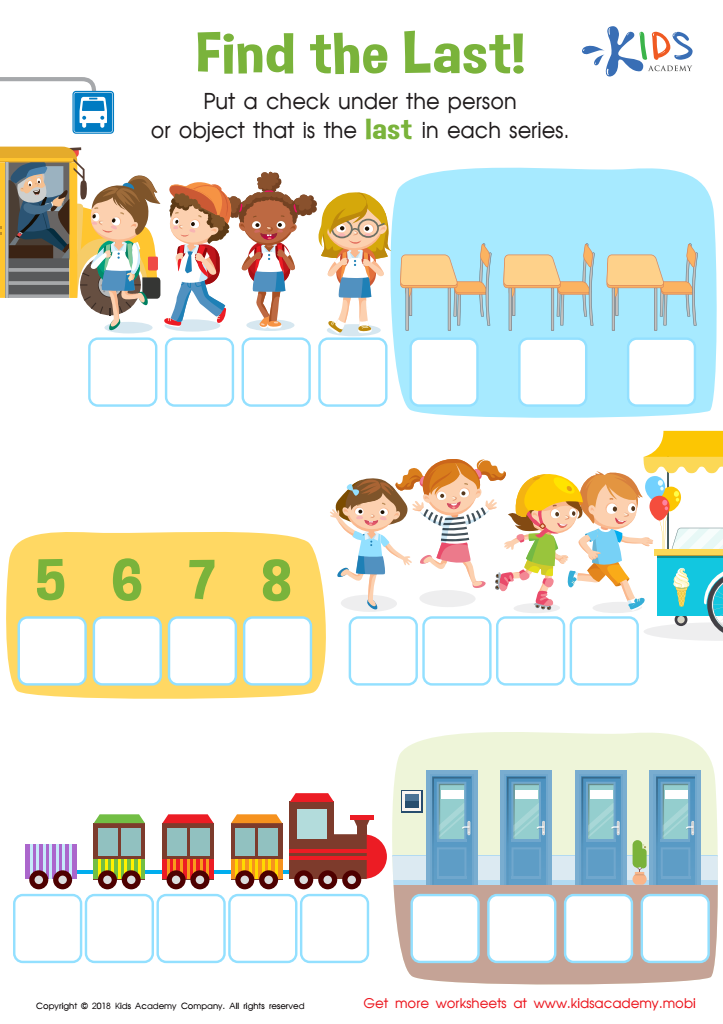
Find the Last! Worksheet
Teach young students about sequence words with this free worksheet. Have them look at sets of people or objects and choose the one that is last. Engage them further by having them describe or act out their day, and what happens last? Enjoy this printout and have fun!
Find the Last! Worksheet
Worksheet
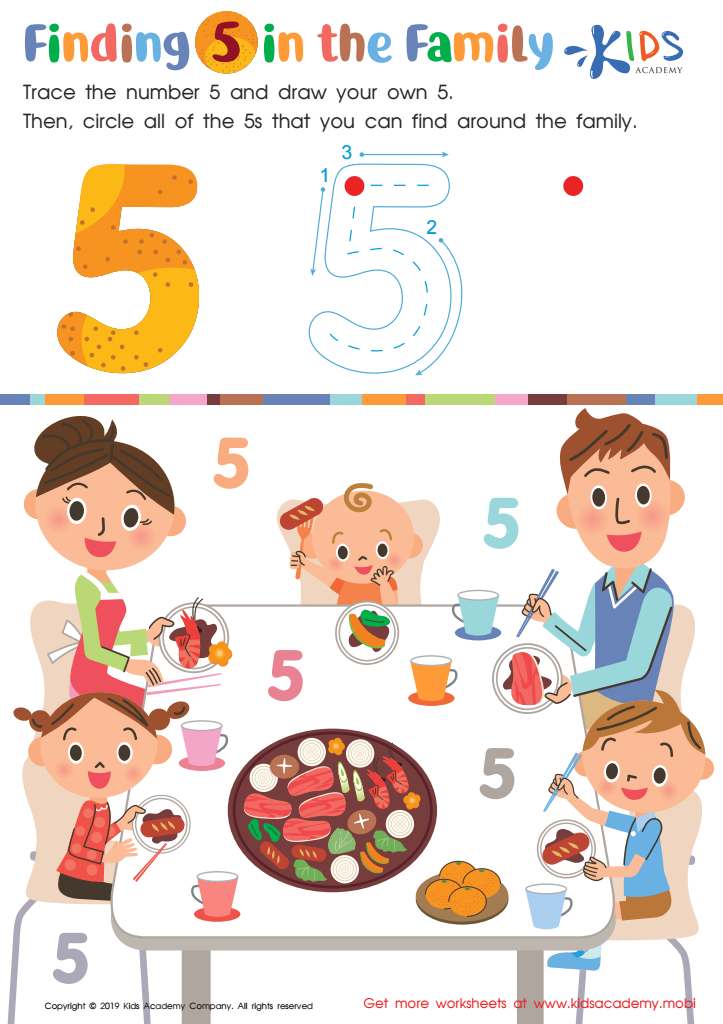
Finding 5 in the Family Worksheet
This worksheet helps kids identify and write the number 5. Ask what the family is doing and who the family members are. Help them trace and draw the 5, then have them circle all 5s in the picture.
Finding 5 in the Family Worksheet
Worksheet
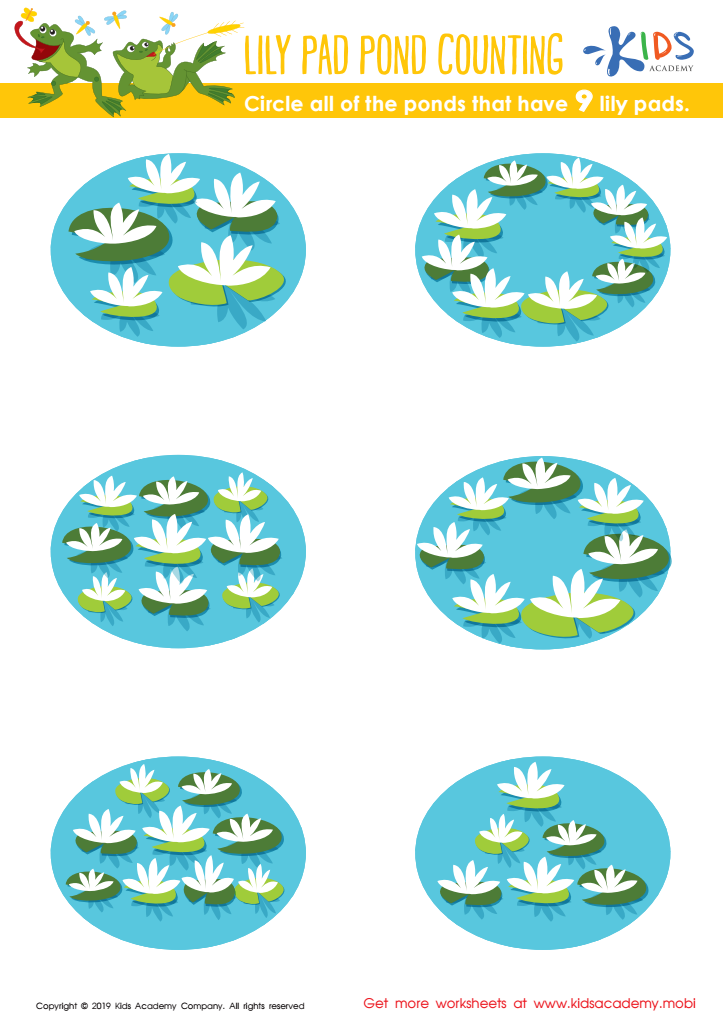
Lily Pad Pond Counting Worksheet
Counting can be fun with this colorful worksheet. Guide and be patient with your kids as they write numbers and count the six groups of lily pads. Help them circle the ponds with 9 lily pads, and watch them learn better and faster.
Lily Pad Pond Counting Worksheet
Worksheet
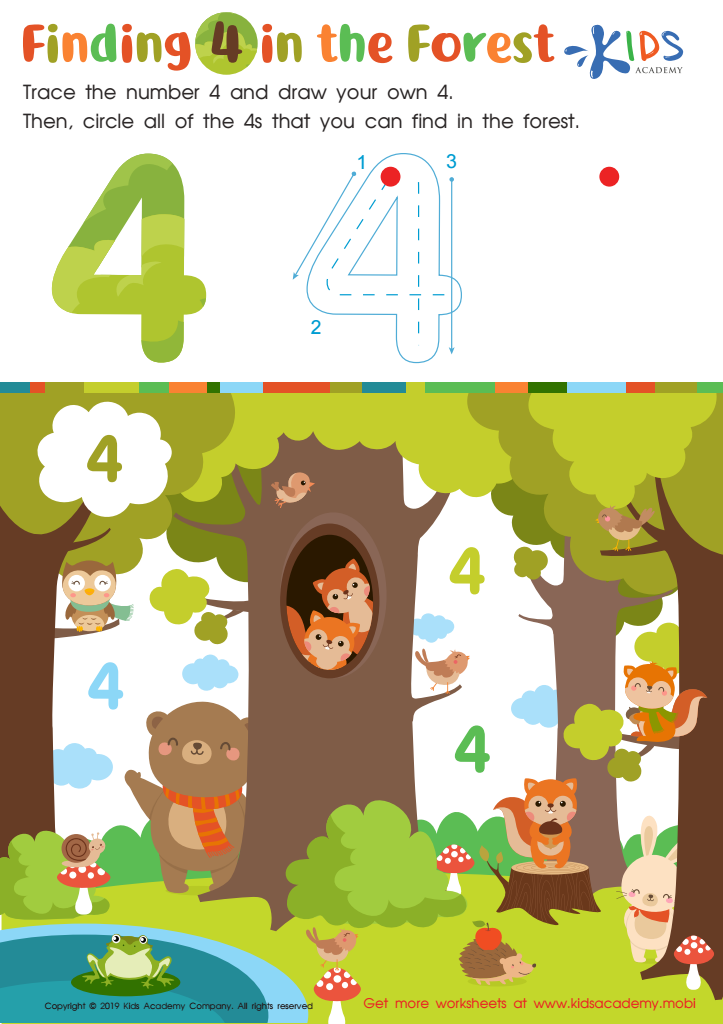
Finding 4 in the Forest Worksheet
Before starting, have your kids count as high as they can. Ask them to identify the setting and point out the 4s. Trace 4 and draw your own. Help your kids circle all the 4s they can find in the forest. How far can they count? How well did they find the hidden 4s?
Finding 4 in the Forest Worksheet
Worksheet
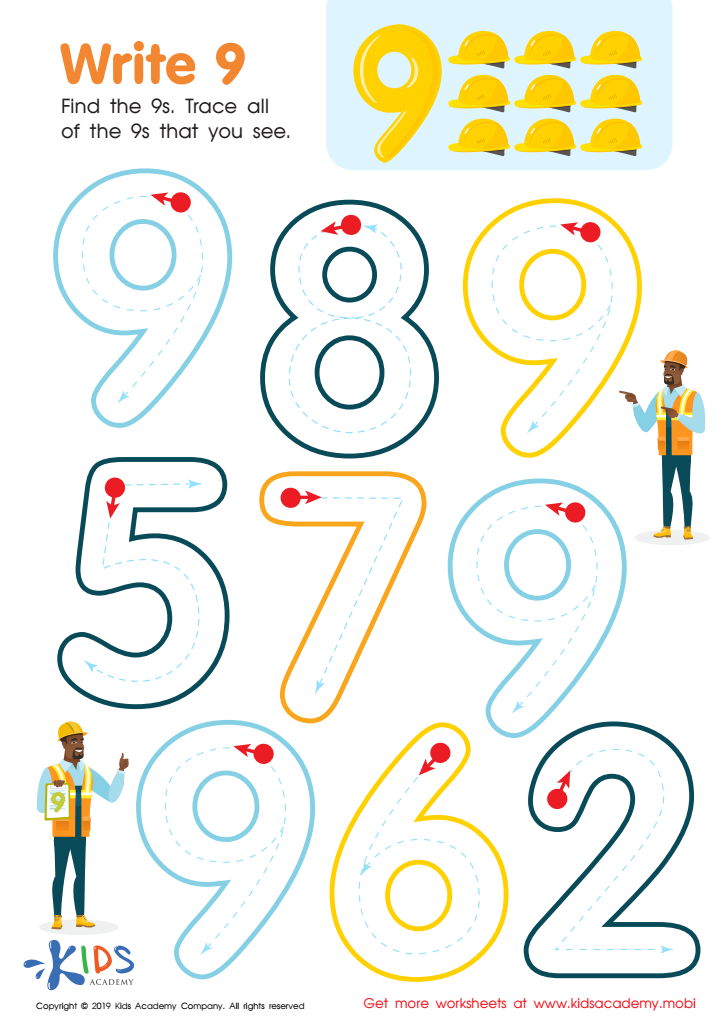
Write 9 Worksheet
Once your kids can count, help them learn to write numbers with your guidance and patience. This worksheet is designed to speed up the process. Help them spot the 9s in the picture, then help them trace them. With your help, your kids will soon be pros at counting and writing numbers.
Write 9 Worksheet
Worksheet
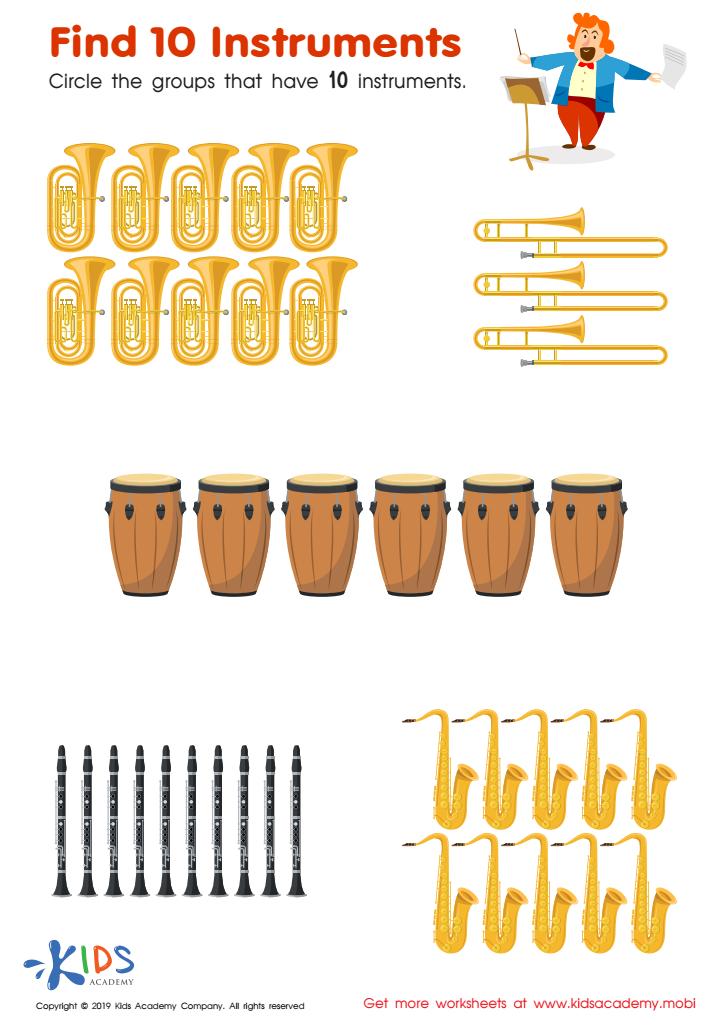
Find 10 Instruments Worksheet
Teach your kids to count with educational DVDs, video games and this worksheet. Show them the picture and help them count the instruments, then circle the groups of 10. It's a great way to practice counting numbers, one of the first things they'll learn.
Find 10 Instruments Worksheet
Worksheet
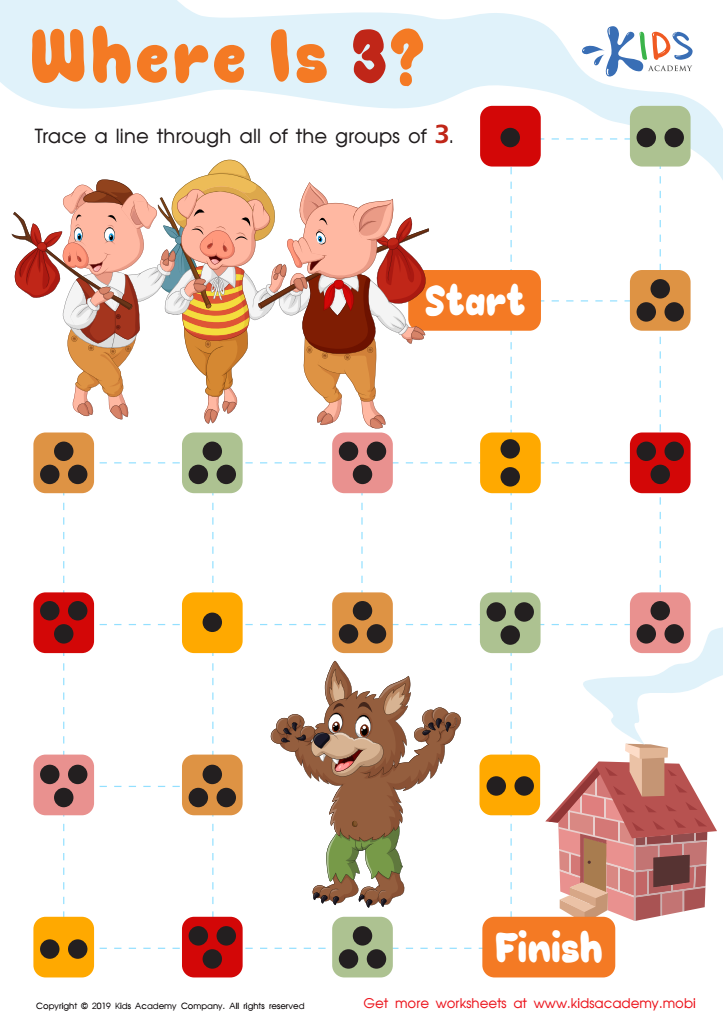
Where Is 3? Worksheet
Let your little mathematician join the Three Little Pigs on an adventure! With this free worksheet, they'll guide the pigs through a maze of numbered bricks, using one-to-one representation to get to the sturdy house. Have fun helping the piggy friends past the wolf!
Where Is 3? Worksheet
Worksheet
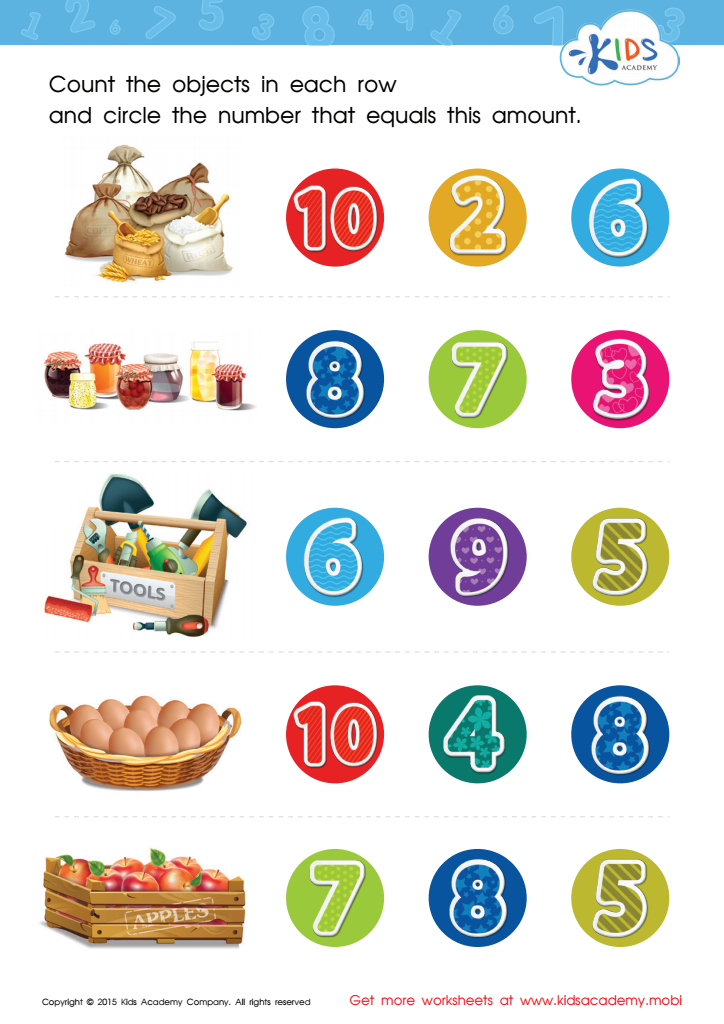
Count and Match 6 – 10 Math Worksheet
Print this fun math worksheet for your kindergartener and help them practice counting up to ten! They'll draw a line from the objects to the correct numbers, visualizing the problem and having fun at the same time. Kids Academy offers more free printable worksheets. Get them now!
Count and Match 6 – 10 Math Worksheet
Worksheet
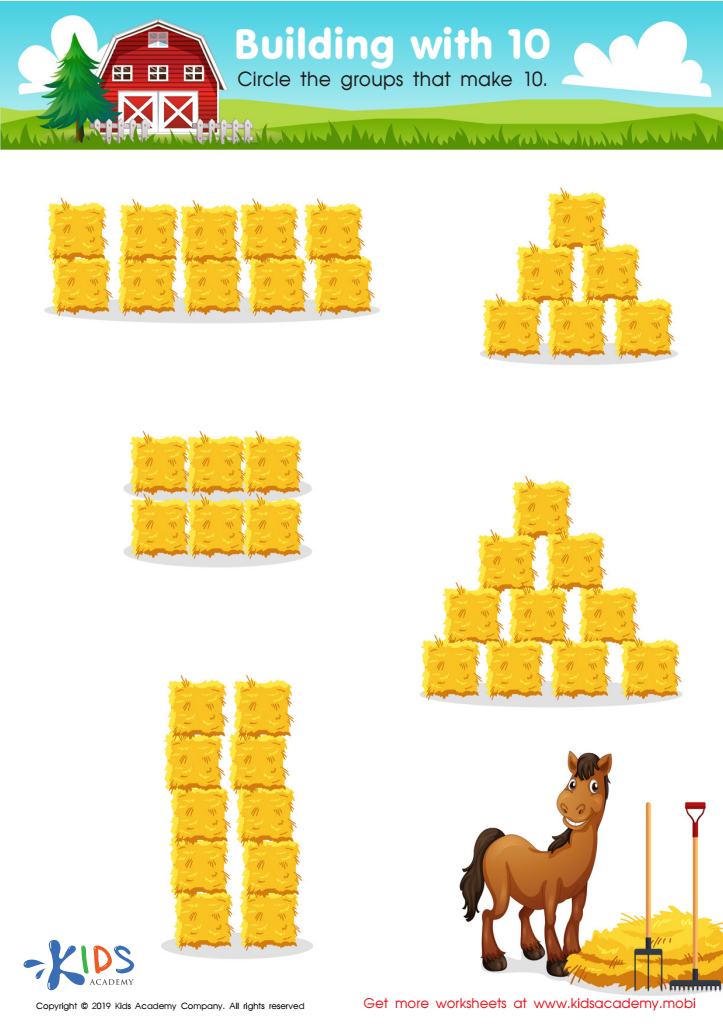
Building with 10 Worksheet
Counting numbers can be simple with this worksheet: Ask your kids to count the stacks of objects, ensure accuracy with your help, then circle the ones of ten. With practice and guidance, your children will soon become counting pros!
Building with 10 Worksheet
Worksheet
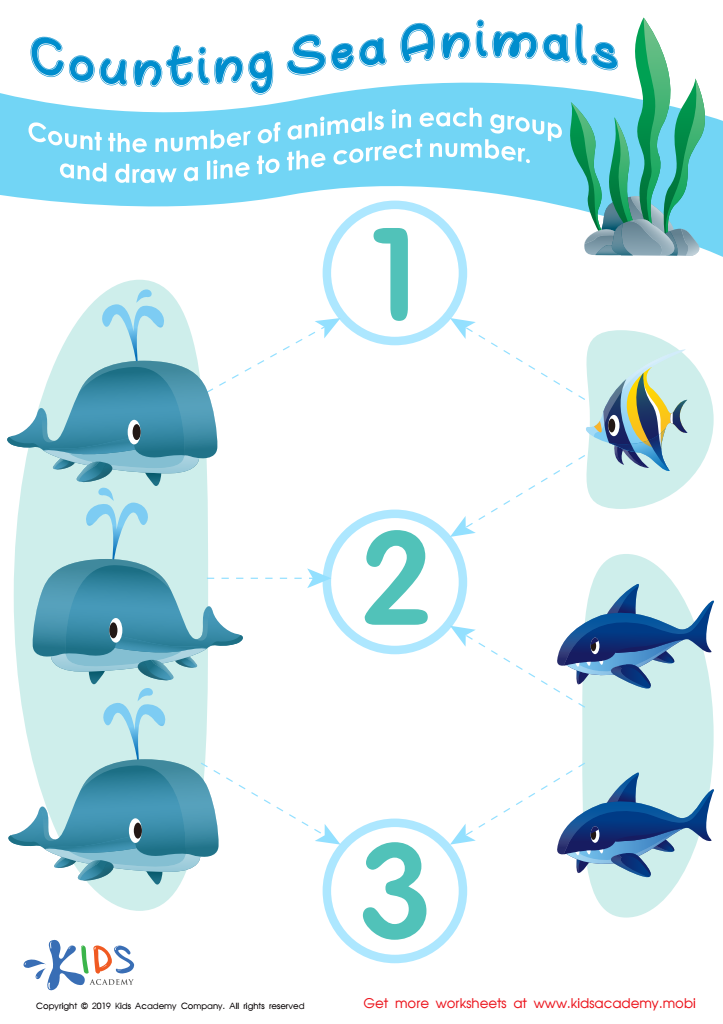
Counting Sea Animals Worksheet
Kids adore sea creatures for their captivating, unknown nature. Let them use this free worksheet to practice counting, where they match numbers to groups of animals. Through traceable lines, they'll easily connect numbers to sea creatures and learn math with vibrant, underwater fun!
Counting Sea Animals Worksheet
Worksheet
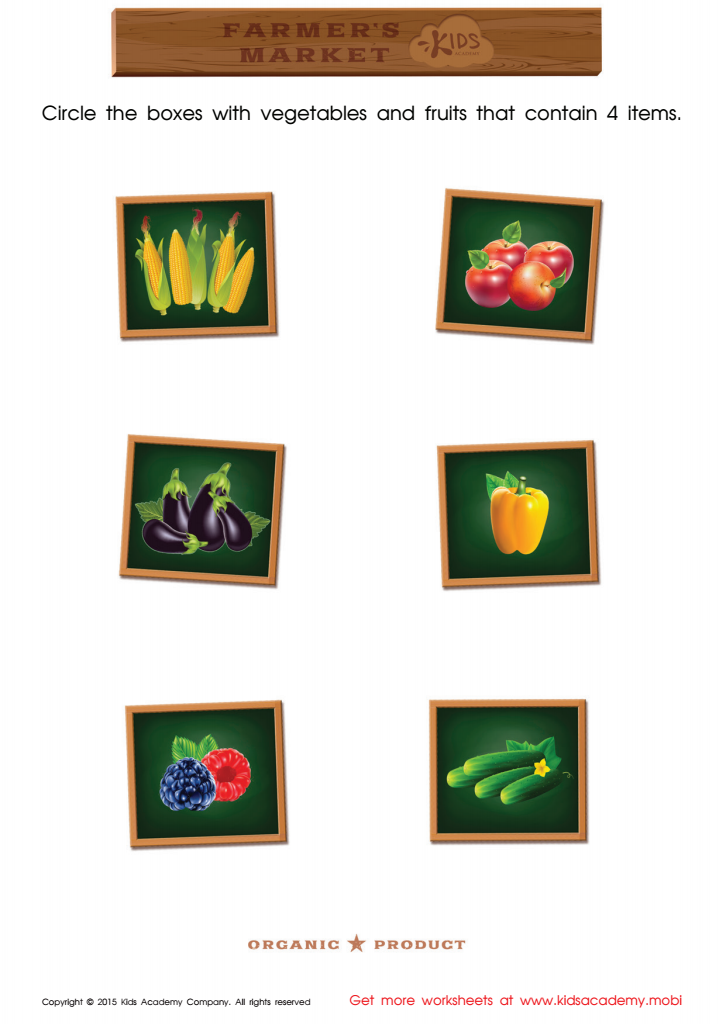
Count and Match Vegetables 2 – 8 Math Worksheet
Download this fun, colorful math worksheet from Kids Academy and help your kid improve their counting skills. Match the boxes to the same number of vegetables, using the pictures to visualize the problem. Get more free printables from Kids Academy by topic.
Count and Match Vegetables 2 – 8 Math Worksheet
Worksheet
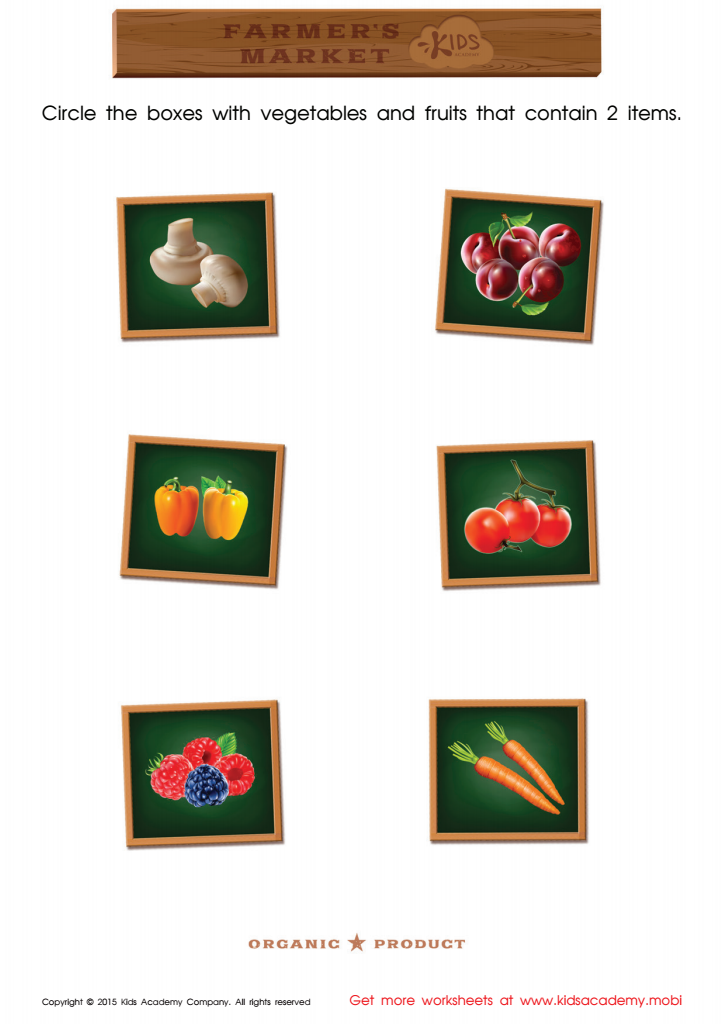
Count and Match Vegetables and Points Math Worksheet
Make your kids excited about math with this free printable kindergarten worksheet! Kids will count up to seven and match boxes with the same number of vegetables. Visualizing the task with this worksheet layout will entertain them while they practice math. Download additional worksheets by topic on Kids Academy.
Count and Match Vegetables and Points Math Worksheet
Worksheet
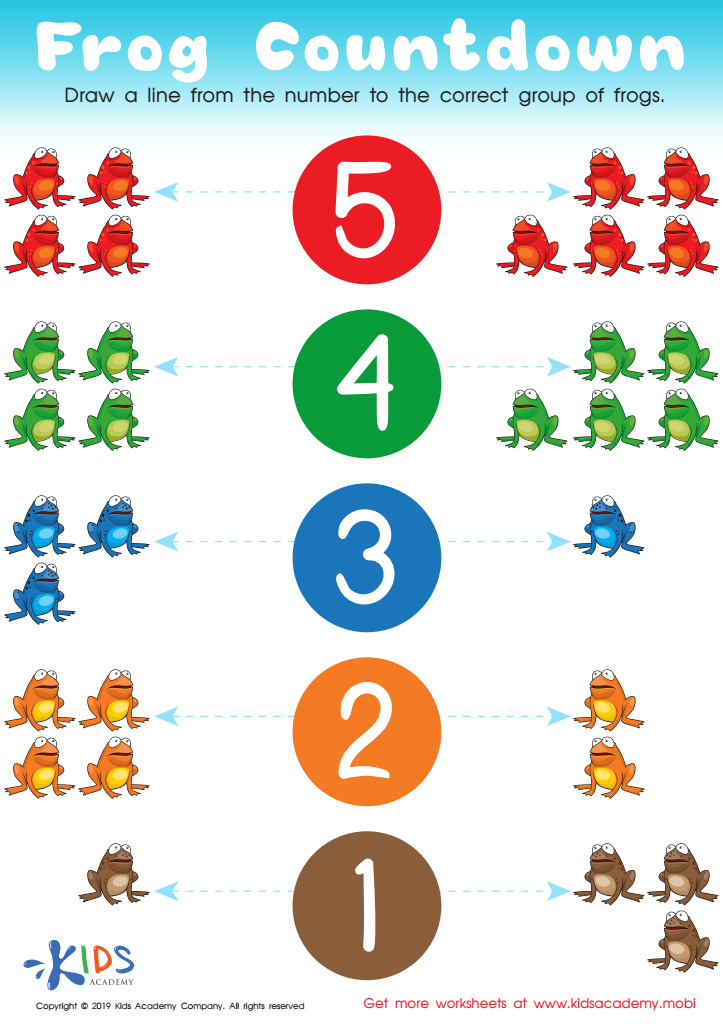
Frog Countdown Worksheet
Make learning fun for kids with traceable printouts! This exercise has kids counting frogs and drawing a line to match the number. Expand their knowledge with activities like this, beyond the basics they learn in school. Help them explore new ways of learning and make it enjoyable.
Frog Countdown Worksheet
Worksheet
Join Kids Academy for Free
Who is primarily going to use this learning content?








Parents and teachers should prioritize the understanding of normal numbers (0-10) for children ages 4-7 due to their foundational role in early mathematics and cognitive development. This stage is crucial as children begin to grasp basic math concepts that serve as building blocks for future learning. Recognizing and working with numbers 0-10 helps children develop number sense, which is essential for more complex mathematical operations they will encounter later.
Additionally, familiarizing young learners with these numbers aids in developing basic skills such as counting, recognizing quantities, and understanding the concept of more or less. Engaging in activities that involve normal numbers can enhance problem-solving abilities, logical reasoning, and critical thinking. Incorporating hands-on learning through games, songs, and interactive activities makes the learning process enjoyable and effective.
Moreover, competence with numbers lays groundwork for skills in literacy, as children repetitively relate numerical concepts to real-world situations, promoting overall cognitive development. When parents and teachers actively support this early knowledge of numbers 0-10, they foster a love for learning and build confidence in children's abilities to navigate everyday mathematical scenarios, nurturing future academic success. This investment in their early education yields lasting benefits, shaping positive attitudes towards math.