Normal Nursery Rhymes Worksheets for Ages 4-7
3 filtered results
-
From - To
Welcome to our "Normal Nursery Rhymes Worksheets" designed specifically for children aged 4-7! These engaging worksheets are a delightful way to introduce young learners to the world of nursery rhymes. Filled with colorful illustrations and creative activities, our resources promote literacy and enhance language skills while making learning fun. Each worksheet encourages children to explore rhythm, phonics, and vocabulary through well-loved rhymes. Perfect for both home and classroom use, these worksheets support cognitive development and foster a love for storytelling. Discover a treasure trove of printable worksheets that will captivate your child's imagination and make learning an enjoyable adventure!

Twinkle Twinkle Little Star Coloring Page
 Assign to My Students
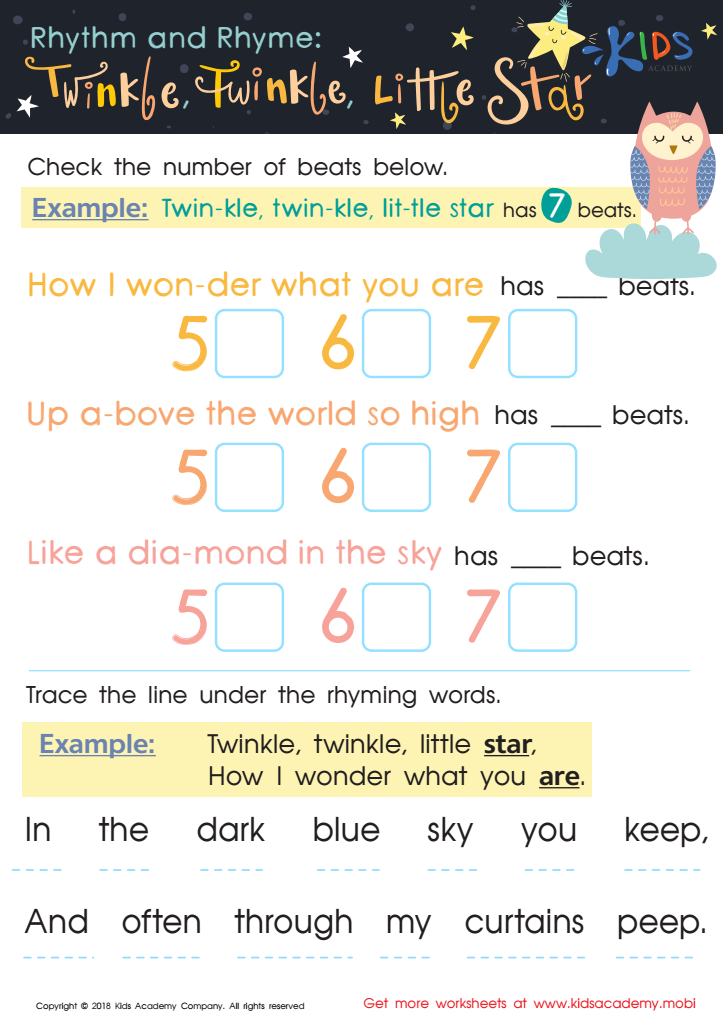
Rhythm and Rhyme: Twinkle, Twinkle, Little Star Worksheet

The Wheels on the Bus Coloring Page
Assign to My Students








Parents and teachers should care about nursery rhymes for ages 4-7 because these timeless verses provide foundational benefits for early childhood development. First, nursery rhymes enhance language skills through rhythm, rhyme, and repetition, helping young learners develop phonemic awareness and vocabulary. The playful language engages children, making them more likely to experiment with sounds and words, which can bolster their reading abilities later on.
Furthermore, nursery rhymes serve as a gateway to cultural literacy. Many rhymes are interwoven with social narratives, themes, and morals, enabling children to understand and appreciate literature's cultural contexts. They also foster emotional intelligence as children relate to characters and scenarios, developing empathy and social skills through shared experiences.
Additionally, singing and reciting nursery rhymes can improve memory and cognitive skills by encouraging recall and creativity. Group activities centered around nursery rhymes can promote social interaction, collaboration, and bonding among peers.
In summary, incorporating nursery rhymes into daily routines enriches children's language acquisition, cultural knowledge, and emotional development. Thus, both parents and teachers play a vital role in nurturing these essential experiences during the critical early years of a child’s growth.