Letter-sound recognition Normal Alphabet Worksheets for Ages 4-8
4 filtered results
-
From - To
Boost early literacy skills with our engaging Letter-Sound Recognition Normal Alphabet Worksheets designed for children ages 4-8. Created by experienced educators, these printables provide fun and interactive practice to help kids recognize letters and associate them with their corresponding sounds. Each worksheet enhances phonemic awareness, supporting the foundational reading skills necessary for future academic success. Convenient and easy to use, these activities are perfect for at-home learning or in the classroom. Give your child the literacy advantage with these effective and playful tools. Discover more and start your educational journey today at Kids Academy.
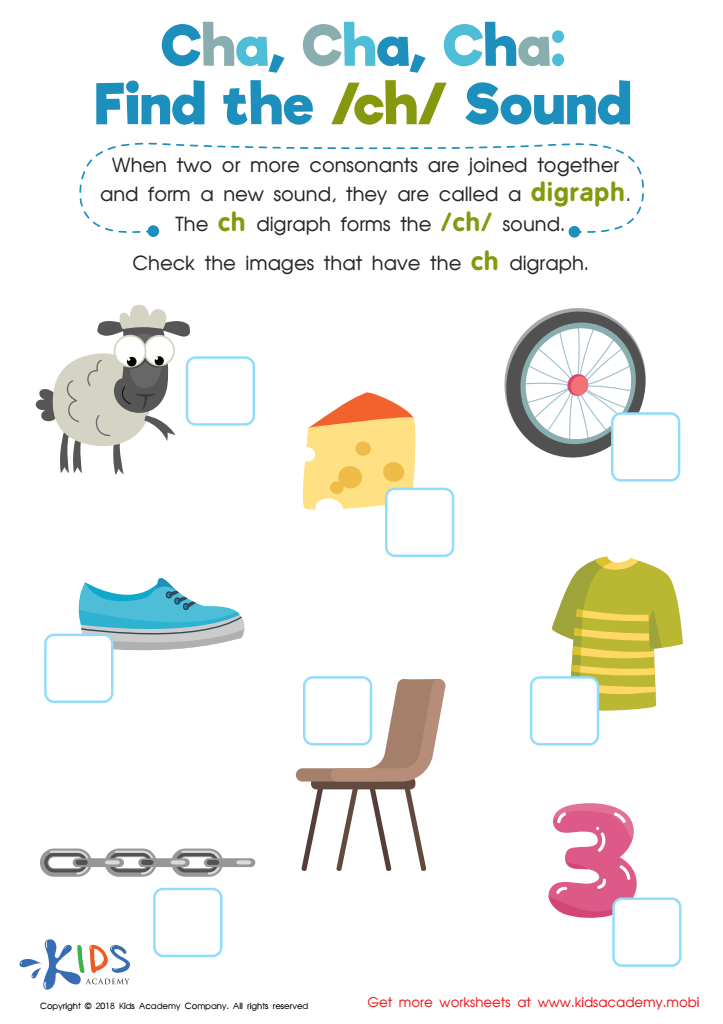
Cha, Cha, Cha: Find the /Ch/ Sound Worksheet
 Assign to My Students
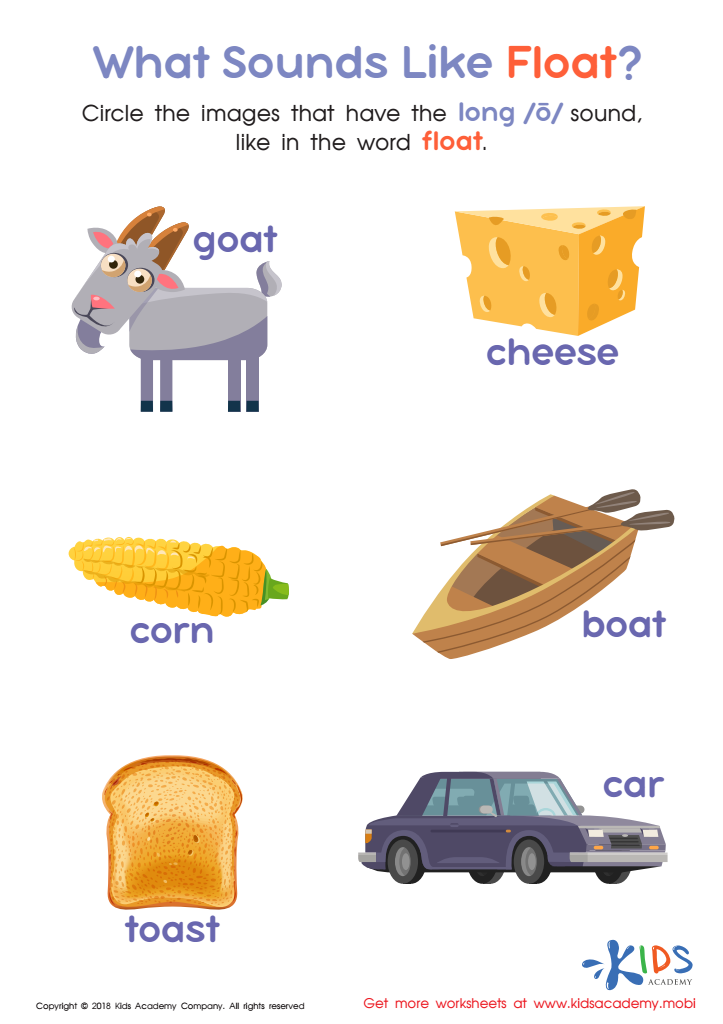
What Sounds Like Float? Worksheet
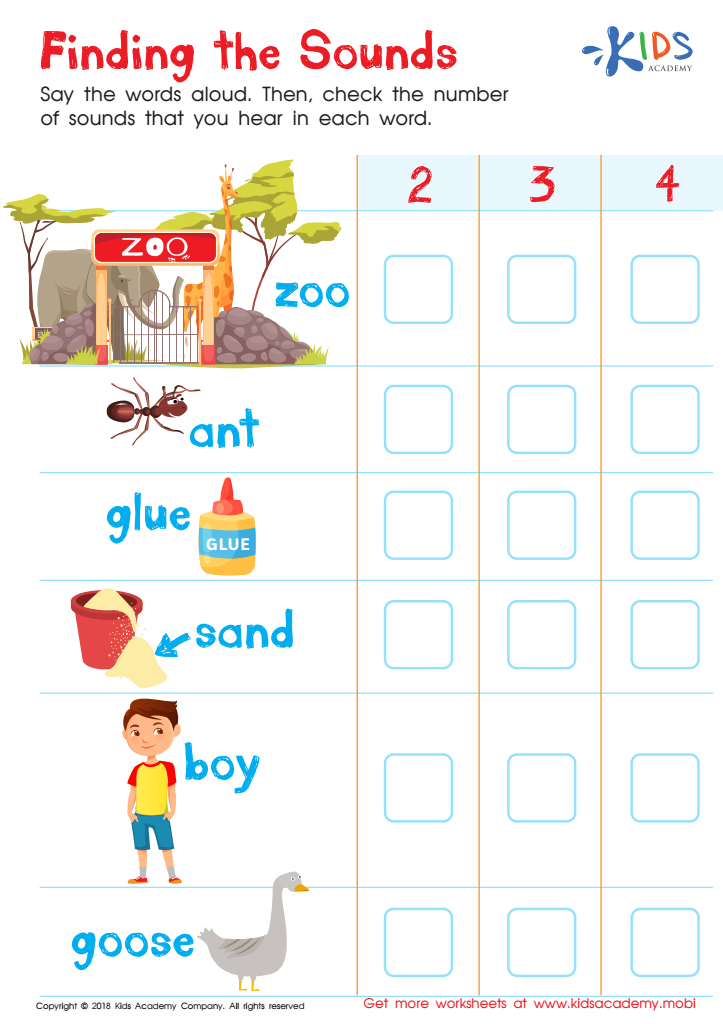
Finding the Sounds Worksheet
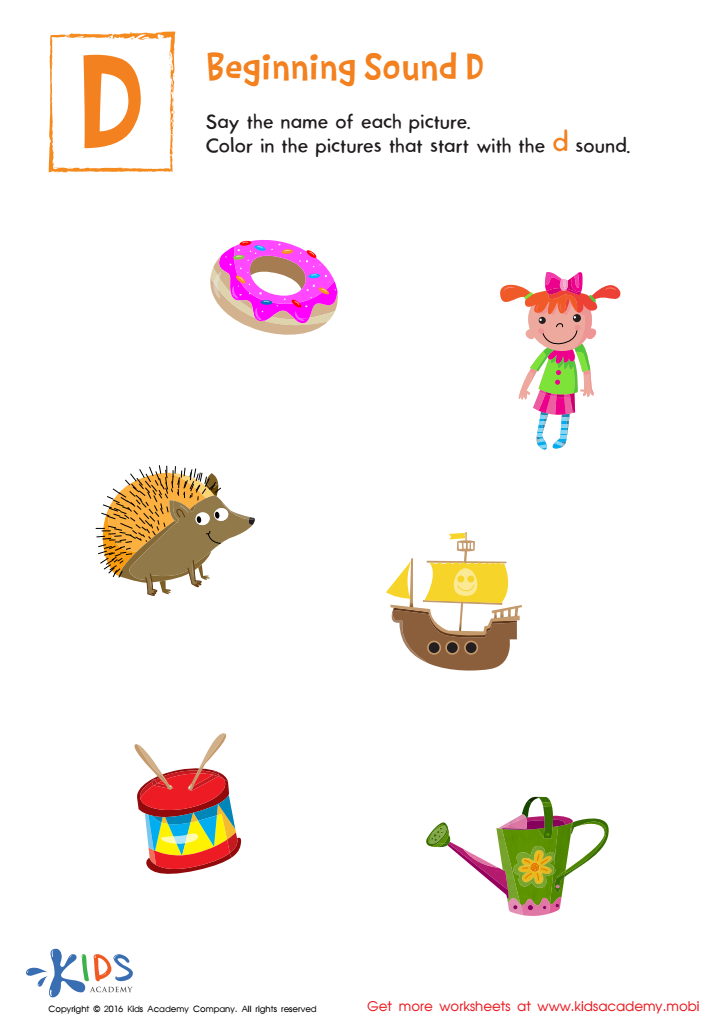
Beginning Sound D Worksheet






Letter-sound recognition is a fundamental component of early literacy development for children ages 4-8, forming the basis for reading and writing skills. Understanding the relationship between letters and their corresponding sounds enables children to decode words, make sense of written language, and commence reading more fluently. For educators and parents, emphasizing letter-sound recognition is crucial because it bridges the gap between knowing the alphabet and being able to read.
Children who grasp letter-sound relationships can recognize and assemble sounds to form words, boosting their phonemic awareness—an essential skill for proficient reading. Without this foundational knowledge, children may struggle with reading comprehension, leading to frustrations and potential academic setbacks. Early development of these skills also fosters confidence and a positive attitude toward learning.
Furthermore, early phonics education aligns with the optimal period of brain plasticity in young children, making it an ideal time for absorbing and retaining new information. Engaging in activities that encourage letter-sound recognition, such as phonics games or storytelling, can make learning enjoyable and effective.
By prioritizing letter-sound recognition, parents and teachers offer children the tools needed for a lifetime of reading enjoyment and academic success, setting them on a course for literacy and learning proficiency.







