Phonological awareness Normal Alphabet Worksheets for Ages 4-8
3 filtered results
-
From - To
Enhance your child's phonological awareness with our engaging Normal Alphabet Worksheets, specially designed for ages 4-8. These versatile worksheets focus on developing foundational skills such as recognizing sounds, syllables, and phonemes essential for reading success. With a variety of fun activities, your child will learn to identify letters, match sounds, and explore word patterns while building crucial literacy skills in an enjoyable way. Perfect for home or classroom use, our worksheets support early learners in their journey towards effective communication. Let your child embark on an exciting adventure in phonological awareness and watch their confidence soar as they master the alphabet!
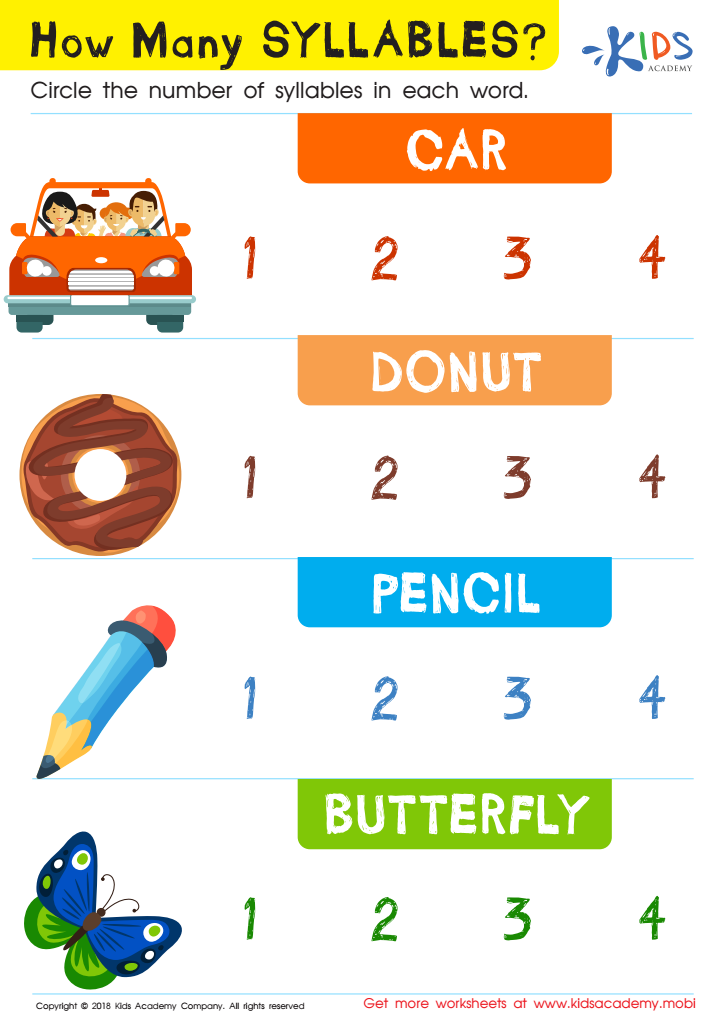
How Many Syllables? Worksheet
 Assign to My Students
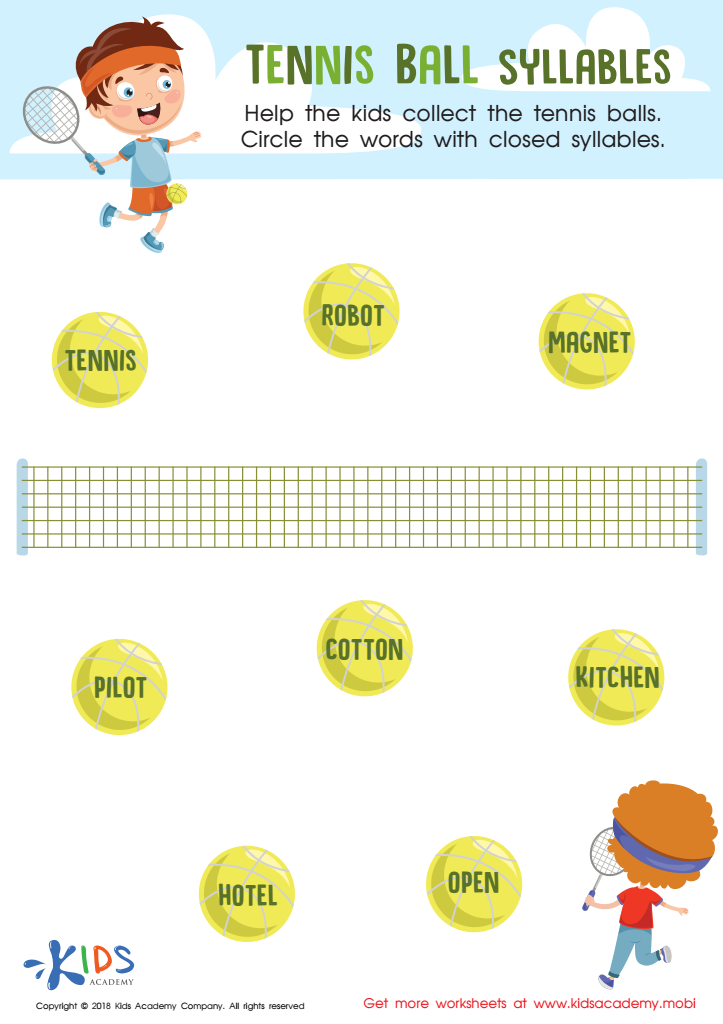
Tennis Ball Syllables Worksheet
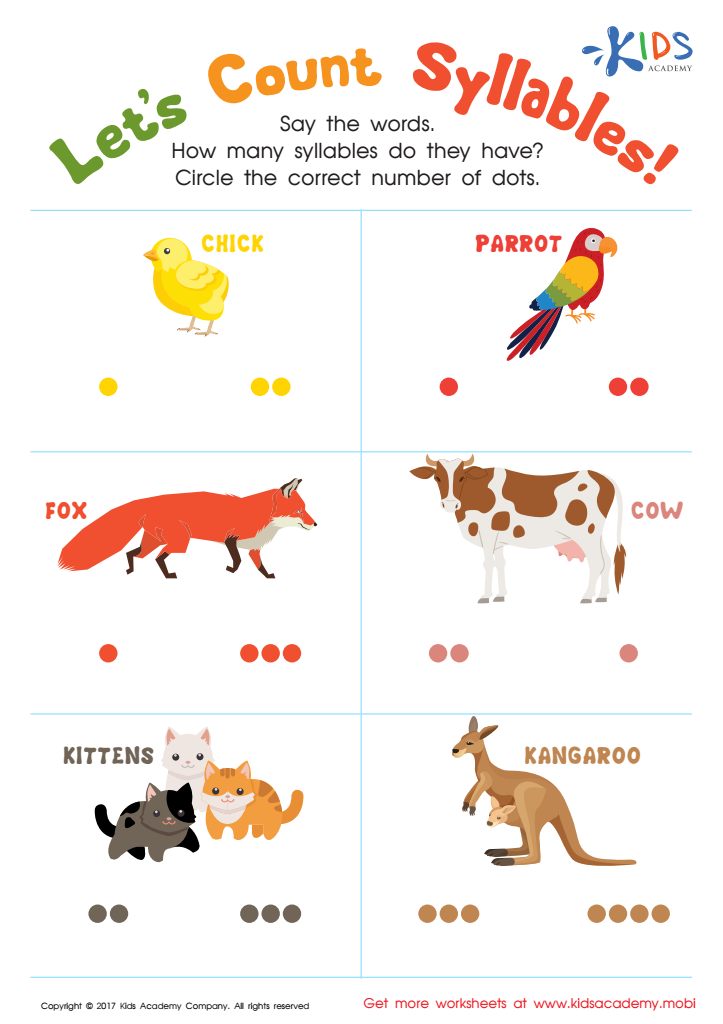
Lets Count Syllables Worksheet







Phonological awareness, including understanding the normal alphabet, is crucial for children aged 4-8 as it lays the foundation for reading and writing skills. This skill encompasses the ability to recognize and manipulate sounds in spoken language, which is vital for decoding words. When children are aware of how sounds correlate with letters, they can better understand how to approach reading and spelling.
Parents and teachers should prioritize phonological awareness, as it has a direct impact on literacy development. Children with strong phonological skills often find it easier to transition from spoken language to reading, enhancing their confidence and enjoyment of books. Learning the alphabet in this context helps them grasp letter-sound relationships, which are essential for fluent reading.
Additionally, fostering phonological skills can help identify children who may need extra support early on, allowing interventions to be put in place to address potential reading difficulties. Engaging children in phonological activities - like rhyming games or sound matching - can also enhance their overall cognitive abilities while making learning fun. By actively caring about phonological awareness, teachers and parents can give children the tools necessary for academic success and a lifelong love of reading.







