Boost your child's reading proficiency with our engaging Normal Alphabet Worksheets designed specifically for ages 4-8. These worksheets provide a fun and effective way to help young learners recognize letters, understand phonetics, and build essential early reading skills. Each activity is carefully crafted to enhance word recognition, letter sounds, and reading comprehension in an interactive manner. Educators and parents can use these resources to foster a love for reading, while ensuring that children gain confidence in their abilities. Explore our collection, which balances educational value with creative fun, making learning to read an enjoyable journey for your child!

Check out this FREE Trial Lesson on Alphabet for age 4-8!

Distinguish between Long U and Short U

Favorites
With answer key
Interactive
  • 4-8
  • Reading proficiency
  • Alphabet
  • Normal
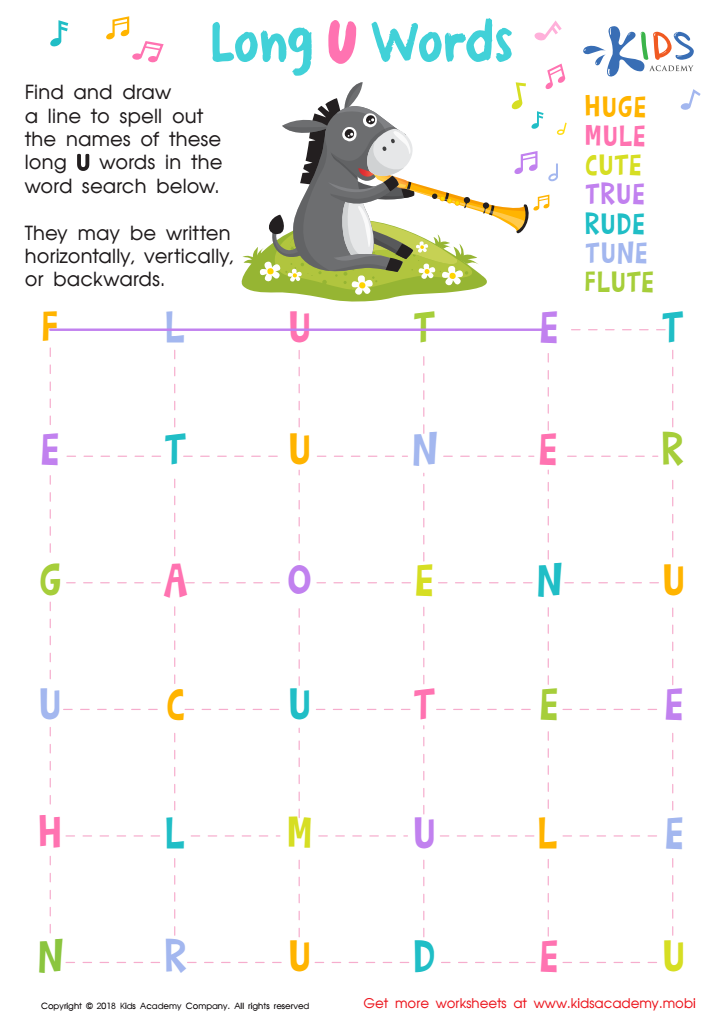
Long /u/ Words Worksheet

Long /u/ Words Worksheet

Your child needs to learn phonetics to enunciate and differentiate words. This fun worksheet encourages them to find and draw lines connecting the long 'U' words in the word search. Help them read the words on the right side of the picture, then look for them in the word search (horizontally, backwards or vertically).
Long /u/ Words Worksheet
Worksheet
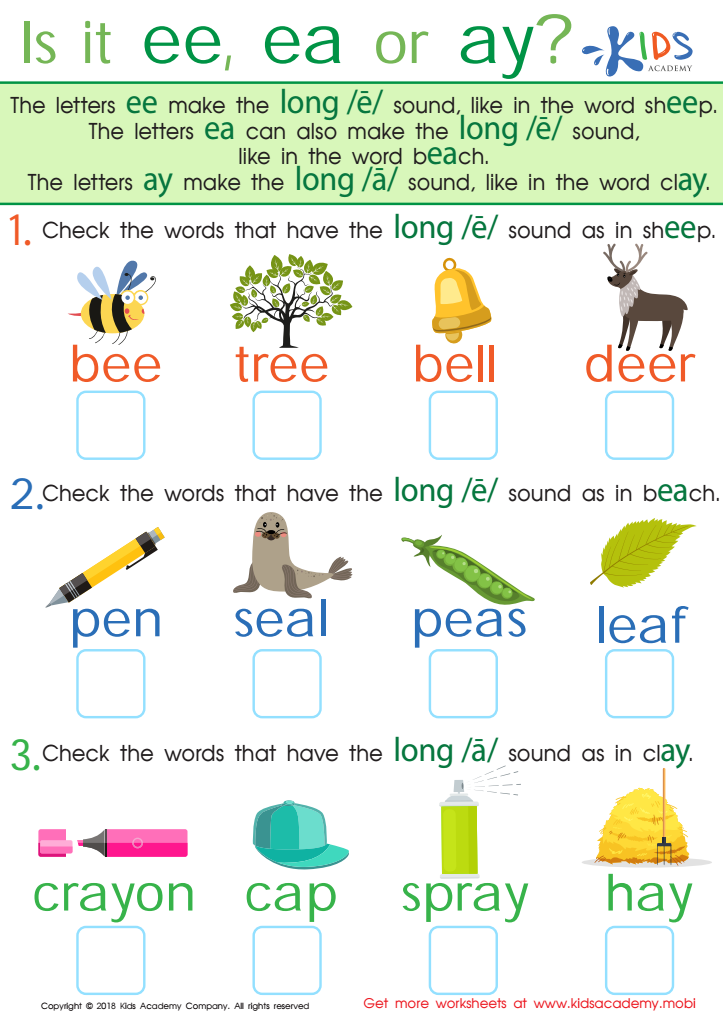
Is It EE, EA, or AY? Worksheet

Is It EE, EA, or AY? Worksheet

When 'ee', 'ea' and 'ay' are in words, they usually make the long /e/ and /a/ sounds. Examples of words with 'ee' are "sheep", 'beach' and 'seat' with 'ea', and 'clay' and 'play' with 'ay'. Check this colourful worksheet with your kids; help them find the words that make the long /e/ sound like 'sheep'.
Is It EE, EA, or AY? Worksheet
Worksheet
Matching Vowel Sounds Worksheet


Matching Vowel Sounds Worksheet

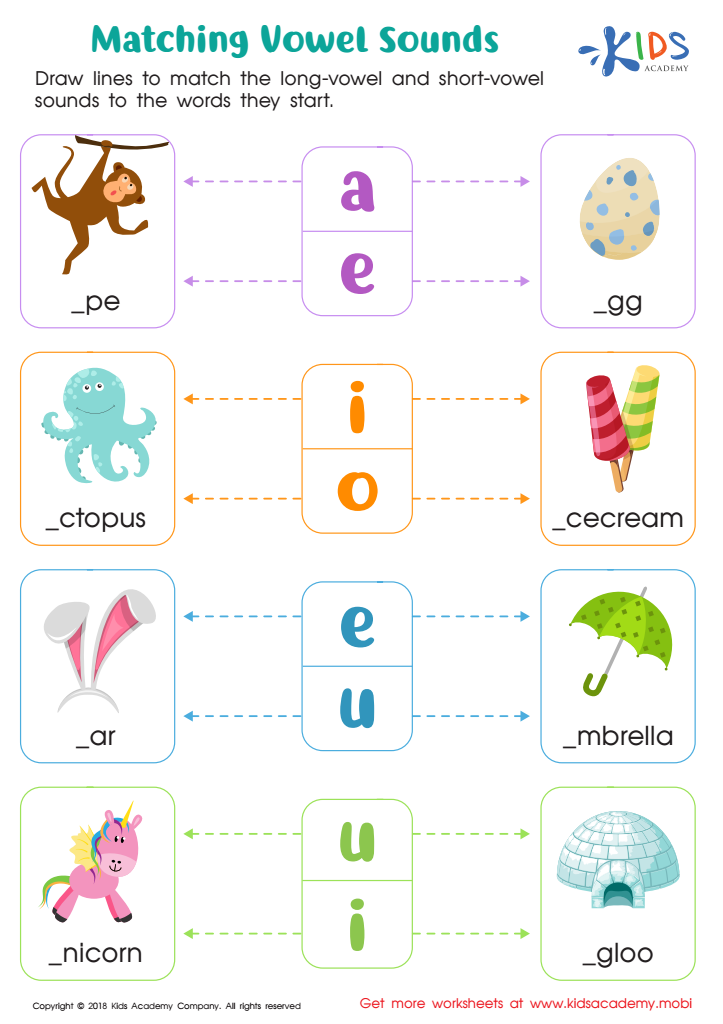
Teach your child phonics with a fun worksheet! Ask your child to name a vowel sound and listen if it's long or short. Differentiating between long and short vowel sounds can be tricky, but this matching worksheet makes it easy for kids to understand. Have fun and master phonics - the worksheet will help them understand the difference between long and short vowel sounds!
Matching Vowel Sounds Worksheet
Worksheet
Long and Short U Worksheet

Long and Short U Worksheet

Revised: Spice up your lesson on long and short vowels with this fun printout! Kids read the words "tube" and "tub," then reinforce the sound by coloring in the words and pictures. It's a great way to make phonics class enjoyable!
Download (PDF)
Assign to My Students
Long and Short U Worksheet
Worksheet
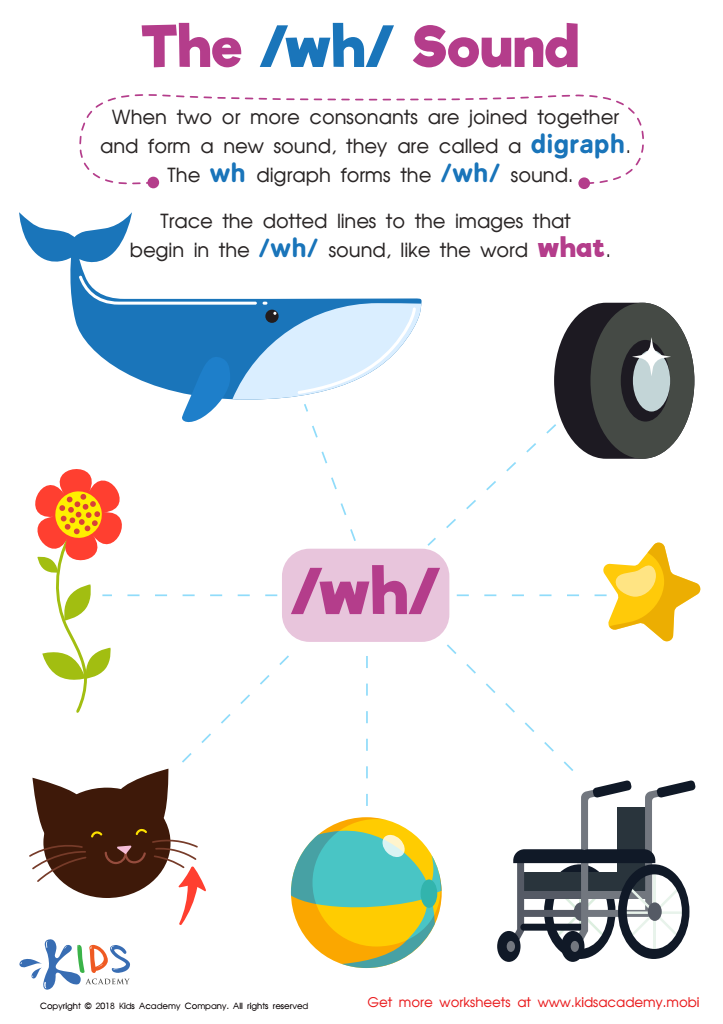
The /wh/ Sound Worksheet

The /wh/ Sound Worksheet

Digraphs join two consonants to make a new sound, like /wh/. Give examples, like "whale", "when" and "why". Ask kids to name pictures in a worksheet and trace dotted lines to images beginning with the /wh/ sound; "what" is one example.
The /wh/ Sound Worksheet
Worksheet
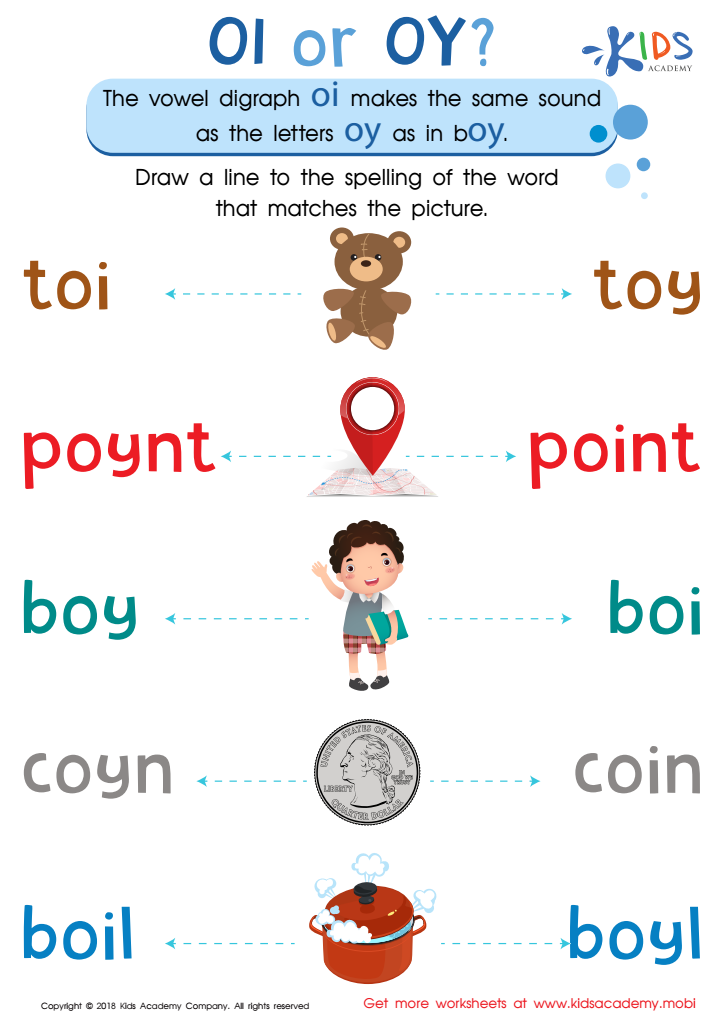
Reading: OI and OY Worksheet

Reading: OI and OY Worksheet

Ask your students if they know the rule for words with /oi/ or /oy/ sound. If not, it's easy to learn! Rule: If /oy/ at end of word, spell with 'oy'; if /oi/ in middle of word, spell with 'oi'. Use this worksheet to help them master these digraphs and improve their ability to decode.
Reading: OI and OY Worksheet
Worksheet
Words with sound k Reading Worksheet


Words with sound k Reading Worksheet

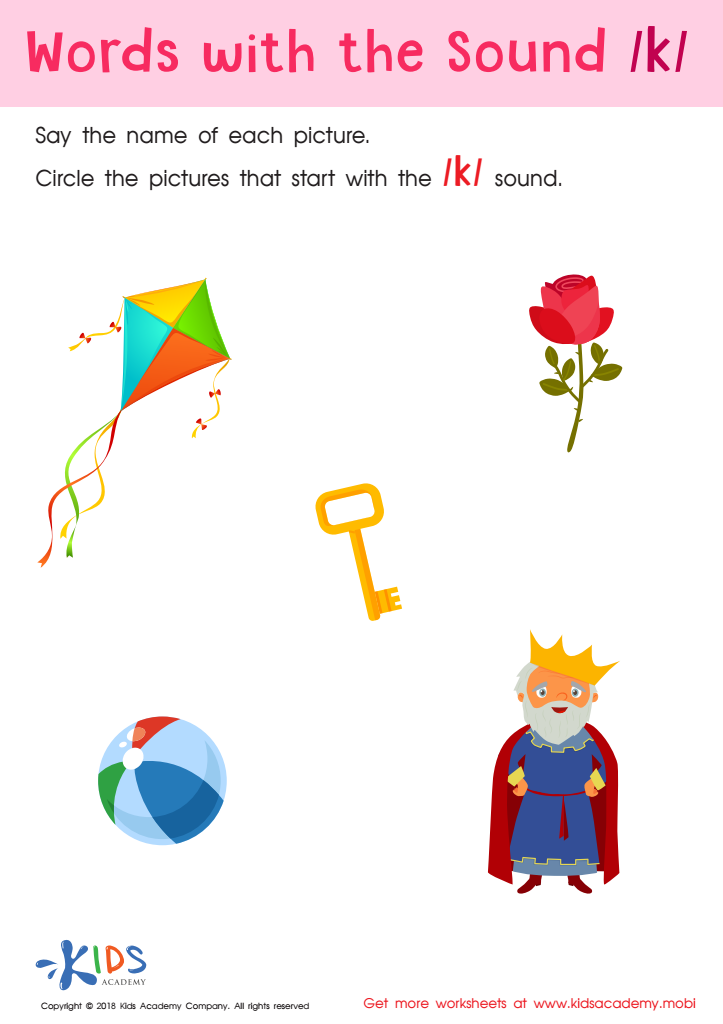
Help your preschooler master the hard "k" sound with this fun worksheet from Kids Academy! Ask your child to say each picture aloud and circle only the pictures that start with "k". This early reading exercise will boost phonics skills and is sure to be loved by your little learner!
Words with sound k Reading Worksheet

Worksheet


Reading proficiency in early childhood, specifically for ages 4-8, is crucial for a child's overall academic success and lifelong learning. During these formative years, children develop foundational skills that set the stage for future literacy. Proficient reading not only enhances vocabulary and comprehension but also boosts critical thinking and communication skills.

Parents and teachers play an essential role in fostering a love for reading and ensuring that children achieve literacy milestones. Engaging with children through reading activities, storytelling, and songs cultivates a positive attitude towards learning, making it fun and enjoyable. Children who are proficient readers tend to perform better academically across subjects, as reading is integral to accessing information in math, science, and social studies.

Moreover, struggles in reading can lead to frustration and a lack of confidence, which may discourage students from engaging in school. By monitoring and supporting reading development, parents and teachers can help identify challenges early on, allowing for timely interventions. Investing time and resources into developing reading skills provides children with the tools they need to succeed both in school and beyond, ultimately building a solid foundation for lifelong education and personal growth.