Reading comprehension Normal Short Vowels Worksheets for Ages 4-8
7 filtered results
-
From - To
Enhance your child's reading skills with our Reading Comprehension Normal Short Vowels Worksheets for Ages 4-8. Perfectly designed for early learners, these engaging worksheets focus on short vowel sounds to boost your child's phonetic development. Each exercise combines fun activities and vibrant illustrations to make learning enjoyable and effective. By completing these worksheets, young readers will improve their word recognition, pronunciation, and comprehension skills. Ideal for both classroom use and at-home practice, our resources offer a solid foundation for your child's literacy journey, making reading a fun and rewarding experience. Start building essential skills today!
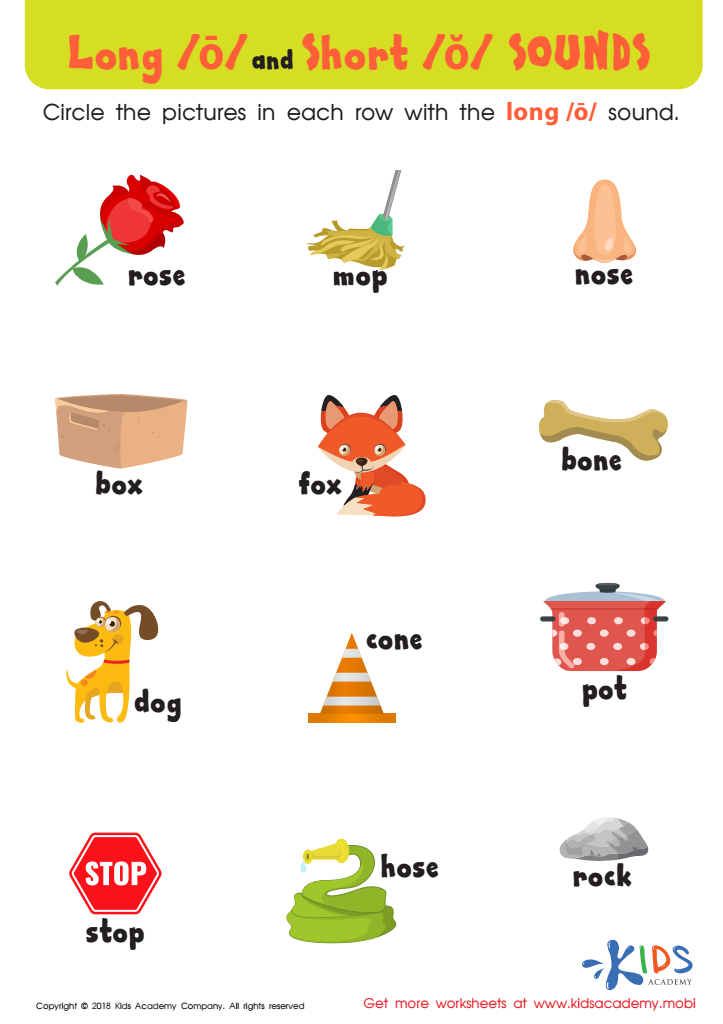
Reading: Long O and Short O Sounds Worksheet
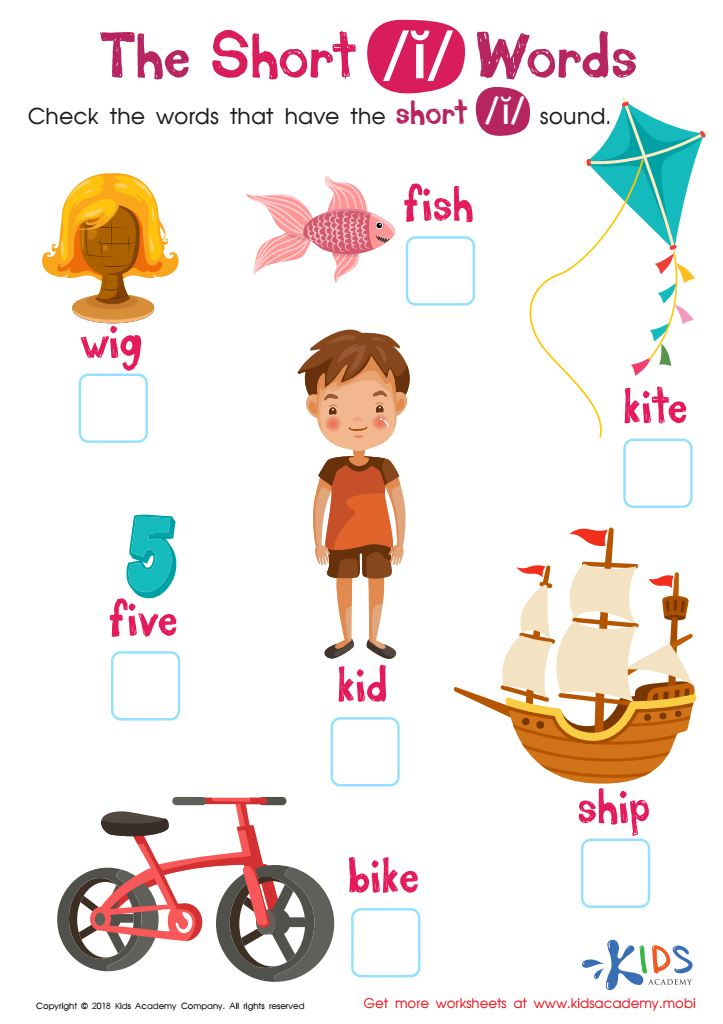
The Short I Words Reading Worksheet
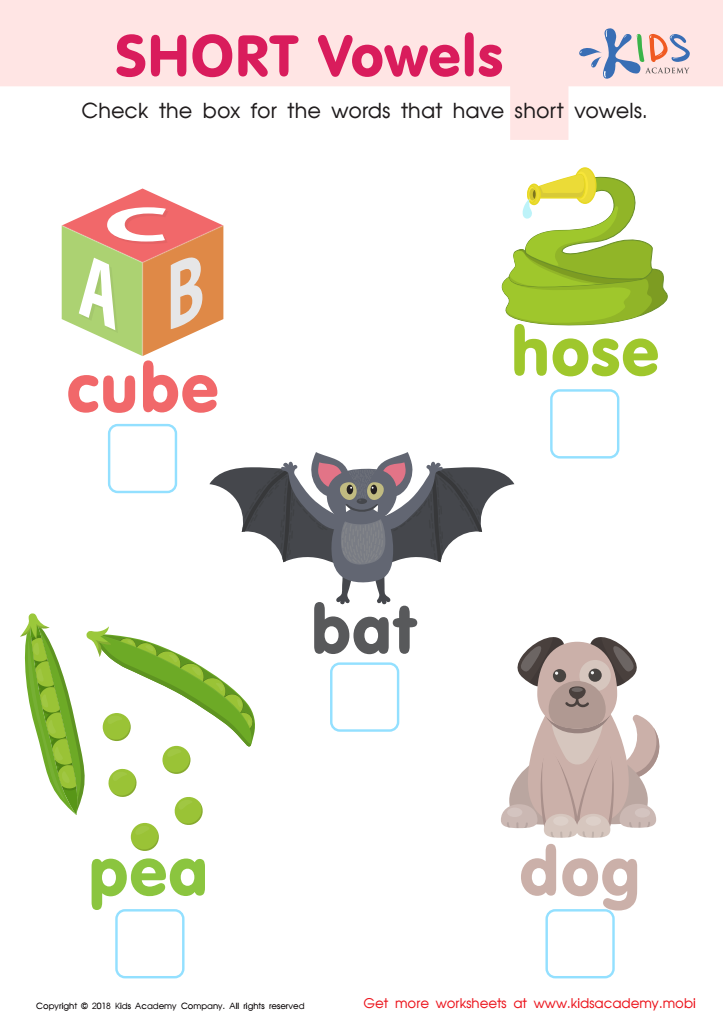
short vowels Worksheet

Short Vowels /e/, /i/, and /u/ Worksheet
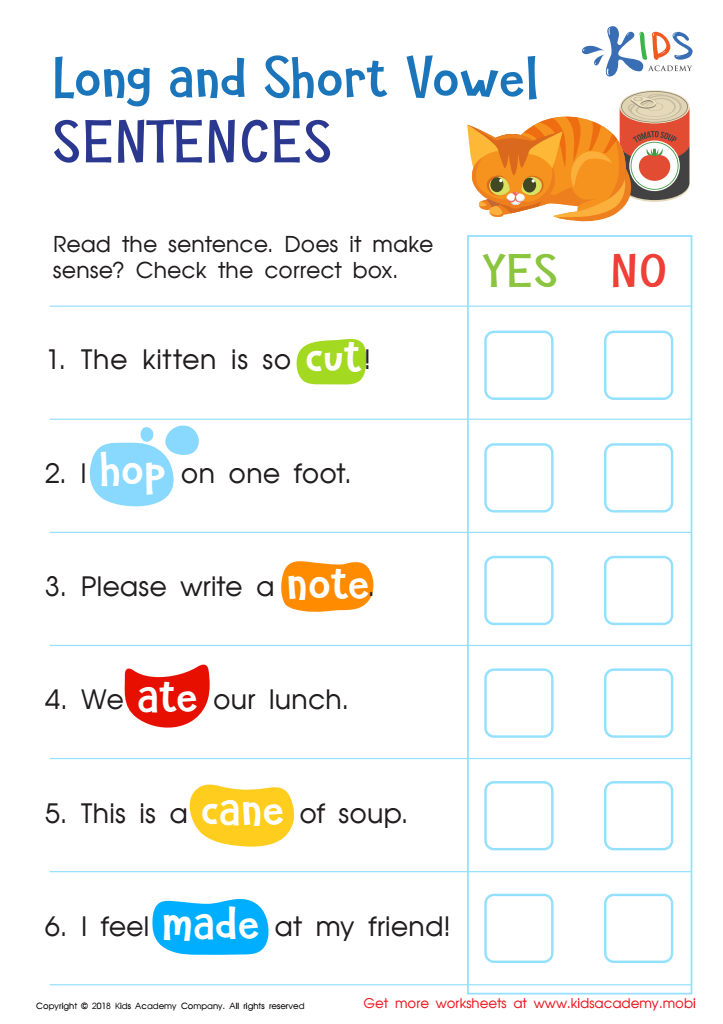
Long and Short Vowel Sentences: Assessment Worksheet
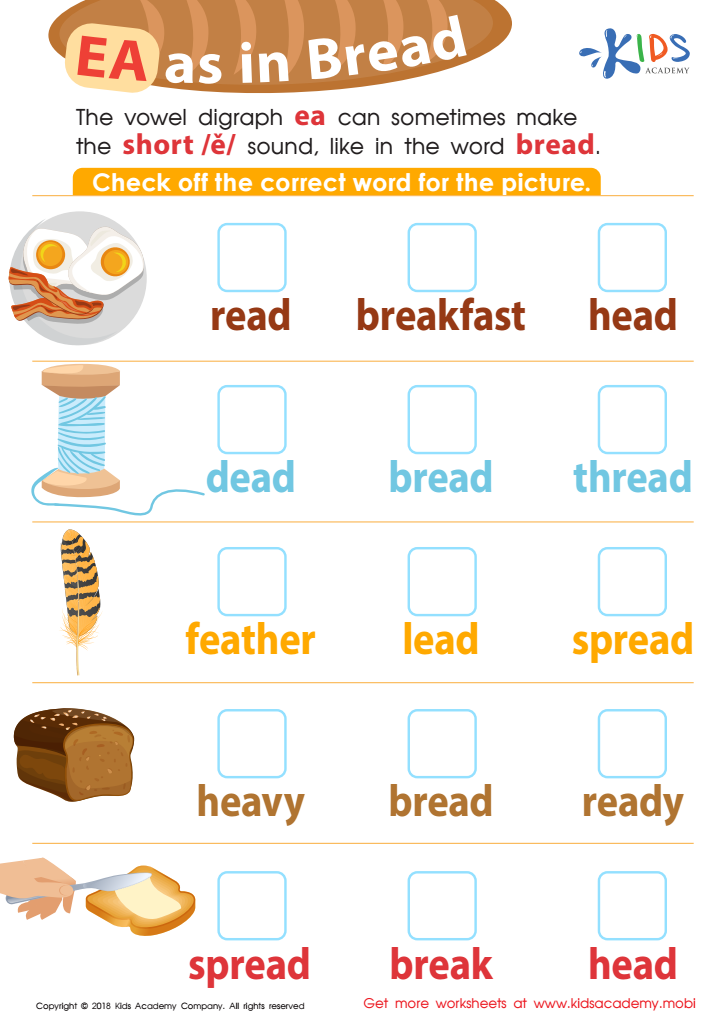
Reading: EA as in Bread Worksheet
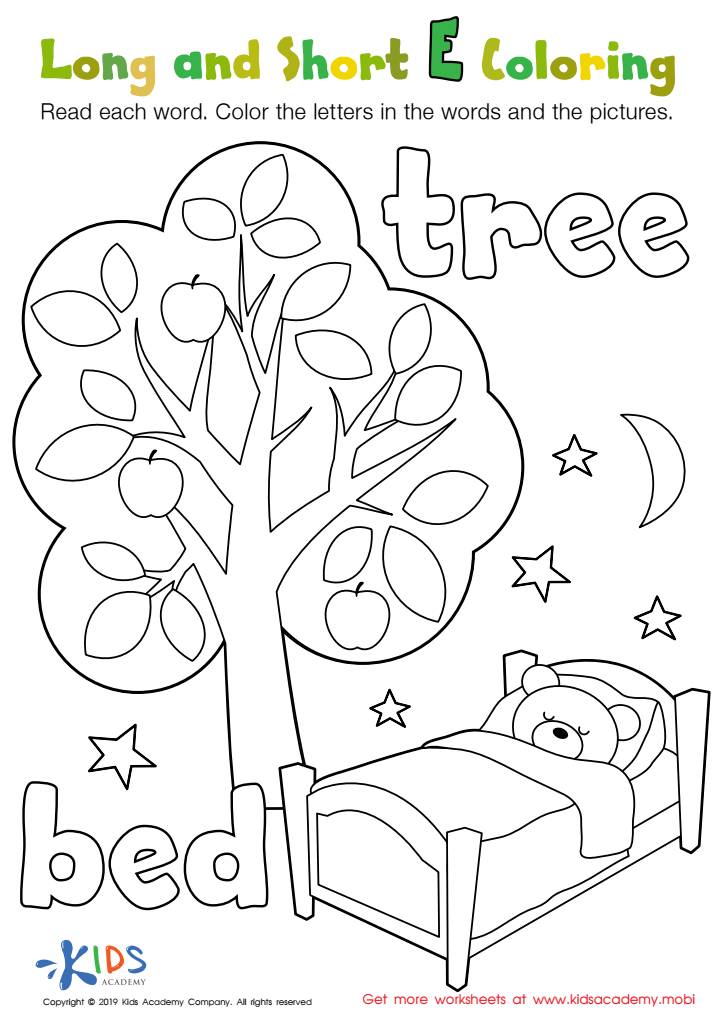
Long and Short E Worksheet
 Assign to My Students



Reading comprehension and the mastery of normal short vowels for children ages 4-8 are foundational skills that deeply impact their future academic success and overall development. At this early stage, children are in a critical period for language acquisition, where they develop the building blocks for reading fluency.
Short vowels are essential because they appear frequently in simple, everyday words like "cat," "bed," "pig," "dot," and "cup." Proficiency in recognizing and pronouncing these vowels enables young readers to decode and blend sounds effectively, which is crucial for reading accuracy. When children confidently understand short vowels, they can more easily progress from sounding out words to reading fluently, fostering a love for reading and learning.
Reading comprehension begins with the ability to parse and understand individual words and sentences. As children grasp vowel sounds and the basics of phonics, they're better equipped to understand the meaning behind the text. This comprehension is essential not just for reading, but for learning across all subjects—including math, science, and social studies—where reading instructions and problem-solving exercises are fundamental.
Moreover, early success in reading enhances a child's confidence and engages their curiosity, setting a positive trajectory for all future learning endeavors. Parents and teachers thus play a critical role in supporting this development, using engaging activities, consistency, and encouragement to build these pivotal language skills.








