Filters

7 filtered results

Clear all filters
Favorites
With answer key
Interactive

7 filtered results

Difficulty Level

Grade


Enhance your child's reading journey with our Reading Comprehension Normal Vowel Blends Worksheets for ages 4-8. Specially designed to improve early literacy, these engaging activities focus on vowel blends, helping young learners recognize common patterns in words. Through enjoyable exercises, kids will boost their reading fluency and comprehension skills. Our resources seamlessly integrate educational value with fun, ensuring a rewarding learning experience. Perfect for both classroom and home use, these worksheets are an excellent tool for building a strong linguistic foundation. Make reading delightful and educational with Kids Academy. Download now and watch your child thrive!

Check out this FREE Trial Lesson on Vowel Blends for age 4-8!

Vowel Teams

Favorites
With answer key
Interactive
  • 4-8
  • Reading comprehension
  • Vowel Blends
  • Normal
Reading: Long E and IE Worksheet

Reading: Long E and IE Worksheet

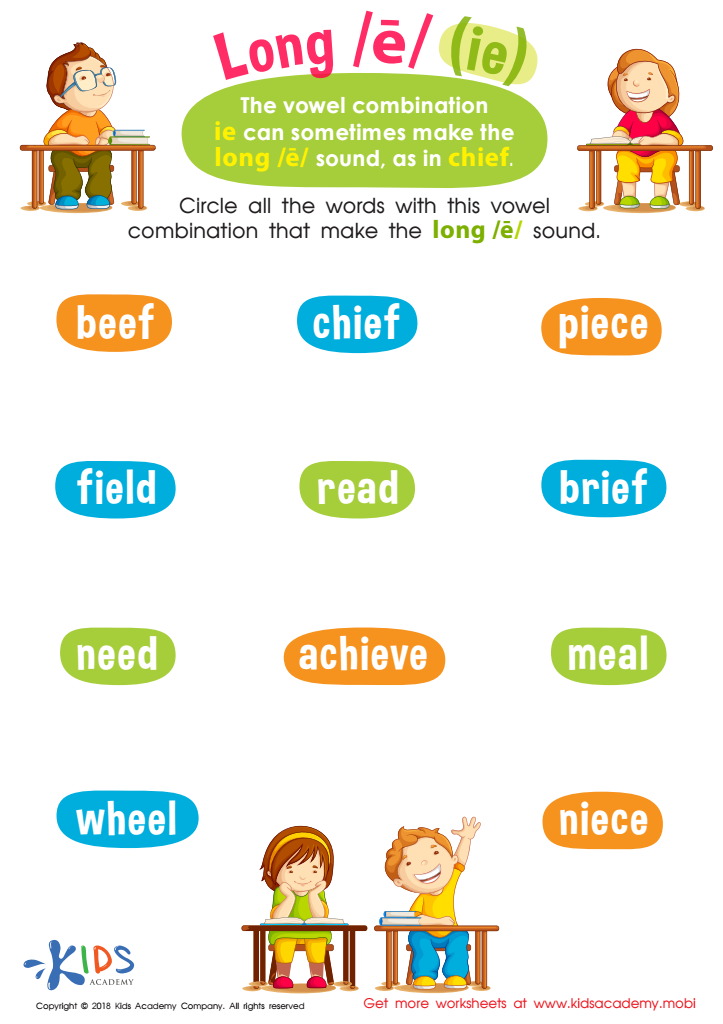
Ask your child to name some words with the long /e/ sound they hear every day. Then, read aloud all the words in the worksheet with them. Ask them to circle the words containing ie that make this sound.
Reading: Long E and IE Worksheet
Worksheet
short vowels Worksheet

short vowels Worksheet

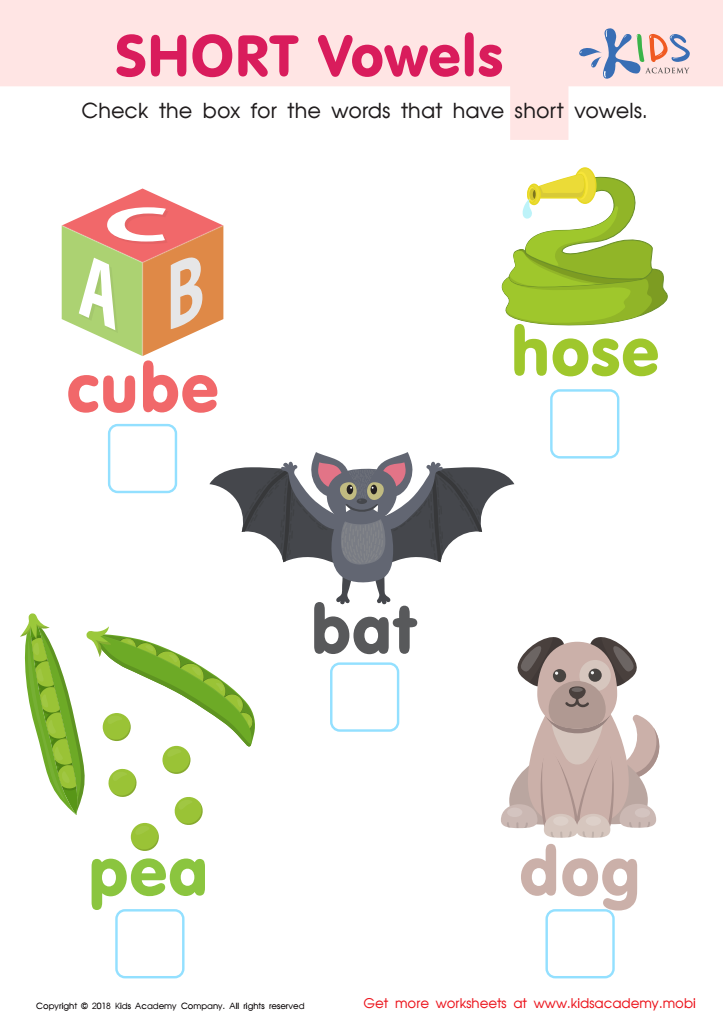
Say "dog" and notice how long it takes to pronounce the vowel. Is it short or long? Compare it to "pea" and use this worksheet to quickly assess your child's mastery. Have them name each picture and listen for the vowel sounds. Only check the boxes for words with short vowel sounds.
short vowels Worksheet
Worksheet
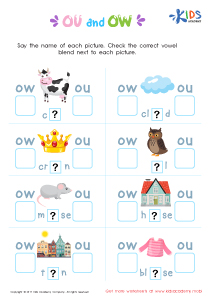
Reading: OA or OW Worksheet

Reading: OA or OW Worksheet

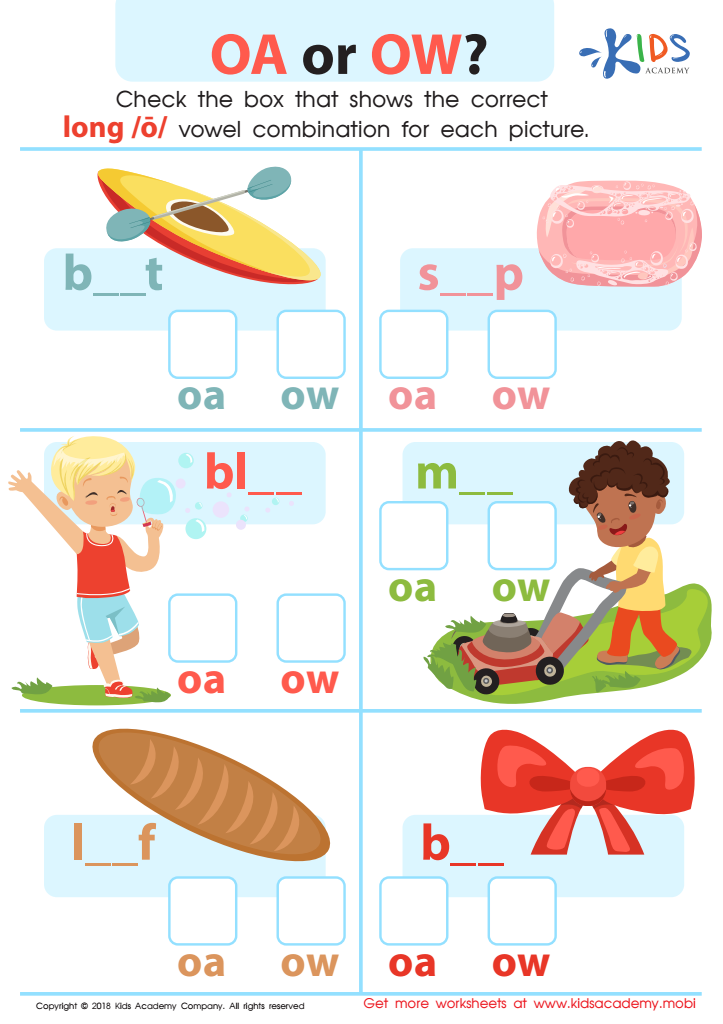
This printable worksheet helps young and emergent readers with decoding words and understanding digraphs (two letters with one sound). It requires students to complete the spelling for each word based on the picture, focusing on /oa/ and /ow/ spellings. It's ideal for a reading classroom and for spelling practice.
Reading: OA or OW Worksheet
Worksheet
Vowel diphthongs oi oy worksheet

Vowel Diphthongs OI OY Worksheet
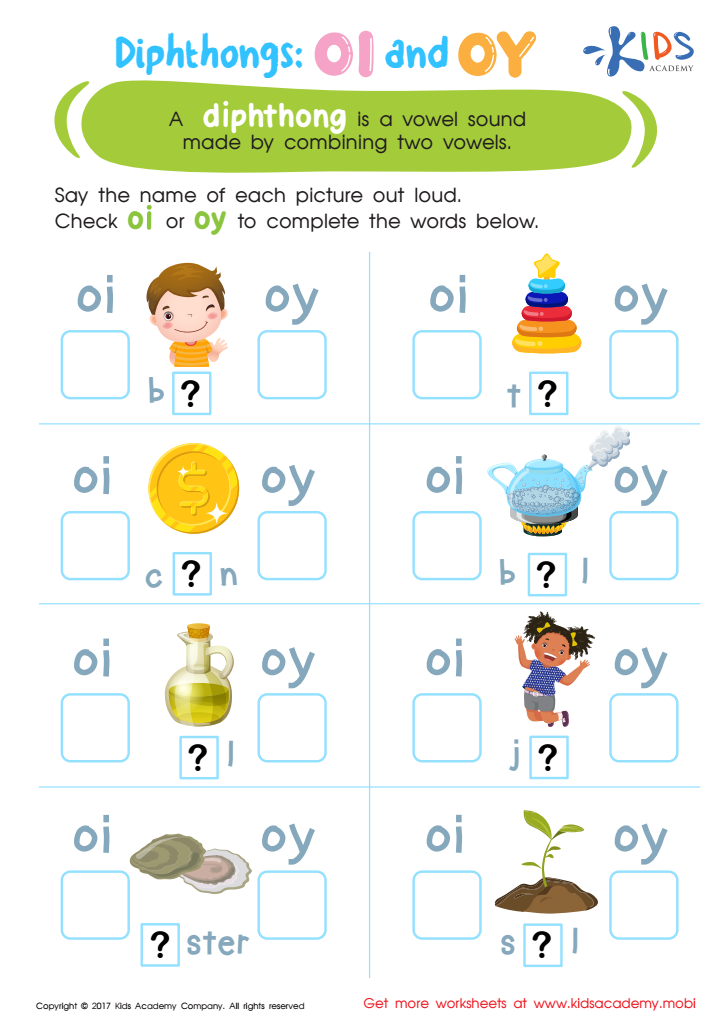
It'll help them read and spell accurately. This fun activity is a helpful way to learn tricky spellings of oi and oy diphthongs. It also aids in reading and spelling comprehension.
Vowel Diphthongs OI OY Worksheet
Worksheet
Reading: AW and AU Words Worksheet

Reading: AW and AU Words Worksheet

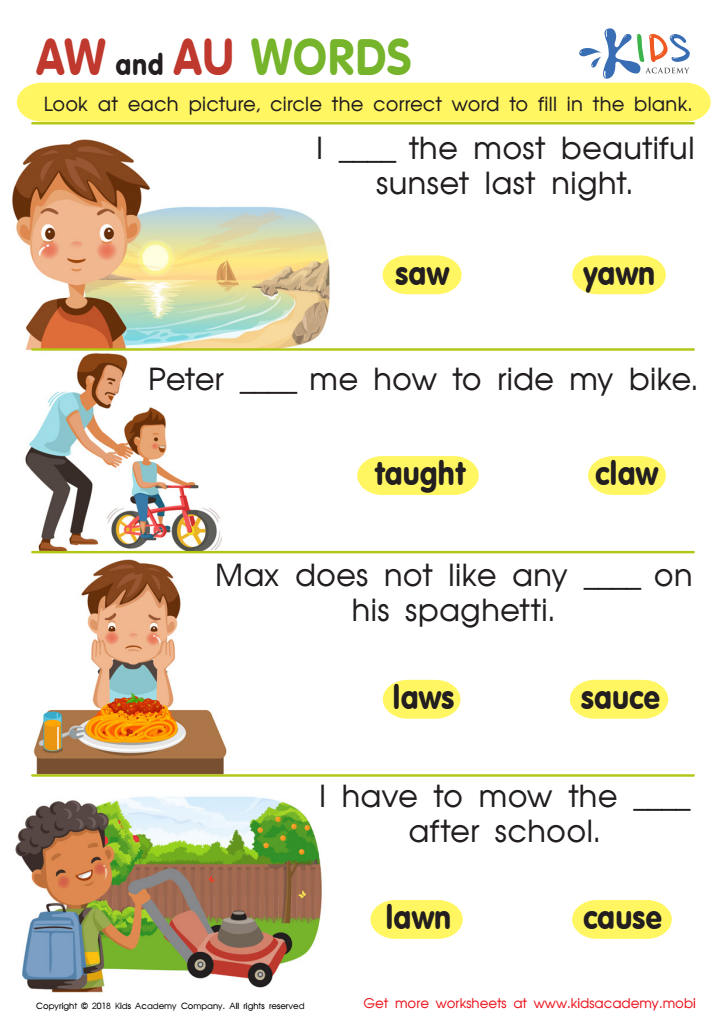
This worksheet helps kids recognize that /au/ and /aw/ can make the same sound. Students read sentences and pick the correct word with one of the digraphs. Understanding digraphs improves decoding and reading fluency. Perfect for reading and phonics classes.
Reading: AW and AU Words Worksheet
Worksheet
Reading: EA as in Bread Worksheet

Reading: EA as in Bread Worksheet

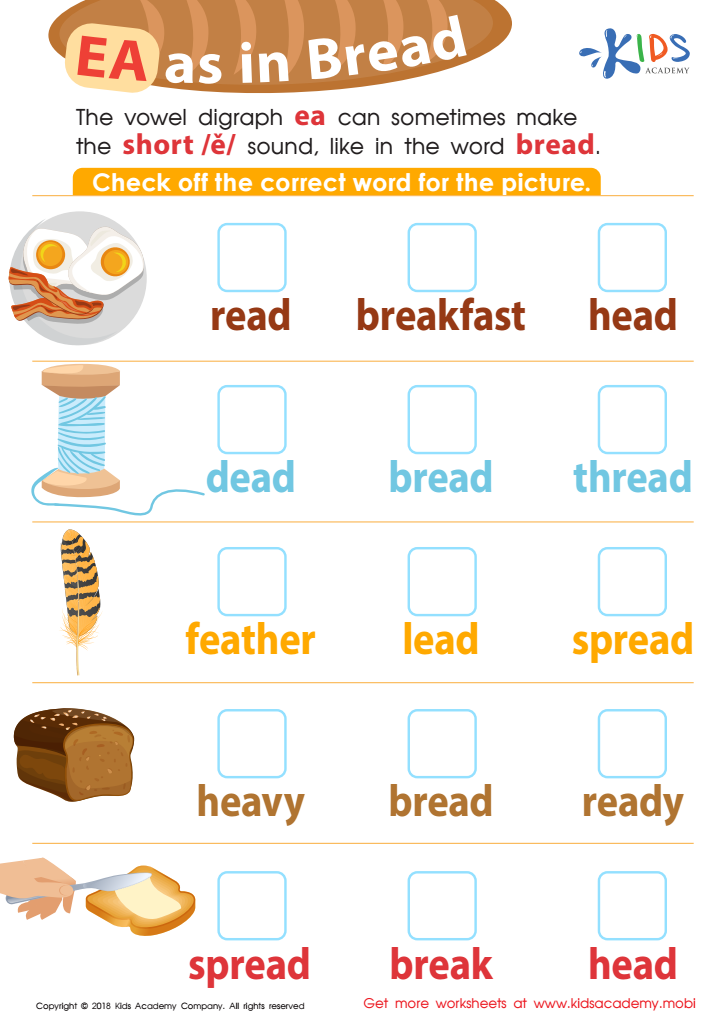
The vowel digraph ea can be read in two ways. Examples of the long sound are "read" and "lead"; examples of the short sound are "bread" and "head". Ask your kids to give you more examples and then have them check off the correct word for the pictures on this worksheet. This will help them understand the ea sound.
Reading: EA as in Bread Worksheet
Worksheet
Long and Short E Worksheet

Long and Short E Worksheet

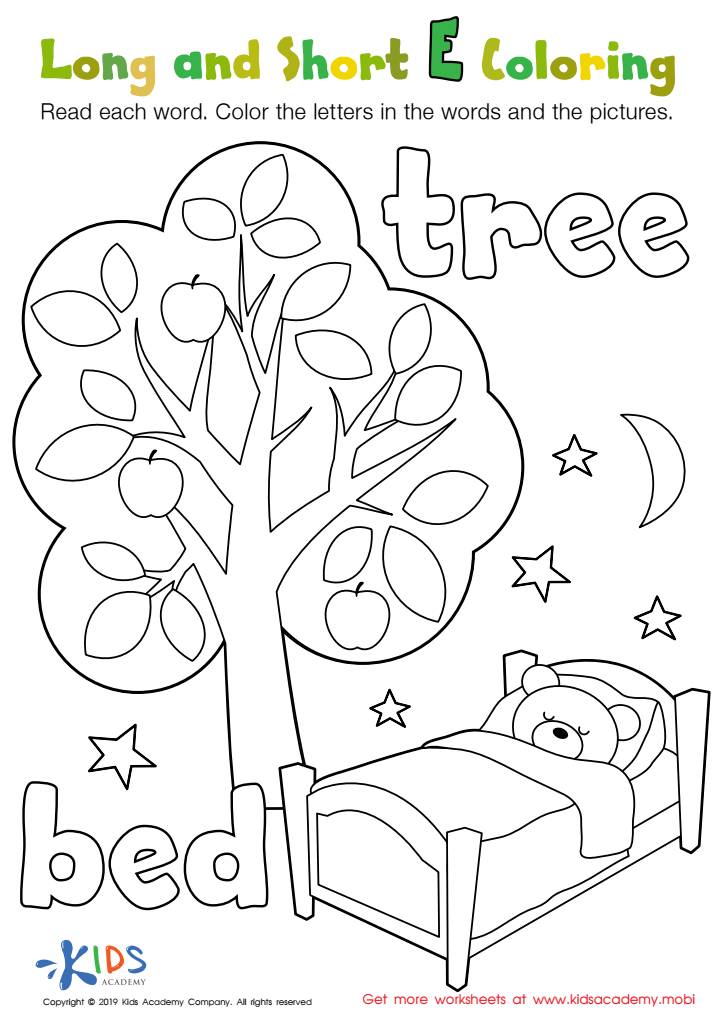
This fun printout makes learning phonics enjoyable for Grade 3 students. Get them to read the words “tree” and “bed” to recognize the different sounds of the letter “E”. After hearing the words they can color the words and the pictures to understand differences between long and short vowels.
Download (PDF)
Assign to My Students
Long and Short E Worksheet
Worksheet


Reading comprehension is a cornerstone of educational development, particularly for children between the ages of 4 and 8. During these formative years, mastering normal vowel blends—combinations of vowels that produce a specific sound in a word—is crucial for several reasons.

Firstly, understanding vowel blends enhances phonemic awareness, which is the ability to recognize and manipulate individual sounds in words. This skill is foundational for decoding new words, making it easier for children to progressively engage with more complex texts. As they become proficient, their confidence in reading grows, fostering a positive attitude towards learning.

Secondly, proficiency in vowel blends directly impacts reading fluency. When children can effortlessly blend vowel sounds, their reading becomes more automatic and expressive. This fluency allows them to concentrate on comprehending the material rather than getting stuck on pronunciation, thus improving overall comprehension.

Furthermore, reading comprehension is tied to academic success across subjects. A solid grasp of blending sounds equips children with the tools to understand instructions, follow narratives, and engage meaningfully with academic content. Early development in this area sets the stage for lifelong learning, critical thinking, and effective communication skills.

Parents and teachers should prioritize vowel blends in their reading instruction to ensure that children build a robust foundation for all future learning, thereby supporting their long-term academic and personal development.