Normal Vowels and Consonants Worksheets for Ages 4-8 - Page 2
26 filtered results
-
From - To
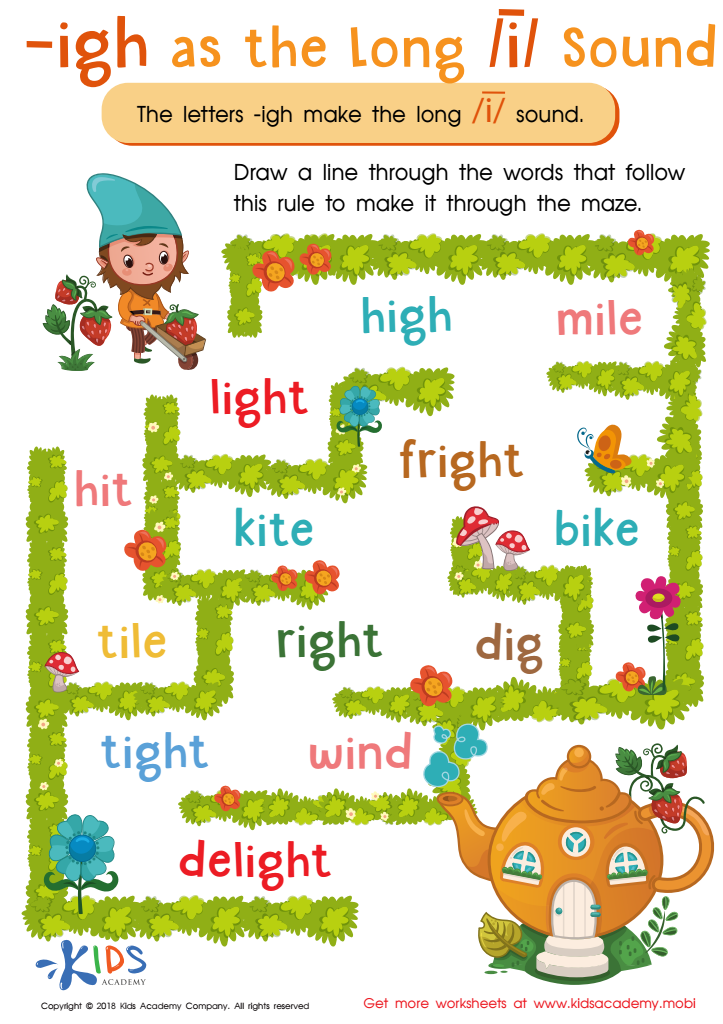
Reading: IGH as Long I Worksheet
 Assign to My Students
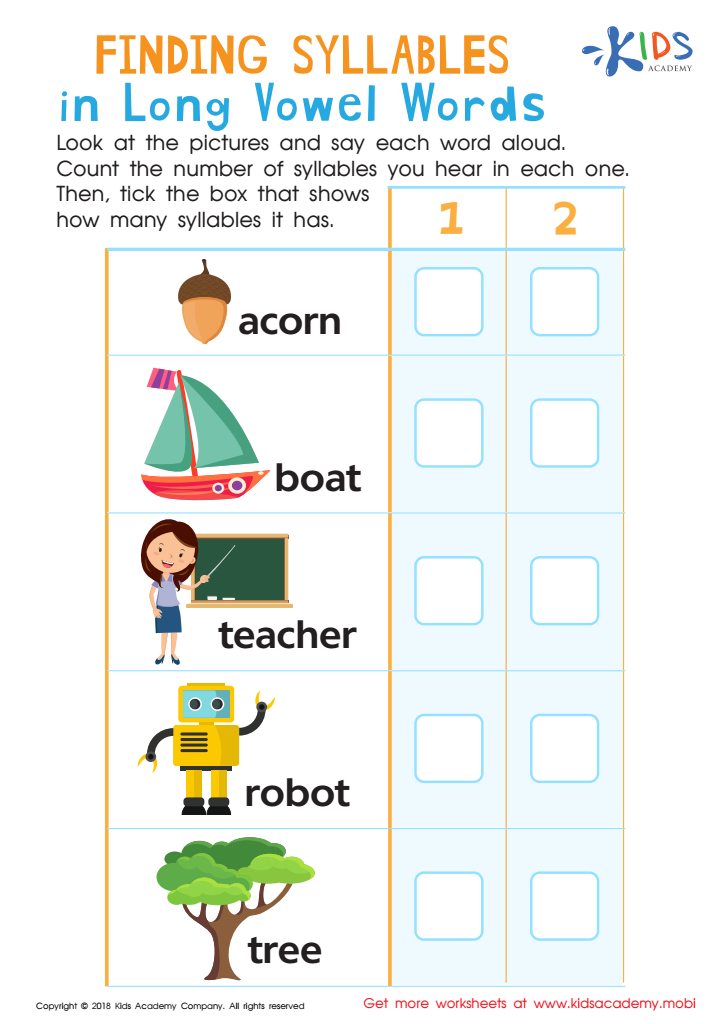
Finding Syllables in Long Vowel Words Worksheet



Understanding normal vowels and consonants is crucial for children ages 4-8 as it forms the foundation of their reading and writing skills. During this developmental stage, children begin to make connections between sounds and letters, making it essential for parents and teachers to emphasize these phonetic elements.
Familiarity with vowels (a, e, i, o, u) and consonants increases children's ability to decode words, recognize patterns, and pronounce them accurately. This skill is fundamental for reading fluency, helping children transition from sounding out words to reading with comprehension. As children develop spelling abilities, a solid grasp of consonant and vowel usage allows them to construct words correctly, enhancing their written communication skills.
Moreover, understanding normal vowels and consonants contributes to language development. Children who master these phonetic elements are more capable of expanding their vocabulary and using complex sentence structures, fostering their ability to express thoughts and ideas clearly.
Involving parents and teachers in this foundational learning ensures that children receive the support needed to become confident, competent readers and communicators. By focusing on normal vowels and consonants, they help set the stage for lifelong literacy and academic success.






