Normal Middle Vowel Worksheets for Ages 4-8
4 filtered results
-
From - To
Enhance your child's reading and phonetics skills with our Normal Middle Vowel Worksheets designed for ages 4-8. These engaging and colorful worksheets focus on identifying and mastering middle vowels, which are crucial for phonemic awareness and early literacy development. Tailored for young learners, each worksheet offers a variety of fun activities, including tracing, filling in the blanks, and matching exercises that promote active learning. Perfect for both home and classroom use, our worksheets help kids recognize the sounds and patterns of middle vowels while building confidence in their reading abilities. Download now and make learning vowels enjoyable!
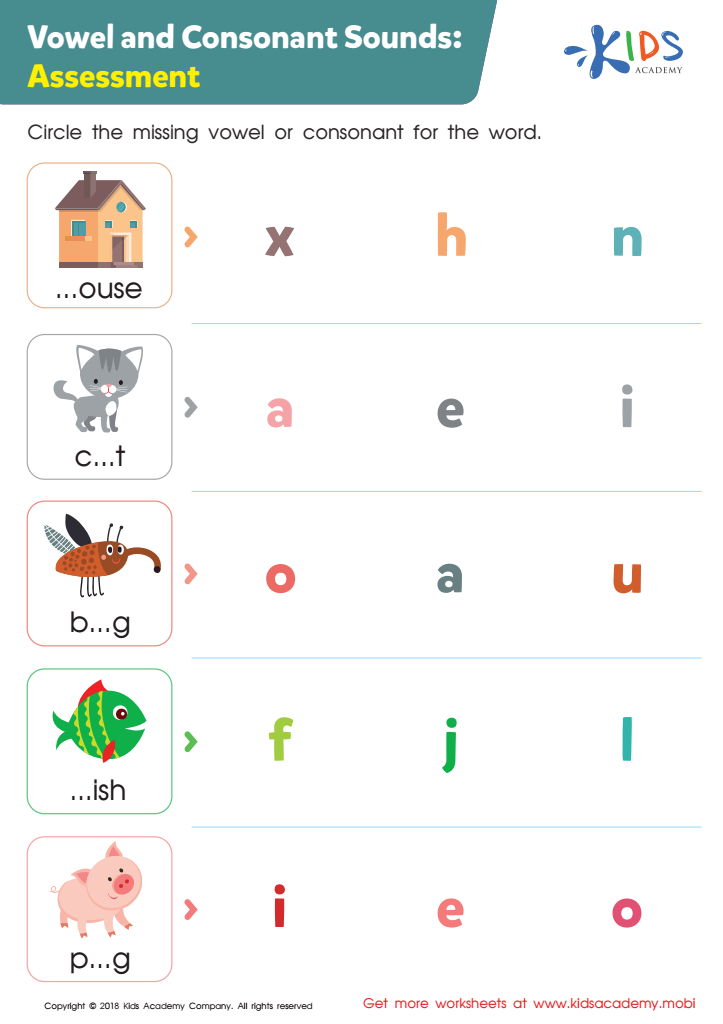
Vowel and Consonant Sounds: Assessment Worksheet
 Assign to My Students
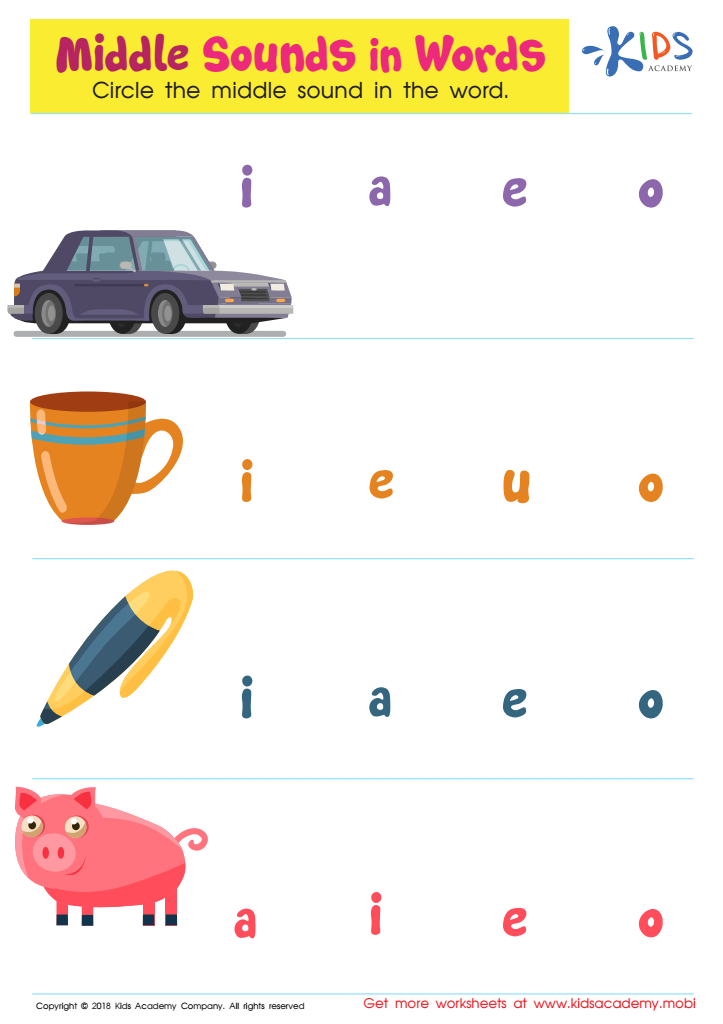
Middle Sounds in Words Worksheet
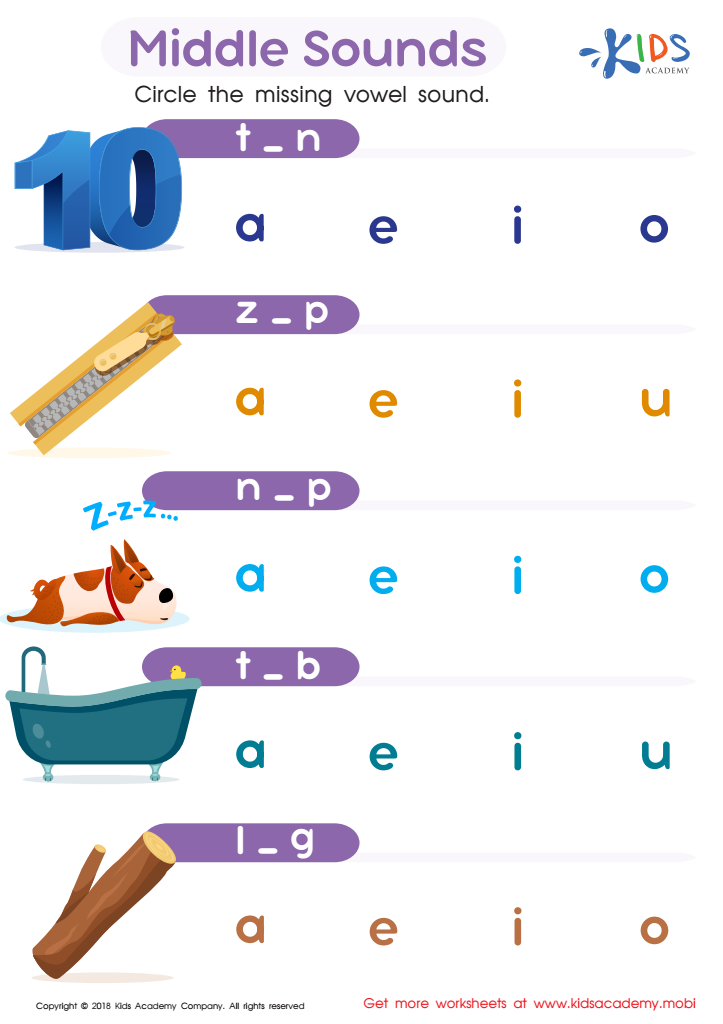
Middle Sounds Worksheet
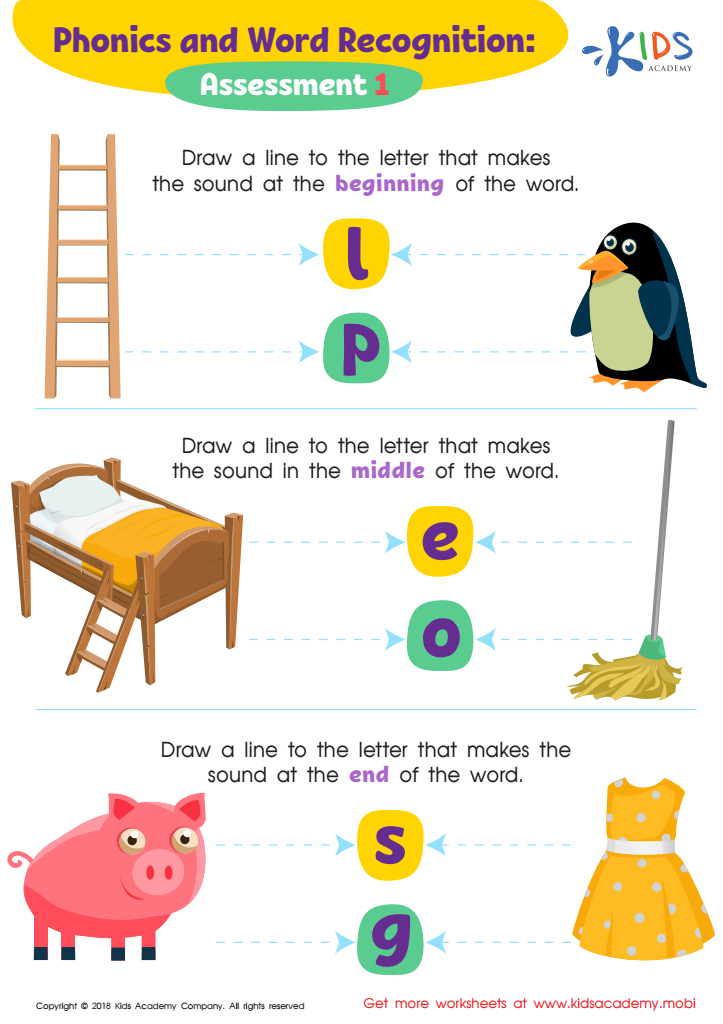
Phonics and Word Recognition: Assessment 1 ELA Worksheet



Parents and teachers should prioritize introducing and reinforcing middle vowel sounds in children aged 4-8 due to their foundational role in early literacy development. Middle vowels, or short vowels like /a/, /e/, /i/, /o/, and /u/, are essential for teaching children how to decode and blend words, which are crucial skills for reading.
Young learners often encounter challenges in phonemic awareness, and understanding middle vowels helps them distinguish between similar-sounding words. By focusing on these sounds, educators can enhance children's ability to segment and blend words, paving the way for successful reading and writing.
Moreover, mastering middle vowel sounds can significantly improve spelling. Given that many words in the English language rely on these vowels, consistent practice fosters phonetic spelling, reducing frustration and boosting confidence as children progress in their literacy journey.
Additionally, engaging activities focused on middle vowel sounds can make learning fun and interactive, capturing children’s interest and curiosity. Parents and teachers can facilitate a love for language and reading by ensuring that students build solid phonetic skills during these formative years. Ultimately, attention to middle vowel solidifies children's linguistic foundations, critically influencing their future academic success.