Addition Practice Normal Worksheets for Ages 4-8 - Page 2
39 filtered results
-
From - To
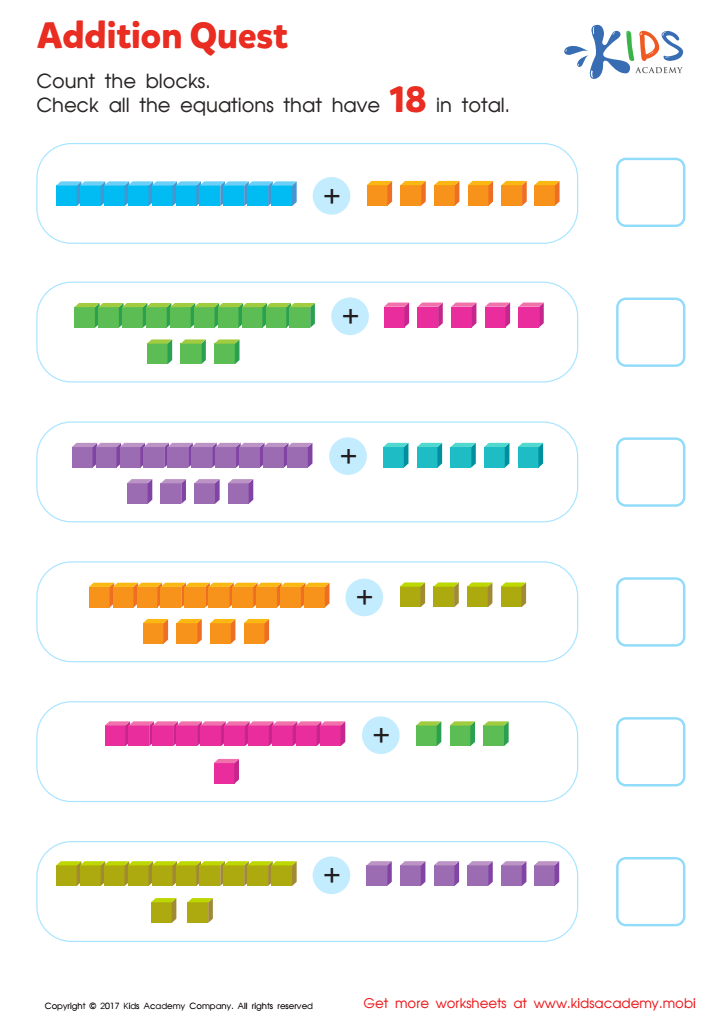
Addition Quest Worksheet: Part 2
 Assign to My Students
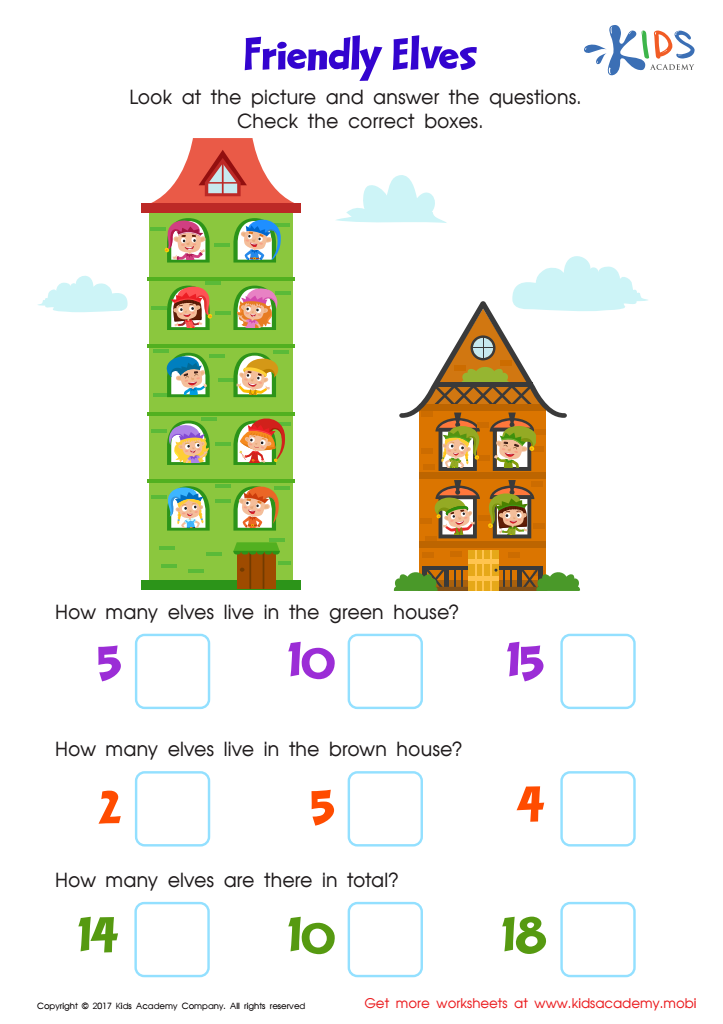
Place Value: Friendly Elves Worksheet
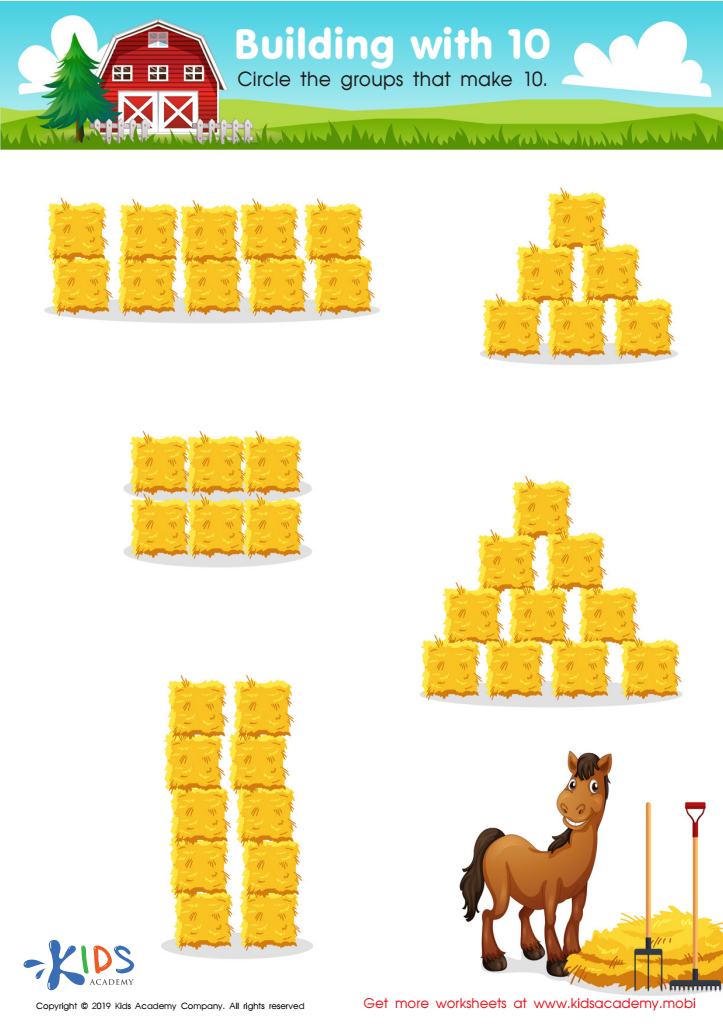
Building with 10 Worksheet
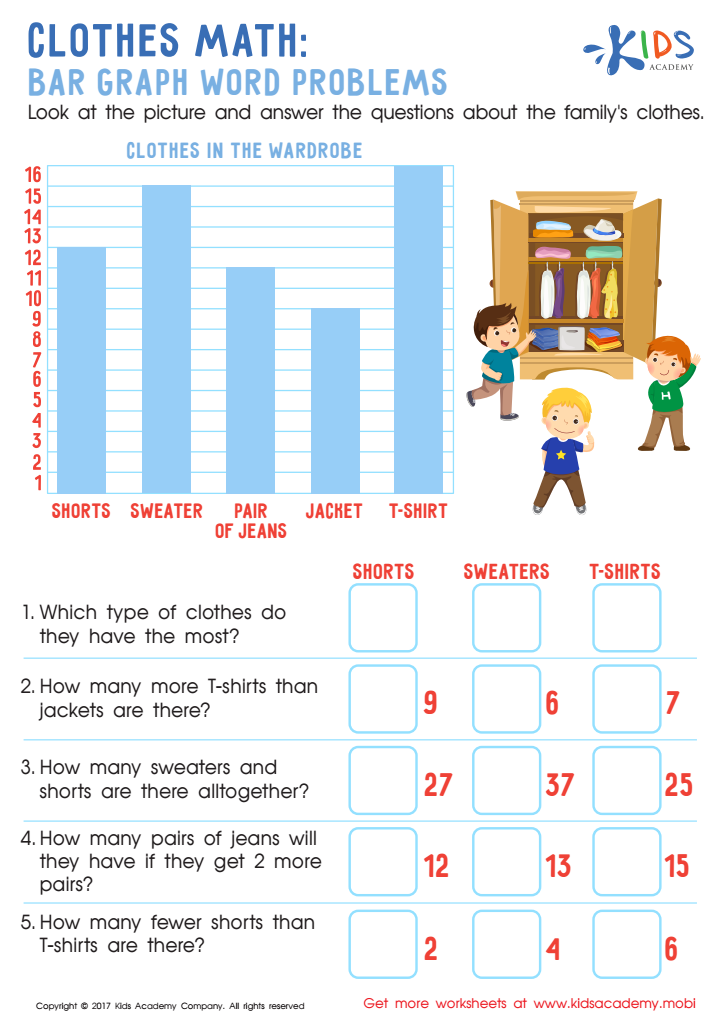
Clothes Math: Bar Graph Word Problems Worksheet
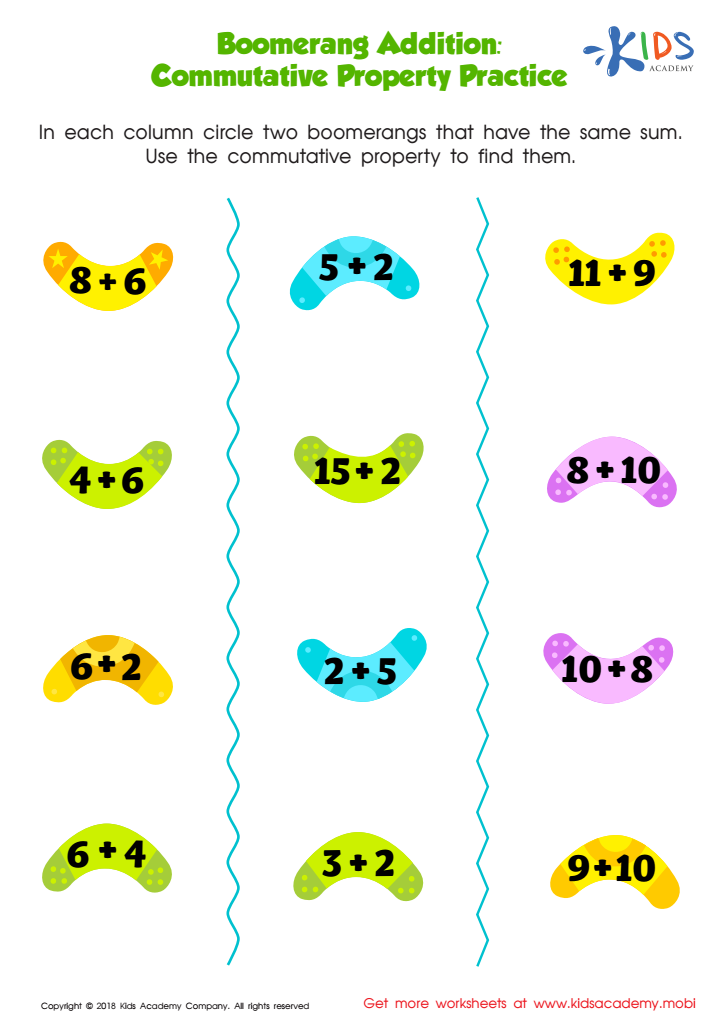
Boomerang Addition Worksheet
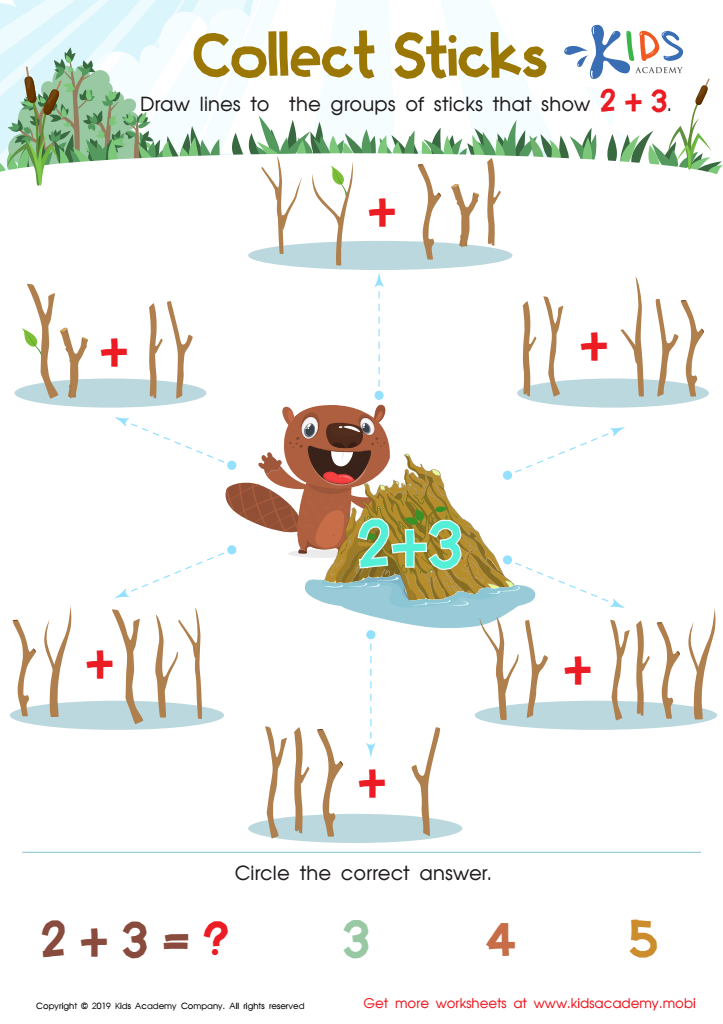
Collect Sticks Worksheet
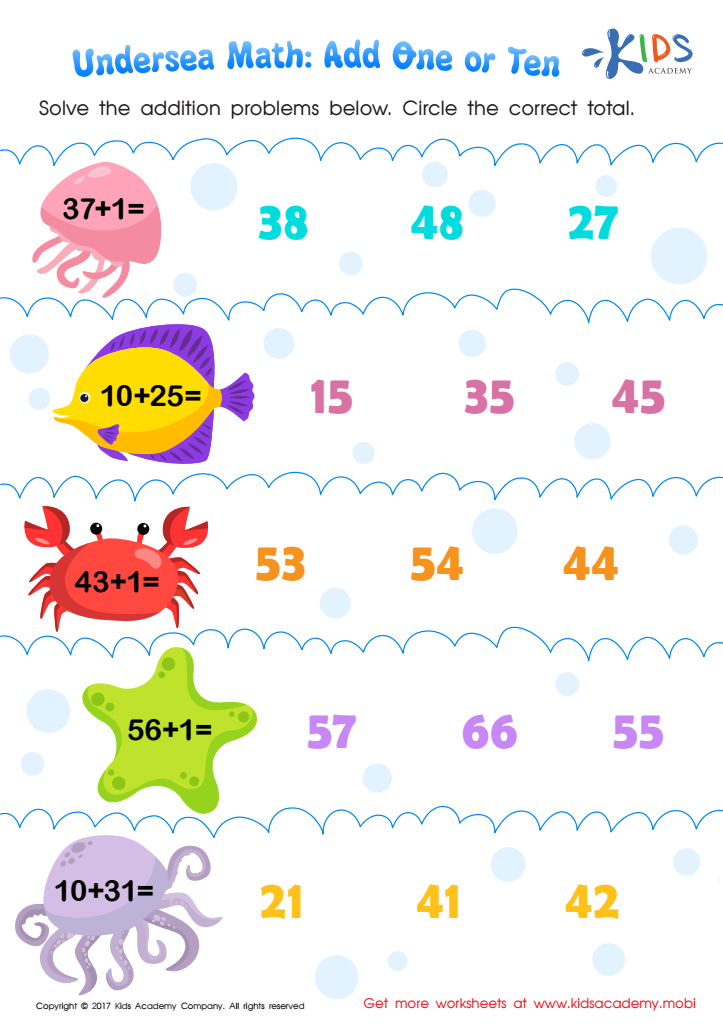
Undersea Math Worksheet
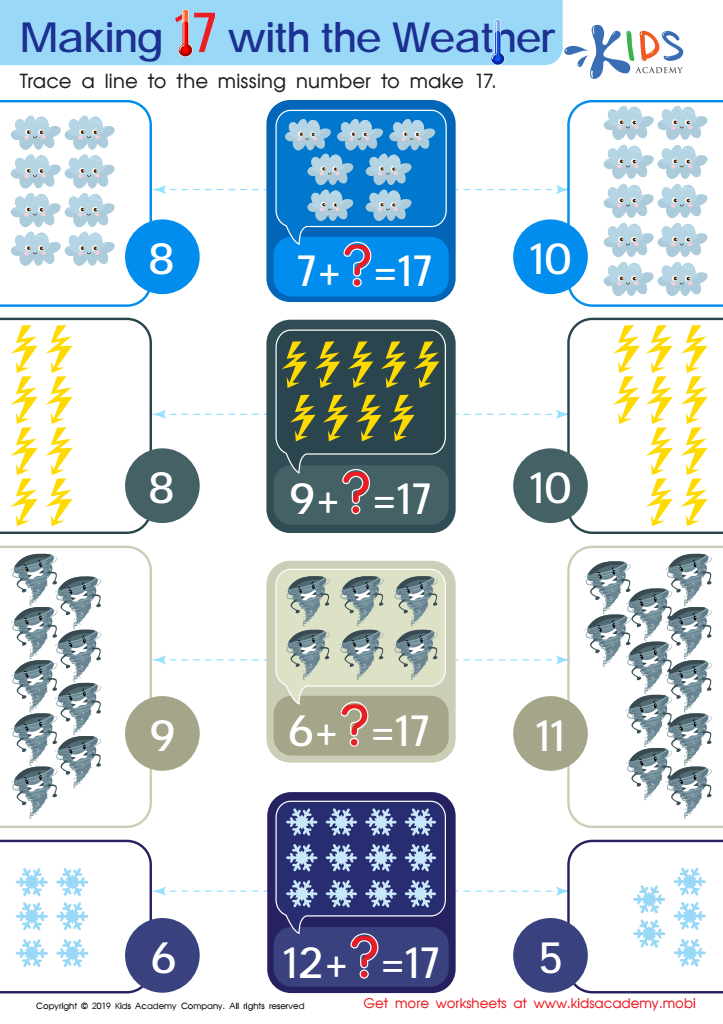
Making 17 with the Weather Worksheet
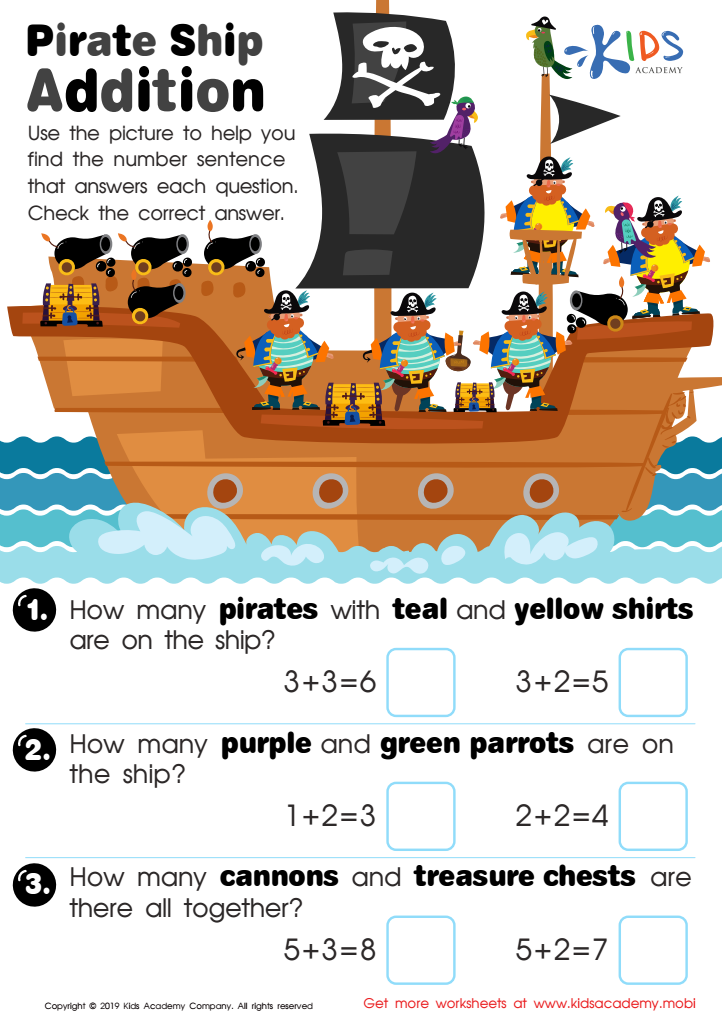
Pirate Ship Addition Worksheet
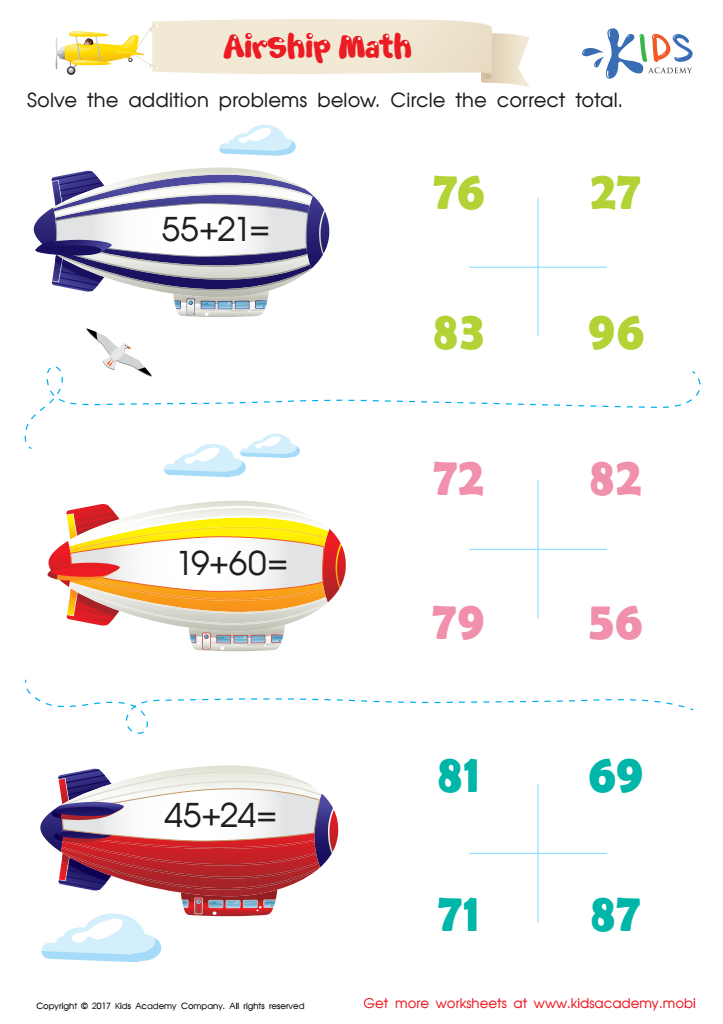
Airship Math Addition Printable
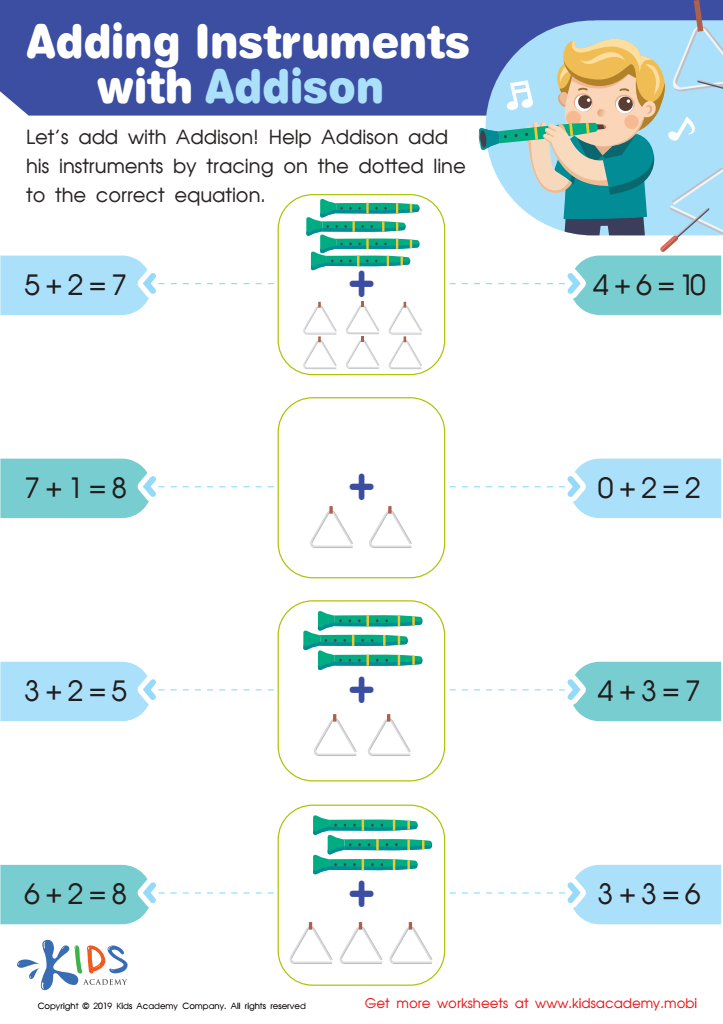
Adding Instruments with Addison Worksheet
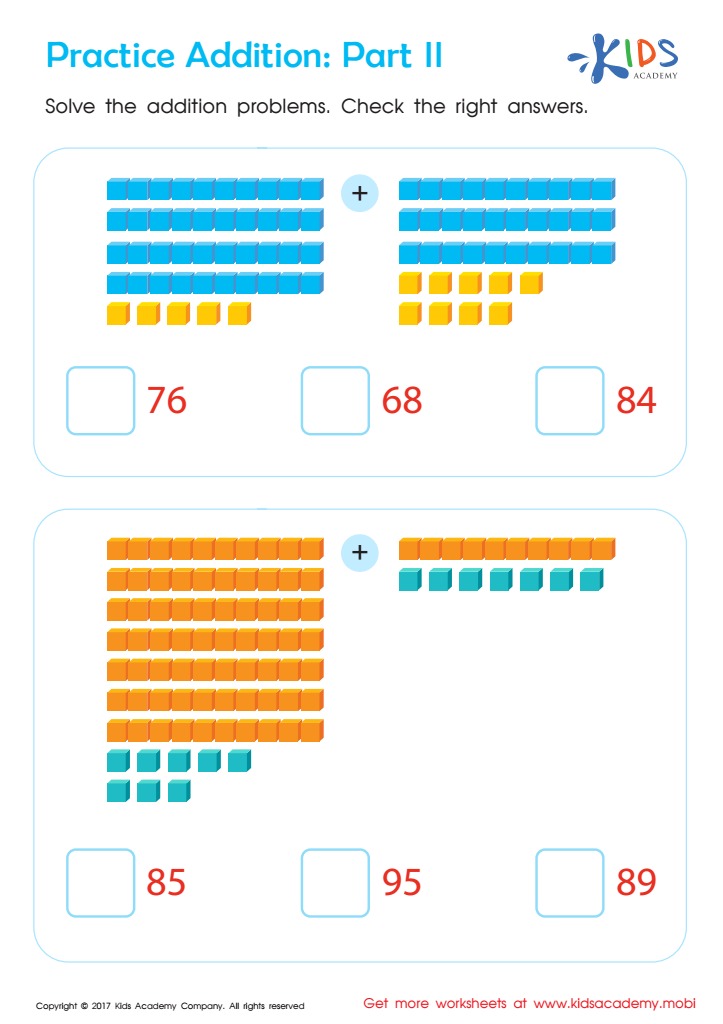
Practice Addition: Part 2 Worksheet
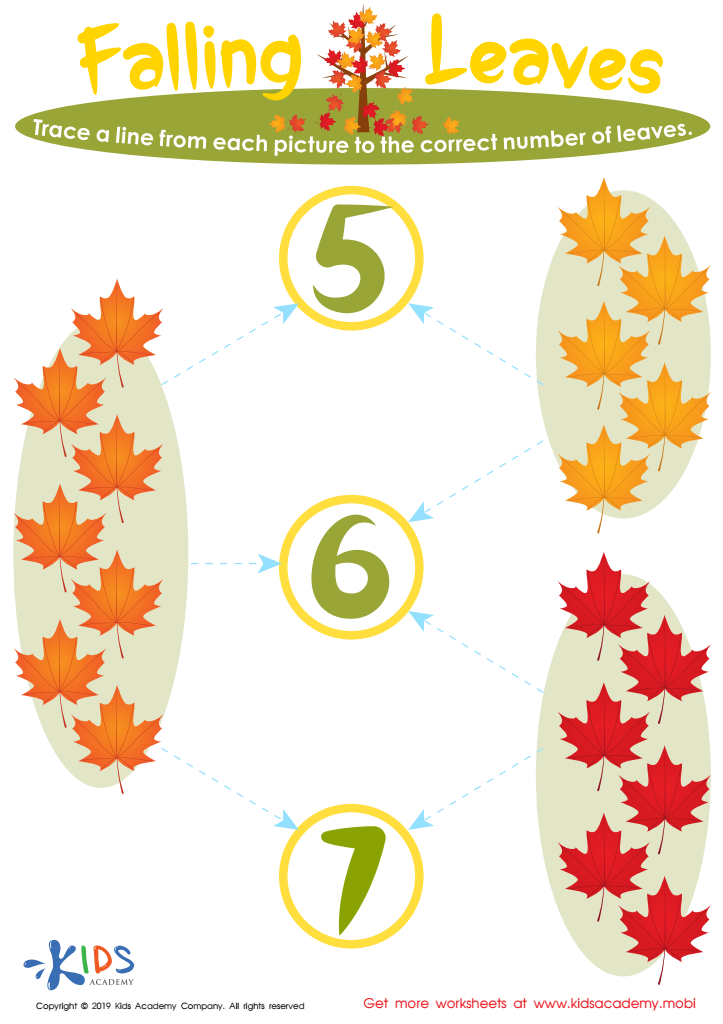
Falling Leaves Worksheet
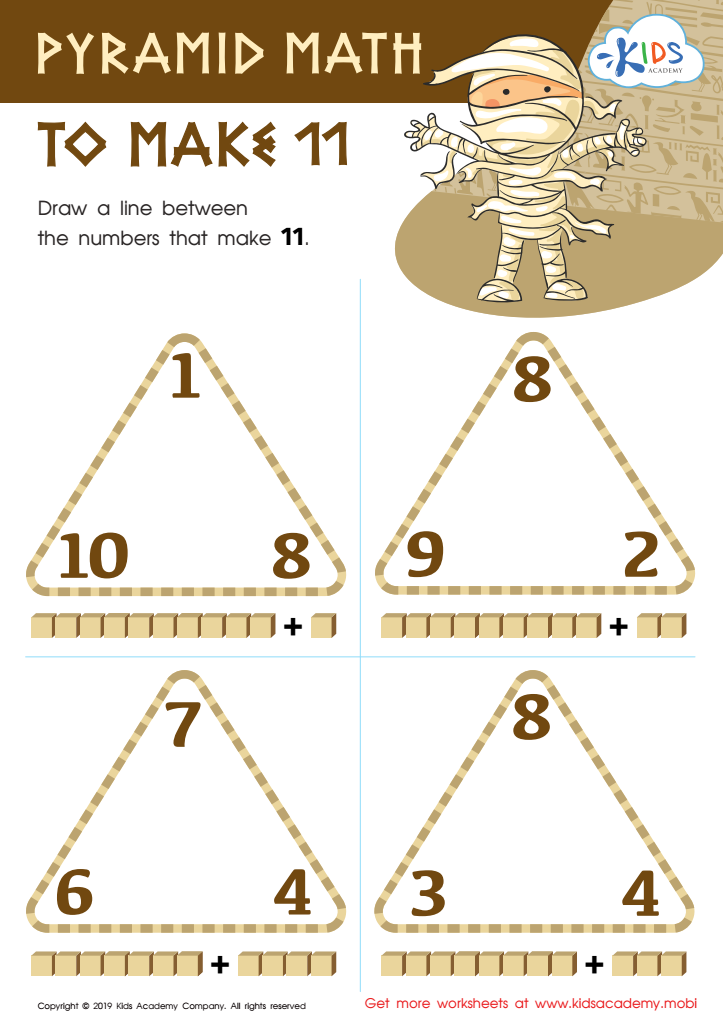
Pyramid Math to Make 11 Worksheet
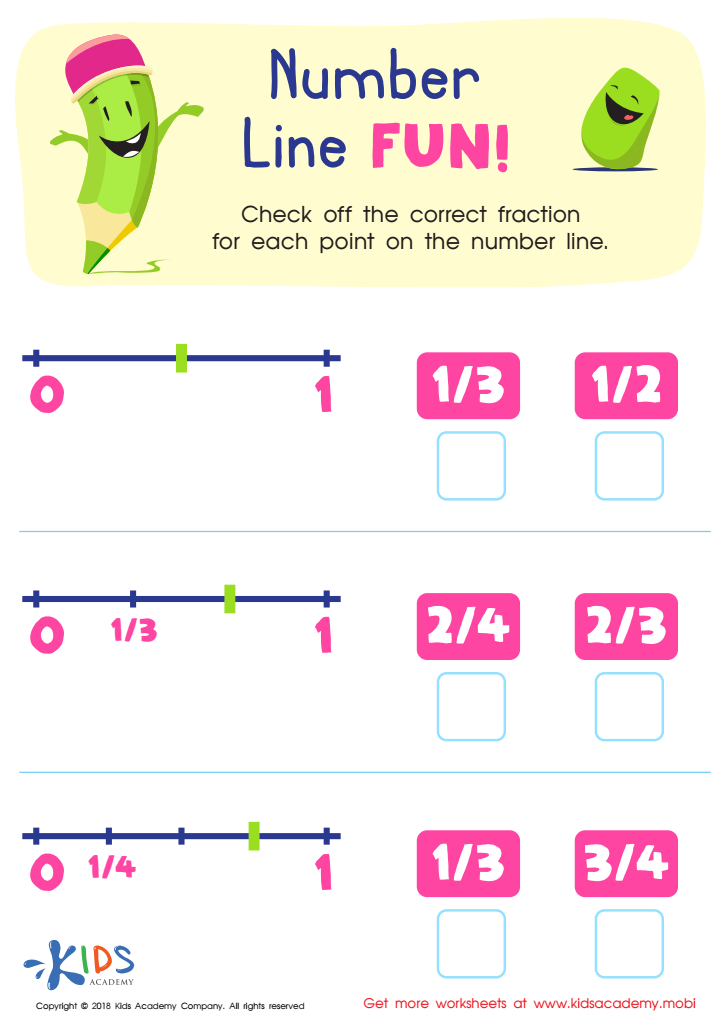
Number Line Fun Worksheet








Addition practice for ages 4-8 is crucial for several reasons. Firstly, it builds a foundational skill that is essential for later mathematical concepts. Understanding addition is not only about numbers; it fosters critical thinking and problem-solving abilities. Children learn to recognize patterns and relationships, which are essential for mathematical reasoning.
Moreover, this practice helps develop cognitive skills, enhancing memory and concentration. As children engage with addition problems, they strengthen their ability to focus and retain information, which is beneficial across all subjects, not just math.
Parents and teachers should also consider the social aspect of learning. Group activities around addition can foster collaboration and communication skills among peers. When children learn together, they build a sense of community and support each other’s learning processes.
Additionally, mastery of basic addition boosts a child’s confidence, encouraging them to take on more complex challenges as they progress. It empowers young learners to explore mathematics without fear, paving the way for a positive attitude toward STEM subjects.
In sum, addition practice is not merely an academic exercise; it lays the groundwork for overall cognitive development and emotional resilience, making it a priority for both parents and educators.








