Comparing sizes Normal Worksheets for Ages 4-8
3 filtered results
-
From - To
Discover engaging "Comparing Sizes" worksheets for ages 4-8 at Kids Academy! These expertly designed activities help young learners identify, compare, and understand various sizes while enhancing their critical thinking skills. Interactive and fun, our worksheets cover fundamental concepts such as big vs. small, tall vs. short, and more. Perfect for preschoolers and early elementary students, these resources make learning about sizes an enjoyable adventure. Boost your child's confidence and mastery in size comparison through colorful, easy-to-follow exercises. Visit Kids Academy now to bring structured learning and excitement to your child's educational journey!
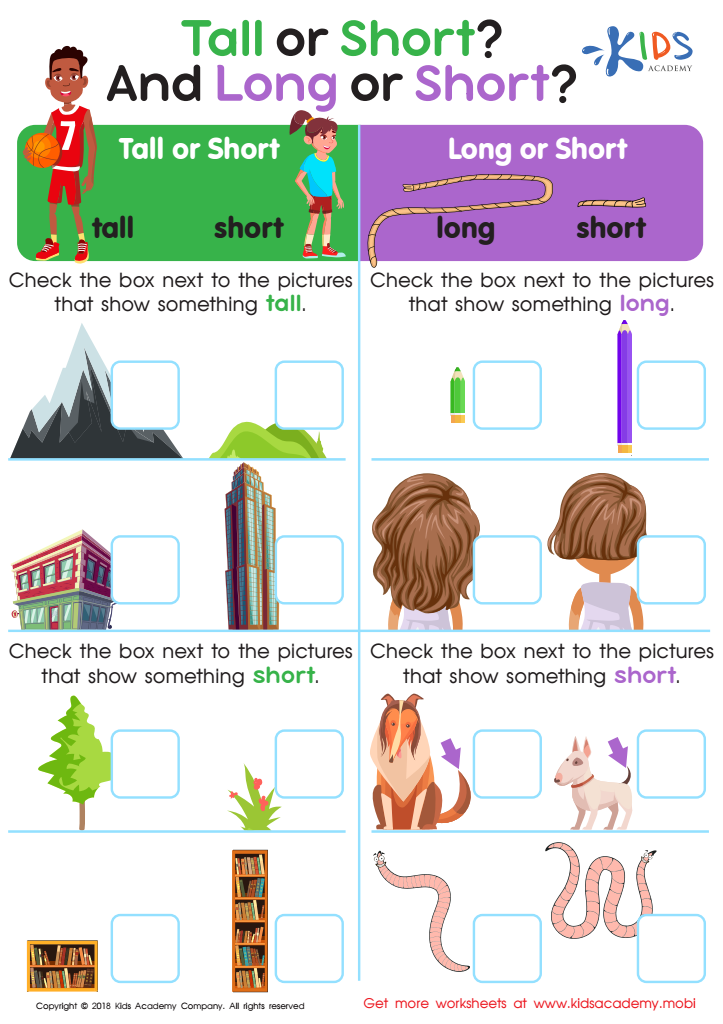
Tall or Short and Long or Short? Worksheet
 Assign to My Students
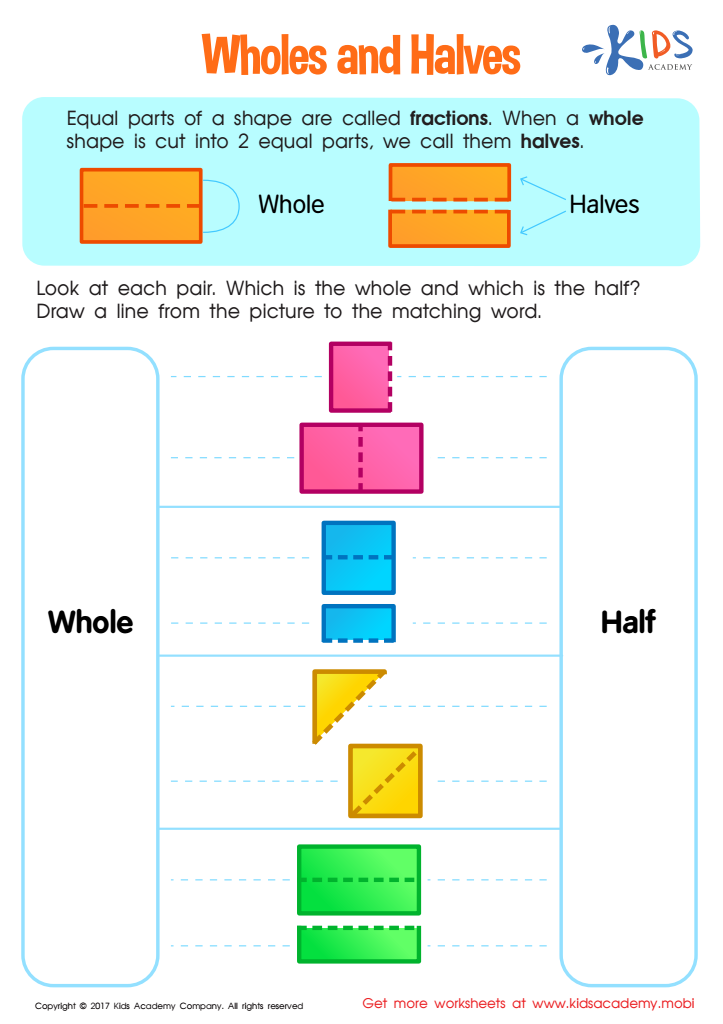
Wholes and Halves Worksheet
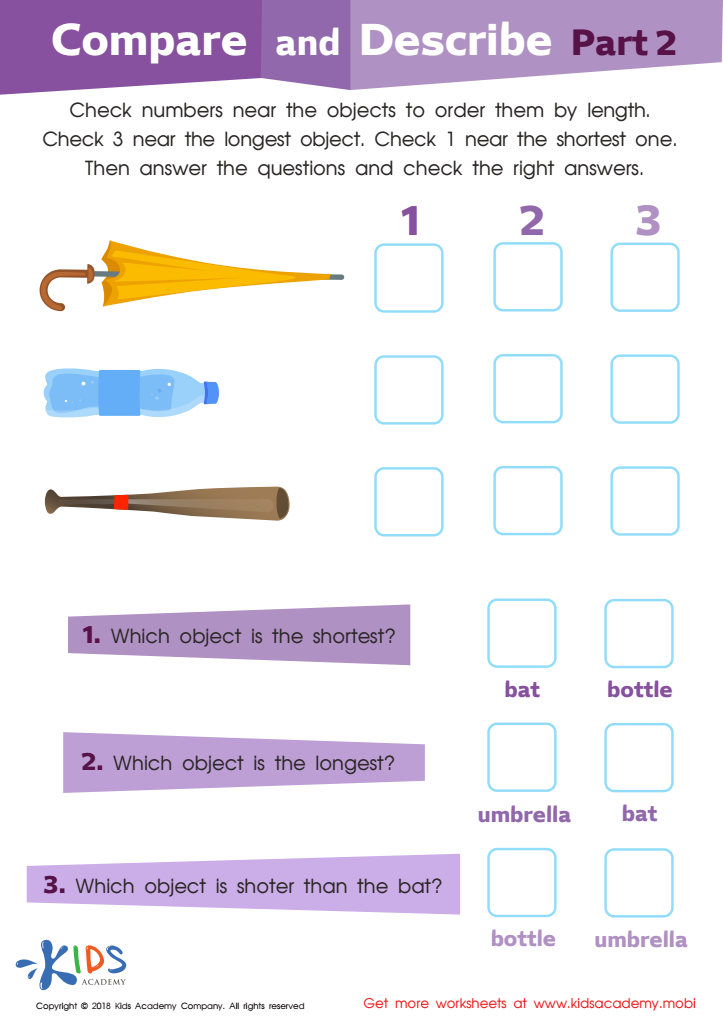
Compare and Describe: Part 2 Worksheet






Comparing sizes is a crucial skill for children aged 4-8 as it lays a strong foundation for their cognitive and mathematical development. At this age, children are naturally curious and keen to make sense of the world around them. By learning to compare sizes—big and small, tall and short—they hone their observational skills, an essential part of early learning. This ability also helps them develop spatial awareness, which is vital for tasks ranging from arranging objects to understanding directions and maps.
For parents and teachers, nurturing these skills translates to supporting a child’s early math literacy. When children compare sizes, they begin to understand the basic concepts of measurement and geometry. This understanding acts as building blocks for more complex math concepts they will encounter later, such as weights, volumes, and the principles of algebra and geometry.
Additionally, comparing sizes can boost language development. As children use words to describe the sizes of objects, they expand their vocabulary and improve their communication skills. Socially, children learn to build relationships as they engage in collaborative activities that involve comparing and categorizing items.
Overall, fostering the ability to compare sizes equips children with essential cognitive tools, improves their academic readiness, and supports their overall development.








