Contextual understanding Normal Worksheets for Ages 4-8
7 filtered results
-
From - To
Contextual Understanding Normal Worksheets for Ages 4-8 from Kids Academy are designed to enhance young learners' comprehension skills through engaging, age-appropriate activities. These printable worksheets cultivate children’s ability to understand and process information in context, boosting their reading, critical thinking, and problem-solving abilities. Perfect for early grade levels, each worksheet is meticulously crafted to align with educational standards and inspire curiosity. Ideal for classroom use or home study, these resources provide structured yet flexible learning, ensuring that every child develops a solid foundation in contextual understanding. Foster your child’s cognitive growth with Kids Academy’s expertly designed worksheets.
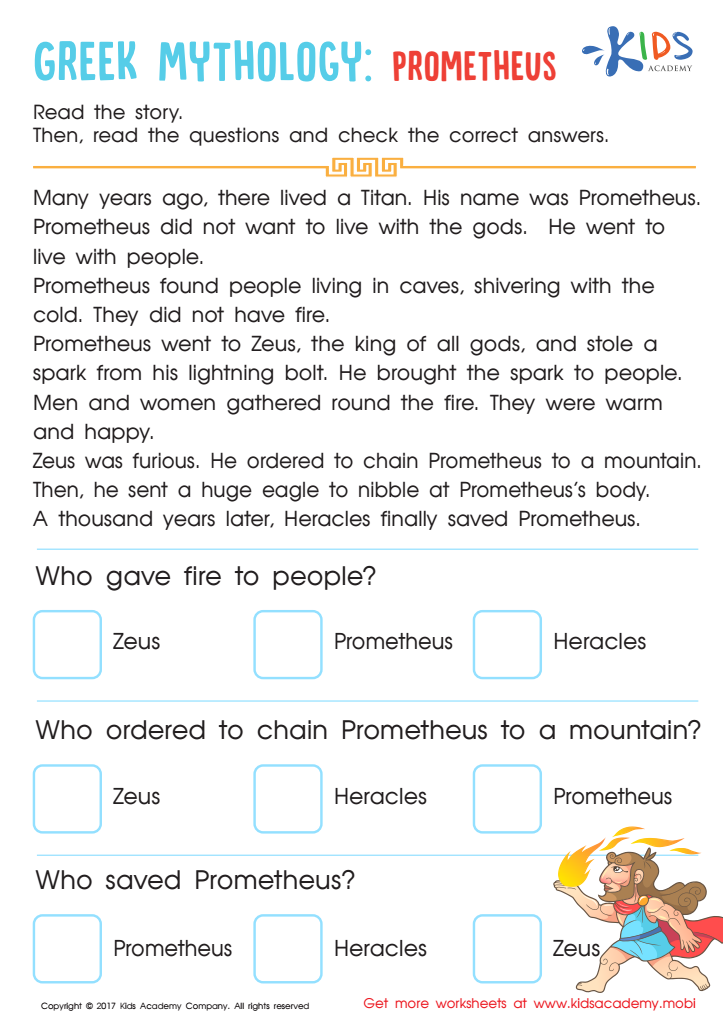
Prometheus Story Worksheet
 Assign to My Students
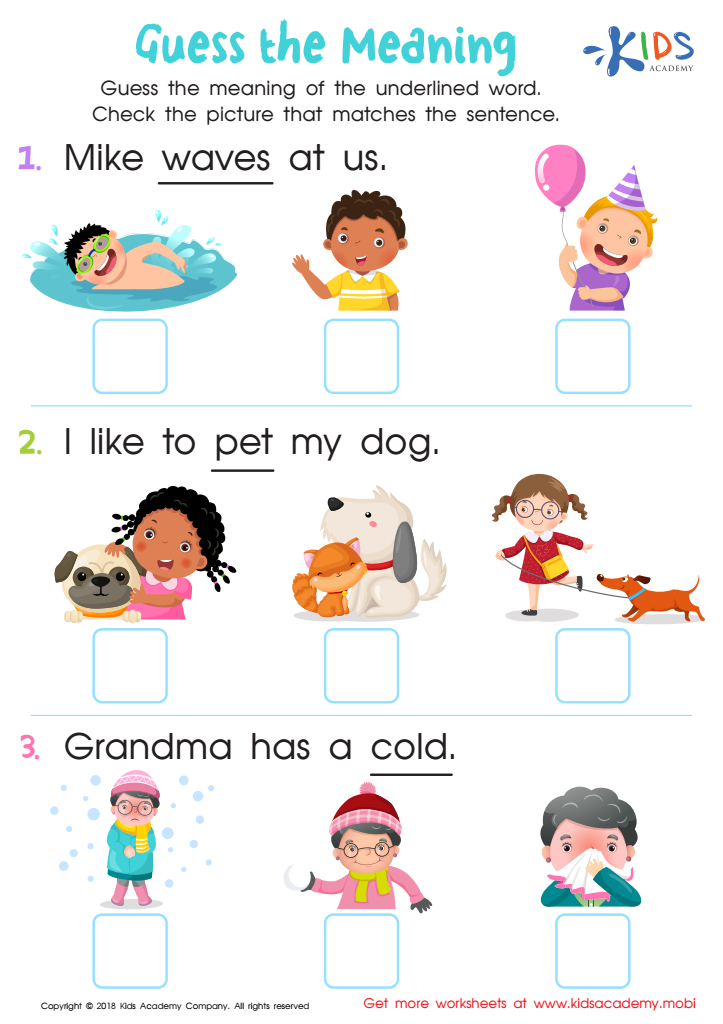
Guess the Meaning Worksheet
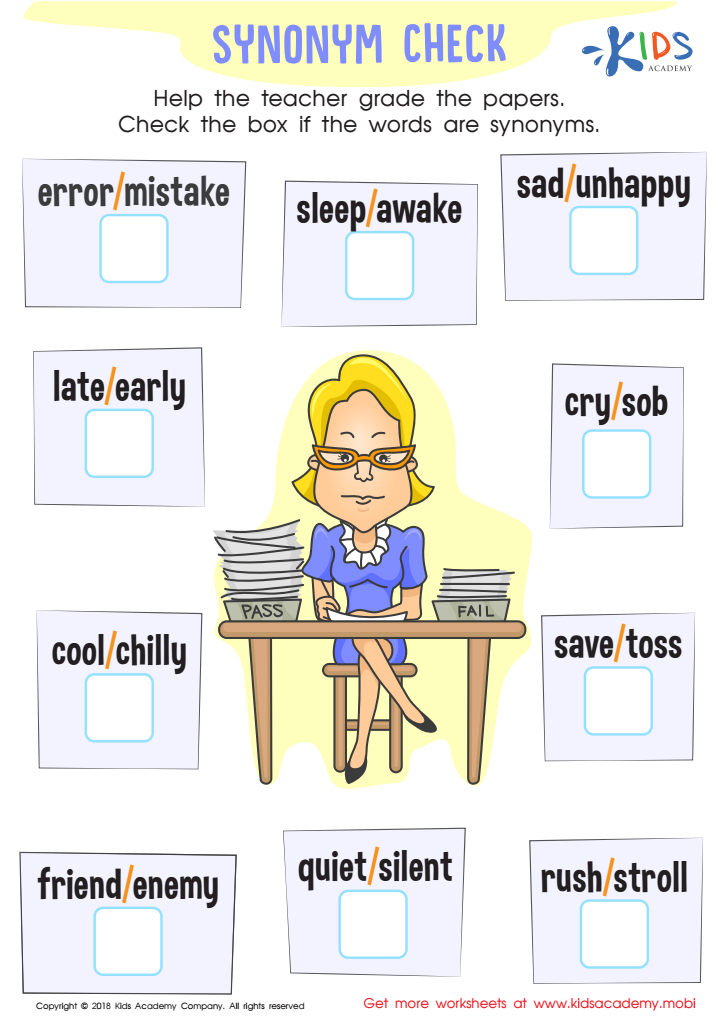
Synonym Check Worksheet
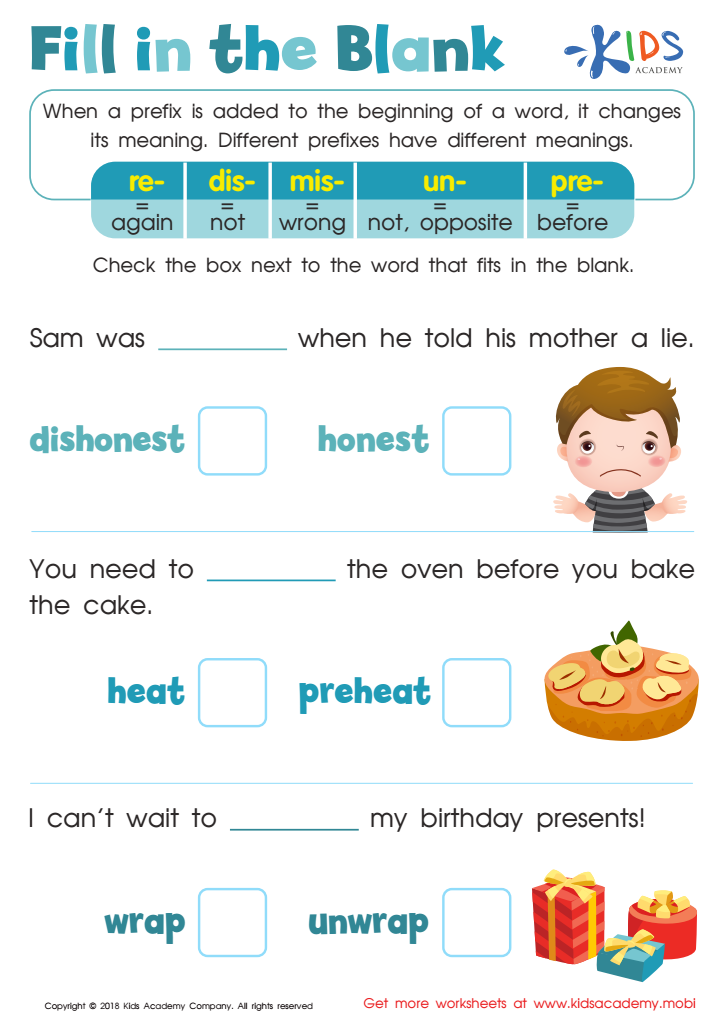
Reading: Fill in the Blank Worksheet
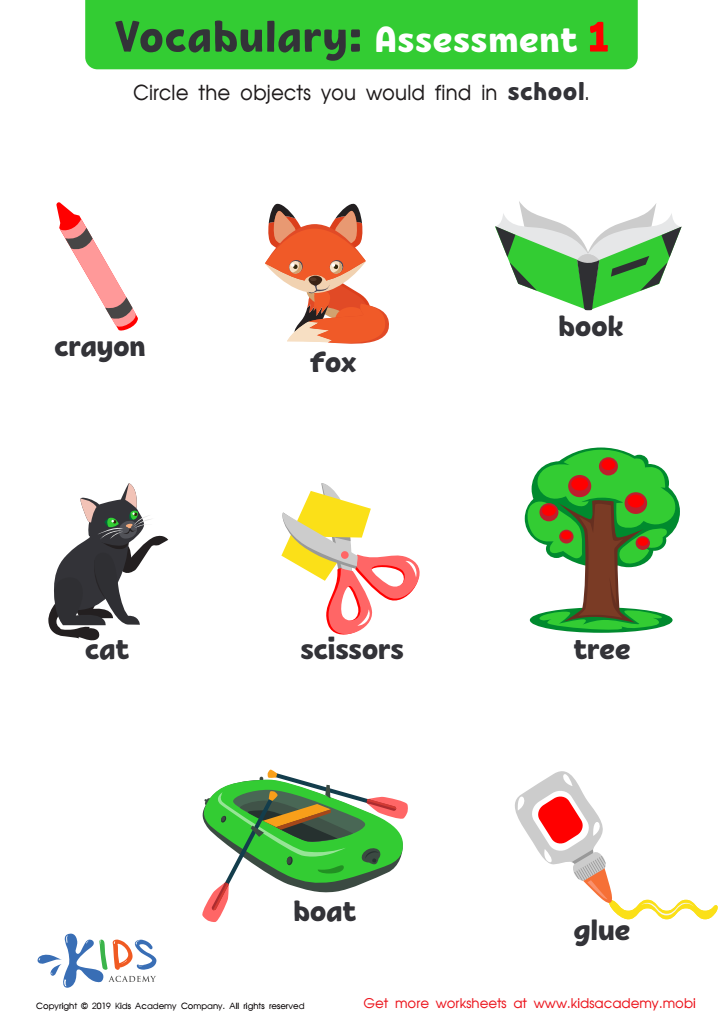
Vocabulary: Assessment 1 Worksheet
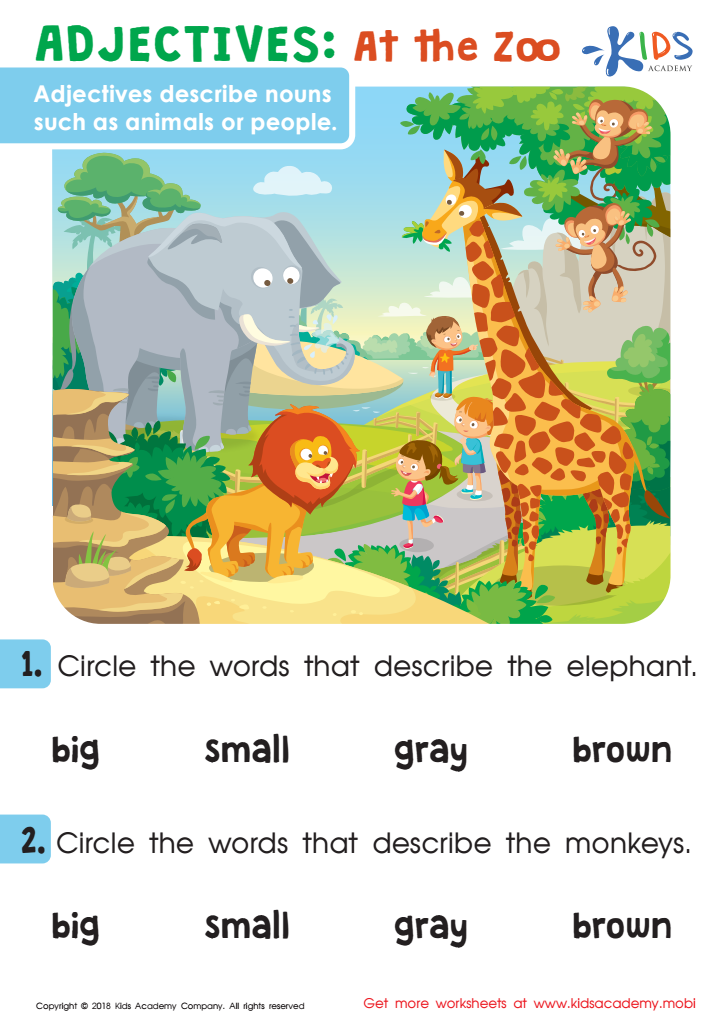
Adjectives: At The Zoo Worksheet
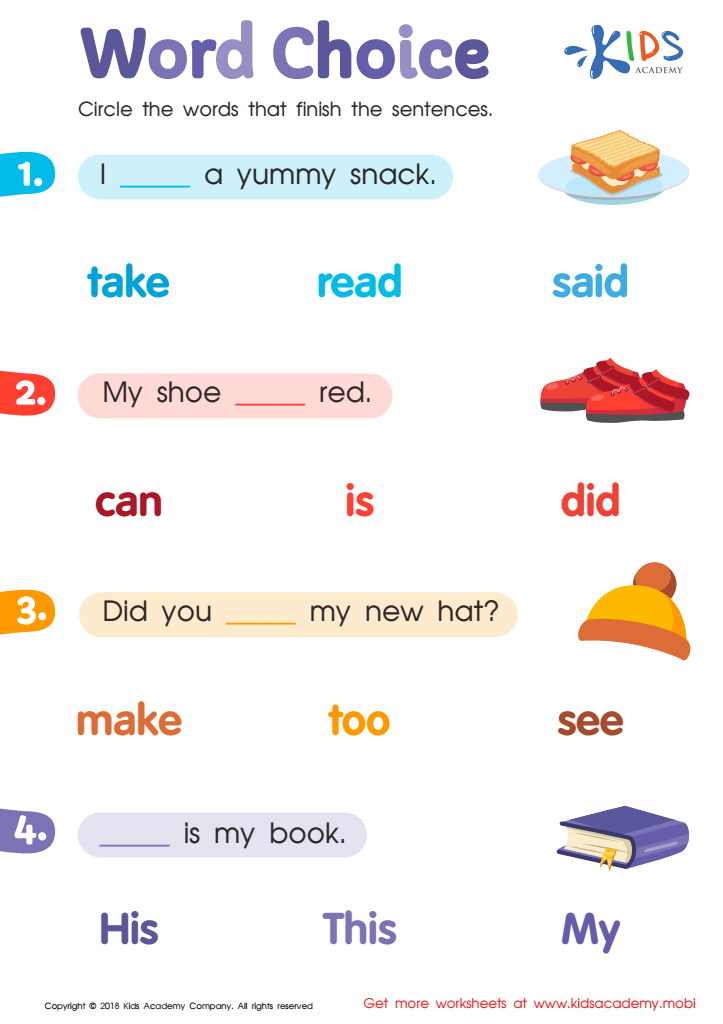
Word Choice Worksheet








Contextual understanding is crucial for children aged 4-8 as it forms the foundation for effective learning and development. At this formative age, children are like sponges, absorbing information not just from direct instruction, but from their entire environment. Contextual understanding helps children make sense of the world around them by placing new information within a familiar framework. This promotes better retention and application of knowledge.
When parents and teachers emphasize contextual learning, they help children develop critical thinking skills. For instance, a lesson about animals is more meaningful when related to a visit to the zoo, and a story about sharing can be reinforced through playtime interactions. These connections bring abstract concepts to life, making learning more engaging and relevant.
Moreover, contextual understanding fosters emotional intelligence and social skills. Children learn to interpret social cues and respond appropriately in different settings. This is essential for building relationships, empathy, and effective communication.
Investing in contextual learning not only enriches academic vocabulary but also nurtures a child's curiosity and love for learning. It aligns with how young minds naturally explore the world—through interaction and real-world experiences—thereby making the educational journey both enjoyable and impactful. Parents and teachers who prioritize this approach lay down a robust foundation for lifelong learning and personal growth.








