
Identifying differences Normal Worksheets for Ages 4-8
3 filtered results
Difficulty Level
Grade
Age
-
From - To
Subject
Activity
Standards
Discover our enriching collection of "Identifying Differences" worksheets tailored for children aged 4-8. These engaging activities are designed to sharpen observational skills, enhance critical thinking, and build foundational learning abilities. Each printable worksheet encourages kids to spot and differentiate subtle variations, fostering keen attention to detail. Perfect for use in classrooms or at home, these exercises ensure an enjoyable and educational experience. Visit Kids Academy to explore our diverse selection and support your child's developmental journey with fun and stimulation that makes learning enjoyable.
Favorites
With answer key
Interactive
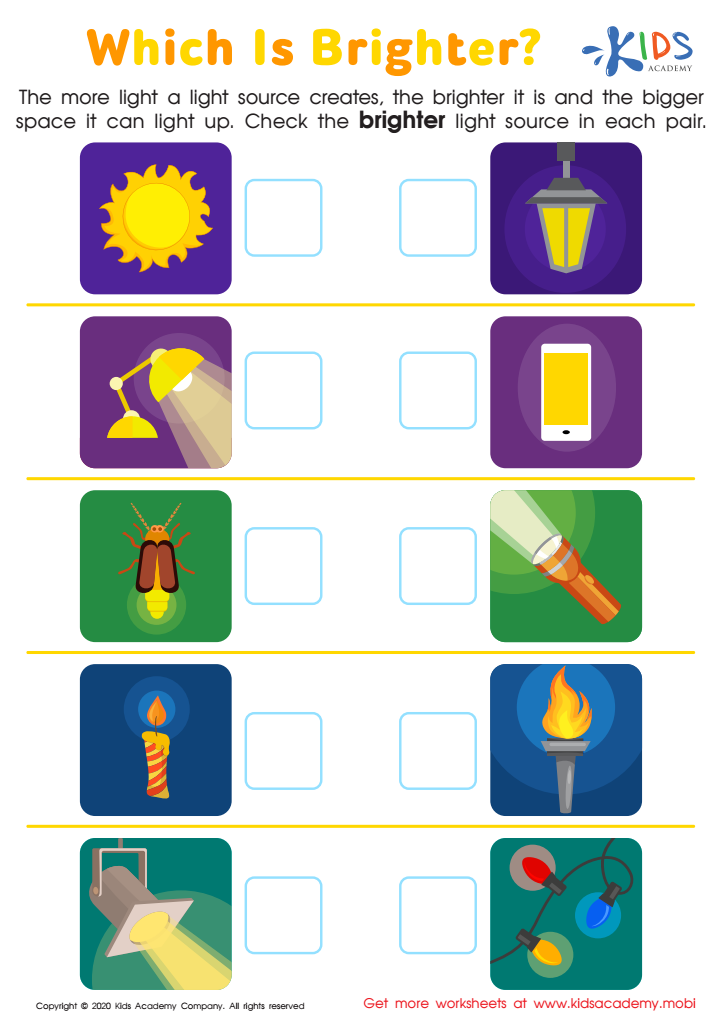
Which Is Brighter? Worksheet
Before the exercise, ask students to recall sources of light. Use this worksheet to explain that the brighter the light source, the more space it can light up. Identify the different light sources in the pictures, then check the brighter light source in each pair. The biggest natural source of light is the sun.
 Assign to My Students
Which Is Brighter? Worksheet
Worksheet
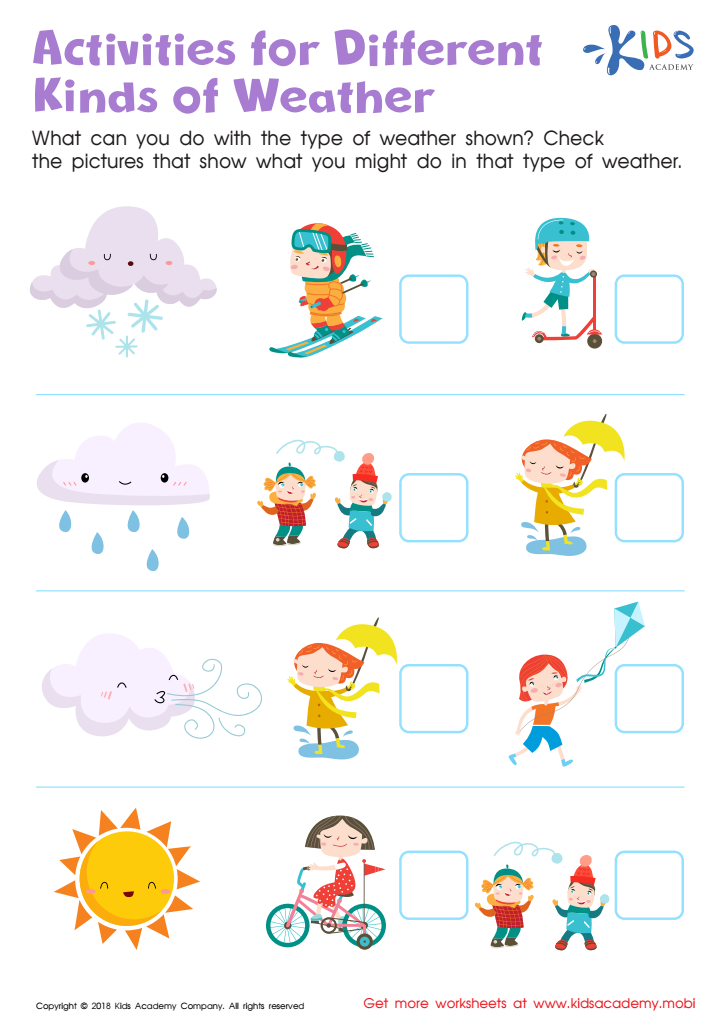
Activities for Different Kinds of Weather Worksheet
Help your child explore the changing seasons with this interactive worksheet. Ask them to name the different seasons and activities associated with each type of weather. Show the pictures and explain what they can do in that kind of weather. Have them check off the activities to help them learn and enjoy the changing seasons.
Activities for Different Kinds of Weather Worksheet
Worksheet
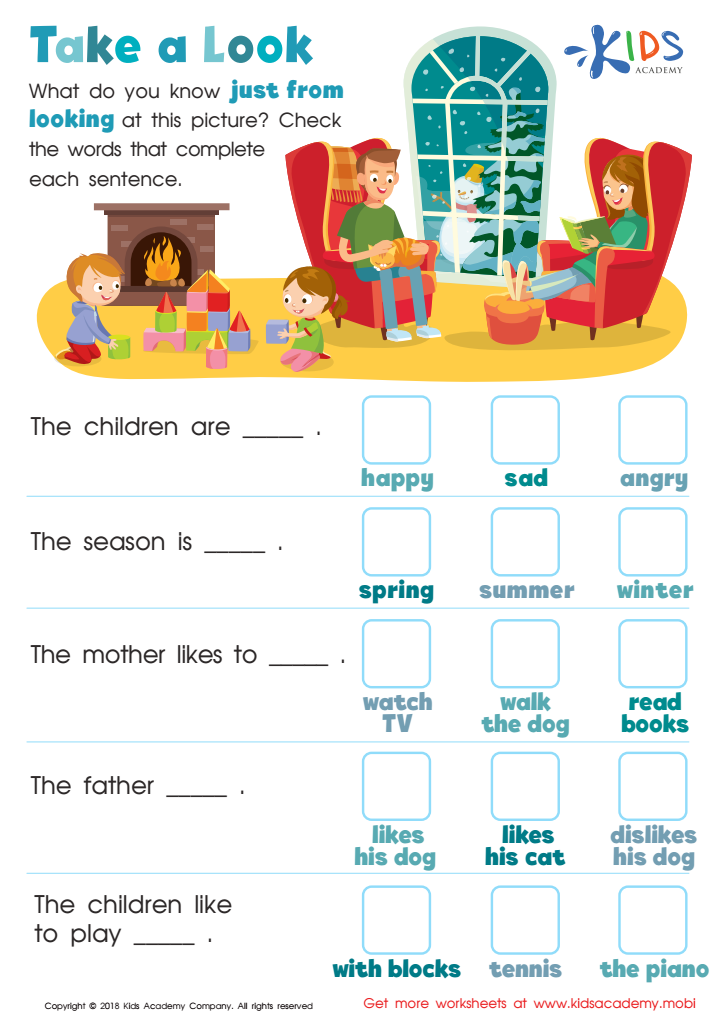
Take a Look - Part 1 Worksheet
Young learners gain understanding when using picture clues when reading. Looking at illustrations can help students learn the meaning of key vocabulary when reading fiction or informational text. Ask your students to look at the worksheet and observe what they can learn from the picture. It's a great comprehension strategy for early readers.
Take a Look - Part 1 Worksheet
Worksheet
Join Kids Academy for Free
Who is primarily going to use this learning content?







.jpg)
Identifying developmental differences in children between the ages of 4-8 is critical for both parents and teachers. This period is a foundational stage for cognitive, social, emotional, and physical growth. Recognizing and understanding what constitutes "normal" development allows adults to provide the right support and interventions to ensure each child reaches their full potential.
First, early detection of any developmental delays or anomalies enables timely intervention, which can significantly improve long-term outcomes. For instance, children with undiagnosed learning disabilities can fall behind academically, affecting their self-esteem and future educational experiences.
Second, being aware of typical developmental milestones helps in setting realistic expectations and individualized goals for each child. This can foster a nurturing and supportive environment where children feel understood and less pressured.
Furthermore, understanding normal development aids in identifying and encouraging each child’s unique strengths and interests. This creates enriched learning experiences and promotes enthusiasm for learning.
Finally, knowing what is normal helps in recognizing and appreciating the diverse range of development among children. It encourages inclusivity and discourages unfair comparisons among peers, fostering a more equitable learning environment.
In essence, being vigilant about developmental differences supports a balanced, tailored approach to education and child-rearing, paving the way for healthier, happier, and more successful children.








