Lowercase identification Normal Worksheets for Ages 4-8
4 filtered results
-
From - To
Enhance your child's literacy skills with our Lowercase Identification Normal Worksheets, designed for ages 4-8. These engaging and interactive worksheets help young learners recognize and differentiate lowercase letters, a crucial step in reading and writing development. Each worksheet is crafted to be age-appropriate and includes a variety of fun activities, such as tracing, coloring, and matching, to keep children excited about learning. With clear illustrations and supportive instructions, these worksheets foster a solid foundation in letter recognition. Perfect for homeschooling, classroom use, or supplemental practice, they make learning lowercase letters enjoyable and effective. Unlock your child's reading potential today!
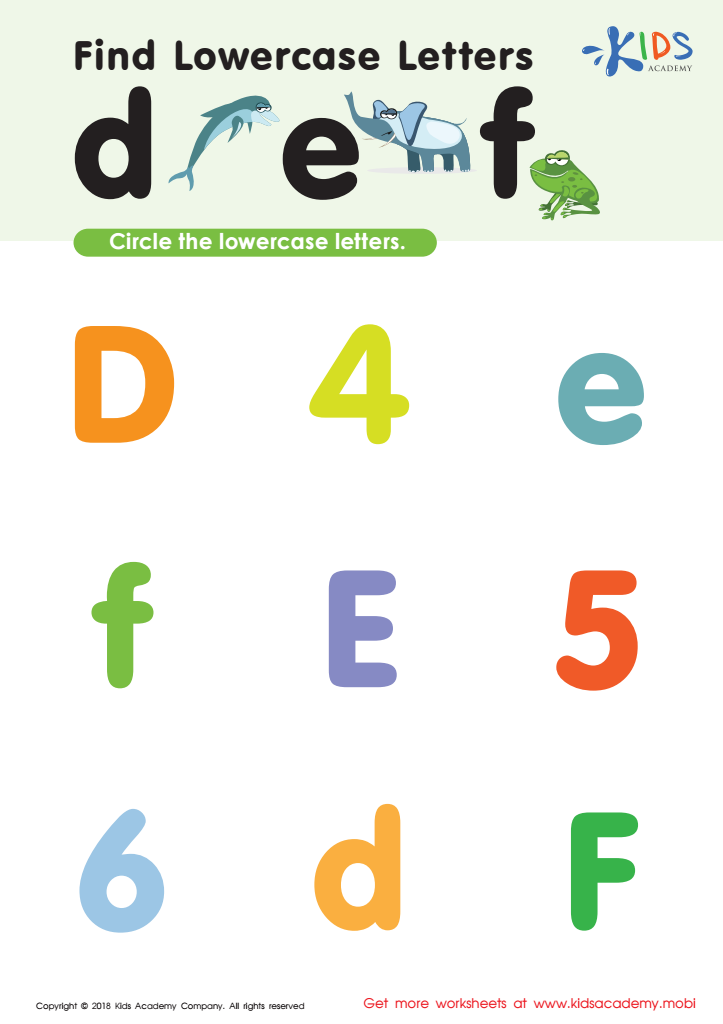
Find Lowercase Letters d e f Worksheet
 Assign to My Students
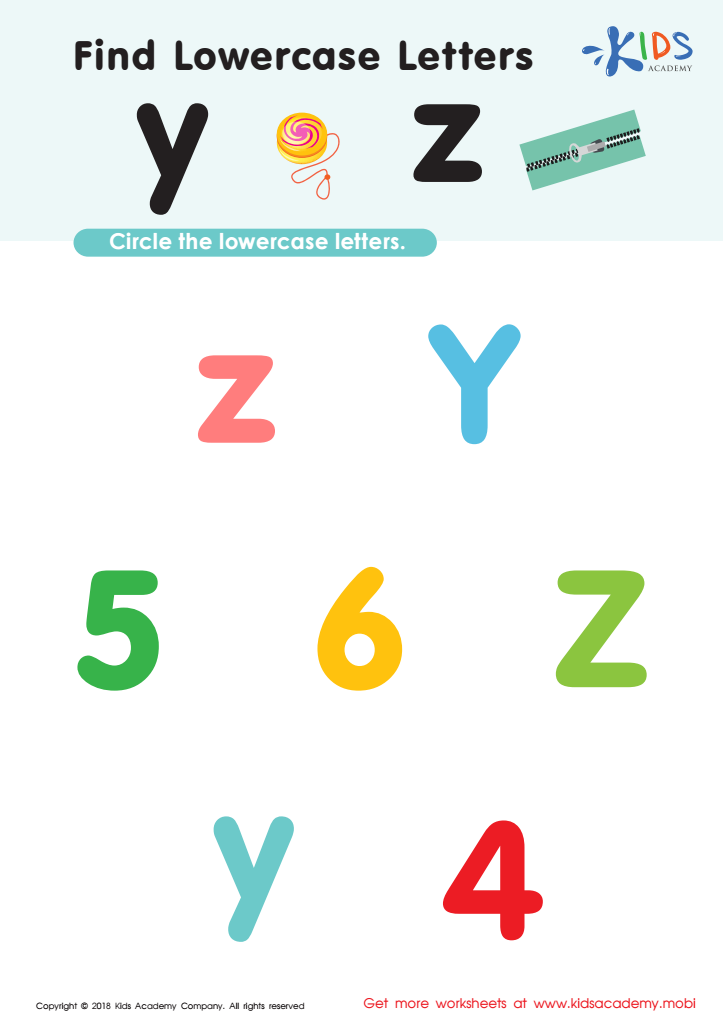
Find Lowercase Letters y z Worksheet
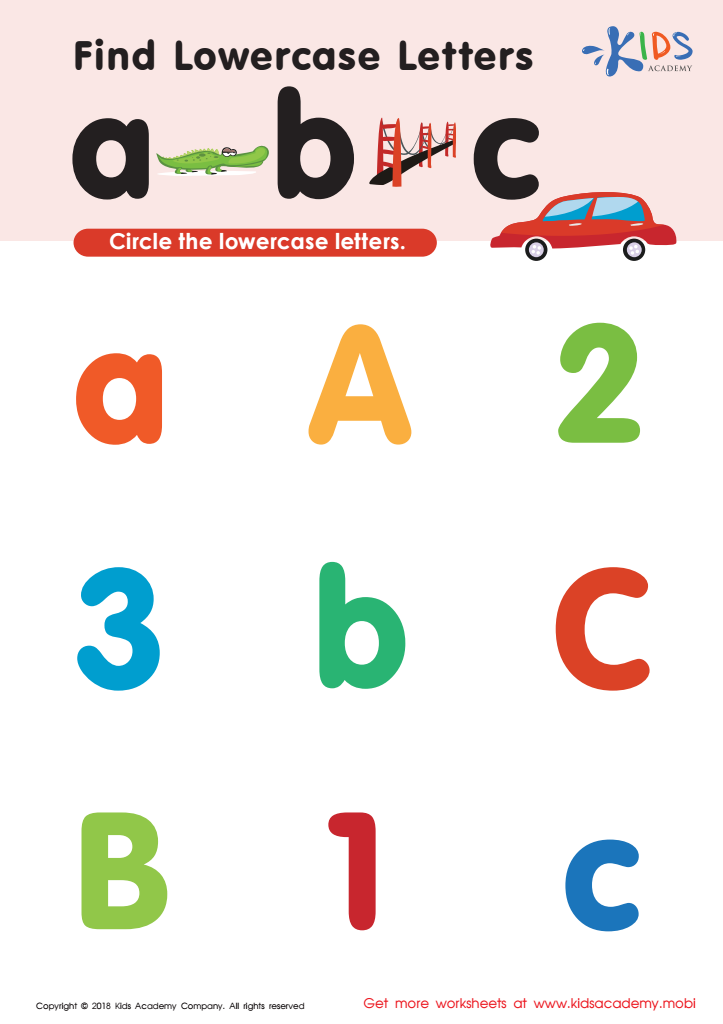
Find lowercase letters a b c Worksheet
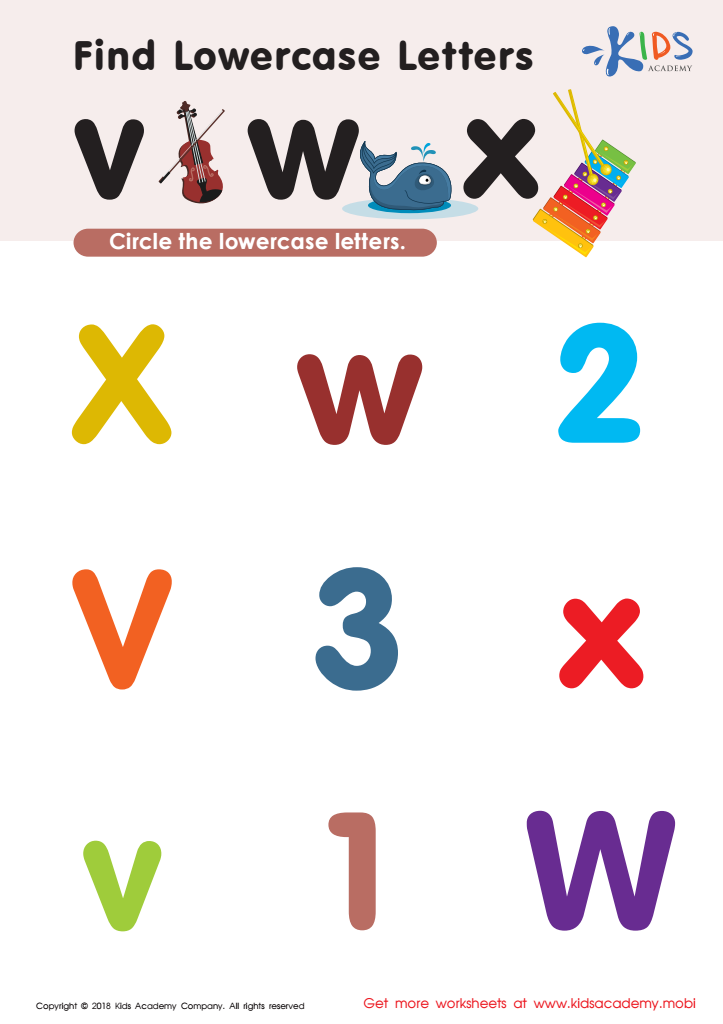
Find Lowercase Letters v w x Worksheet





.jpg)


Lowercase letter identification is a fundamental skill for children aged 4 to 8, serving as a cornerstone for literacy development. At this stage, children are transitioning from the pre-reading phase to actual reading, making it crucial for them to recognize and differentiate lowercase letters. Understanding lowercase letters is essential for reading fluency, as most texts—including children’s books—are predominantly in lowercase.
Parents and teachers should care about this aspect of literacy for several reasons. First, mastery of lowercase letters bolsters phoneme awareness, as children learn to associate sounds with their corresponding letters, paving the way for proficient reading and writing skills. Additionally, being able to identify lowercase letters helps with word recognition, enhancing vocabulary development and boosting confidence when faced with texts.
Moreover, when children struggle with lowercase letter recognition, it can impact their overall academic performance and motivation. This skill lays the groundwork for more advanced literacy skills and promotes a love for reading. Engaging in fun and interactive activities—like games and multi-sensory learning tools—can make the identification of lowercase letters enjoyable. Ultimately, fostering this foundational skill instills a sense of achievement and prepares children for their academic journey.








