Phonological awareness Normal Worksheets for Ages 4-8
5 filtered results
-
From - To
Boost your child's literacy skills with our engaging Phonological Awareness Normal Worksheets designed for ages 4-8. These worksheets provide a fun and interactive way for young learners to develop crucial phonemic skills, including rhyming, syllable segmentation, and sound blending. With colorful illustrations and age-appropriate exercises, your child will enjoy improving their auditory discrimination and sound manipulation abilities. Perfect for classroom use or at-home learning, our worksheets support early reading development, making learning enjoyable. Ideal for parents and educators alike, download our printable resources today and watch your child flourish in their reading journey!
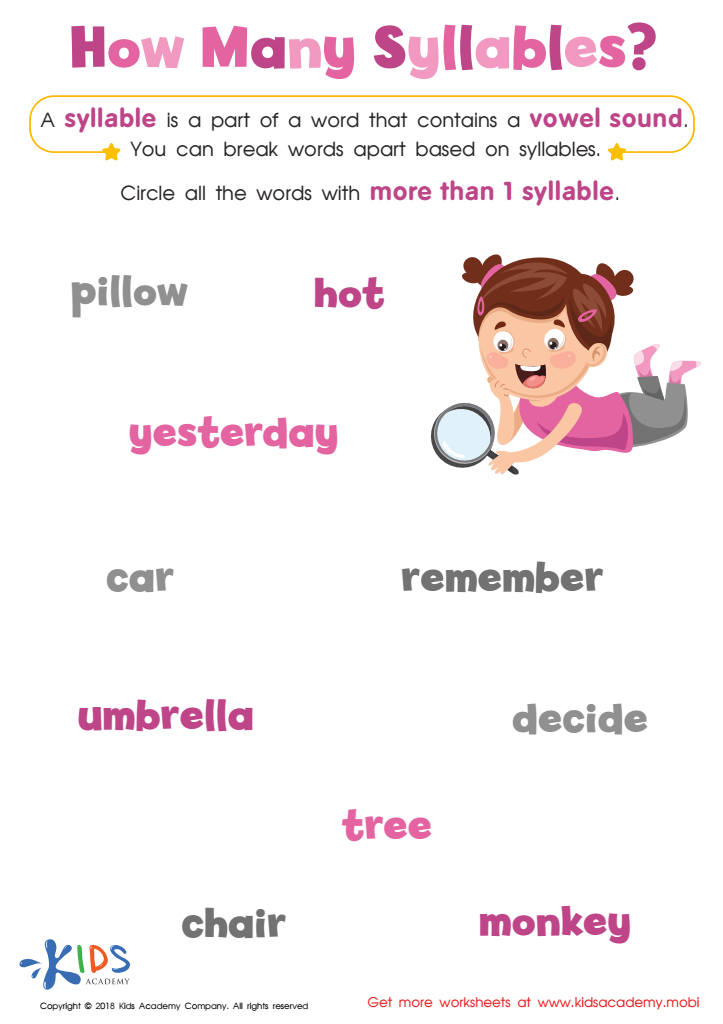
Reading: How Many Syllables Worksheet
 Assign to My Students
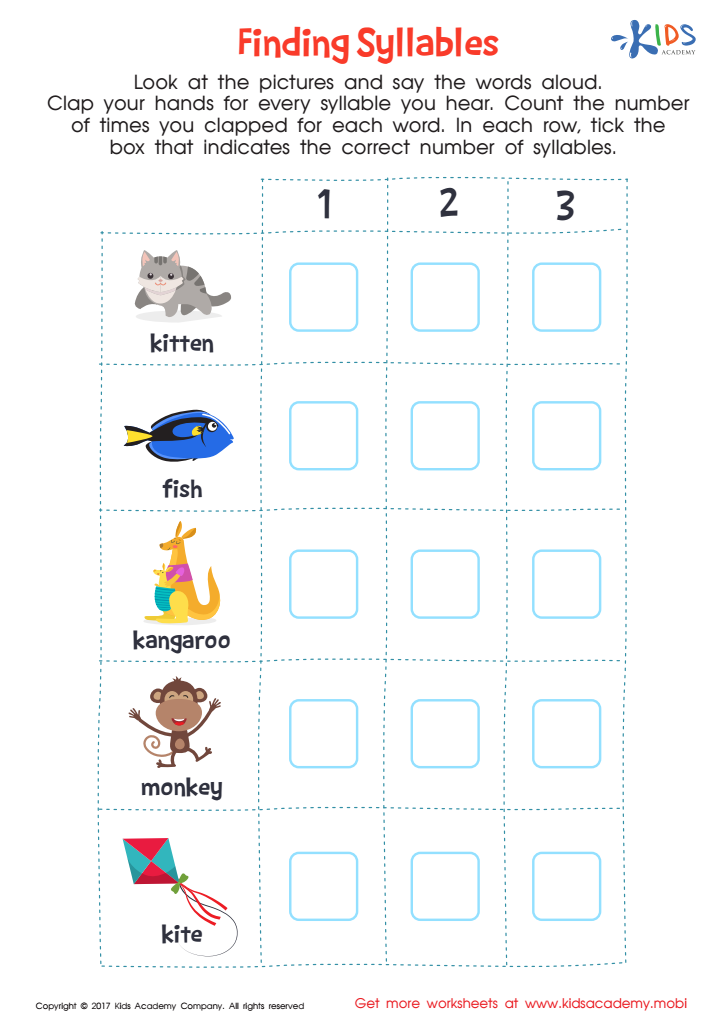
Finding Syllables Word Structure Worksheet
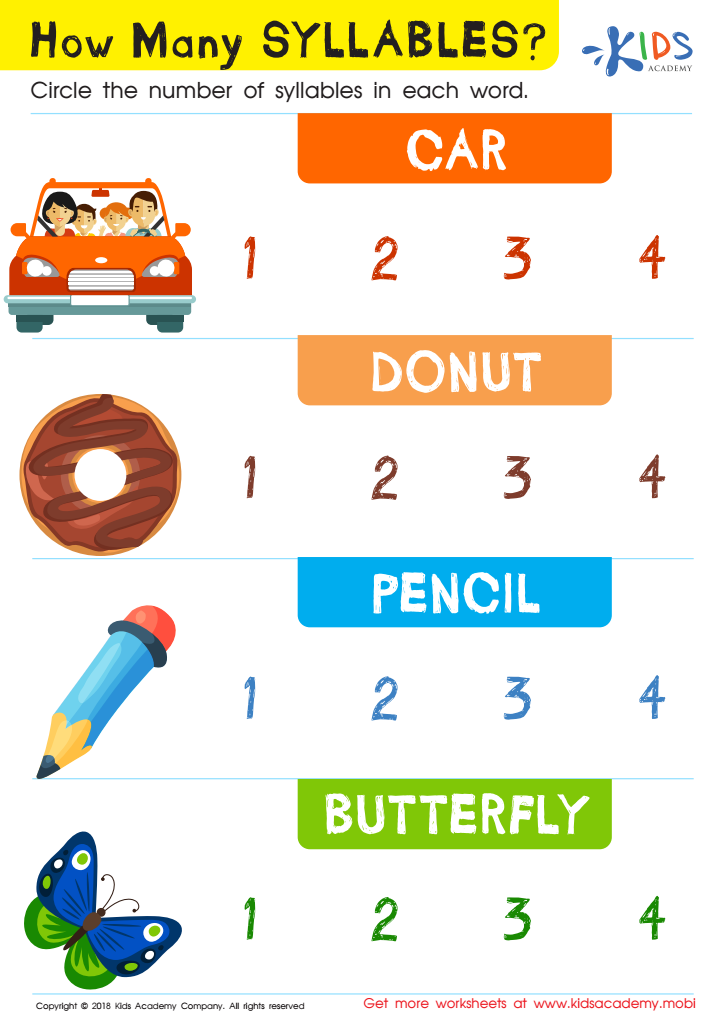
How Many Syllables? Worksheet
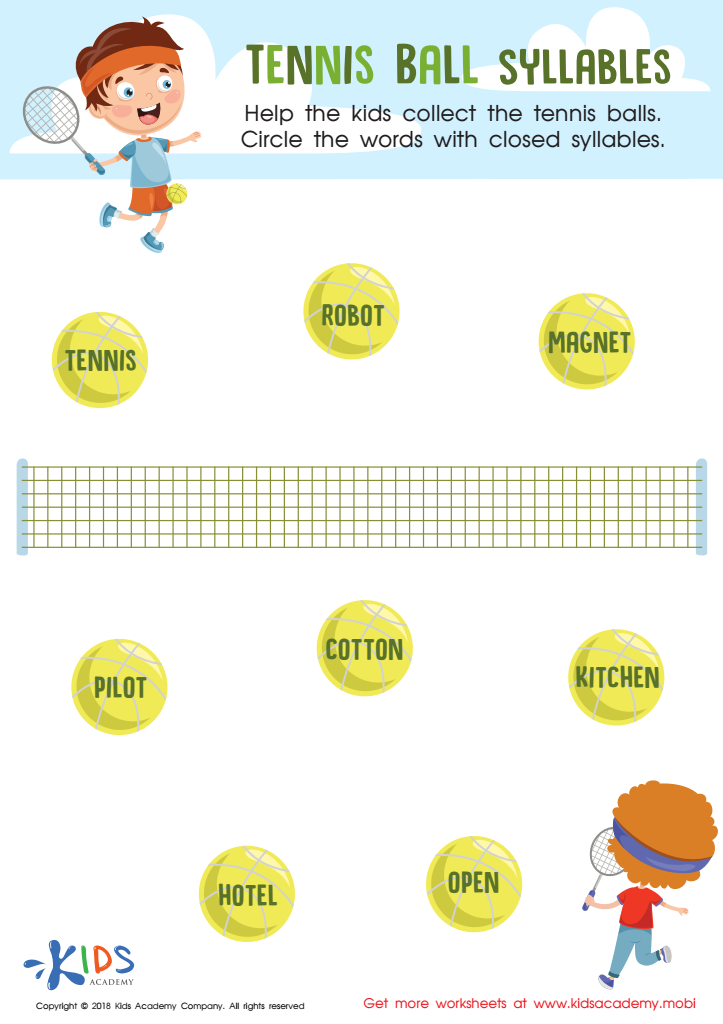
Tennis Ball Syllables Worksheet
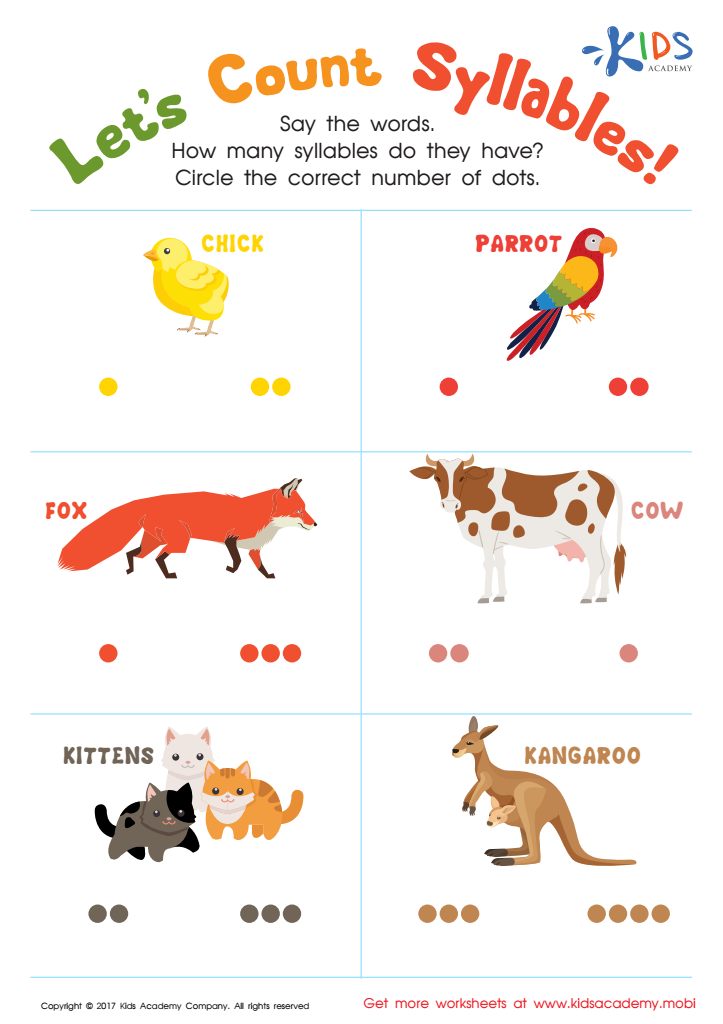
Lets Count Syllables Worksheet








Phonological awareness is a crucial skill for children ages 4-8, serving as a foundational element in developing reading and writing abilities. Parents and teachers should prioritize this skill because it directly impacts literacy outcomes. Phonological awareness involves the ability to recognize and manipulate sounds in spoken language, which helps children understand the connection between sounds and letters when they begin to read.
At this development stage, children are particularly receptive to learning about sounds, rhymes, syllables, and phonemes. By nurturing phonological awareness, parents and teachers can facilitate better reading fluency, vocabulary growth, and overall academic achievement. Children who struggle with phonological skills are more likely to face difficulties in learning to read, which can lead to long-term academic challenges.
Engaging children in activities that promote phonological awareness—such as singing, rhyming, and phoneme manipulation games—makes learning fun and interactive. Early intervention, support, and intentional practice can help solidify these skills, enabling children to develop confidence and a love for reading, ultimately fostering a lifelong appreciation for learning. Therefore, prioritizing phonological awareness is essential for parents and teachers to ensure that children build a strong literacy foundation.








