Recognizing Patterns Normal Worksheets for Ages 4-8
6 filtered results
-
From - To
Welcome to our "Recognizing Patterns Normal Worksheets" designed for children ages 4-8! These engaging worksheets are perfect for enhancing critical thinking skills through fun and interactive exercises. Your child will explore various patterns using shapes, colors, and objects, fostering their ability to recognize sequences and make predictions. Our carefully crafted activities make learning enjoyable while supporting developmental growth in early literacy and math skills. Ideal for both at-home learning and classroom settings, these worksheets are a fantastic resource for parents and educators aiming to build a strong foundation in pattern recognition. Download now and watch your child’s skills flourish!
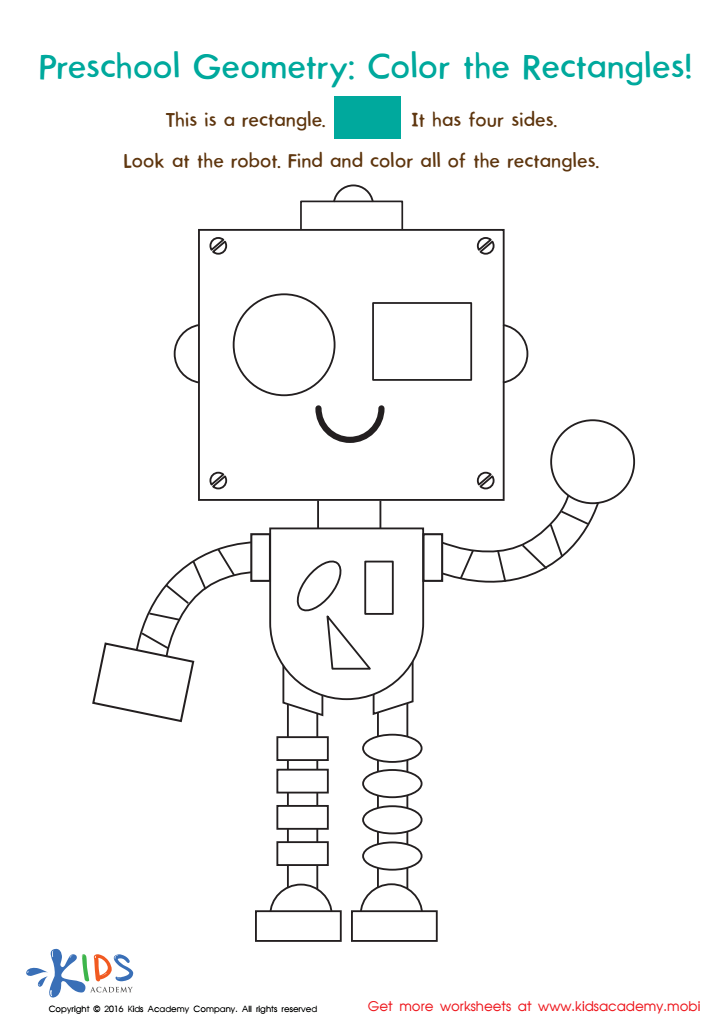
Geometry Worksheet
 Assign to My Students
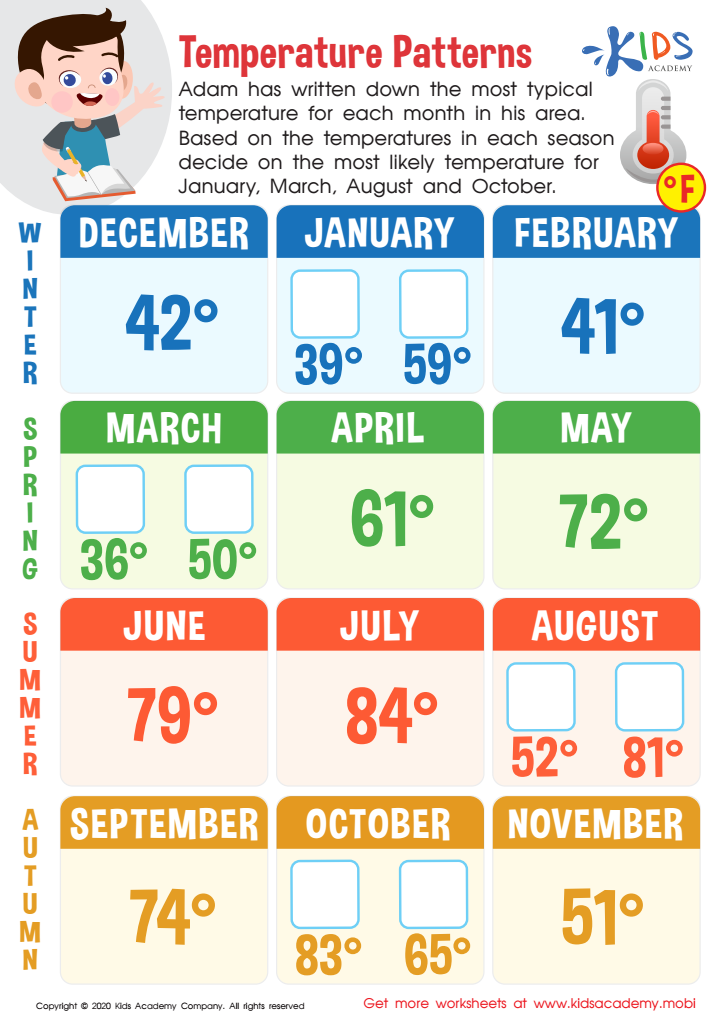
Temperature Patterns Worksheet
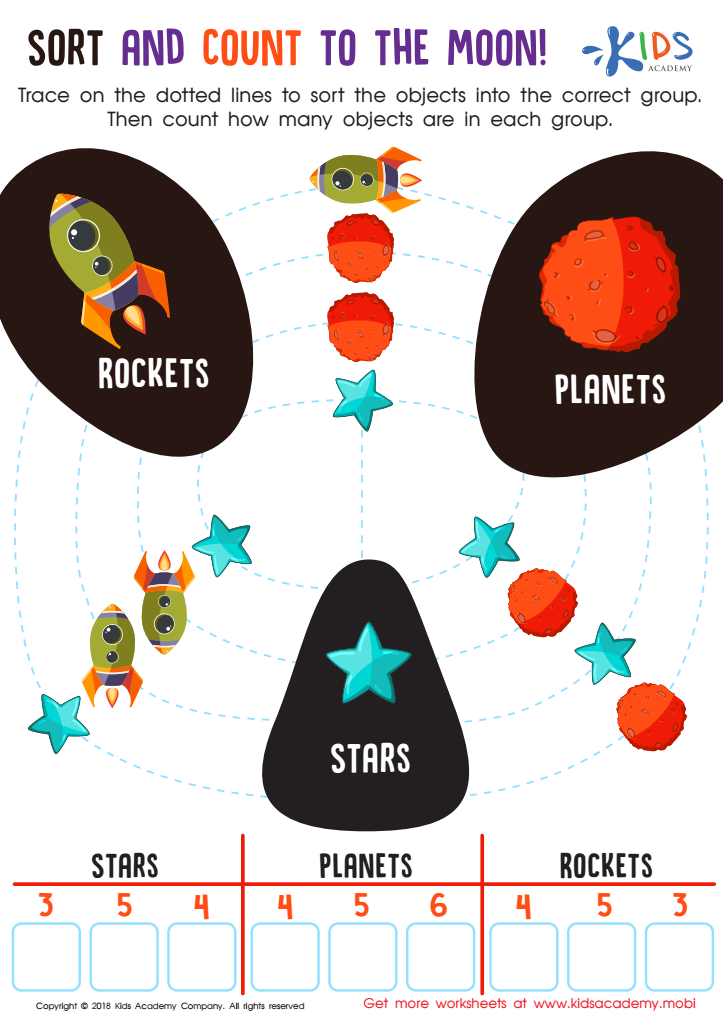
Sort and Count to the Moon Worksheet
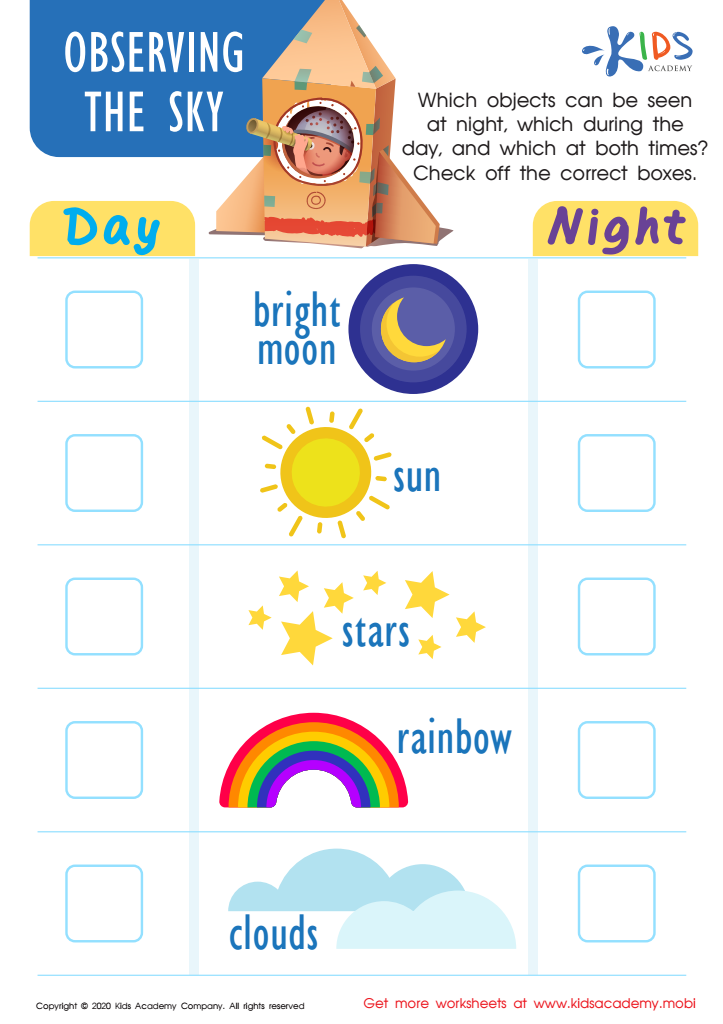
Observing the Sky Worksheet
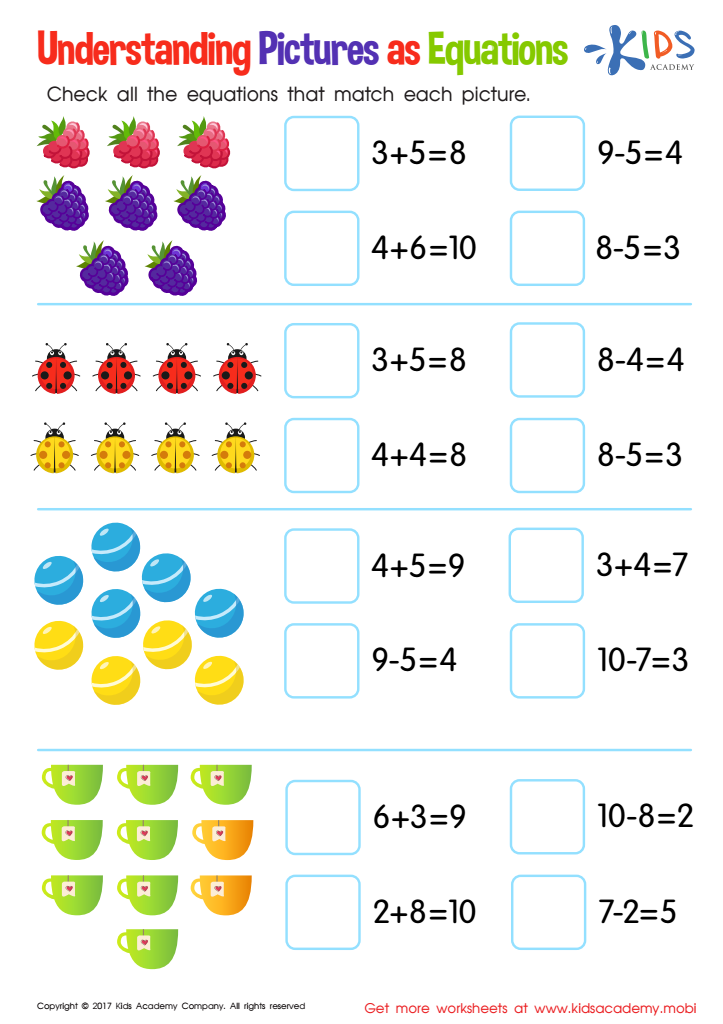
Understanding Pictures as Equations Worksheet
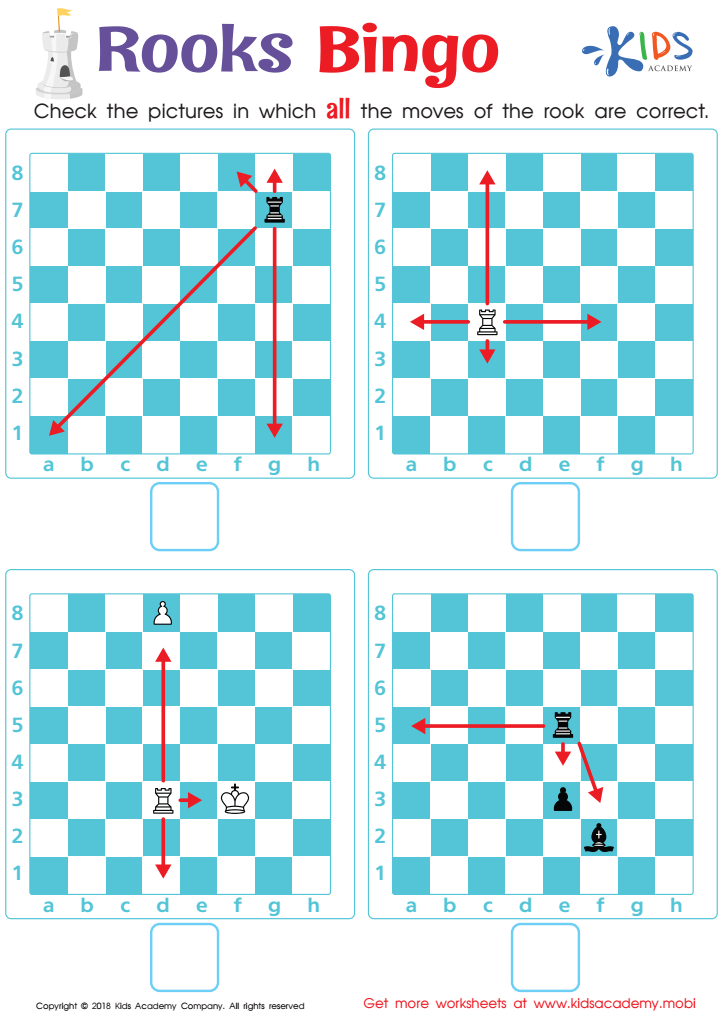
Rooks Bingo Worksheet







Recognizing patterns is a fundamental skill that lays the groundwork for later mathematical concepts and critical thinking in children aged 4-8. During these formative years, children are naturally inclined to explore and make sense of the world around them. When parents and teachers emphasize pattern recognition, they engage students in identifying sequences, relationships, and rhythms in various contexts, from nature to everyday objects.
Understanding patterns fosters cognitive development, enhancing skills such as logic, reasoning, and problem-solving. For instance, when children recognize color patterns using beads or create shape sequences, they learn to make predictions and draw conclusions. This not only boosts their mathematical knowledge but also encourages creativity and curiosity. Moreover, pattern recognition skills are essential for grasping more advanced concepts in mathematics, science, and even art.
Furthermore, pattern recognition is a key component of early literacy. Children who detect rhymes in songs or letter patterns in words improve their ability to read and write. By creating opportunities for children to engage with patterns, both parents and teachers contribute to a strong educational foundation that supports lifelong learning and prepares children for future academic success. Ultimately, nurturing pattern recognition enriches children's exploration and understanding of the world around them.








