Sound Association Normal Worksheets for Ages 4-8 - Page 2
27 filtered results
-
From - To
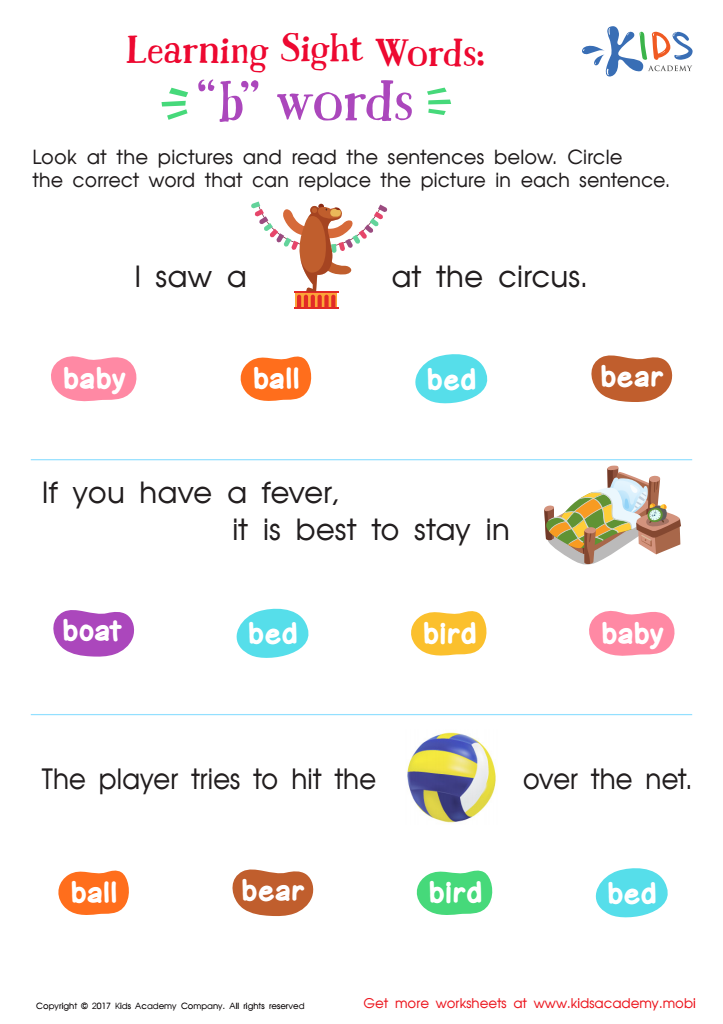
"B" Words Printable Sight Words Worksheet
 Assign to My Students
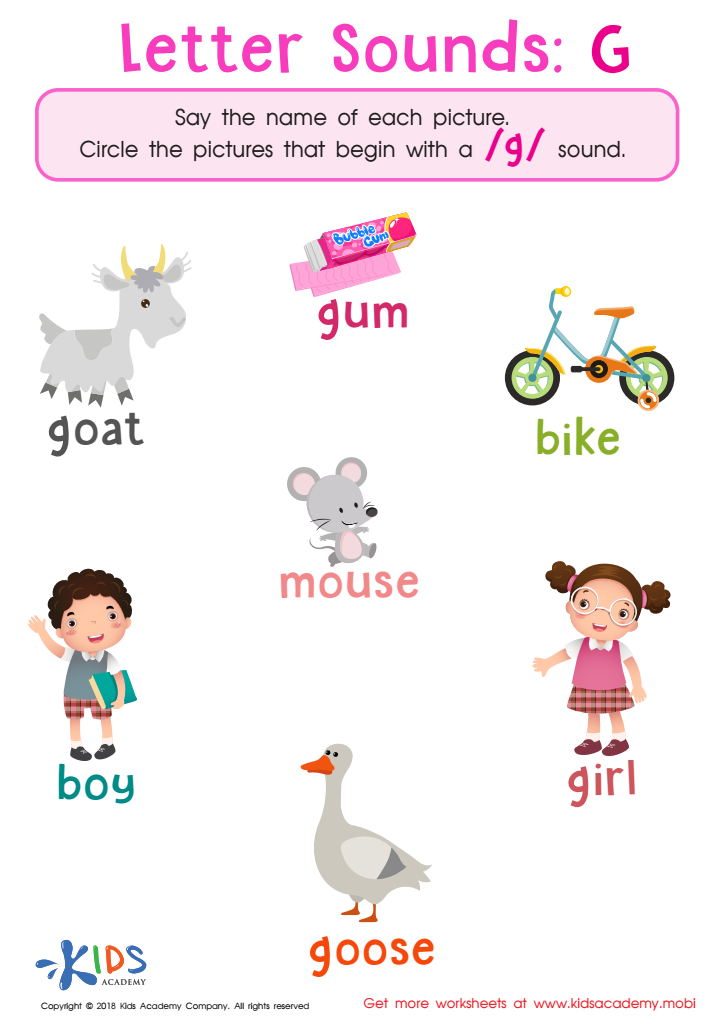
Letter G Sounds Worksheet
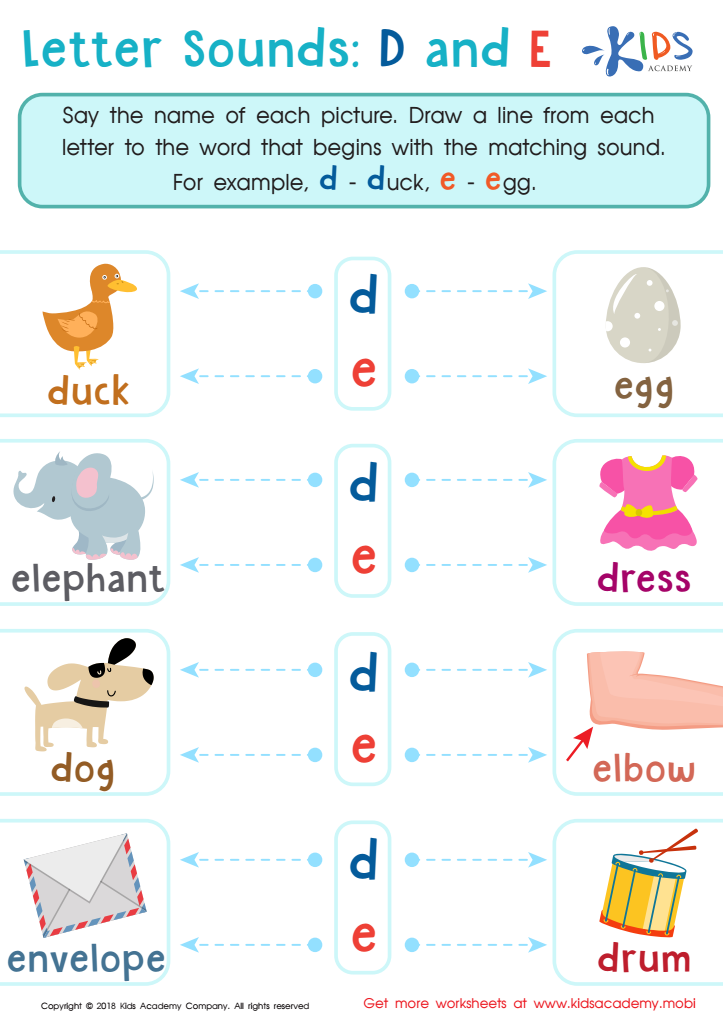
Letter D and E Sounds Worksheet







Sound associations, or phonemic awareness, are the building blocks of early literacy and play a critical role in a child's reading and spelling development. For children aged 4-8, fostering a strong foundation in sound association is essential for several reasons.
First, understanding the relationship between letters and sounds facilitates accurate decoding of words. Children who can recognize that 'b' stands for the sound /b/ and 'd' stands for /d/ can efficiently blend these sounds to read words such as "bat" and "dog." This foundational skill makes learning to read smoother and more enjoyable, avoiding frustrations that could arise from difficulty in recognizing patterns.
Second, phonemic awareness aids in spelling. Children who can break down words into individual sounds are better equipped to spell them. Recognizing that "cat" is composed of /c/, /a/, and /t/ leads to more accurate spelling and reinforces their understanding of word structures.
Additionally, early literacy skills have a significant impact on overall academic achievement. Children who grasp sound associations early tend to develop a love for reading, fueling curiosity and lifelong learning. This skill also enhances vocabulary and comprehension, enabling children to excel across various subjects.
Thus, prioritizing sound association training in early childhood education supports long-term academic success and cognitive development, making it a key area for parents and teachers to focus on.








