Check out this FREE "Spatial awareness" Trial Lesson for age 4-8!

Recognize Common Types of Texts

Favorites
With answer key
Interactive
  • 4-8
  • Spatial awareness
  • Normal
In Front or Behind: Part 2 Worksheet

In Front or Behind: Part 2 Worksheet

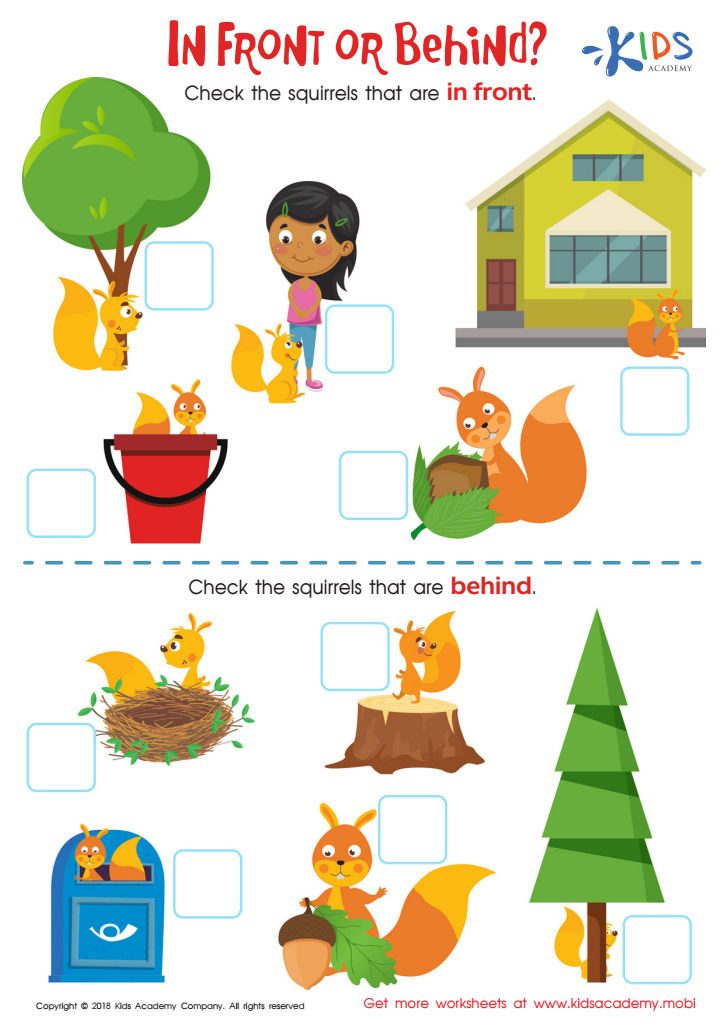
Teach positional words "front" and "behind" with this fun worksheet! Students identify where the squirrel is in relation to the object - in front or behind. It's a great exercise to practice early geometry skills and understanding object movement.
In Front or Behind: Part 2 Worksheet
Worksheet
Fairy Tales Maze Worksheet

Fairy Tales Maze Worksheet

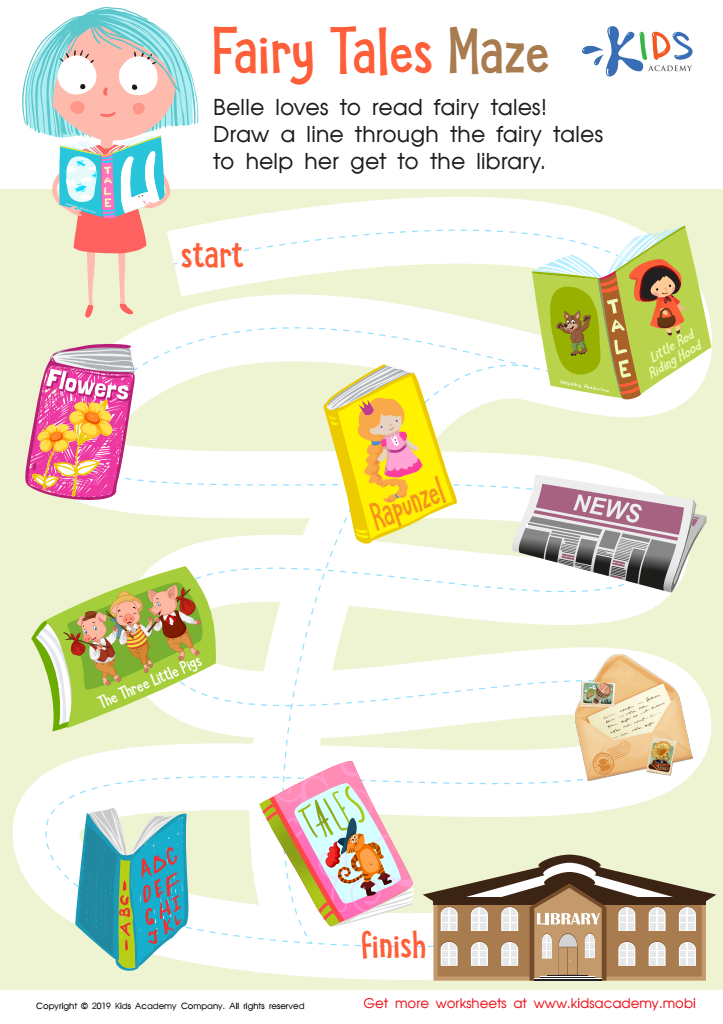
Kids love mazes and fairy tales, so this free worksheet is a great way to help teach young readers about familiar topics. They'll join Bella and use the traceable lines to travel through different reading genres, and find their way to the library for a nice reward!
Fairy Tales Maze Worksheet
Worksheet
Up or Down Worksheet

Up or Down Worksheet

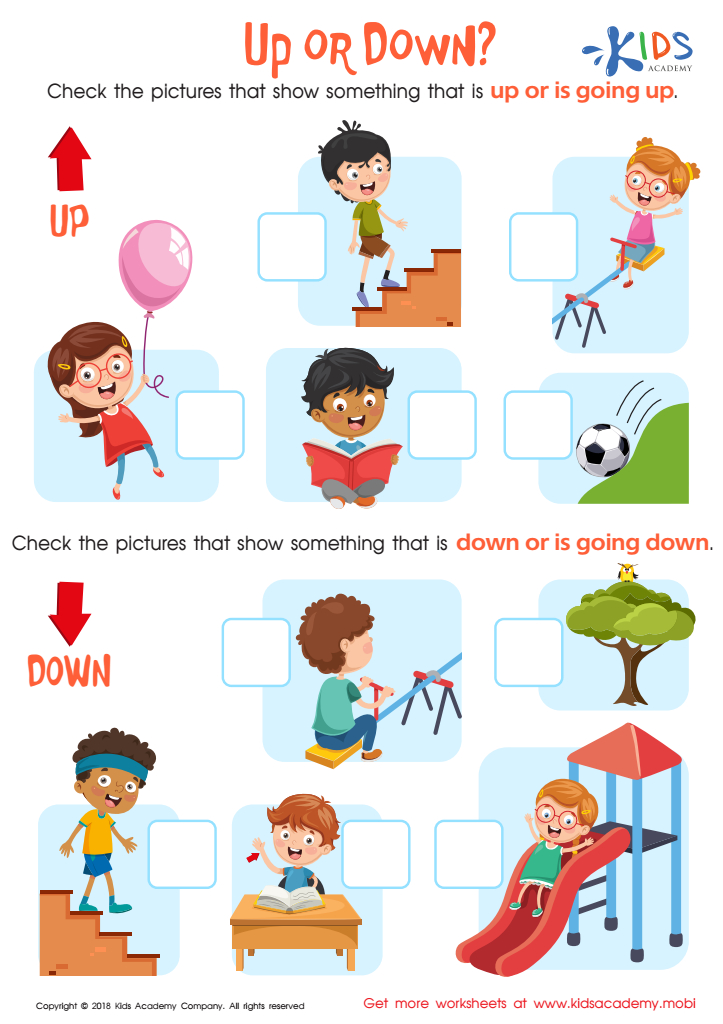
Teach your toddlers the concepts of up and down with Kids Academy's vivid worksheet! Use the seesaw analogy to reinforce this language with them and build a strong foundation for future learning. Show them how a balloon can float up but must come back down too.
Up or Down Worksheet
Worksheet
Space maze worksheet: Telescope

Astronomer Maze: Telescope Worksheet

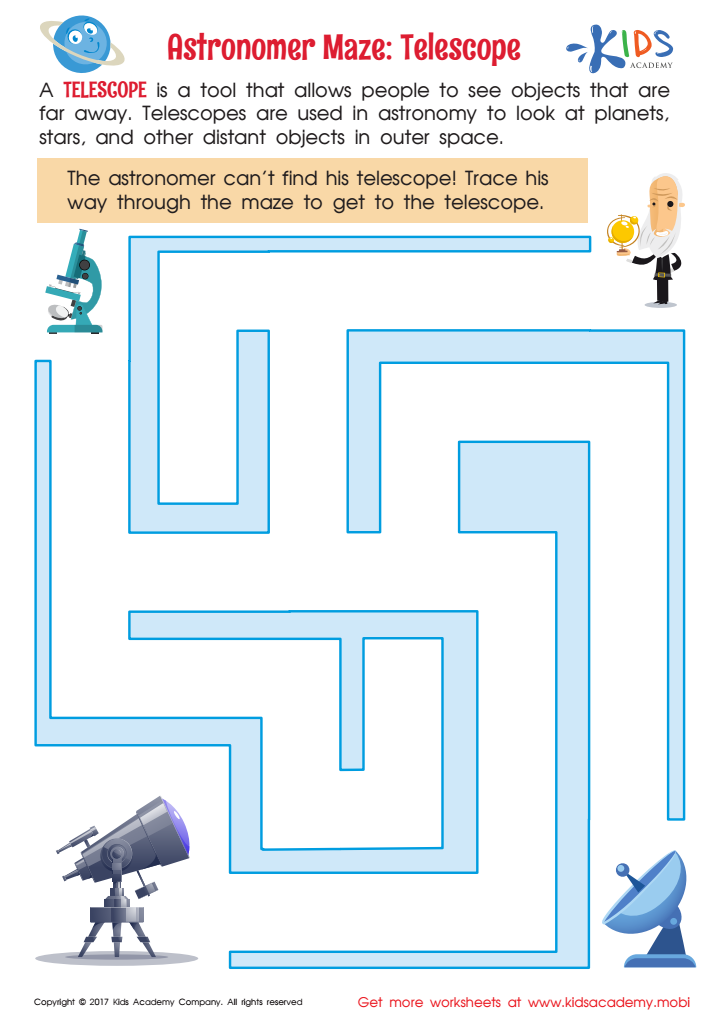
Let your mini astronomer explore the galaxy with this fun and puzzling space maze worksheet – Telescope! Your child will have a great time navigating the maze, while learning how telescopes help scientists study the stars.
Astronomer Maze: Telescope Worksheet
Worksheet
Migration Maze Worksheet

Migration Maze Worksheet

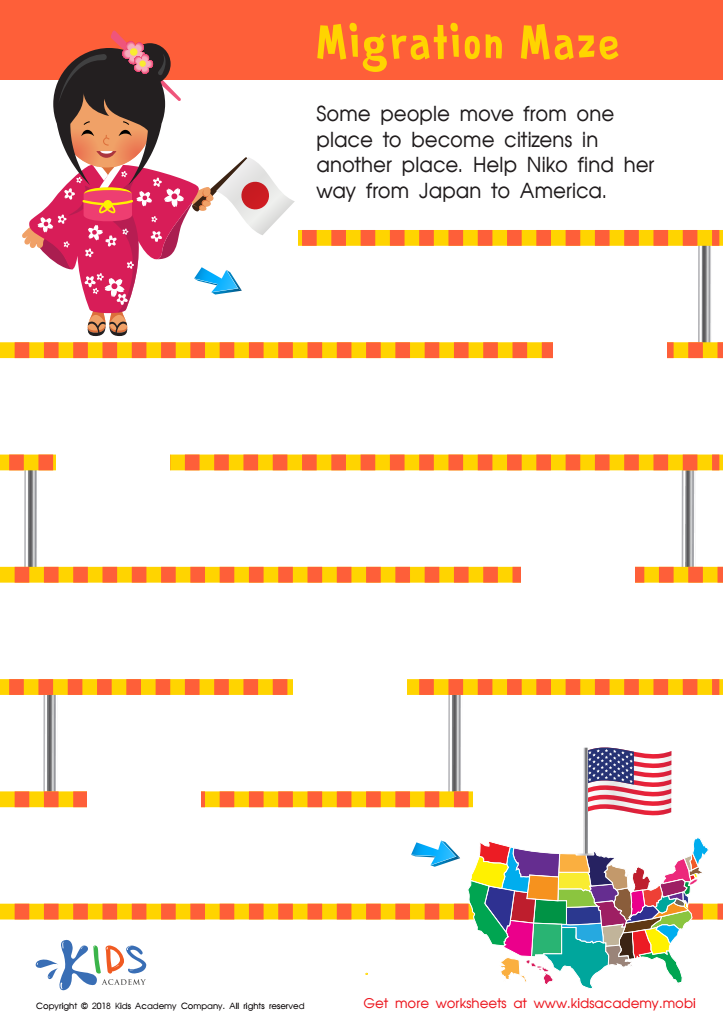
You are a citizen of your school, city and country. Many people migrate to become citizens of another place, like Niko in this worksheet. Ask your students to help her find her way from Japan to America.
Migration Maze Worksheet
Worksheet


Spatial awareness is a crucial cognitive skill that helps children understand the relationship between themselves and the objects around them. For ages 4-8, when children are rapidly developing fundamental cognitive abilities, spatial awareness plays a significant role in their overall growth.

Fostering this skill can enhance a child's ability to solve problems, which is essential in mathematical reasoning and understanding geometry. Activities like building blocks, puzzles, and even simple games promote spatial awareness, allowing children to visualize relationships, understand directions, and comprehend size and distance.

Furthermore, spatial awareness contributes to everyday skills, from learning to write and read to playing sports and recognizing shapes in their environment. Children with strong spatial skills often find it easier to learn subjects like math and science later on.

Teachers and parents can incorporate spatial activities into daily routines to strengthen these skills. Simple activities such as following directions in games, discussing maps, or engaging in construction play not only aid cognitive development but also enhance fine motor skills. Overall, caring about and supporting children’s spatial awareness during these formative years sets a solid foundation for their academic success and enhances their confidence as learners.