Syllable identification Normal Worksheets for Ages 4-8
7 filtered results
-
From - To
Discover our engaging Syllable Identification Worksheets, perfect for children ages 4-8. Designed to elevate early reading skills, these worksheets help young learners recognize and count syllables in words through fun activities. From clapping hands to segmenting words, kids will enjoy a variety of exercises that make learning interactive. Each worksheet aims to enhance phonological awareness, setting a strong foundation for reading fluency. Visit Kids Academy to access our printable resources and boost your child’s literacy development while keeping them entertained and eager to learn. Ignite a love for reading with our expertly crafted syllable identification worksheets!
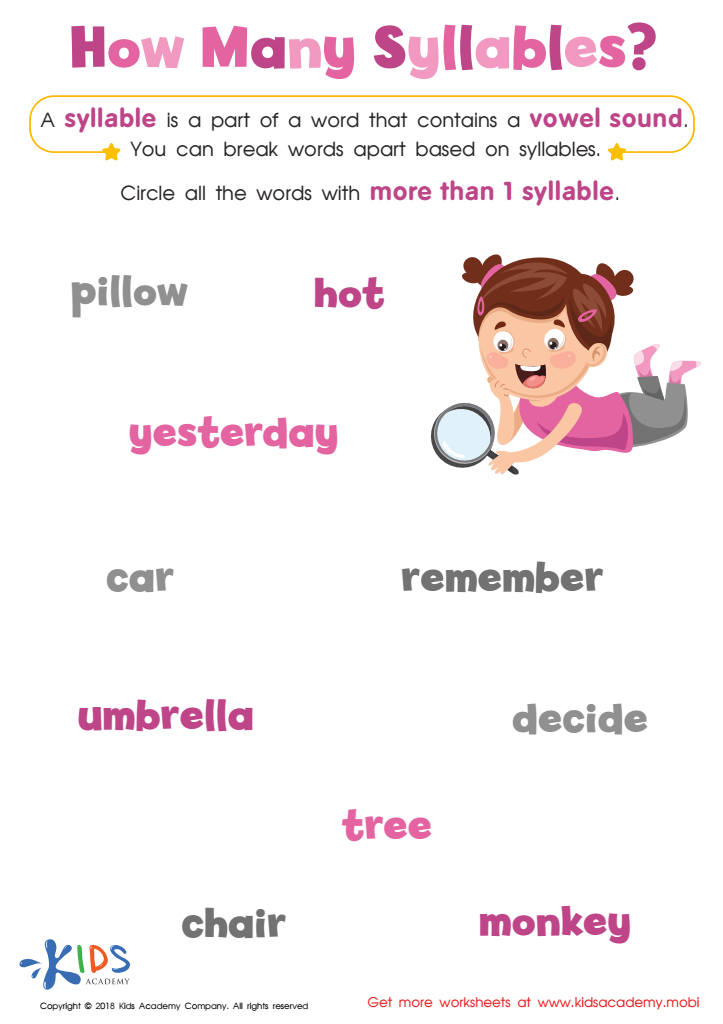
Reading: How Many Syllables Worksheet
 Assign to My Students
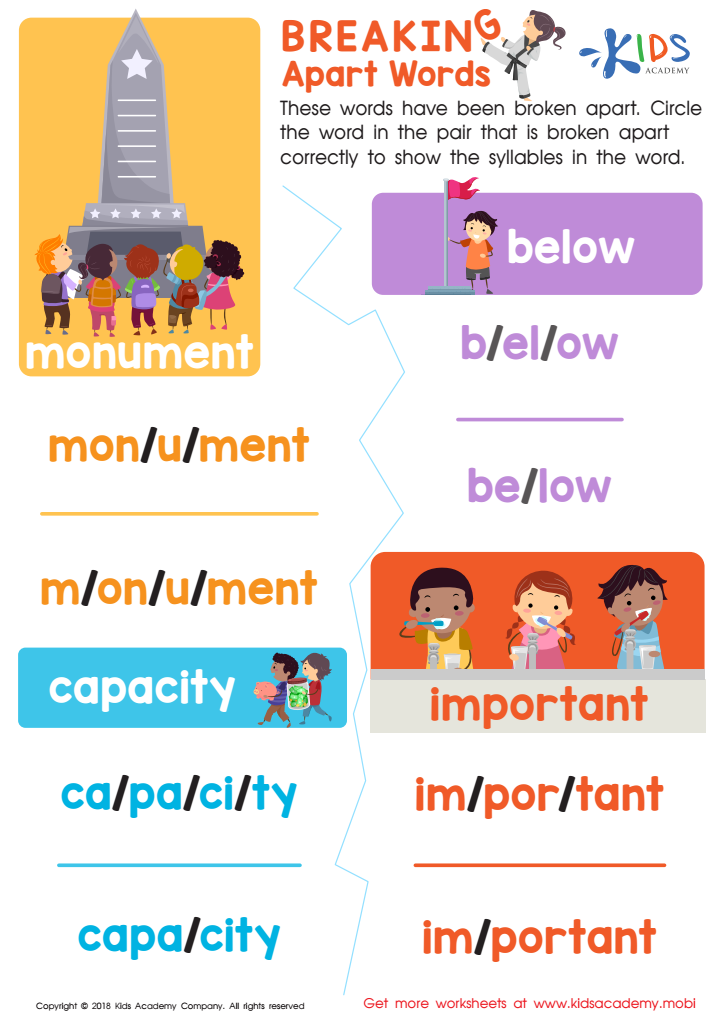
Breaking Apart Words Worksheet
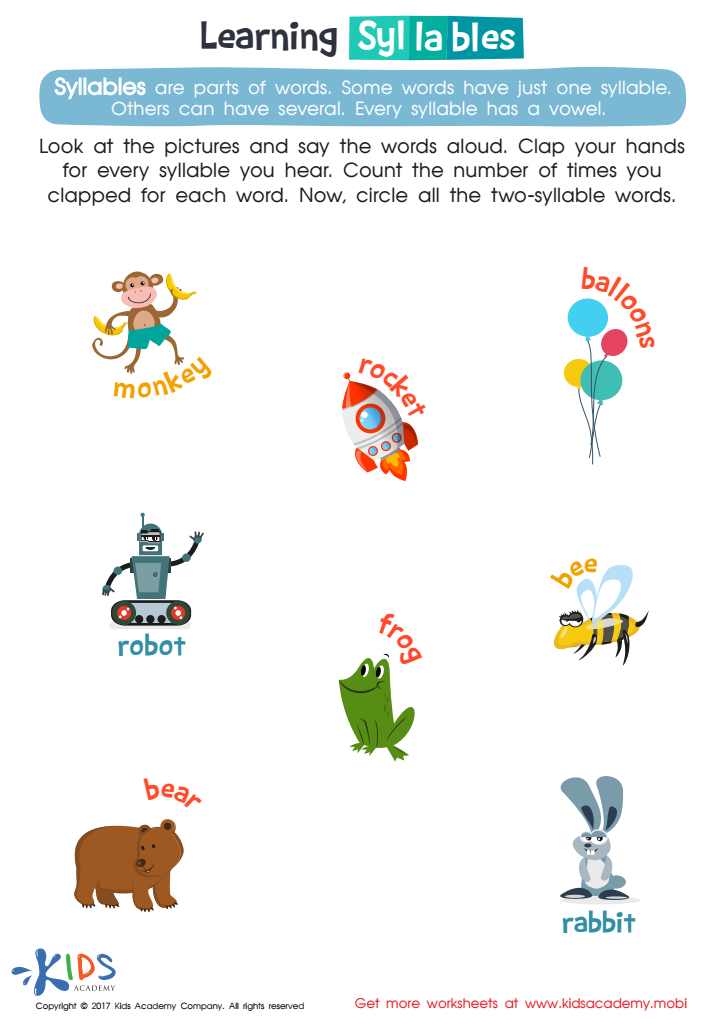
Learning Syllables Word Structure Worksheet
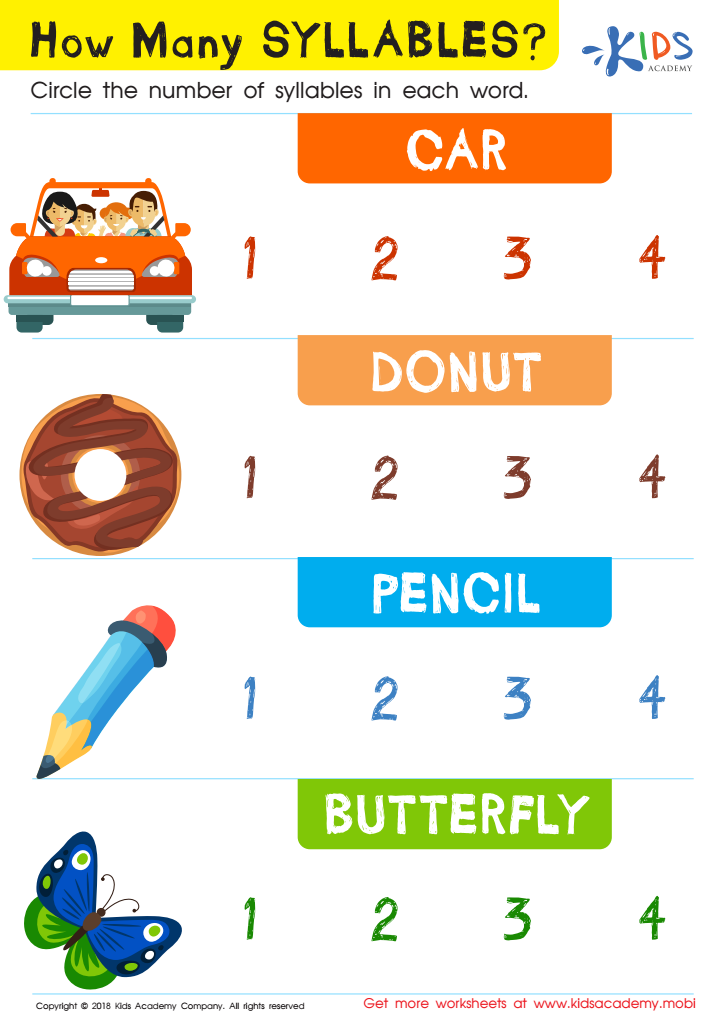
How Many Syllables? Worksheet
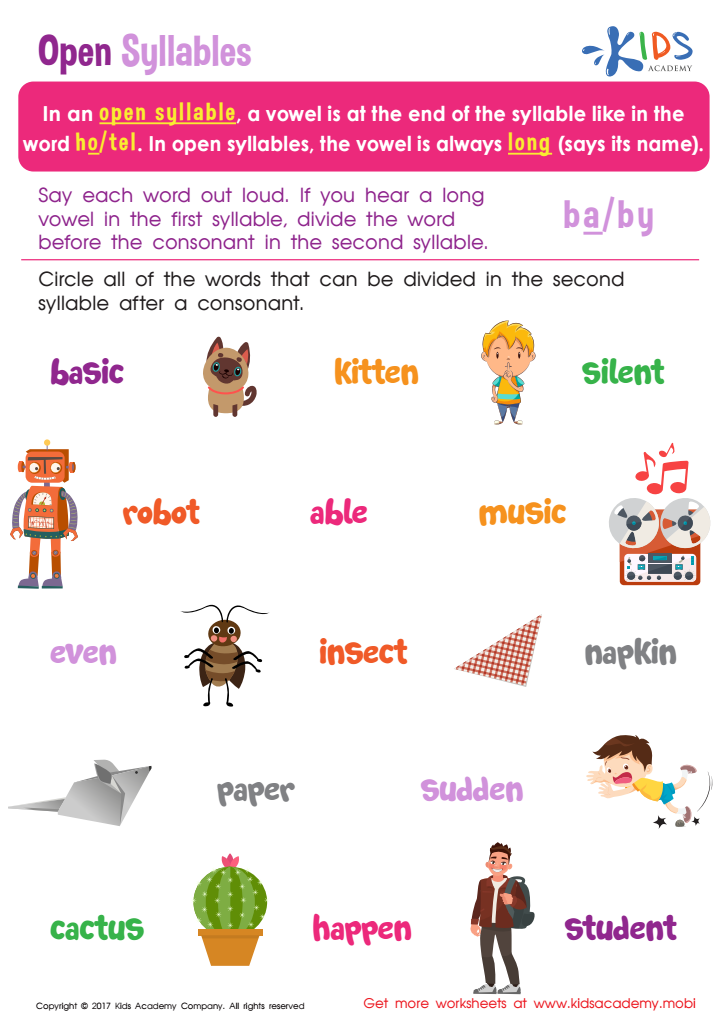
Open Syllable Printable Worksheet
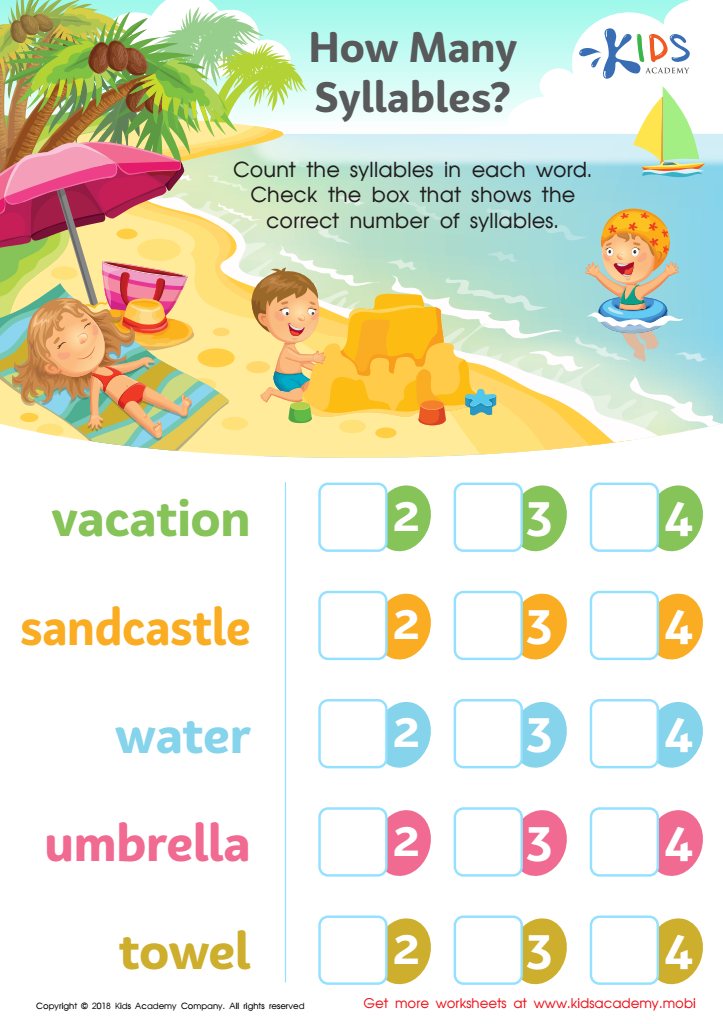
How Many Syllables Worksheet
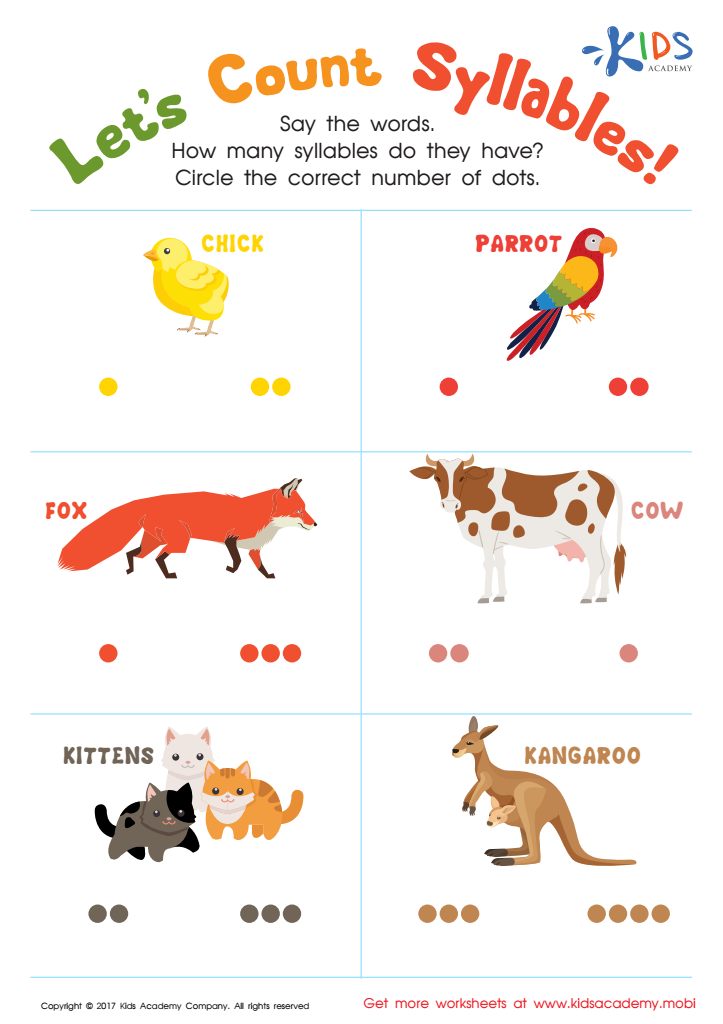
Lets Count Syllables Worksheet






.jpg)
Syllable identification is a fundamental skill for children aged 4-8 as it serves as the building block for reading and writing proficiency. Parents and teachers should highly value this skill because it aids in the development of phonological awareness—the ability to recognize and manipulate the sounds in language. When children identify syllables, they start to understand that words can be broken down into smaller, manageable parts, making the learning process less daunting and more approachable.
Mastering syllable identification helps children improve their decoding skills, enabling them to sound out new words more effectively. This acts as a significant confidence booster, encouraging them to read more frequently and with greater enjoyment. Additionally, strong syllable awareness can lead to better spelling skills since children can break words into syllables and sounds, facilitating accurate letter placement.
Moreover, recognizing and producing syllables assists in enhancing pronunciation and listening skills, which are crucial for effective communication. Early syllable identification lays a strong linguistic foundation that contributes to overall academic success, as many subjects relying on reading and comprehension benefit from it. Therefore, by supporting and prioritizing syllable identification, parents and teachers lay the groundwork for a child’s lifelong literacy and learning journey, ultimately fostering a more profound intellectual and emotional development.








