Uppercase identification Normal Worksheets for Ages 4-8
5 filtered results
-
From - To
Discover engaging Uppercase Identification Normal Worksheets tailored for children aged 4-8 at Kids Academy. These meticulously crafted worksheets are designed to make learning uppercase alphabets fun and effective. Enhance your child's recognition skills through a variety of activities featuring vibrant illustrations and interactive exercises. Perfect for young learners, these worksheets support early literacy by focusing on letter matching, identification, and writing practice. Help your child achieve confidence in their uppercase letters with our educational resources, making the journey to reading and writing enjoyable and rewarding. Visit Kids Academy for top-notch learning materials that inspire growth and creativity.
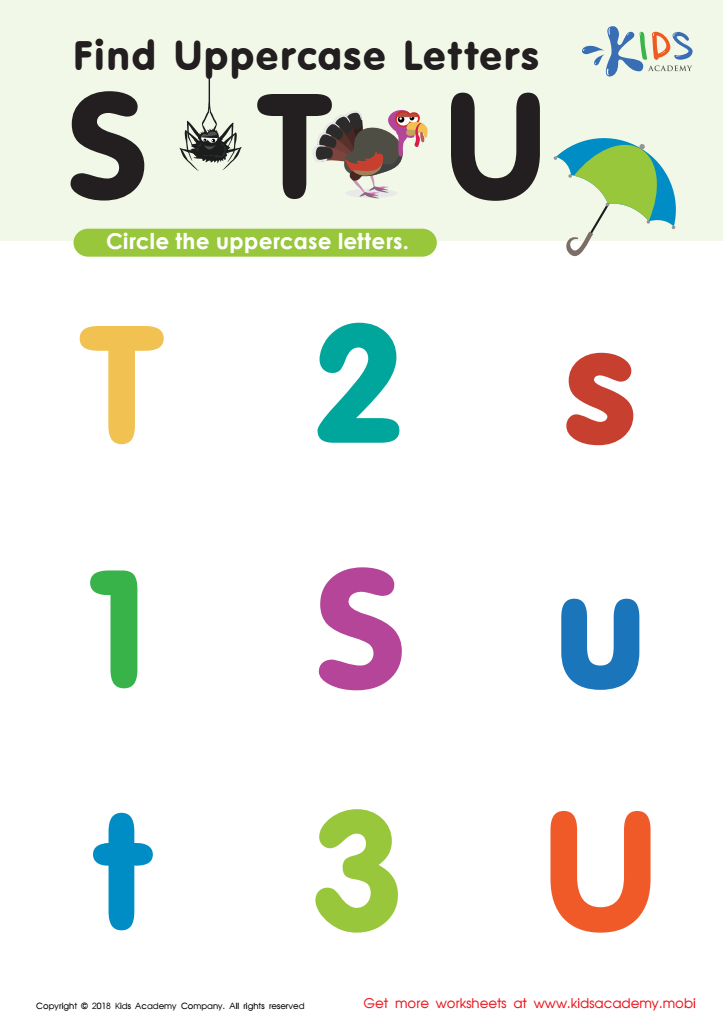
Find Uppercase Letters Worksheet
 Assign to My Students
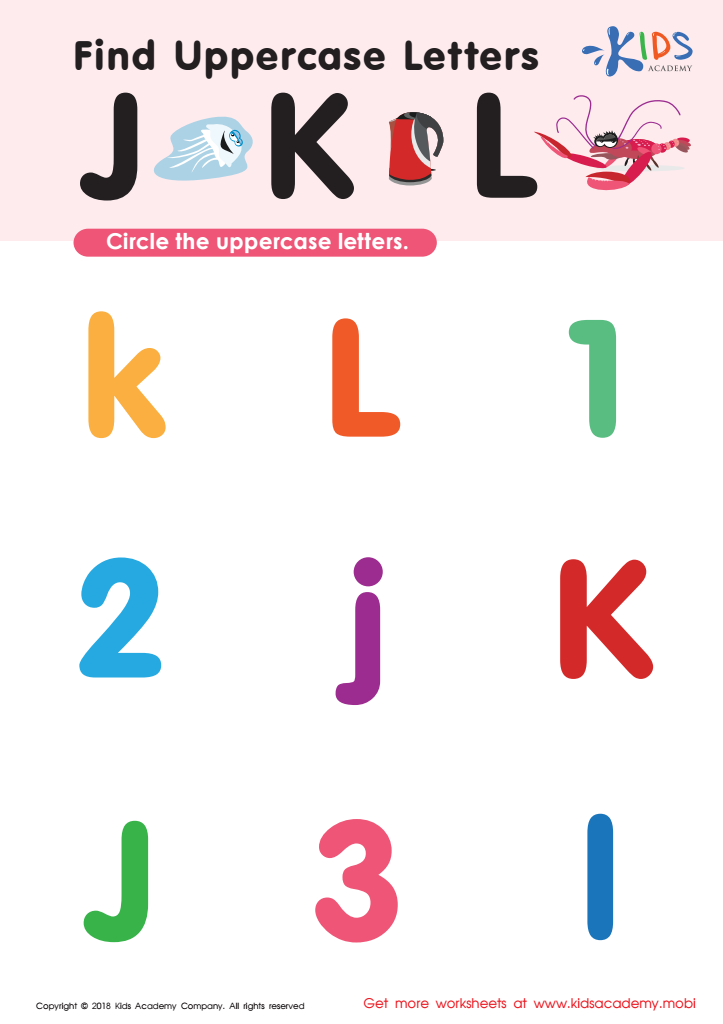
Find Uppercase Letters J, K, and L Worksheet

Find Uppercase Letters A, B, and C Worksheet
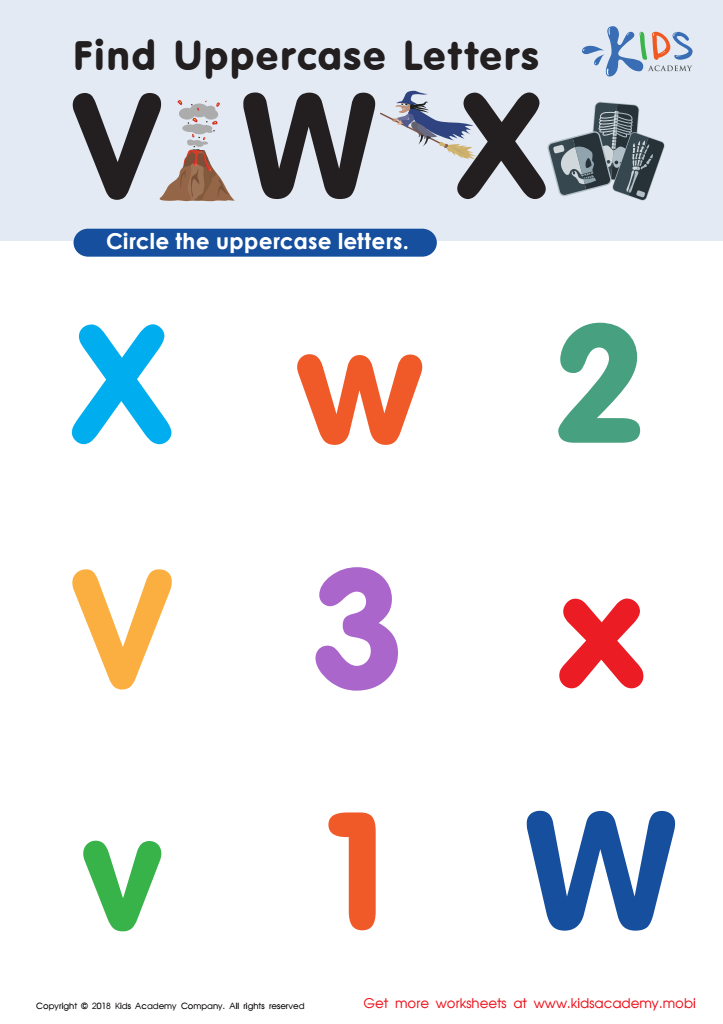
Find Uppercase Letters V, W, X Worksheet
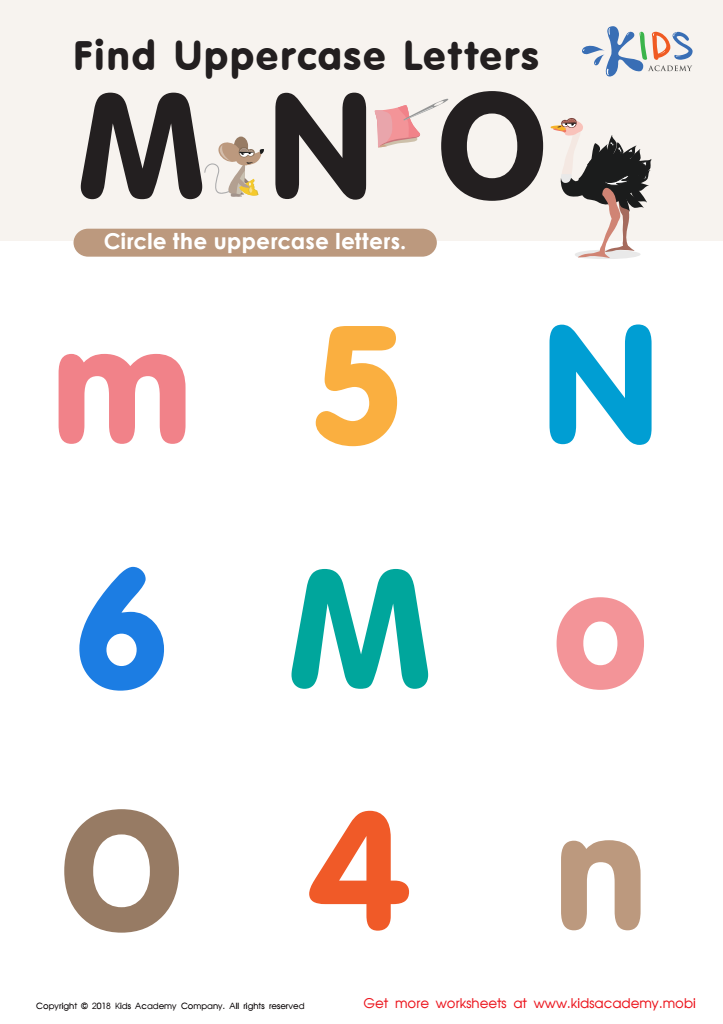
Find Uppercase Letters M, N, and O Worksheet






.jpg)
Uppercase identification is a fundamental aspect of early literacy that parents and teachers should prioritize for children aged 4-8. This period, often referred to as the 'critical window,' is when young minds are highly receptive to learning foundational skills that impact their future academic success.
First, recognizing uppercase letters is a precursor to reading proficiency. Children typically learn to recognize and write uppercase letters before lowercase ones, providing an essential stepping stone to reading and writing words. This skill helps children understand the alphabetic principle — the idea that letters represent sounds in spoken language, which forms the bedrock of phonics and other spelling skills.
Second, uppercase identification fosters cognitive development. Mastering these letters involves memory, visual discrimination, and fine motor skills, nurturing the child's overall intellectual growth.
Additionally, uppercase letter recognition frequently appears in environmental print — signs, billboards, and labels that children encounter daily. This familiarity accelerates reading abilities by connecting letters to real-world contexts, enhancing vocabulary acquisition.
Lastly, early success with uppercase letters boosts a child’s confidence and morale. Recognizing and correctly identifying letters prepares children not just for school but for a lifelong journey of learning, encouraging a positive attitude toward education. In essence, foundational literacy skills today pave the way for academic achievement tomorrow.








