Basic subtraction skills Normal Addition & Subtraction Worksheets for Ages 4-8
3 filtered results
-
From - To
Enhance your child's math foundation with our "Basic Subtraction Skills" worksheets, designed for ages 4-8. These worksheets engage young learners in a fun and interactive way, making subtraction concepts easy to grasp. Featuring vibrant illustrations and approachable exercises, children will develop essential skills through practice and repetition. Our carefully curated activities support the understanding of subtraction as the inverse of addition, boosting confidence in their math abilities. Perfect for both classroom and home learning, these printable worksheets can help build a strong mathematical foundation that paves the way for future learning. Start your child's journey to math success today!
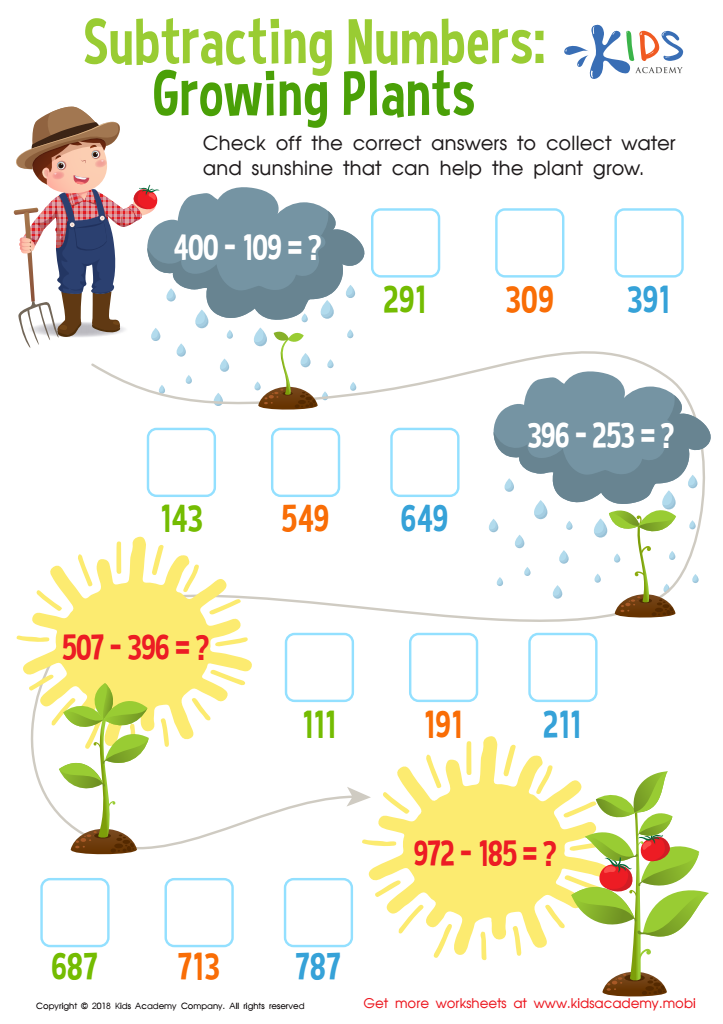
Subtracting Numbers: Growing Plants Worksheet
 Assign to My Students
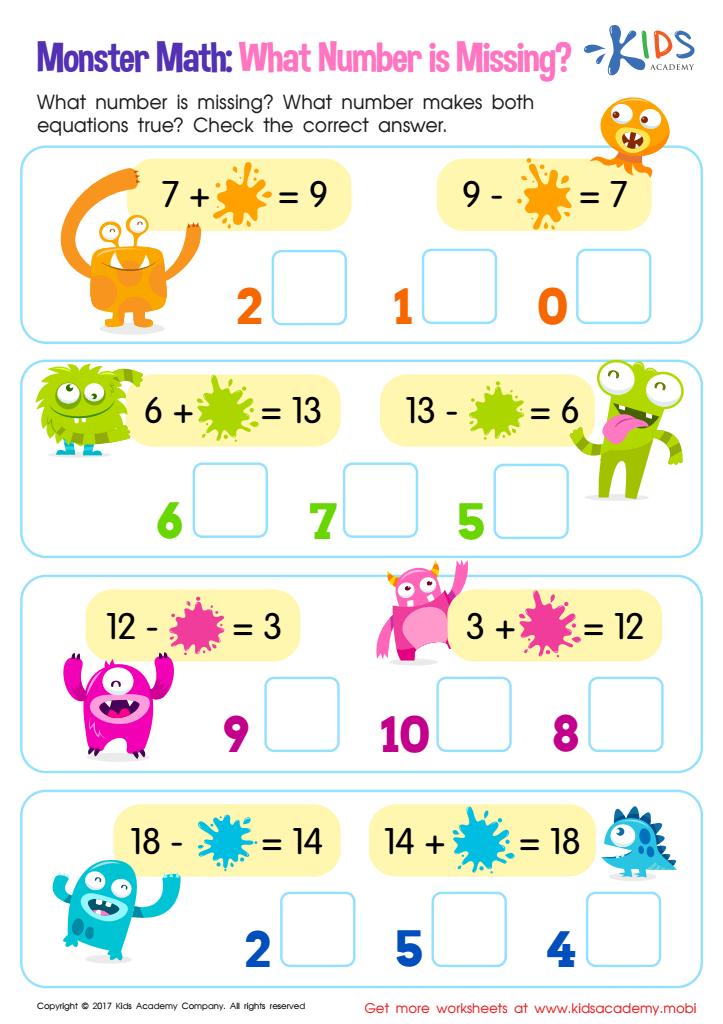
Missing Number: Monster Math Worksheet
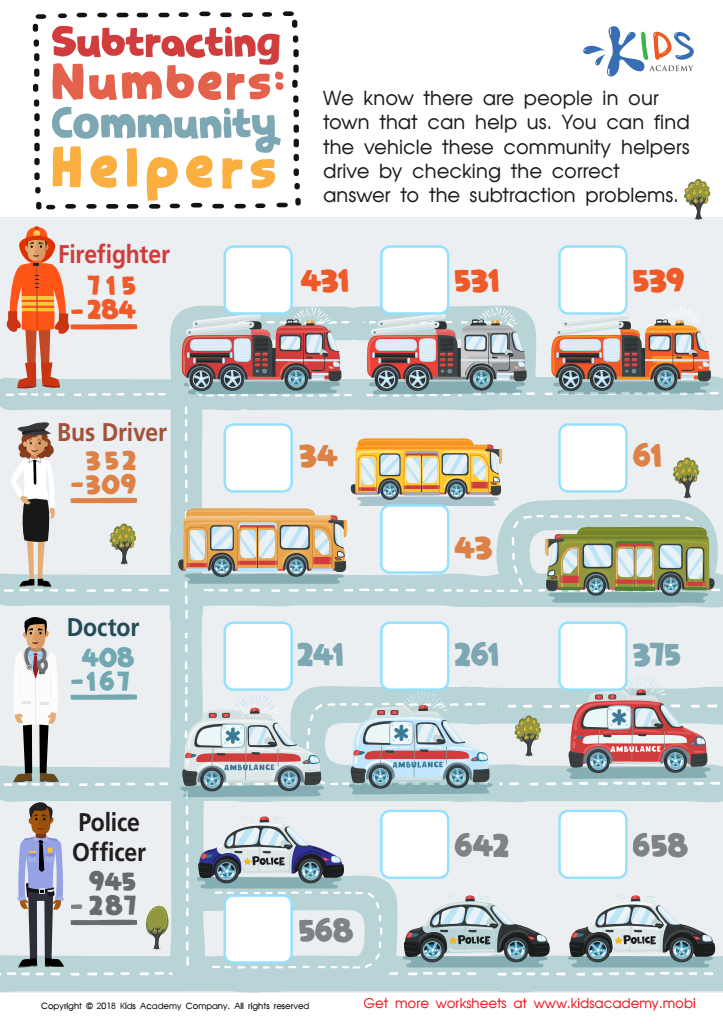
Subtracting Numbers: Community Helpers Worksheet








Basic subtraction and addition skills are fundamental building blocks in a child's education, especially for those aged 4-8. Mastering these skills lays a strong foundation for more complex mathematical concepts introduced in later grades. At this early stage, children develop critical thinking and problem-solving abilities. By understanding how to manipulate numbers, they enhance their cognitive development, which also contributes to better performance across various subjects.
Moreover, proficiency in basic addition and subtraction promotes confidence and independence in learning. Children who grasp these skills can tackle math-related tasks with greater ease, fostering a positive attitude towards academics. For parents and teachers, being involved in this foundational stage can enhance the learning experience, as they can encourage discussions around math in everyday situations—turning counting sweets or subtracting toys into engaging activities and lessons.
Additionally, strong basic math skills are vital for everyday life and future educational success. Children will encounter these concepts both in school and in daily scenarios, including budgeting and measurement. By nurturing these skills early on, parents and teachers provide essential scaffolding for lasting academic progress, preparing children to navigate more complex mathematical challenges in the future.








