Counting practice Normal Addition & Subtraction Worksheets for Ages 4-8
8 filtered results
-
From - To
Welcome to our Counting Practice worksheets designed for children ages 4 to 8! These engaging resources focus on normal addition and subtraction concepts to enhance foundational math skills. With user-friendly instructions and colorful illustrations, kids will enjoy learning how to count while mastering basic equations. Our worksheets provide ample opportunities for practice, helping young learners build confidence and improve their computation abilities. Perfect for both classroom and homeschooling environments, these worksheets make math exciting and accessible. Explore our carefully crafted activities, designed to nurture a love for learning while reinforcing essential counting, addition, and subtraction skills. Start your math journey today!
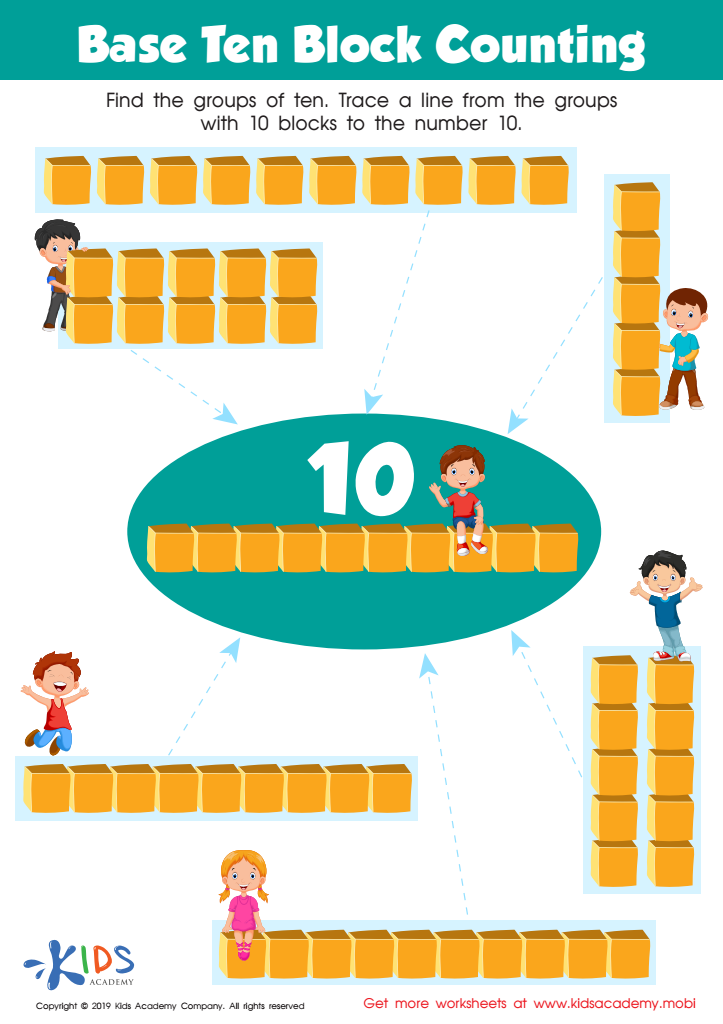
Base Ten Block Counting Worksheet
 Assign to My Students
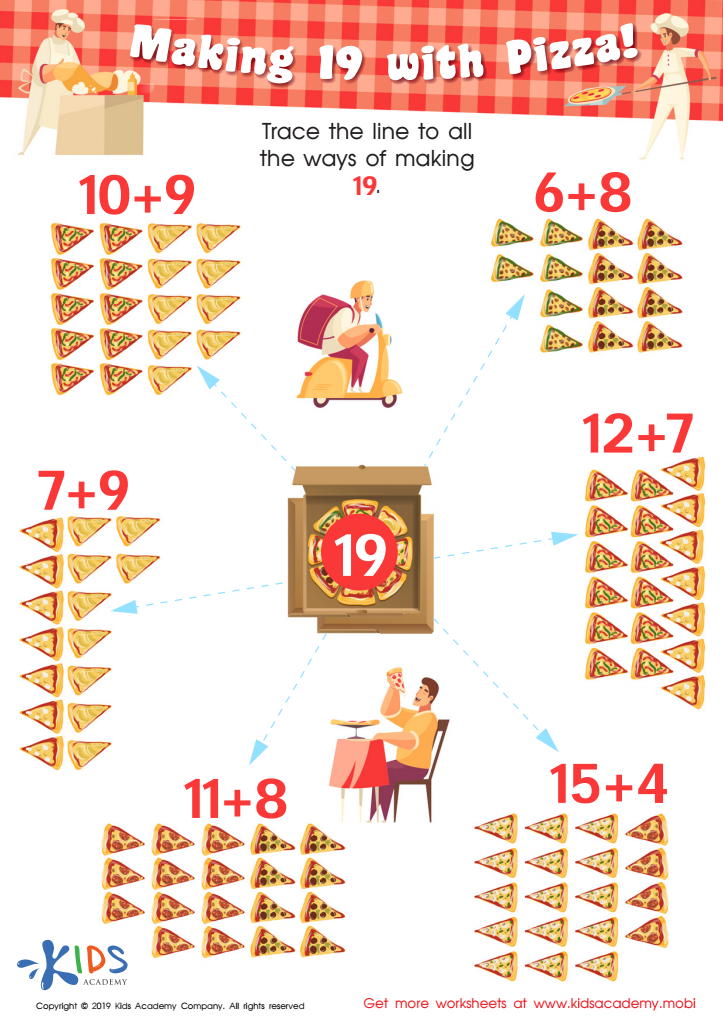
Making 19 with Pizza! Worksheet
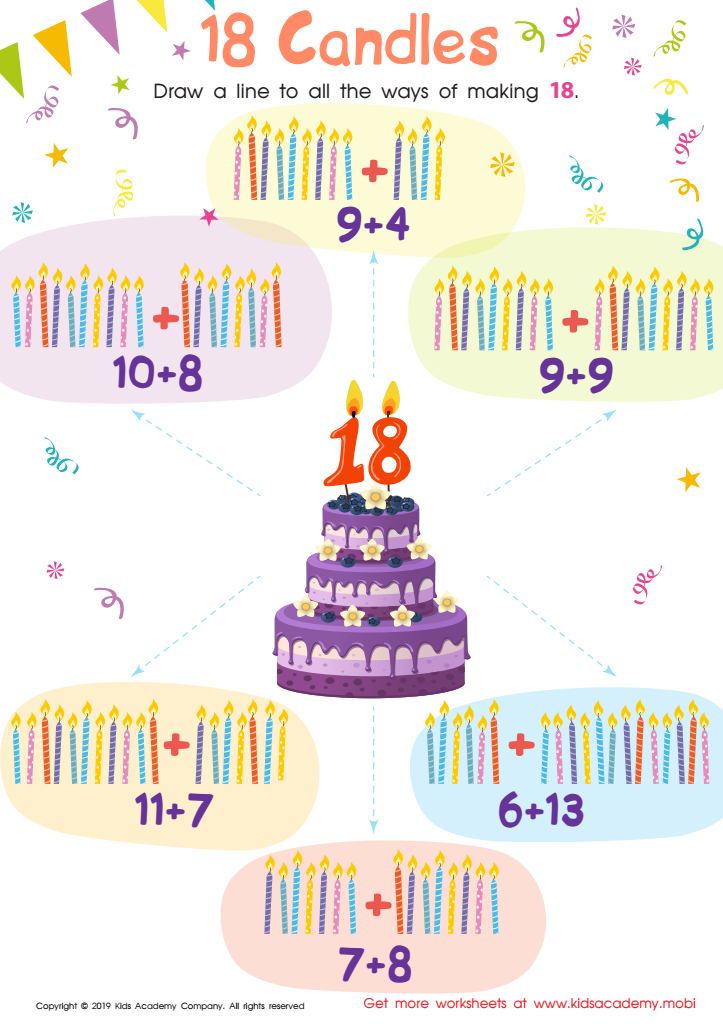
18 Candles Worksheet
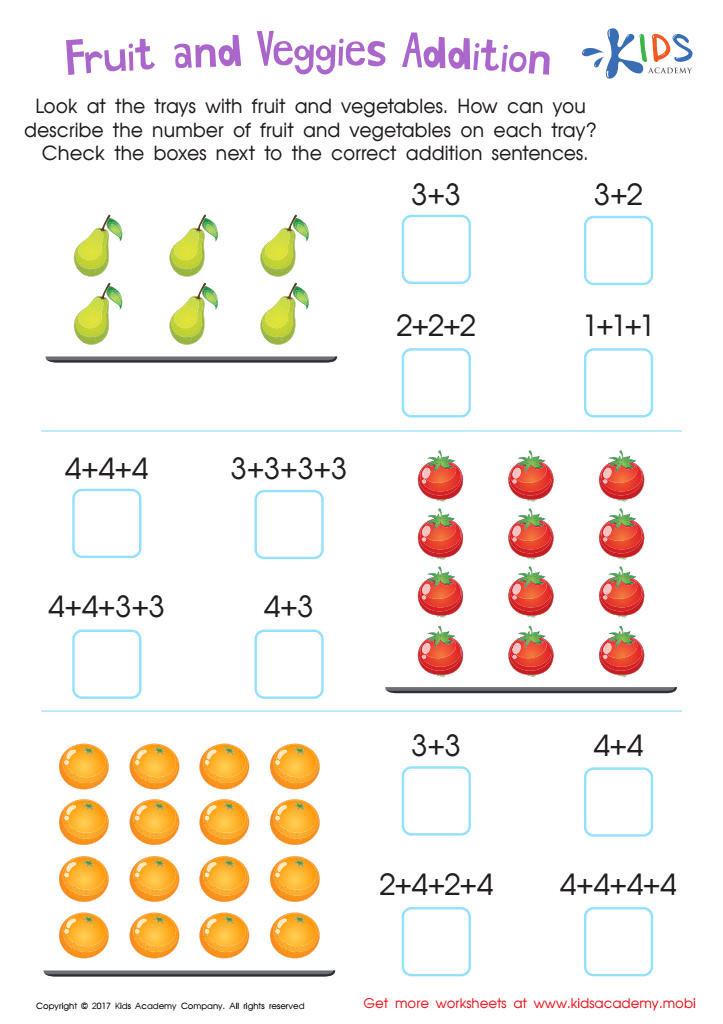
Fruit and Veggies Worksheet
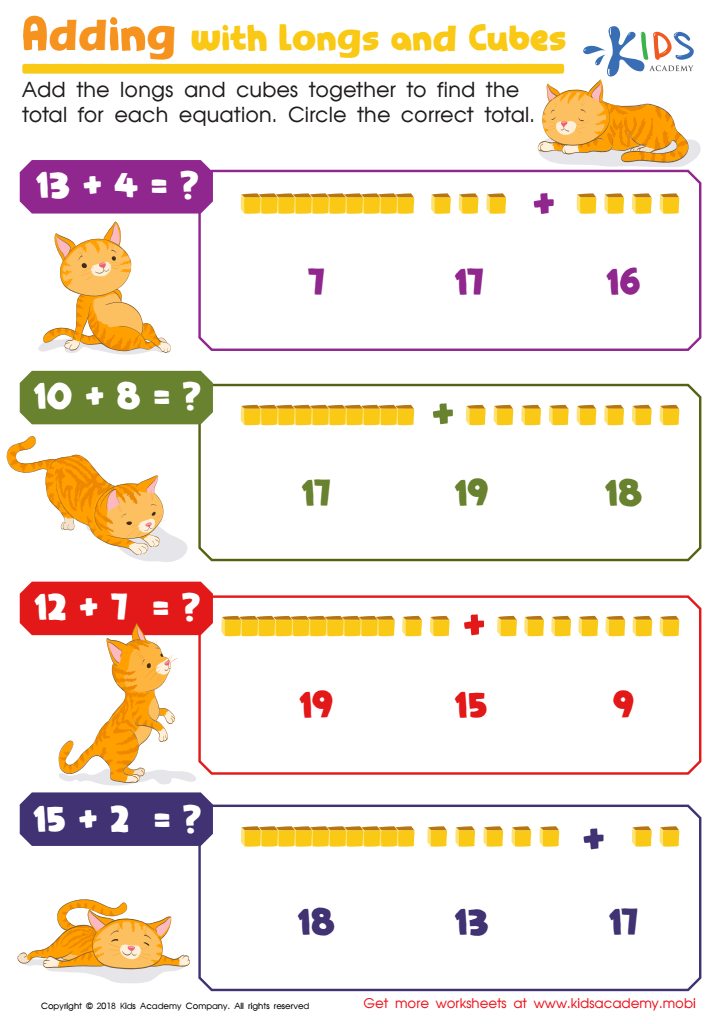
Adding With Longs and Cubes Worksheet
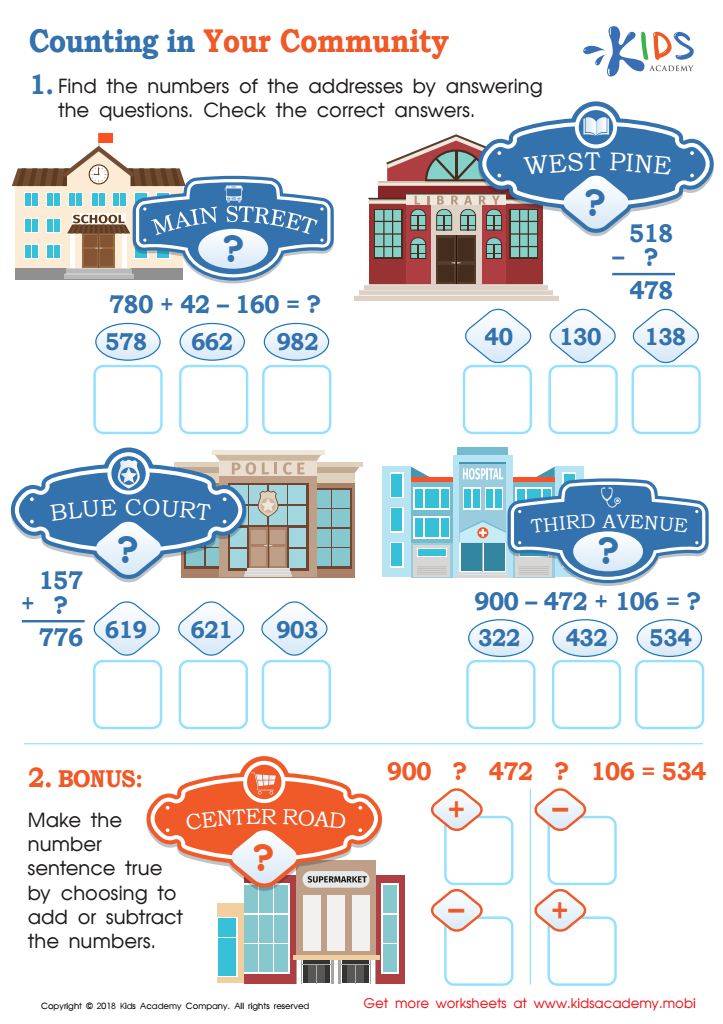
Counting in Your Community Worksheet
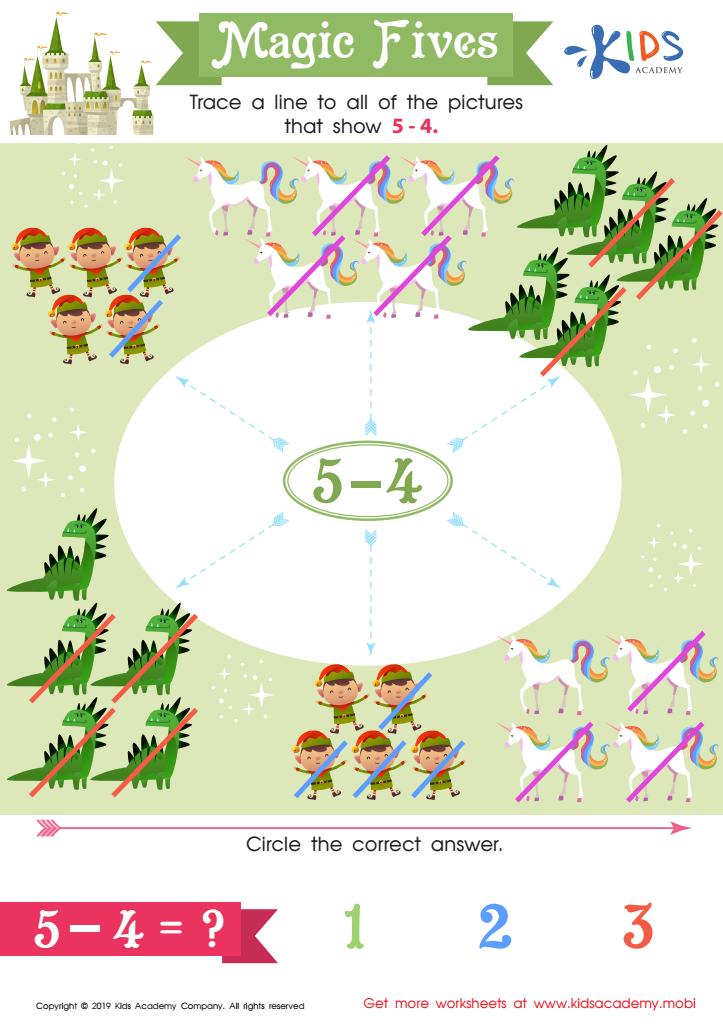
Magic Fives Worksheet
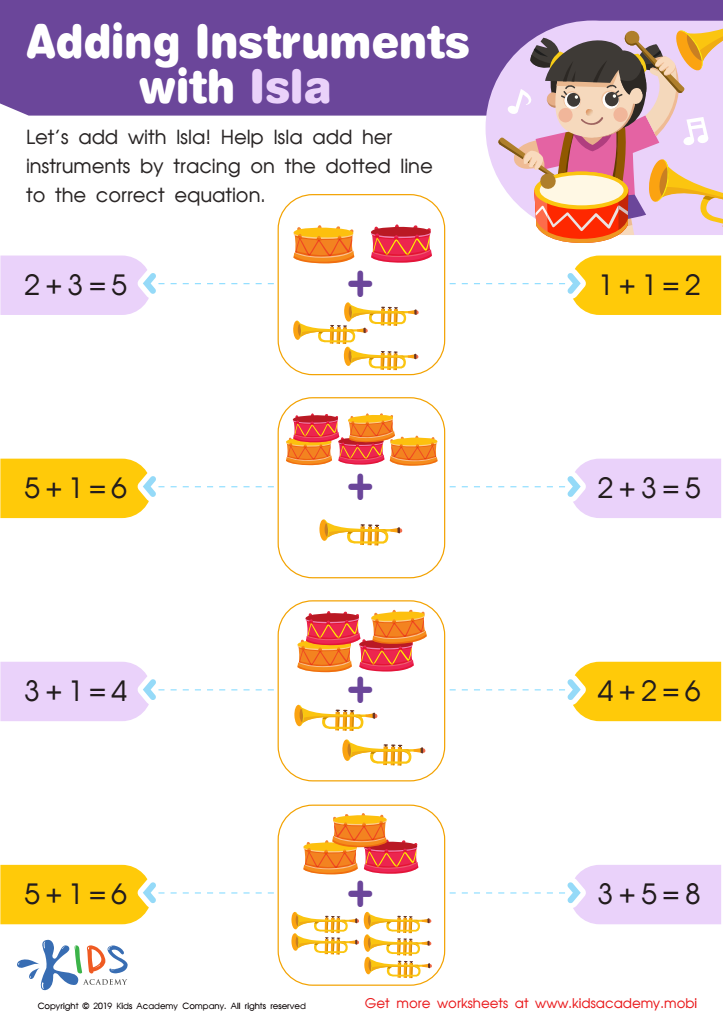
Adding Instruments with Isla Worksheet








Counting practice in normal addition and subtraction is crucial for children aged 4-8 as it lays the foundation for essential mathematical skills. At this early stage, children develop number sense, which is fundamental for future math concepts. By engaging in counting and basic operations, children learn to recognize numbers, understand their relationships, and improve their problem-solving skills.
Effective counting and arithmetic practices enhance cognitive development and help children identify patterns and sequences, fostering logical thinking. Additionally, these skills promote confidence as children successfully tackle math challenges, paving the way for a positive attitude toward learning.
Teachers and parents play a vital role in reinforcing these concepts through interactive activities that make learning enjoyable. Games, songs, and hands-on activities can be integrated into daily routines to motivate children to practice counting and math operations naturally.
Moreover, a strong early math foundation has implications for future academic success, as it correlates with overall achievement in various subjects. By prioritizing counting practice and normal addition and subtraction, parents and teachers equip children with essential skills, ensuring they are prepared for more complex mathematical concepts as they progress in their education.








