Improving math skills Normal Addition & Subtraction Worksheets for Ages 4-8
5 filtered results
-
From - To
Improve your child's math skills with our Normal Addition & Subtraction Worksheets designed for ages 4-8. Our worksheets provide a fun, effective way for young learners to master essential arithmetic concepts, including addition and subtraction. Each worksheet is carefully crafted to engage and challenge children, helping them develop confidence and build a strong math foundation. With a variety of activities and colorful designs, our resources make learning enjoyable and accessible. Enhance your child's learning experience and watch them excel in math with our expertly designed, age-appropriate worksheets. Visit Kids Academy to start improving math skills today!
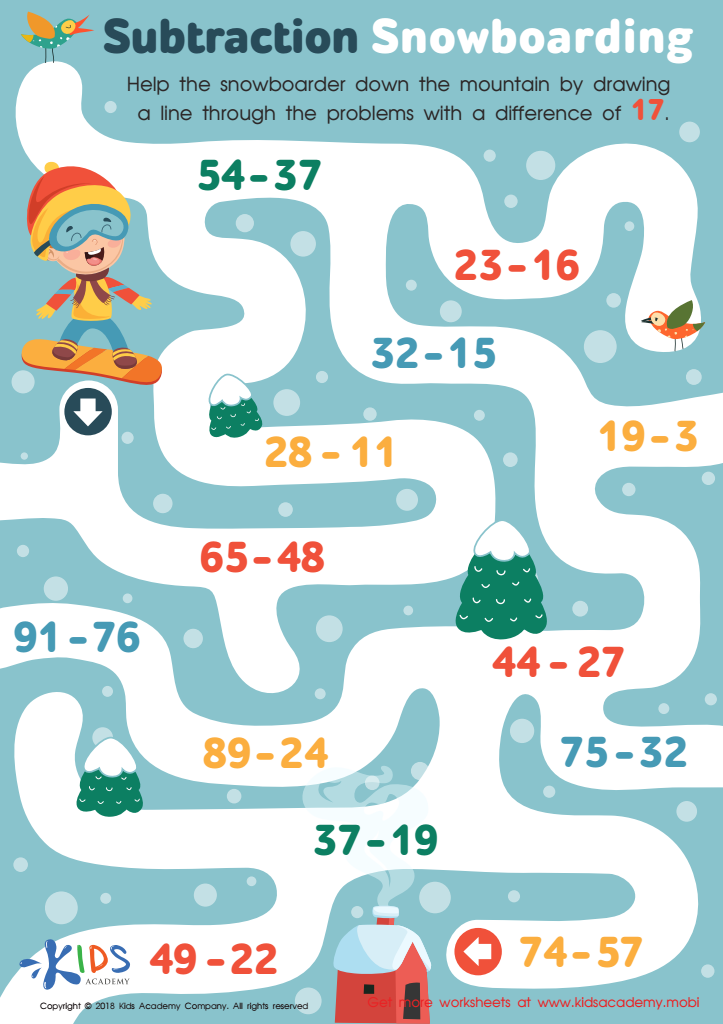
Subtraction Snowboarding Worksheet
 Assign to My Students
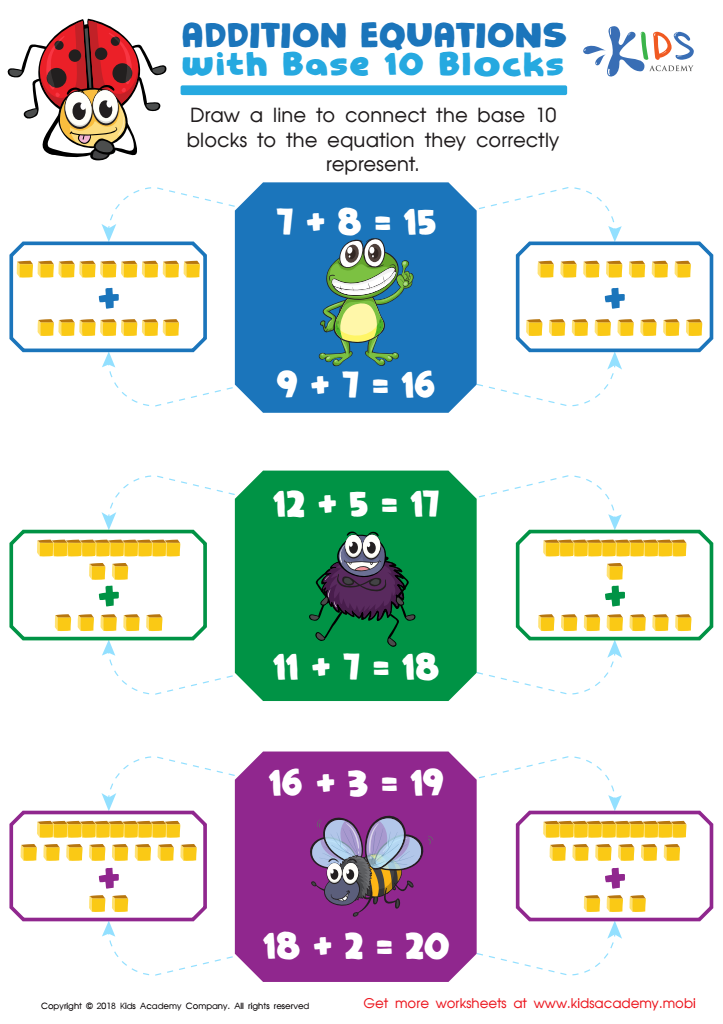
Addition Equations With Base 10 Blocks Worksheet
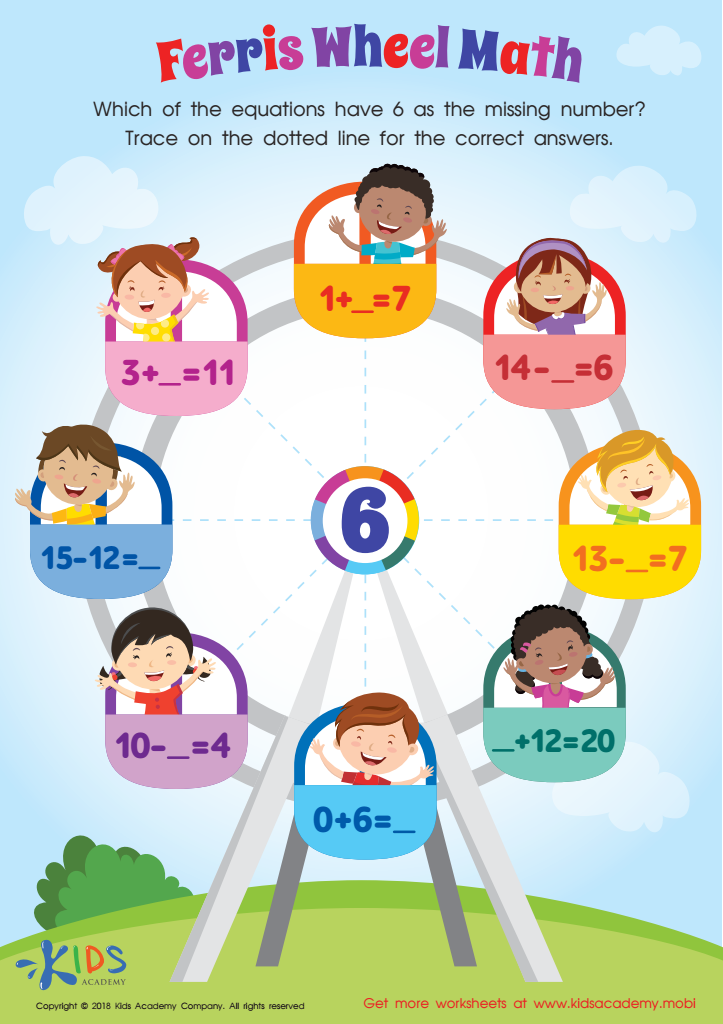
Missing Number: Ferris Wheel Math Worksheet
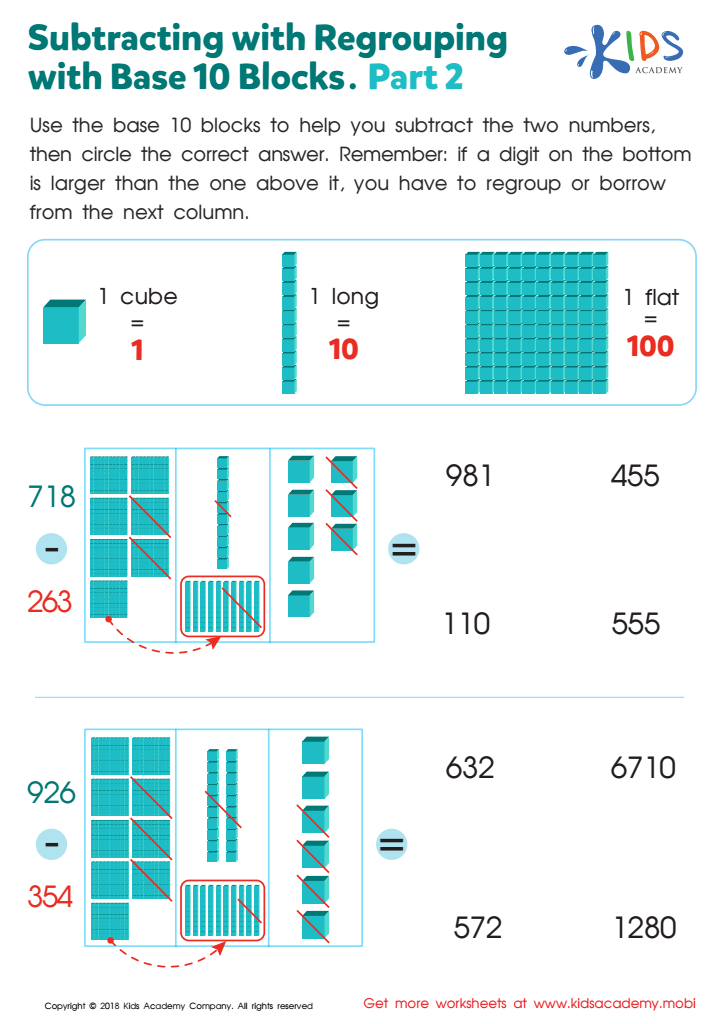
Subtracting with Regrouping with Base 10 Blocks. Part 2 Worksheet
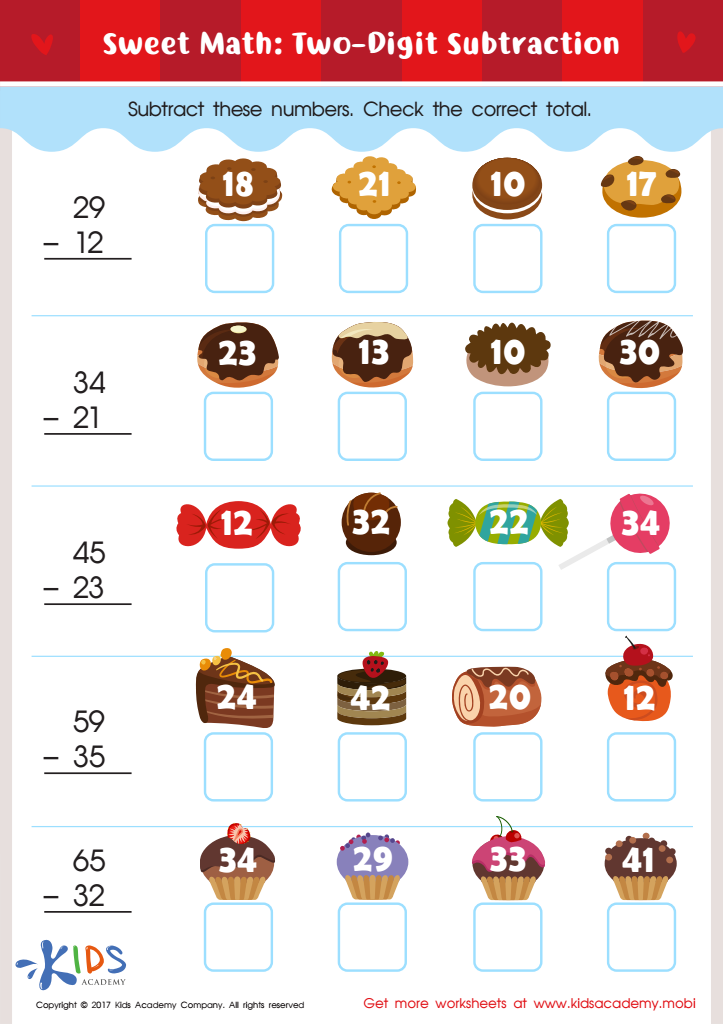
Two Digit Subtraction Worksheet








Improving math skills, specifically normal addition and subtraction, for children aged 4-8 is crucial for several developmental and educational reasons. Firstly, early exposure to math helps build a strong foundation for future math learning. Mastery of basic arithmetic like addition and subtraction lays the groundwork for more complex concepts that students will encounter later in their academic journey, such as multiplication, division, and fractions.
Moreover, developing these skills enhances critical thinking and problem-solving abilities. When children practice addition and subtraction, they learn to identify patterns, make predictions, and understand relationships between numbers, all of which are essential skills in daily life, not just in academics.
Engaging with math at an early age also boosts confidence and reduces math anxiety. When children feel competent in basic math, they are more likely to approach more challenging problems with a positive attitude. This sense of accomplishment fosters a lifelong love of learning and can translate into higher academic achievement overall.
Parents and teachers play pivotal roles in nurturing these skills. By incorporating fun, practical activities like counting objects, playing educational games, and using visual aids, they can make math enjoyable and relevant. Cultivating an early interest in math sets the stage for continuous improvement and success in both academic and real-world contexts.








