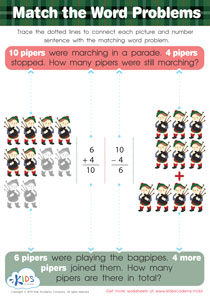
Mental math skills Normal Addition Worksheets for Ages 4-8
5 filtered results
-
From - To
Boost your child's mental math skills with our engaging Normal Addition Worksheets designed for ages 4-8! These worksheets are perfect for developing quick and accurate addition abilities, helping young learners build a strong foundation in math. Through fun exercises and interactive tasks, children will strengthen their problem-solving skills and enhance their number sense. Our worksheets cater to various learning styles, ensuring each child can master addition at their own pace. Ideal for classrooms or home practice, these printable resources make math enjoyable and accessible. Start nurturing your child's math confidence today with our expertly crafted mental math exercises!
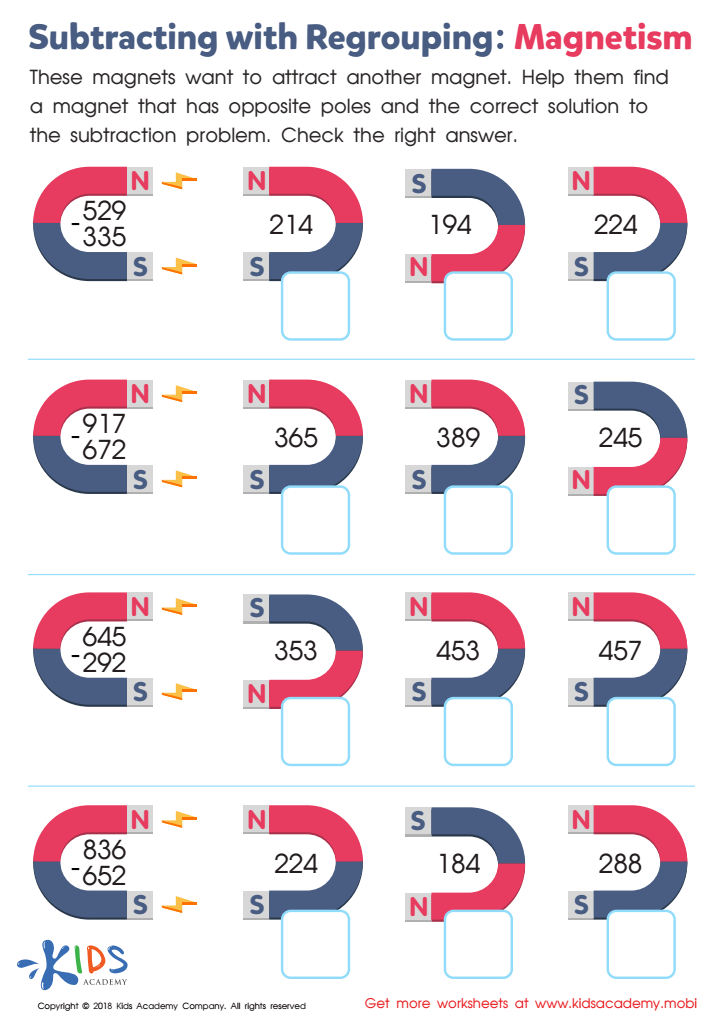
Subtracting with Regrouping: Magnetism Worksheet
 Assign to My Students
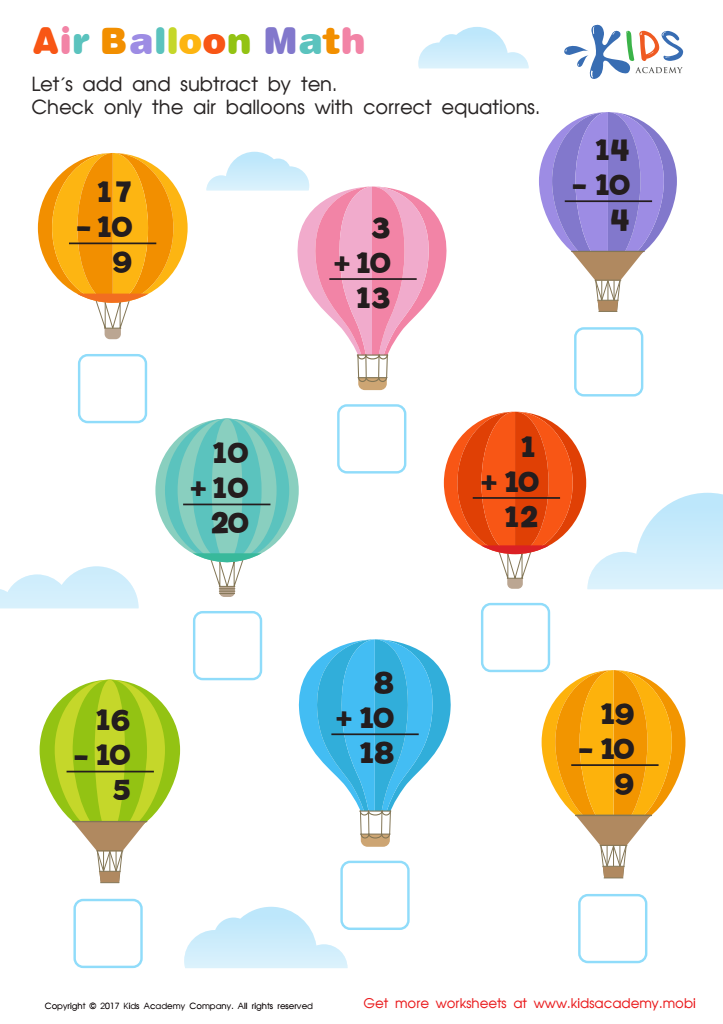
Air Balloon Math Worksheet
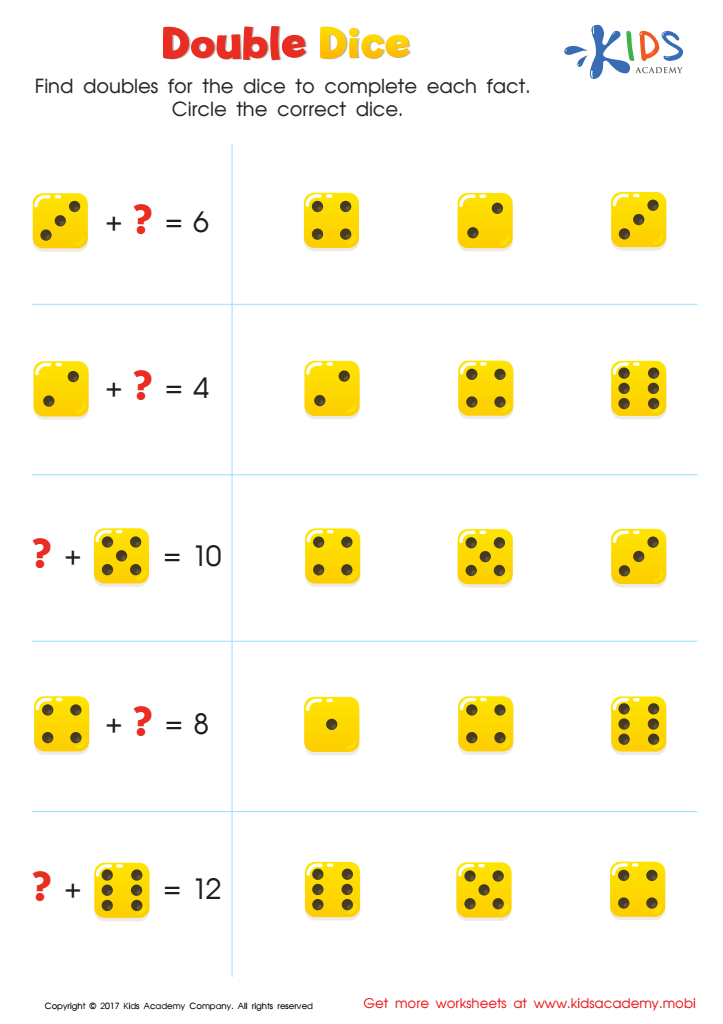
Addition Facts: Double Dice Worksheet
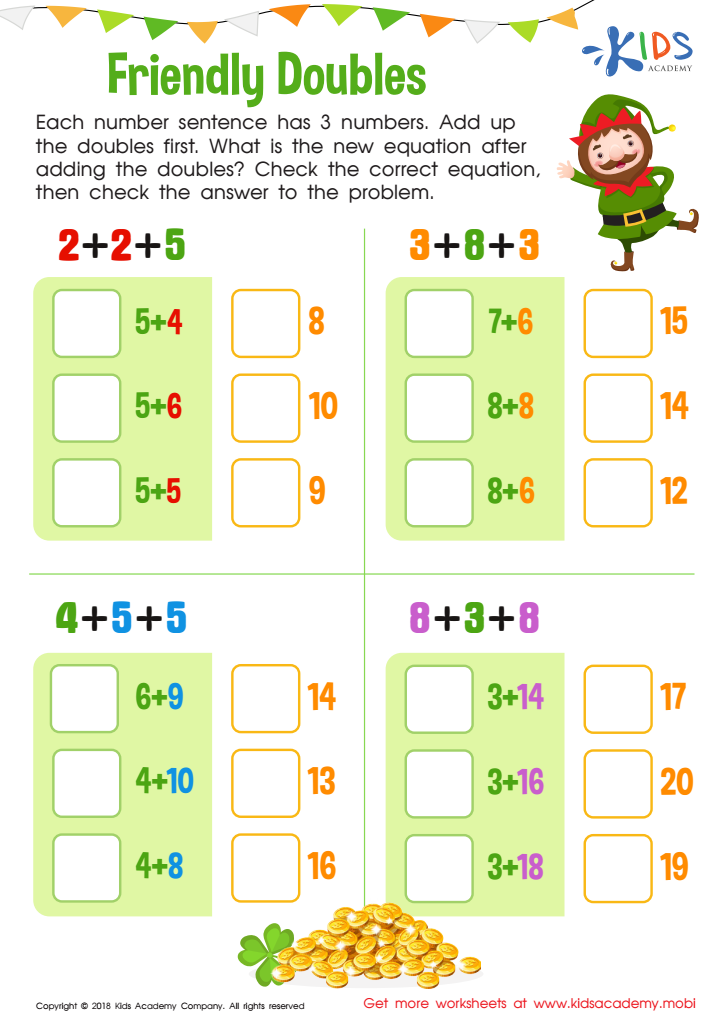
Friendly Doubles Worksheet
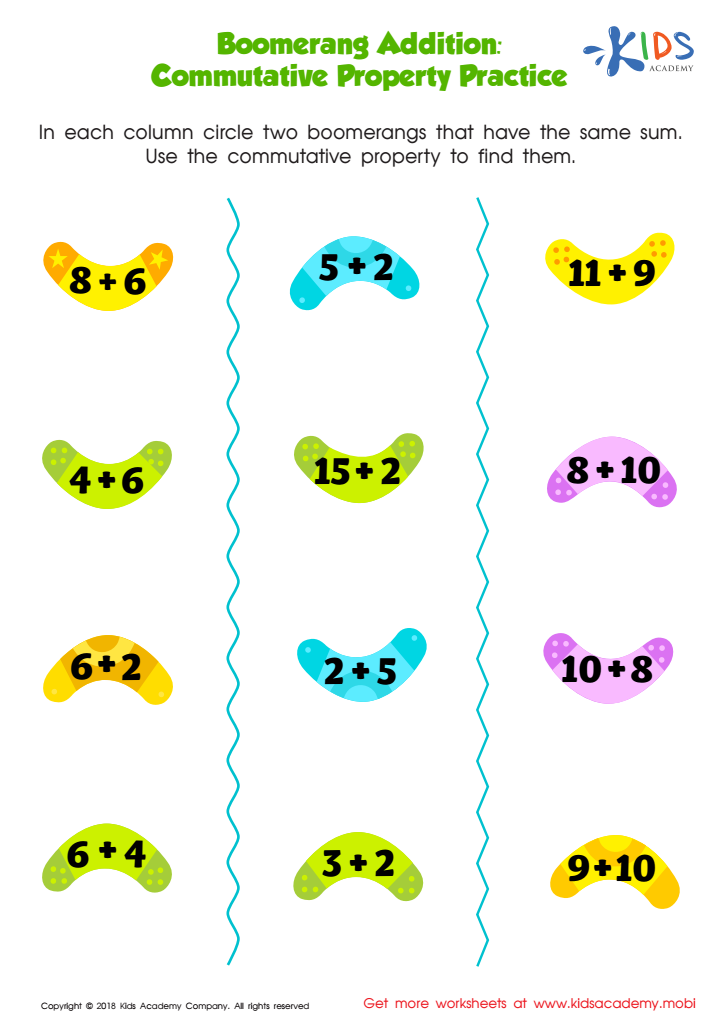
Boomerang Addition Worksheet








Mental math skills, particularly normal addition, are crucial for children aged 4-8 as they form the foundation for a child's mathematical understanding. During these formative years, developing mental math encourages cognitive skills like problem-solving, critical thinking, and memory retention. It helps children visualize numbers and relationships, enhancing their fluency with basic arithmetic.
Parents and teachers should care about mental math because it fosters confidence in young learners. When children practice mental addition, they become more adept at swiftly calculating answers in their heads, which builds their self-esteem and enthusiasm for math. This proficiency can lead to a smoother transition into more complex mathematical concepts, paving the way for academic success.
Moreover, strong mental math skills foster independence and resilience. Children learn to tackle equations without always relying on external aids, boosting their analytical abilities. These skills are not only essential in school but also throughout life, as they contribute to everyday tasks like budgeting or cooking.
By nurturing mental math aptitude early, parents and teachers empower children to engage with math positively and playfully, setting the stage for lifelong learning and appreciation of mathematics. Ultimately, mental math is a vital component of a well-rounded education, preparing children for a successful future.