Counting practice Normal Geometry Worksheets for Ages 4-8
3 filtered results
-
From - To
Explore our engaging Counting Practice Normal Geometry Worksheets designed for children aged 4 to 8! These worksheets help young learners develop essential counting skills while exploring basic geometric shapes and patterns. Perfect for at-home learning or classroom activities, each worksheet combines fun visuals with educational concepts, encouraging kids to count objects and recognize shapes like circles, squares, and triangles. Our resources foster a strong foundation in math through interactive learning, making concepts more approachable and enjoyable. Download these worksheets today to enhance your child's developmental skills while keeping learning fun and dynamic! Perfect for enhancing mathematical readiness in young minds!
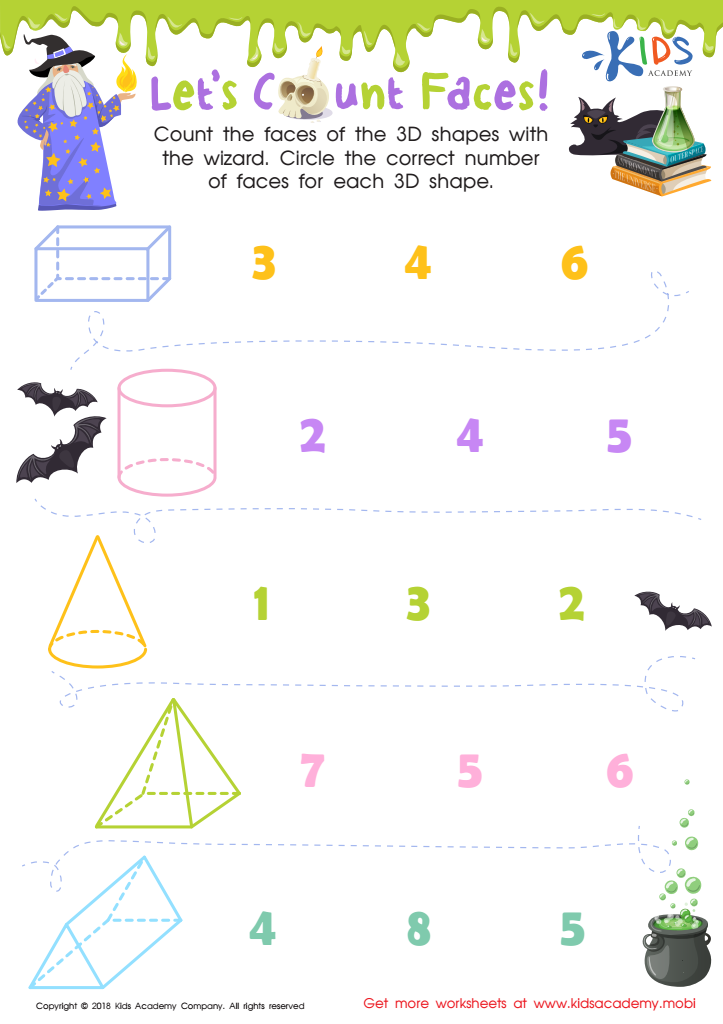
Let's Count Faces! Worksheet
 Assign to My Students











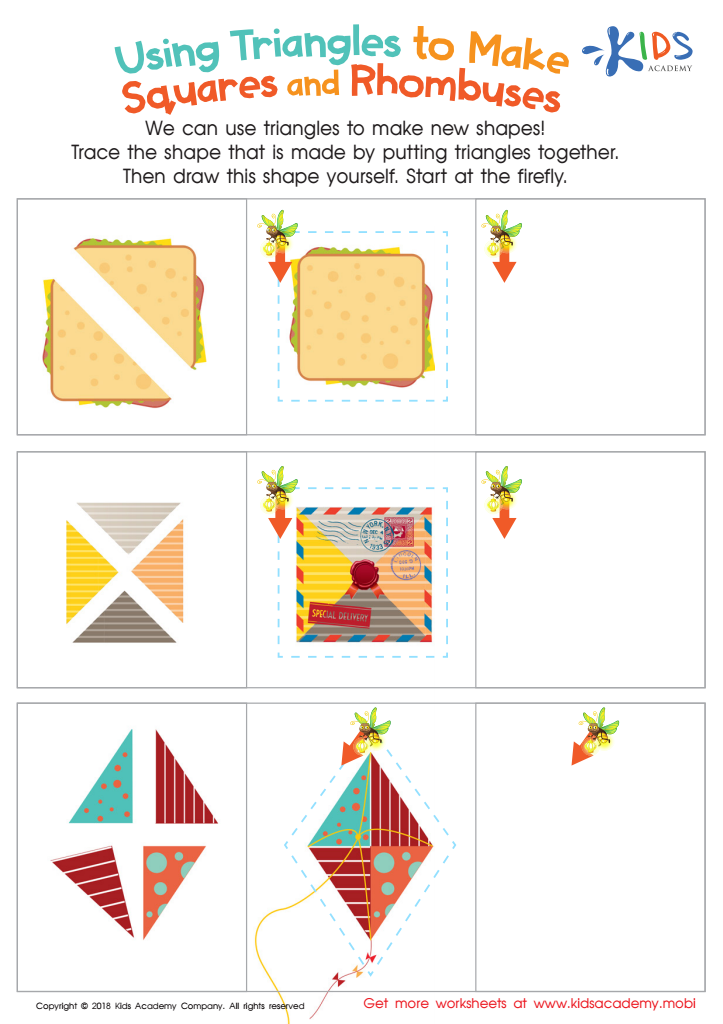
Using Triangles to Make Squares and Rhombuses Worksheet
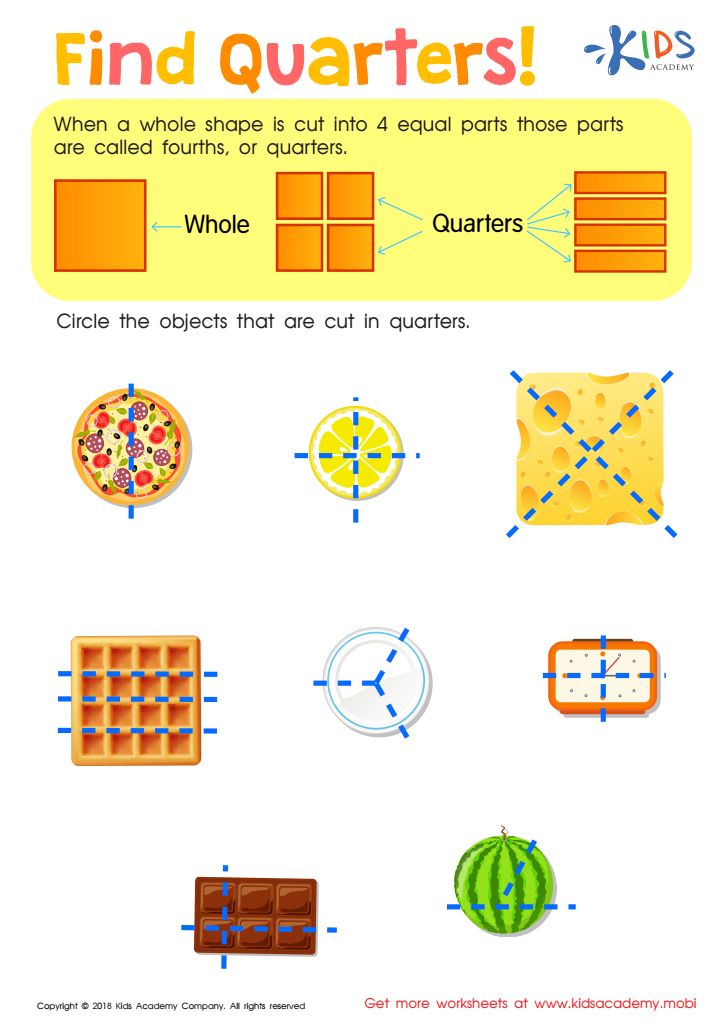
Find Quarters Worksheet








Counting and understanding basic geometry are fundamental skills for children aged 4-8 that lay the groundwork for future mathematical learning. Parents and teachers should care about counting practice and normal geometry because these skills enhance cognitive development, problem-solving abilities, and critical thinking.
Counting is not just about reciting numbers; it involves recognizing patterns, understanding quantities, and developing number sense, which is crucial for more complex mathematical concepts later on. Engaging children in counting activities helps improve their fine motor skills and concentration.
Similarly, introducing children to normal geometry—shapes, spatial awareness, and measurements—enriches their understanding of the world around them. Recognizing shapes and understanding spatial relationships fosters creativity and logical reasoning. Activities that involve sorting objects, identifying patterns, or even basic measurements can support language development as children learn to describe properties of shapes.
Ultimately, a strong foundation in counting and geometry promotes a positive attitude toward mathematics, increasing confidence and persistence in problem-solving. By incorporating these practices in fun and engaging ways, parents and teachers can nurture a love for learning while equipping children with essential skills for lifelong success in both math and everyday situations.








