Pattern recognition Normal Geometry Worksheets for Ages 4-8
3 filtered results
-
From - To
Discover our engaging Pattern Recognition Normal Geometry Worksheets designed specifically for children aged 4 to 8. These interactive resources foster critical thinking and bolster geometry skills through fun-filled activities. Young learners will explore shapes, connect patterns, and enhance their understanding of spatial relationships in a playful way. Each worksheet emphasizes essential early math skills, promoting recognition and identification of geometric patterns while supporting cognitive development. Perfect for classroom use or at-home learning, our worksheets inspire creativity and confidence in budding mathematicians. Equip your child for success in math with these tailored, high-quality resources that make learning an enjoyable adventure!
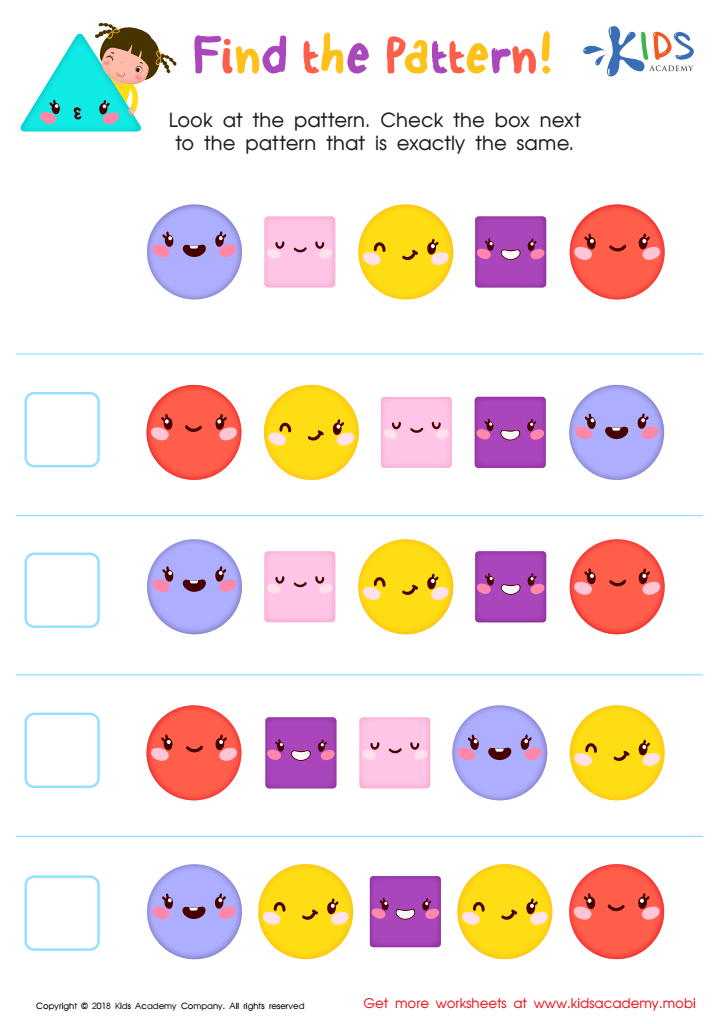
Find the Pattern Worksheet
 Assign to My Students











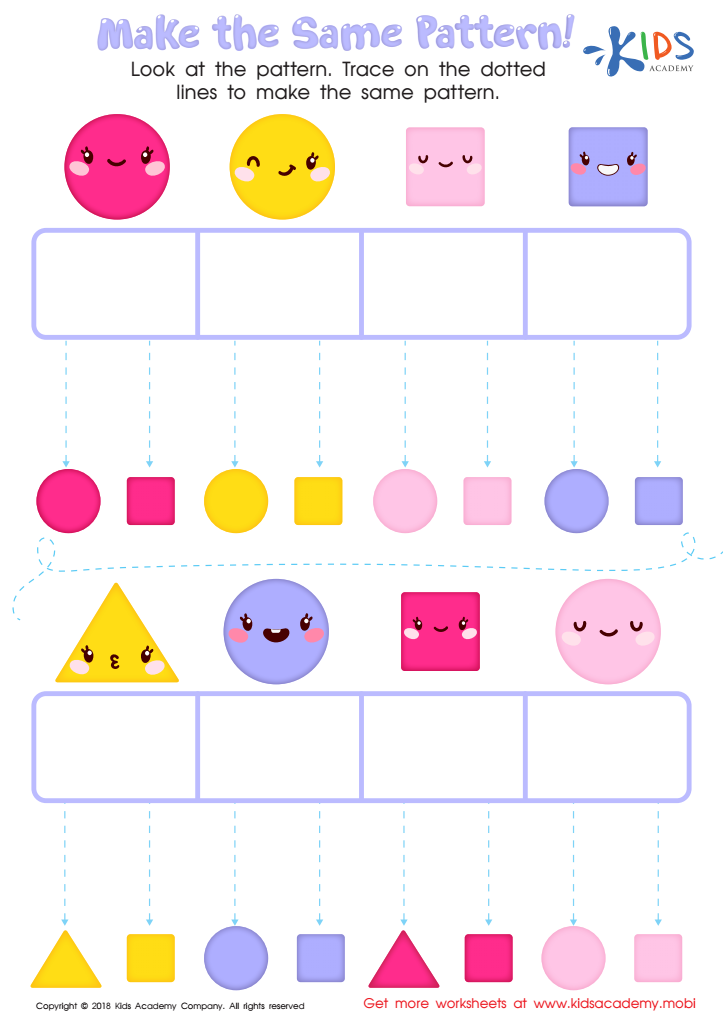
Make the Same Pattern Worksheet
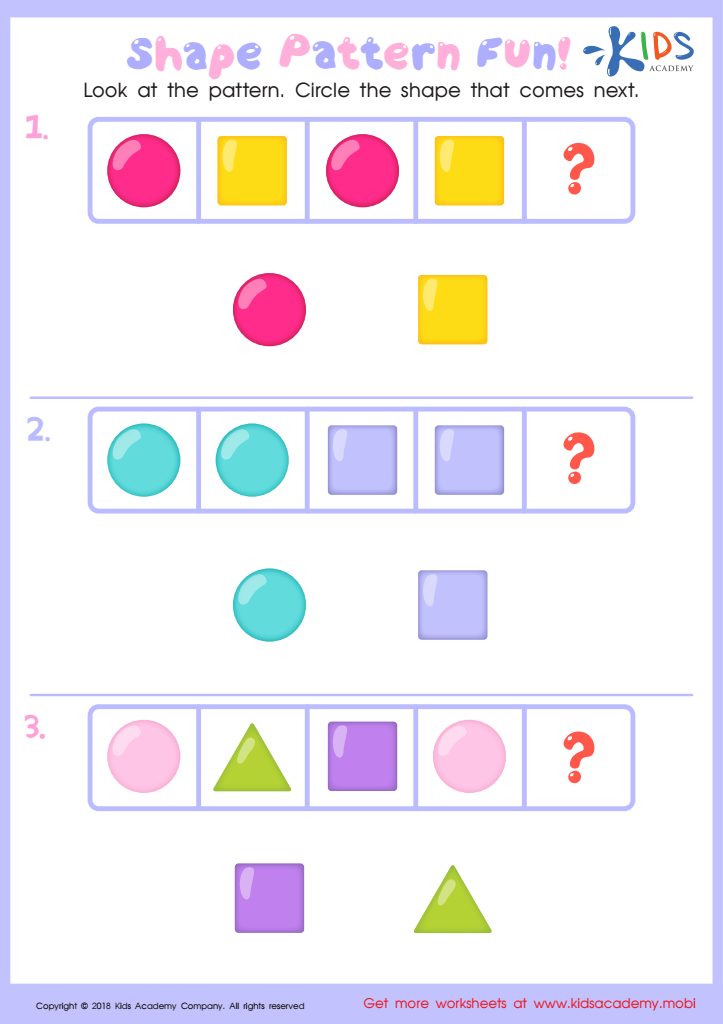
Shape Pattern Fun Worksheet








Pattern recognition and geometry are foundational skills that significantly impact a child's cognitive development. For children ages 4-8, grasping these concepts lays the groundwork for critical thinking, problem-solving, and mathematical reasoning. When children identify patterns, they learn to predict outcomes, which enhances their ability to process information and understand relationships in their environment.
Developing geometric understanding introduces children to shapes, spatial awareness, and symmetry, aiding in their ability to visualize and manipulate objects mentally. Recognizing patterns and grasping basic geometry foster creativity and a sense of order, allowing children to connect mathematical concepts to the real world. These skills are not only essential for future math learning but also enrich literacy and scientific exploration.
Parents and teachers should prioritize these areas to cultivate a child’s innate curiosity and analytical abilities. Engaging with patterns and shapes through play, art, and everyday experiences makes learning enjoyable and meaningful. Moreover, strong pattern recognition and geometry skills are crucial for success in advanced mathematical topics in later years, providing children with confidence and competence in their academic journeys. Ultimately, investing time in these early learning experiences creates a solid foundation for lifelong learning and discovery.








