Shape identification Normal Geometry Worksheets for Ages 4-8
5 filtered results
-
From - To
Discover engaging Shape Identification Normal Geometry Worksheets tailored for children aged 4-8! Our printable resources are designed to help young learners explore foundational geometry concepts through fun and colorful activities. Each worksheet encourages children to identify, match, and categorize various shapes, enhancing their observational skills and spatial awareness. Perfect for in-class assignments or at-home learning, these worksheets are aligned with early math standards and aim to make learning enjoyable. Teachers and parents alike will appreciate the ease of use and the ability to foster a love for geometry in early learners. Download now to spark creativity and critical thinking in your child's education!
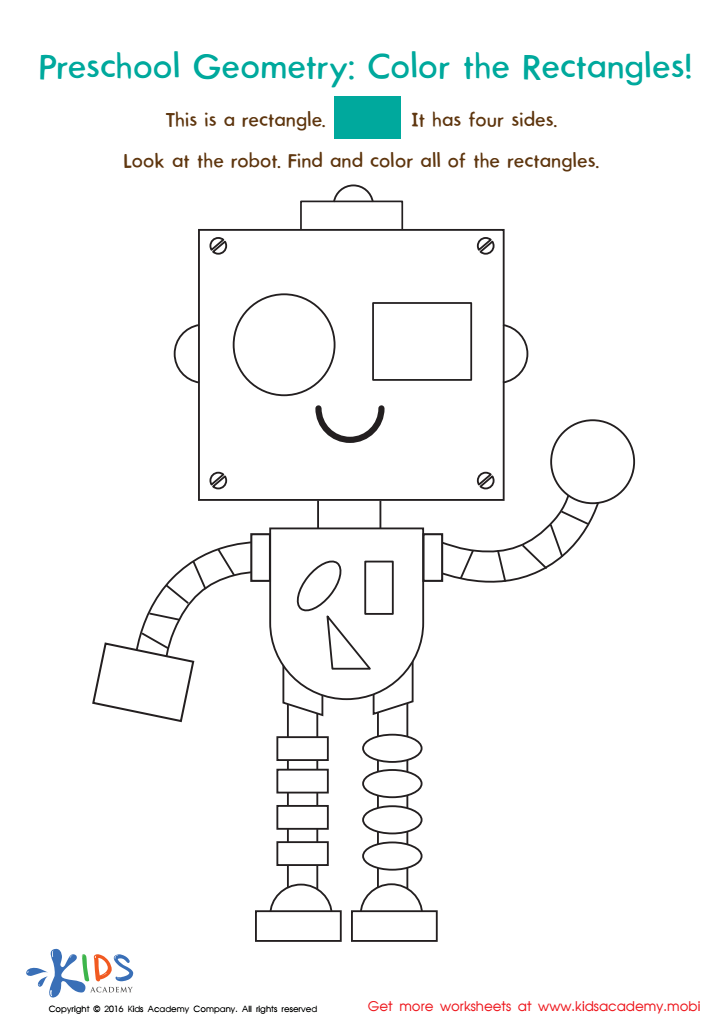
Geometry Worksheet
 Assign to My Students











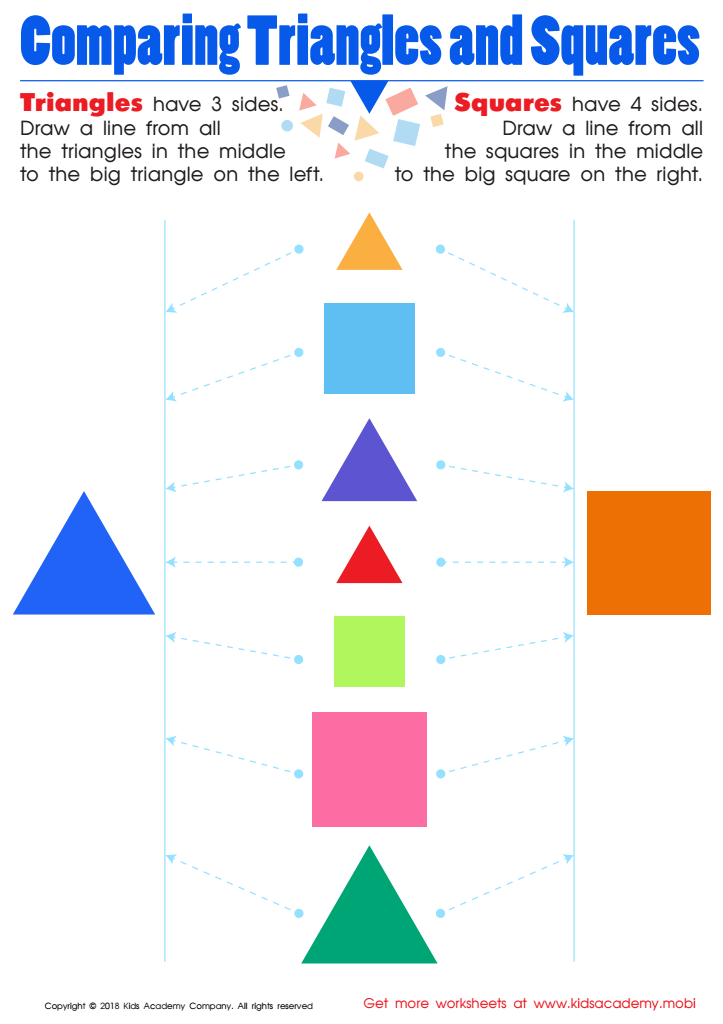
Comparing Triangles Squares Worksheet
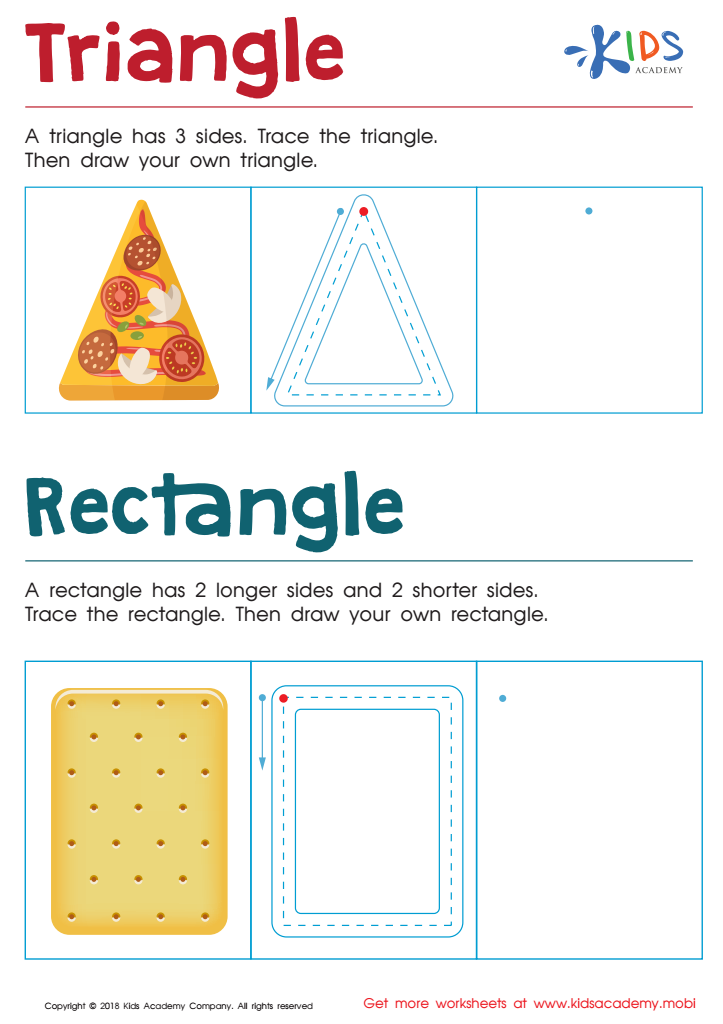
Triangle Rectangle Worksheet
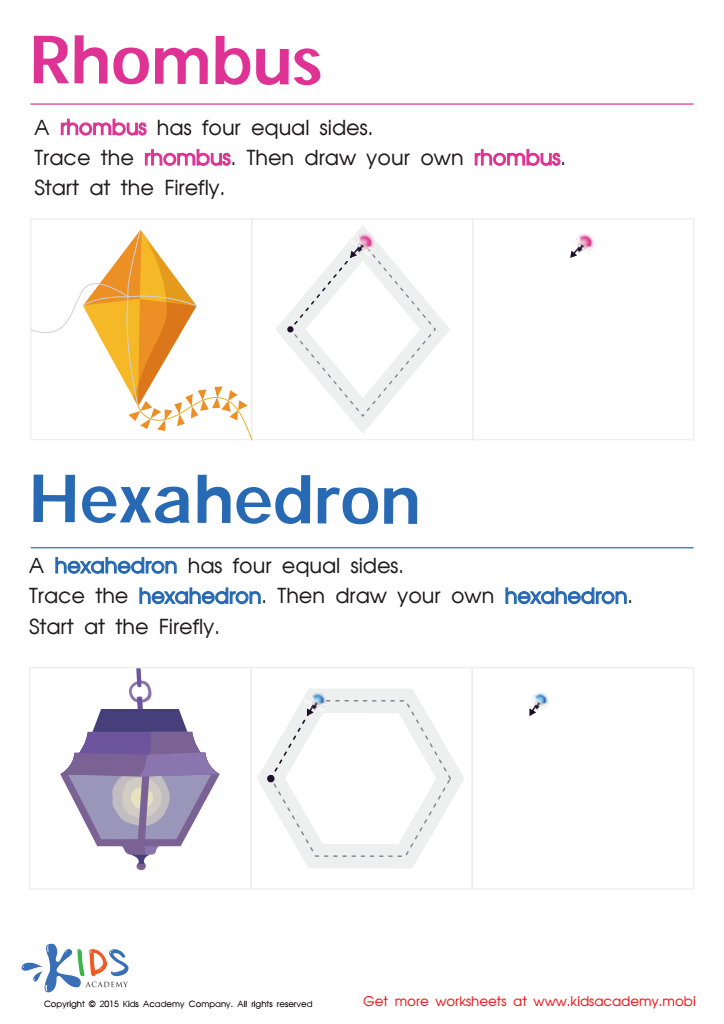
Draw a Rhombus And a Hexahedron Printable
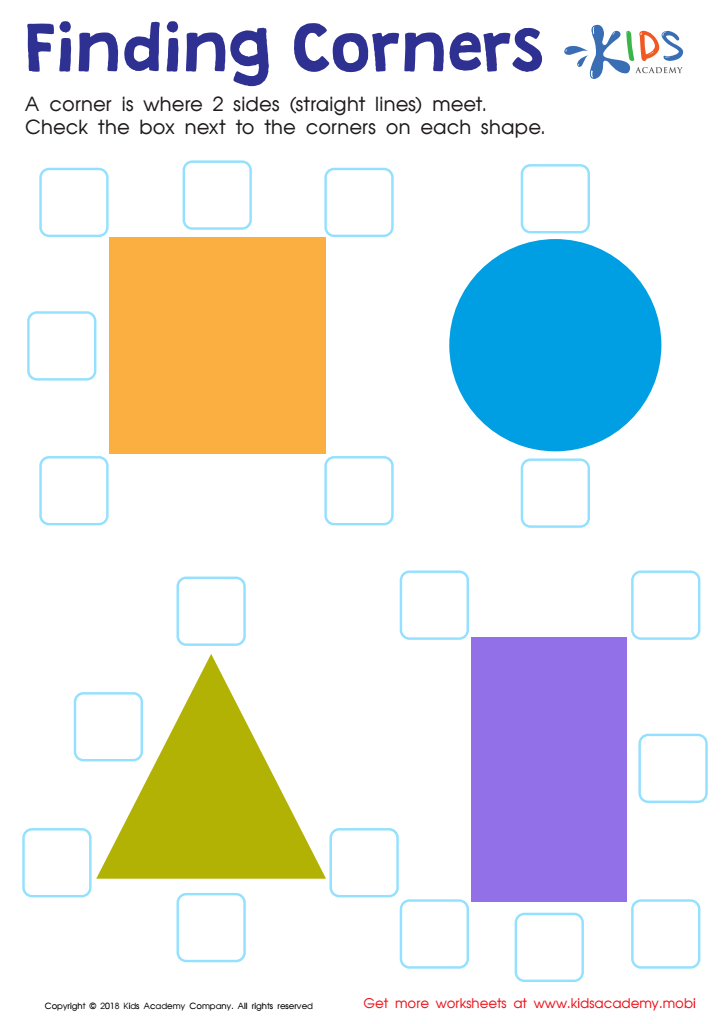
Finding Corners Worksheet








Shape identification is a fundamental aspect of early education, particularly for children ages 4-8. Understanding basic shapes is crucial as it lays the groundwork for more complex mathematical concepts later in life. For parents and teachers, fostering shape recognition helps develop critical visual-spatial skills that enhance problem-solving abilities and logical reasoning.
Engaging with shapes also supports cognitive development; as children learn to classify and differentiate various shapes, they build observation and critical thinking skills. Furthermore, recognizing shapes is often linked to early literacy—shapes are prevalent in letters and numbers, which helps children transition into reading and math more confidently.
Socially and emotionally, shape identification activities can be interactive experiences that promote teamwork and communication skills. Through games and discussions around shapes, children learn to express their thoughts and collaborate with peers. For parents, reinforcing these concepts at home strengthens family bonds and encourages a love for learning.
In summary, investing time in shape identification at an early age equips children with essential skills, prepares them for future academic success, and nurtures a holistic development that encompasses cognitive, social, and emotional growth. This foundational knowledge reflects the beginning of their lifelong journey in understanding and navigating the world around them.








