
Visual perception Normal Geometry Worksheets for Ages 4-8
3 filtered results
Difficulty Level
Grade
Age
-
From - To
Subject
Activity
Standards
Discover a world of shapes, patterns, and creativity with our Visual Perception Normal Geometry Worksheets for ages 4-8! These engaging worksheets are designed to develop your child’s visual perception and spatial awareness through interactive activities and fun geometric puzzles. By exploring various shapes and their relationships, children will enhance essential math skills and improve critical thinking. Perfect for young learners, these worksheets are crafted to stimulate curiosity and foster a love for geometry in a playful and educational manner. Download now and watch your child's confidence in math soar as they master key concepts while having fun!
Favorites
With answer key
Interactive
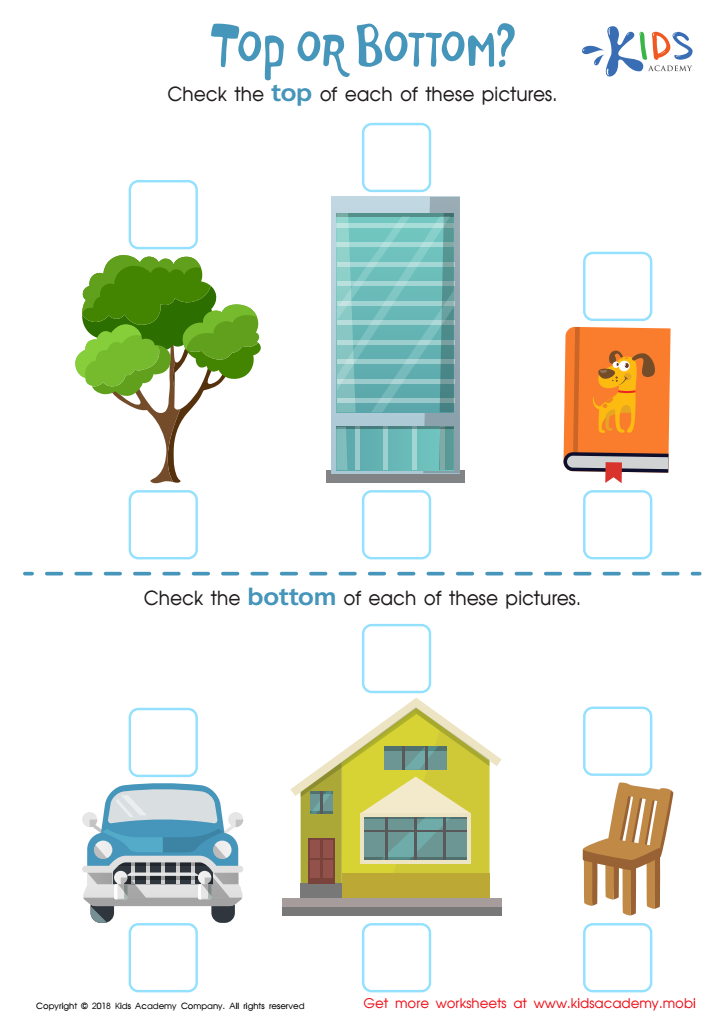
Top or Bottom Worksheet
Help your toddler master orientation and early geometry skills with this free printable worksheet. It tasks children with identifying the top and bottom of familiar images, like cars, to help build their mental map of objects. It may be simple for adults and older kids, but toddlers must learn the words to describe objects and their physical orientation.
 Assign to My Students
Top or Bottom Worksheet
Worksheet











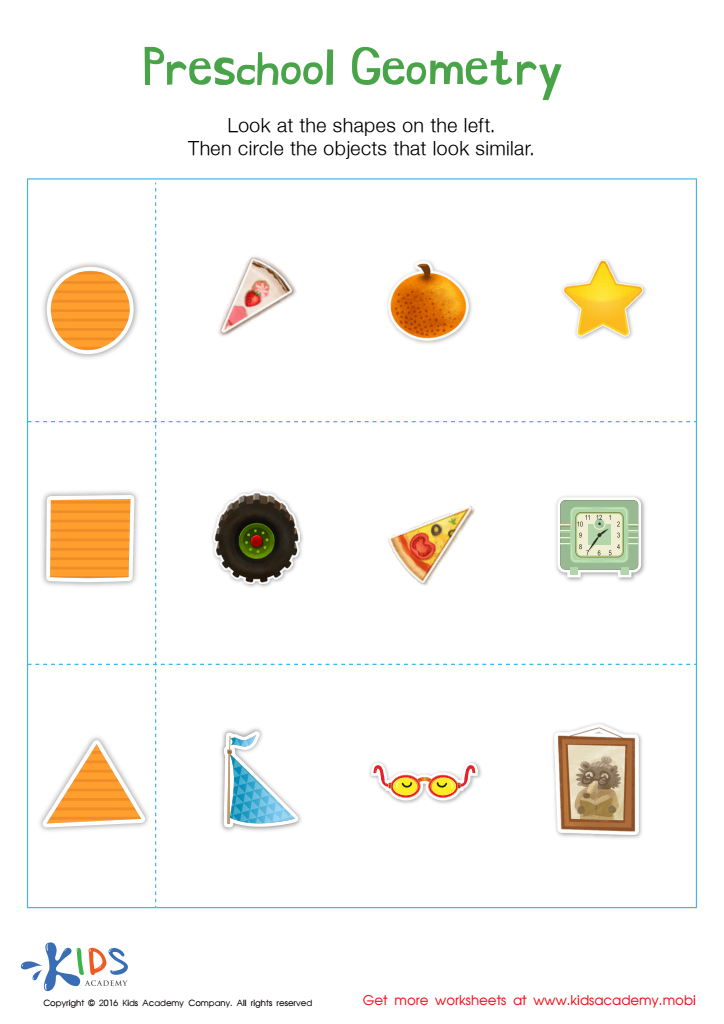
Preschool Geometry Match Up Worksheet
Teach your preschooler geometry using everyday objects. This printable worksheet helps them recognize, match, and follow directions like left and right. Start a conversation to extend their learning and they'll see how shapes appear in the world around them.
Preschool Geometry Match Up Worksheet
Worksheet
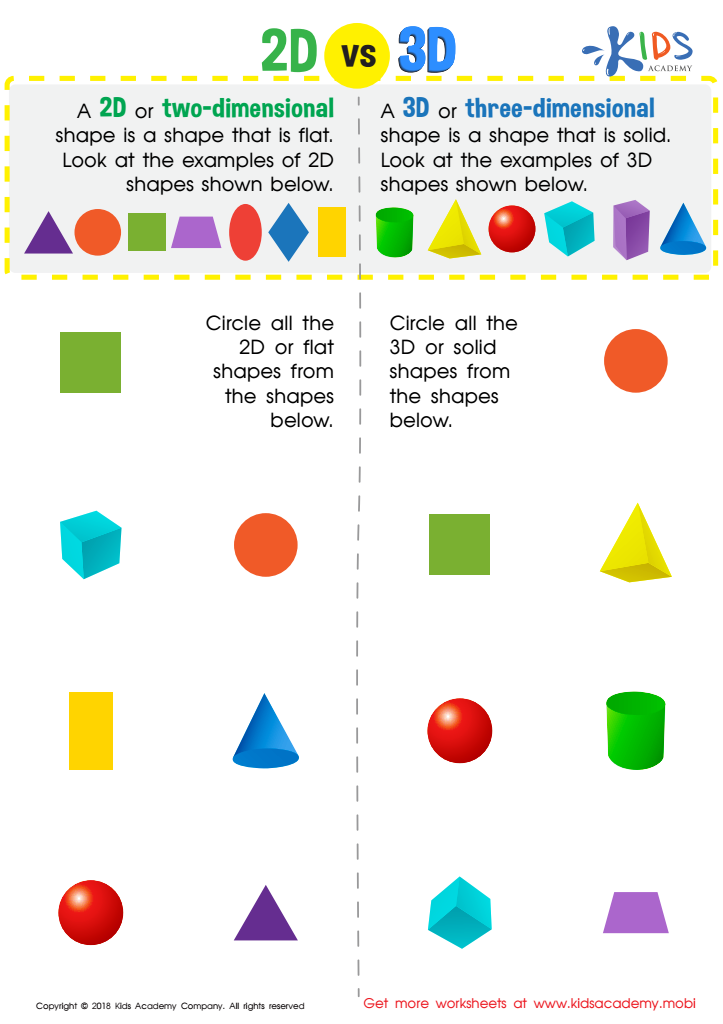
2D vs 3D Shapes Worksheet
Help your child understand 3D shapes using this engaging worksheet! Read the descriptions at the top and search for 2D and 3D shapes. An ideal activity for toddlers learning shapes. A fun way to understand the tricky concept of 3D shapes!
2D vs 3D Shapes Worksheet
Worksheet
Join Kids Academy for Free
Who is primarily going to use this learning content?








Visual perception in normal geometry for children ages 4-8 is a critical cognitive skill that underlies many essential learning processes. At this developmental stage, children's brains are highly receptive to visual information, and strong visual perception skills contribute significantly to their overall academic and personal development.
For parents and teachers, fostering visual perception in geometry involves activities that help children understand shapes, spatial relationships, and spatial orientation. These skills are foundational for math learning, as geometry is a core component of the math curriculum. Early mastery of geometric concepts can lead to greater confidence and better performance in mathematics as children progress through school.
Furthermore, robust visual perception abilities support reading and writing. The ability to recognize and differentiate between shapes and patterns assists in identifying letters and words, understanding directionality, and improving hand-eye coordination necessary for writing.
In day-to-day life, boosting visual perception in geometry helps children navigate their environments more effectively, improving their ability to engage in play, sports, and other hands-on activities that contribute to healthy physical and social development.
Therefore, investing time and effort in enhancing children's visual perception skills in geometry is crucial. It fosters critical thinking, analytical abilities, and academic success, forming a solid framework for future learning and overall development. Parents and teachers can facilitate this through interactive activities, games, and practical experiences that make learning both engaging and meaningful.








