
Handwriting practice Normal Numbers Worksheets for Ages 4-8
6 filtered results
Difficulty Level
Grade
Age
-
From - To
Subject
Activity
Standards
Discover our Handwriting Practice Normal Numbers Worksheets designed specifically for children aged 4-8! These engaging and educational worksheets help young learners strengthen their number writing skills while making learning fun. Each worksheet features clear number guides and creative activities to enhance handwriting and fine motor skills. Perfect for at-home practice or classroom use, these resources promote confidence and ensure mastery of number formation. Encourage your child's early math education with our thoughtfully crafted, user-friendly worksheets that make learning numbers an enjoyable experience. Start your child on a path to academic success with our Handwriting Practice Normal Numbers Worksheets today!
Favorites
With answer key
Interactive
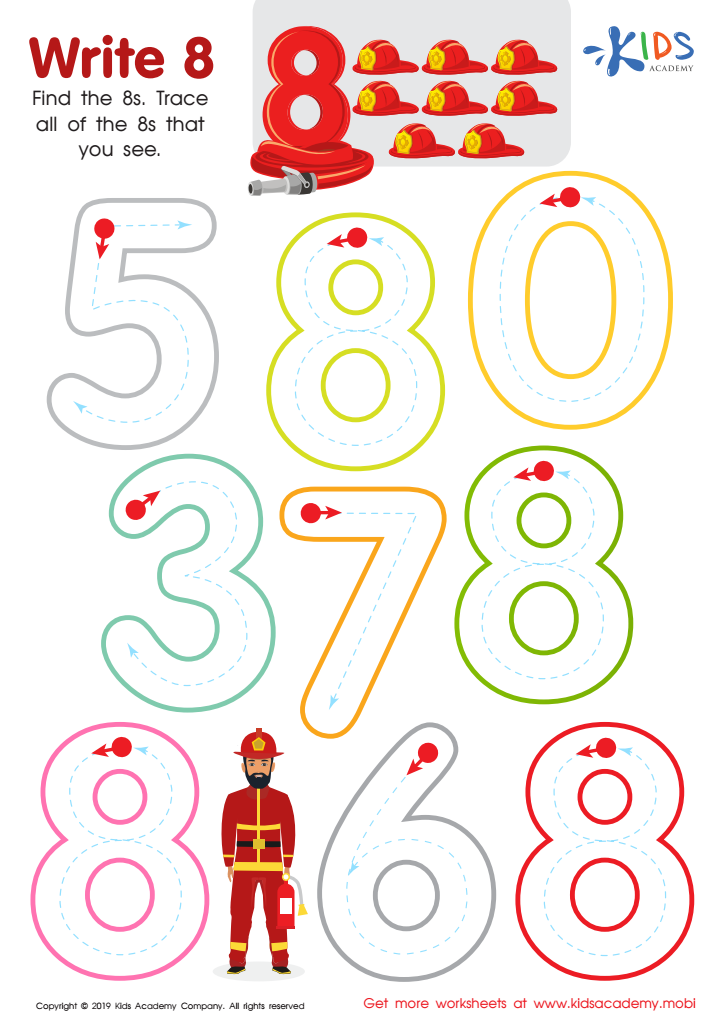
Write 8 Worksheet
Once your kids can count small numbers, it's time to learn how to write them. With your help and patience, they will soon be pros! This worksheet will make learning easier. Help them spot the 8s in the picture, then help them trace them.
 Assign to My Students
Write 8 Worksheet
Worksheet
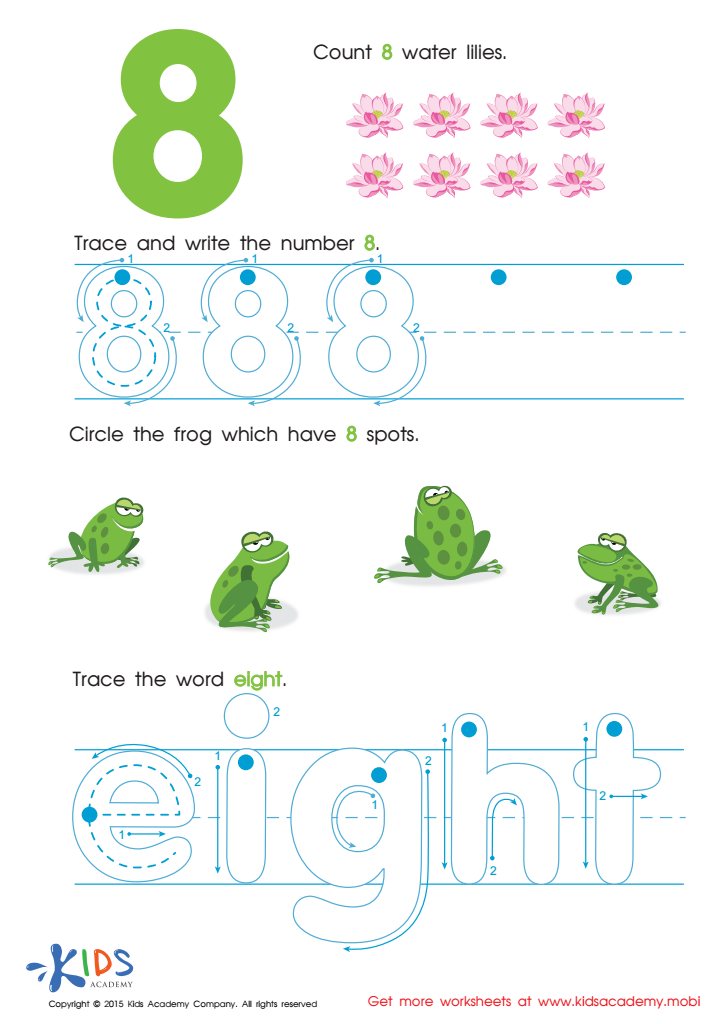
Learn Number 8 Easily Worksheet
Kids can trace, write numbers and learn to pronounce them through exciting activities and games. Try our number worksheets for preschoolers to make learning fun!
Learn Number 8 Easily Worksheet
Worksheet
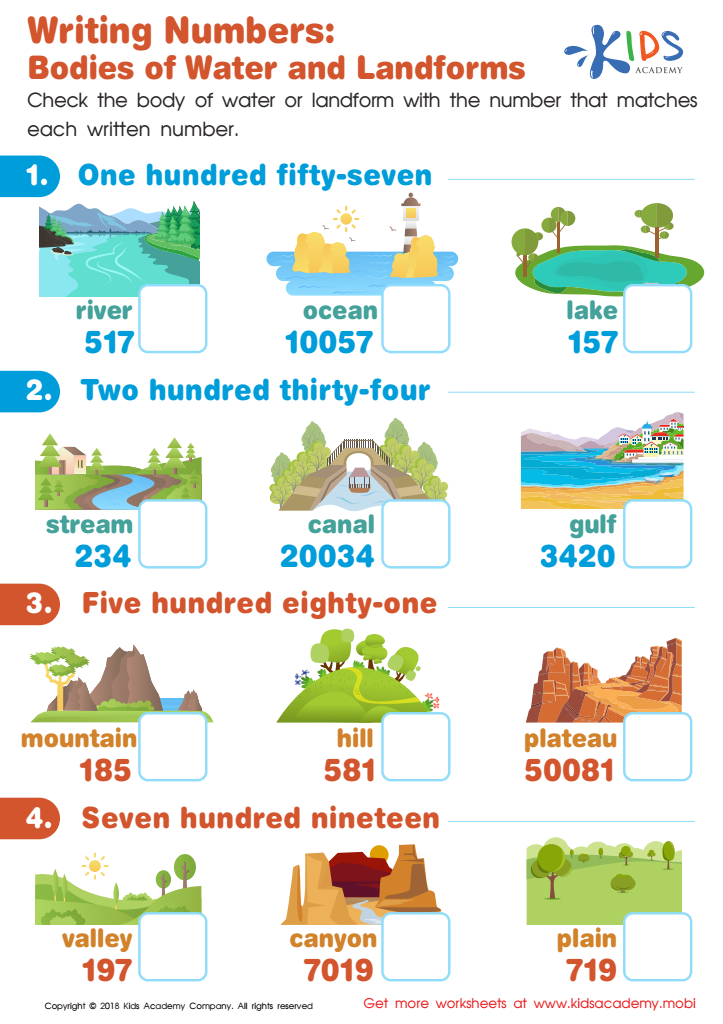
Bodies of Water and Landforms Writing Numbers Worksheet
Your student will love this engaging worksheet with its bright hues, while you give them practice comparing numbers with higher place values. Matching the correct number words to their numeral representations is key for our students as they deal with larger numbers and higher place values.
Bodies of Water and Landforms Writing Numbers Worksheet
Worksheet
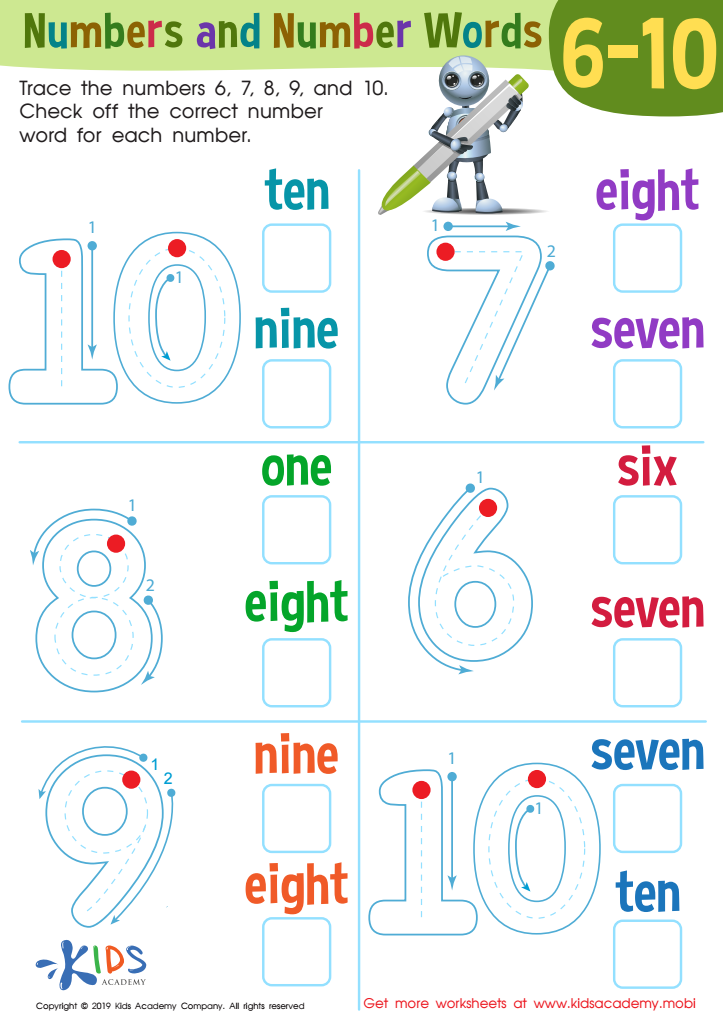
Numbers and Number Words 6–1 Worksheet
As children explore numbers and words, parents and teachers can help them learn to count and read with activities such as this worksheet. Here, the student traces numbers 6-10 and then selects the right number words to match. A fun and interactive way to learn!
Numbers and Number Words 6–1 Worksheet
Worksheet
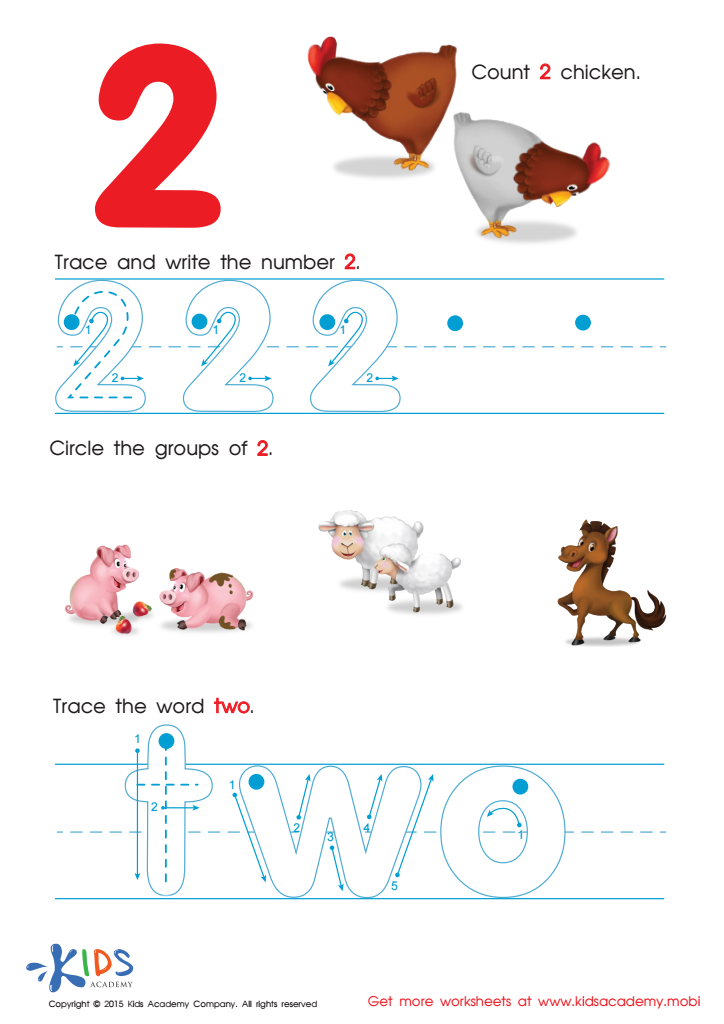
Learn to Write the Number 2 Worksheet
Teaching numbers should be fun! Ask your kids to count the two chicks, circle the groups of two among the animals, then trace and write the number and word. Get more fun worksheets from Kids Academy.
Learn to Write the Number 2 Worksheet
Worksheet
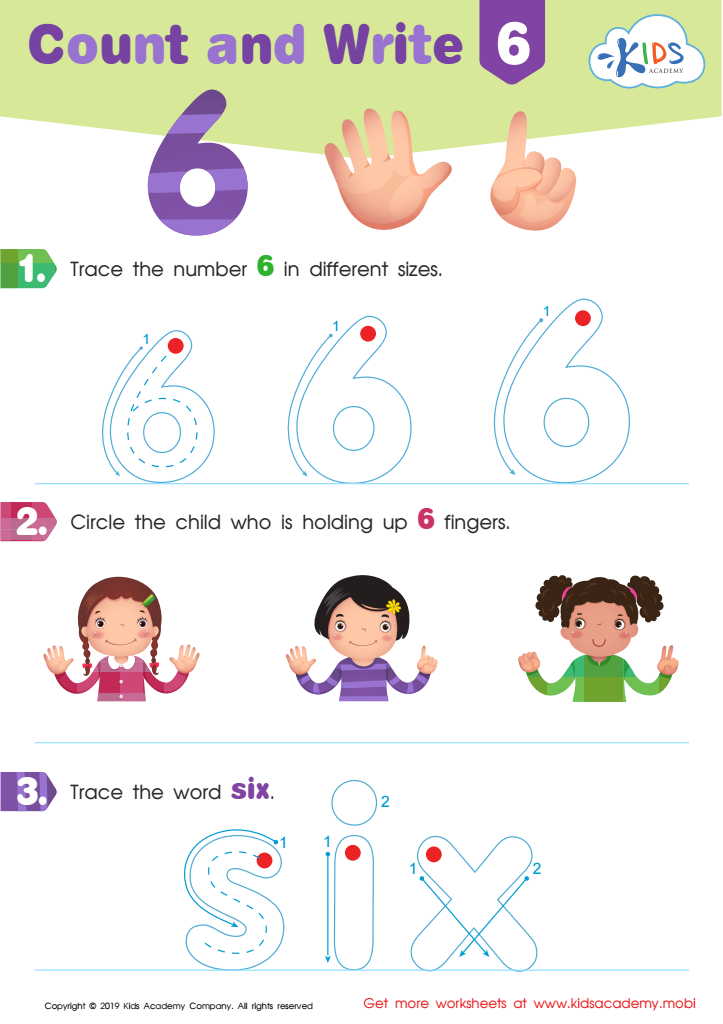
Count and Write 6 Worksheet
Kids begin math by mastering recognition skills. This worksheet helps with that by giving them practice writing "six" and the numeral 6, with guide dots and traceable lines. Giving kids multiple ways to learn the basics helps them build a strong math foundation.
Count and Write 6 Worksheet
Worksheet
Join Kids Academy for Free
Who is primarily going to use this learning content?








Handwriting practice, particularly for numbers, plays a critical role in the development of young children aged 4-8. During these formative years, children are honing their fine motor skills, and practicing handwriting can greatly enhance their dexterity and control. Mastering the formation of normal numbers not only builds these essential skills but also increases confidence as they transition to more complex mathematical concepts.
Moreover, legible handwriting is crucial for effective communication. Children who take the time to practice writing numbers will be more likely to clearly express their thoughts, whether in math problems or written assignments. This clarity fosters better understanding and reduces frustration in both academic settings and everyday situations.
Additionally, consistent practice helps children establish a foundation for literacy. Engaging in handwriting reinforces their cognitive development, giving them a better grasp of number recognition and sequencing, which is vital for early math skills.
For parents and teachers, supporting handwriting practice is not merely about aesthetics but is integral to nurturing a child's overall academic success and self-esteem. Encouraging this skillly transformative process creates a positive learning environment where children feel competent and capable, ultimately setting the stage for lifelong learning.








