
Basic Arithmetic Normal Math Worksheets for Ages 4-8
11 filtered results
Difficulty Level
Grade
Age
-
From - To
Subject
Activity
Standards
Discover our collection of Basic Arithmetic Worksheets designed for young learners aged 4-8 at Kids Academy. Our expertly crafted worksheets cover essential math skills such as addition, subtraction, counting, and number recognition. Each printable activity is tailored to make learning engaging and enjoyable, helping children build a strong foundation in arithmetic. Perfect for homeschooling or supplementing classroom learning, these worksheets offer a fun and effective way to develop critical thinking and problem-solving abilities. Explore our extensive collection today and watch your child’s confidence in math grow!
Favorites
With answer key
Interactive
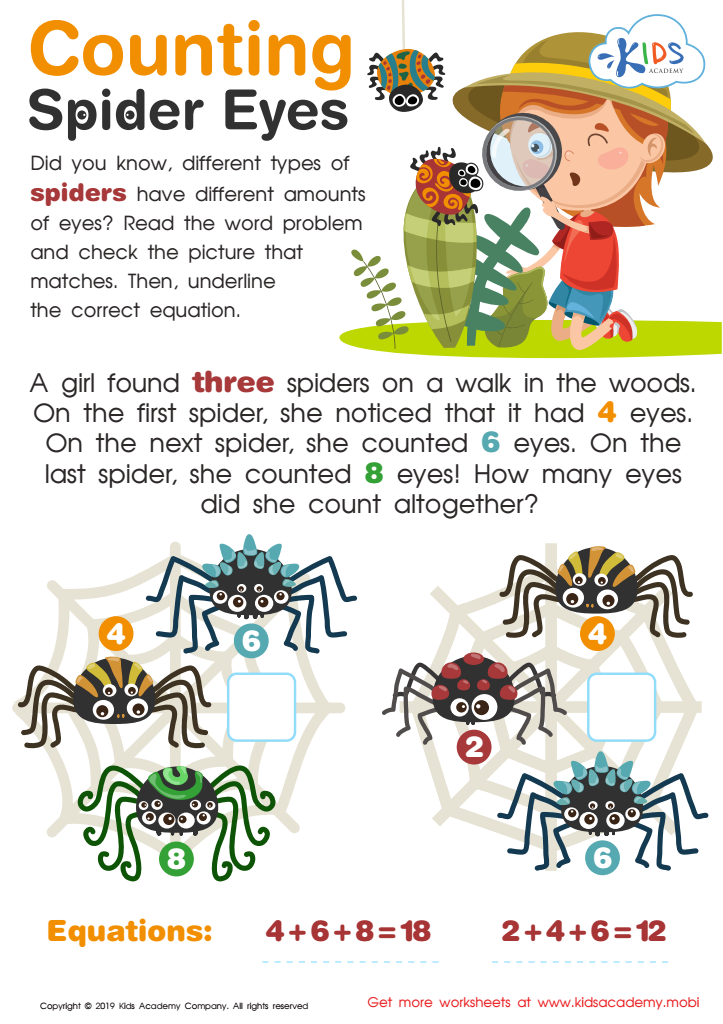
Counting Spider Eyes Worksheet
Did you know different spiders have different eye numbers? Kids will love learning this fact and solving the spider word problems on this free worksheet! Word problems promote a deeper understanding of the concept, plus they get to add up the spiders’ eyes while solving addition problems with more than one addend. Fun and math all in one!
 Assign to My Students
Counting Spider Eyes Worksheet
Worksheet
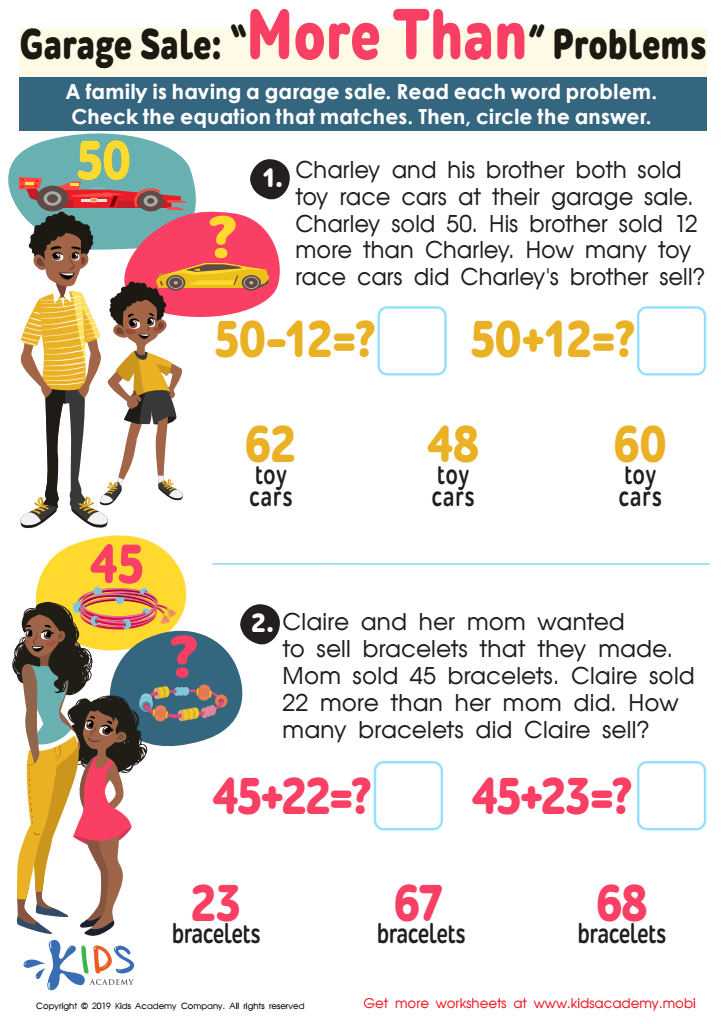
Garage Sale - More yhan Worksheet
The whole family can join in on the fun with this free worksheet! It helps kids practice math word problems while assisting their friends with a garage sale. Kids learn to identify "More Than" key words and pick the right equation, improving their order of operations skills. Download the PDF and get started!
Garage Sale - More yhan Worksheet
Worksheet
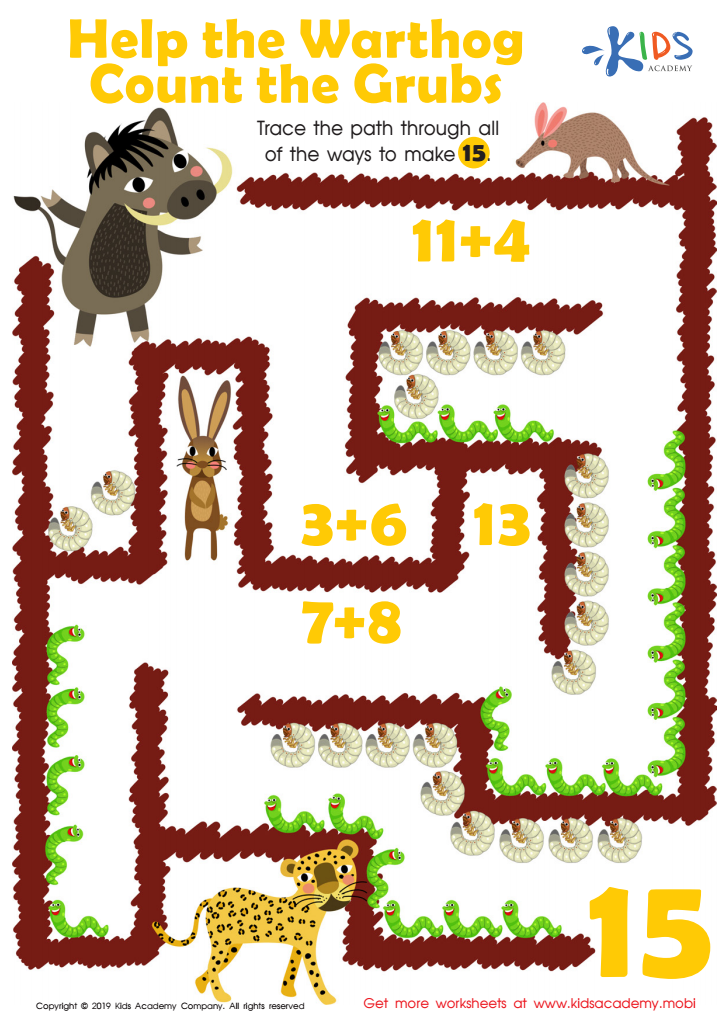
Help the Warthog Count the Grubs Worksheet
Test your kids' knowledge of wild animals. Ask them to name some they know, then have them identify the animals on this worksheet. If they can't, take the time to tell them the names. Finally, trace the warthog's path through the maze by solving the equations and going through paths that make 15.
Help the Warthog Count the Grubs Worksheet
Worksheet
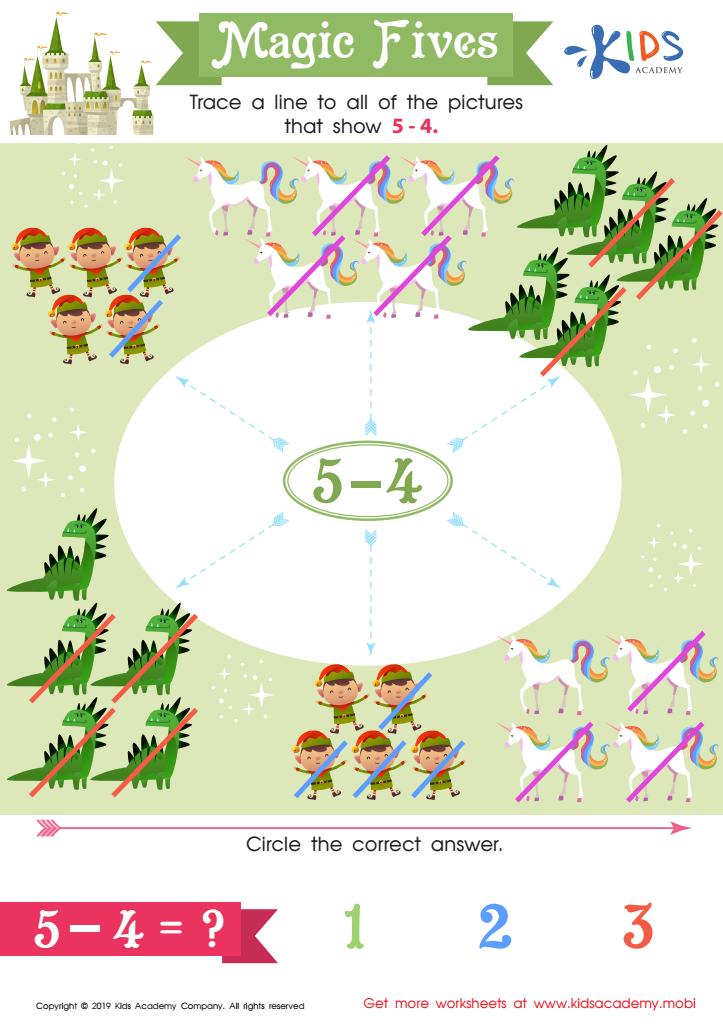
Magic Fives Worksheet
Help your students identify the objects & people in the worksheet. Point to the equation 5 -4 in the center, then get them to count the items and trace a line connecting those that add up to 5 - 4.
Magic Fives Worksheet
Worksheet
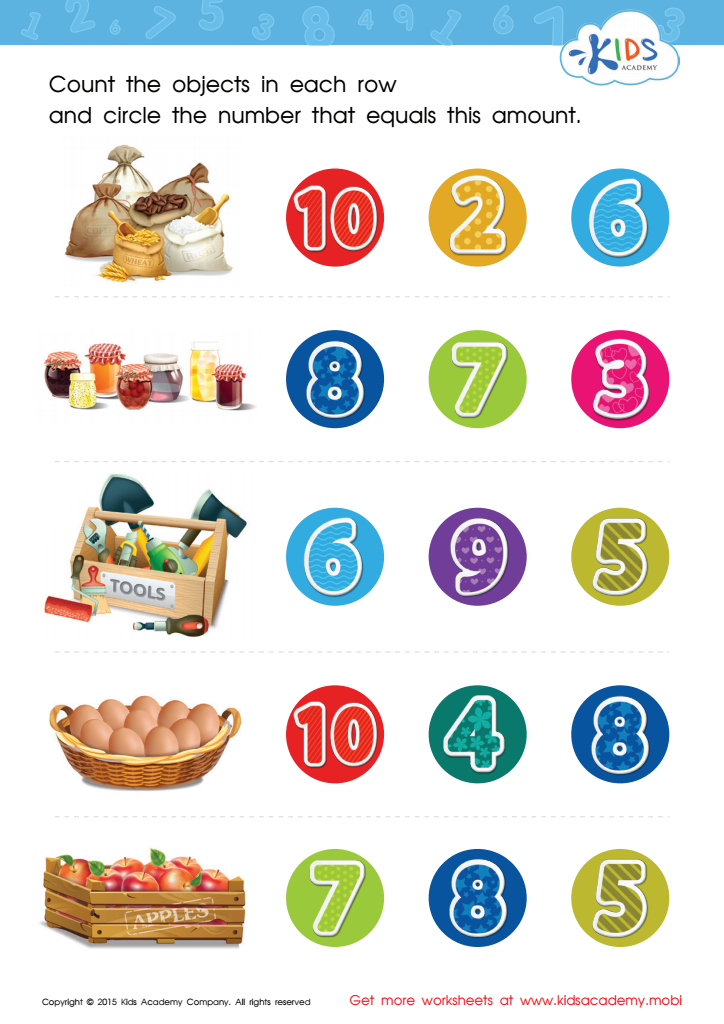
Count and Match 6 – 10 Math Worksheet
Print this fun math worksheet for your kindergartener and help them practice counting up to ten! They'll draw a line from the objects to the correct numbers, visualizing the problem and having fun at the same time. Kids Academy offers more free printable worksheets. Get them now!
Count and Match 6 – 10 Math Worksheet
Worksheet
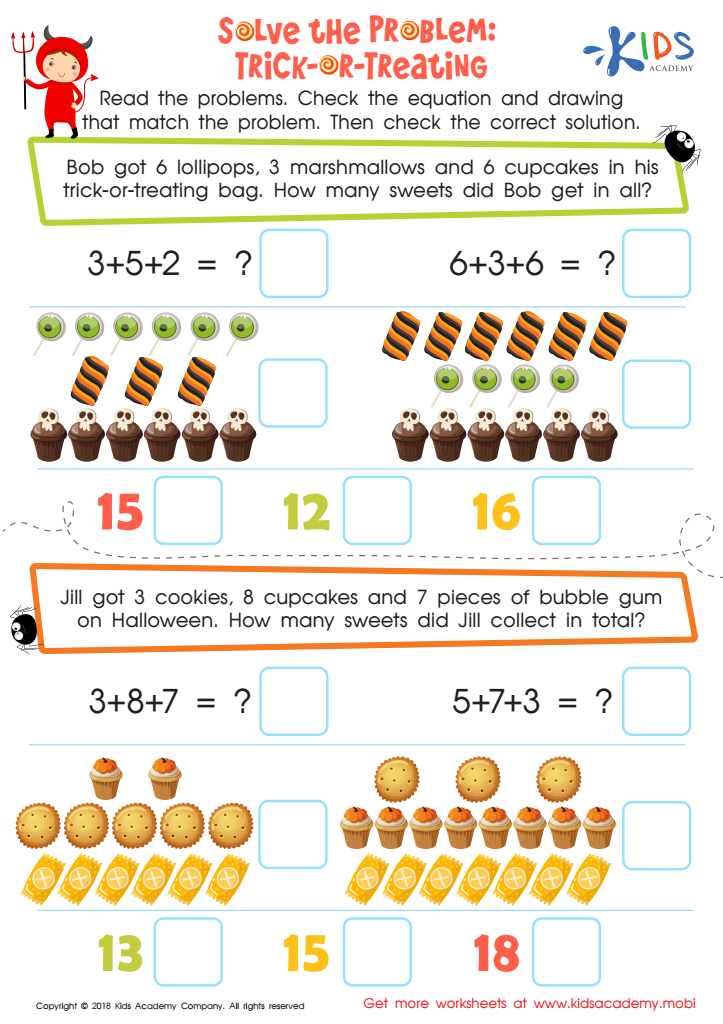
Solve the Problem: Trick–or–treating Worksheet
Kids will love this fun PDF worksheet for trick-or-treating! It's packed with yummy images and math practice. They can read the word problems, count and add numbers, check their answers, and match the addition equations with the pictures. Math made delicious!
Solve the Problem: Trick–or–treating Worksheet
Worksheet
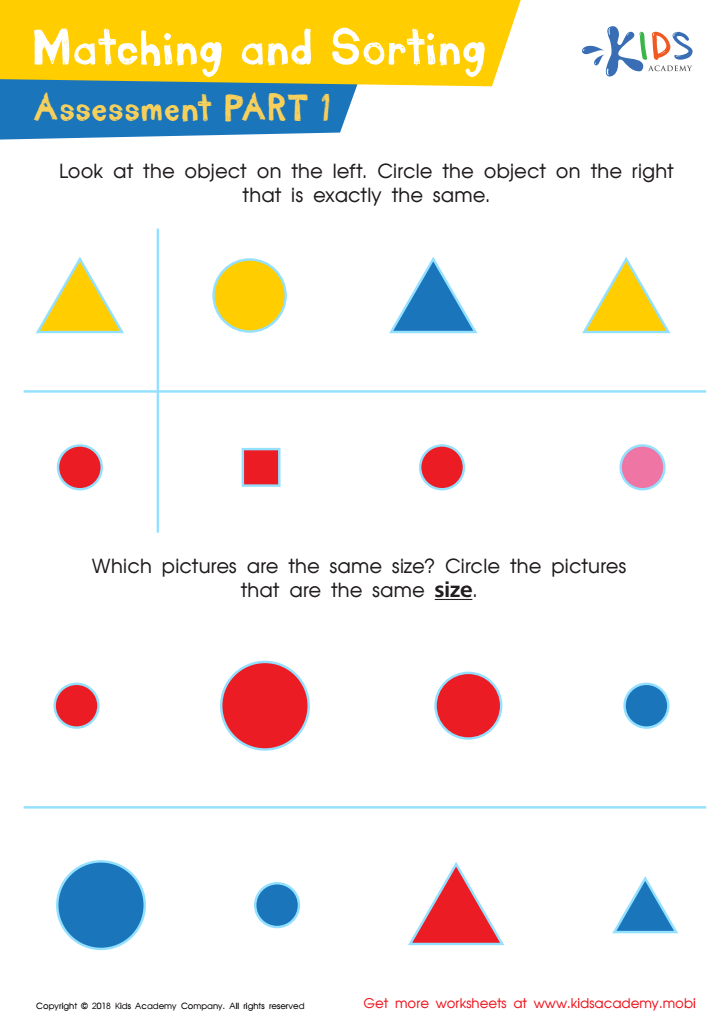
Matching and Sorting for Kindergarten: Assessment 1 Worksheet
Kids can sharpen their visual discrimination skills and analyze properties of shapes with this free downloadable worksheet. They'll identify color, size, shape, and symmetry, working with bright primary colors. This helps build a strong geometric foundation, learning to identify shape attributes.
Matching and Sorting for Kindergarten: Assessment 1 Worksheet
Worksheet
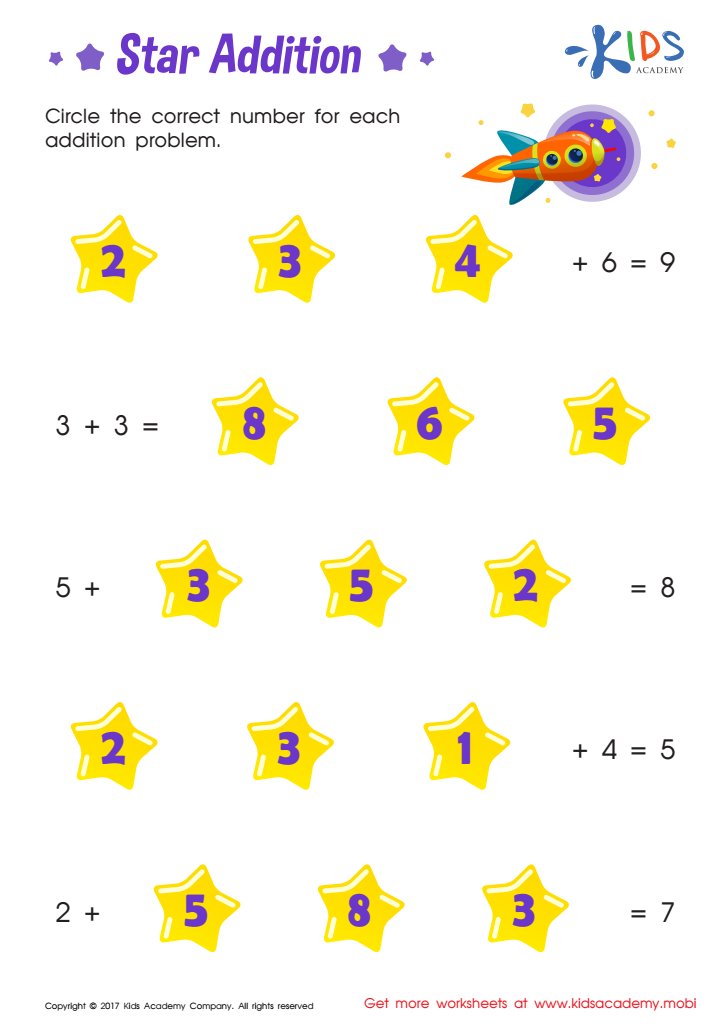
Star Addition Printable
Is your child bored with the school math assignments? For those who love a challenge, this addition worksheet is perfect. It'll help your child practice addition, understand equations and switch between methods. Have them try each answer choice to eliminate wrong ones and for advanced learners, teach them to use subtraction. Let your child have fun while learning more advanced math concepts!
Star Addition Printable
Worksheet
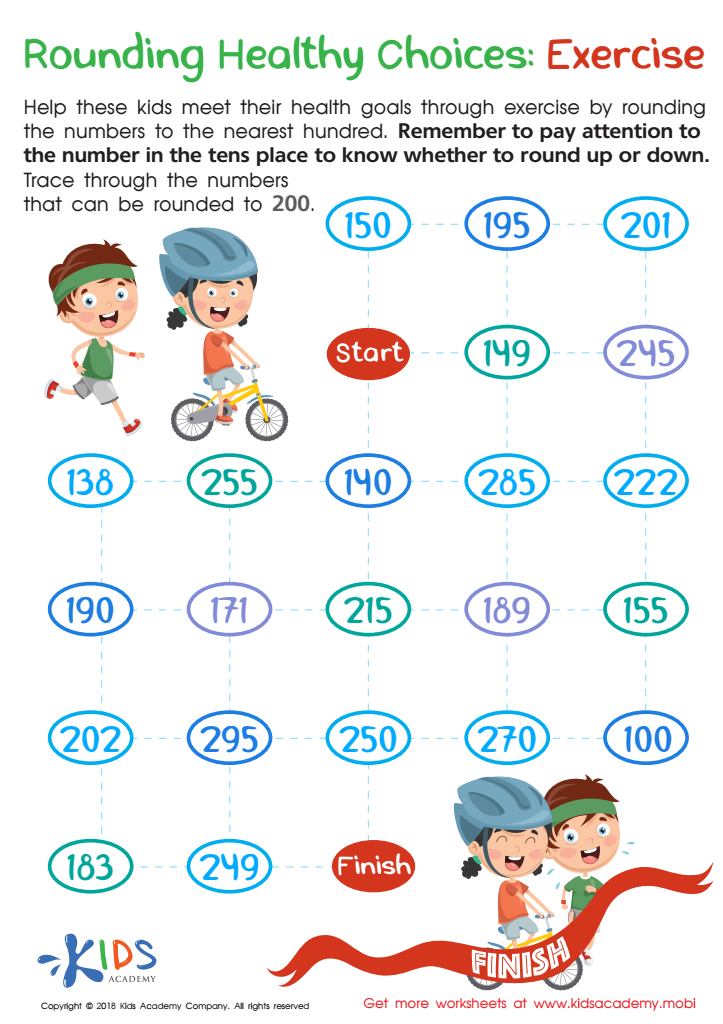
Rounding Healthy Choices Exercise Worksheet
Tired of boring math worksheets? Check out this fun rounding maze printout! Help the kids reach their goals by going from start to finish. To move through the maze, they must find numbers to round to 200. Teach them to pay close attention to the tens place to know whether to round up or down. Have fun and reach the finish line to complete the maze!
Rounding Healthy Choices Exercise Worksheet
Worksheet
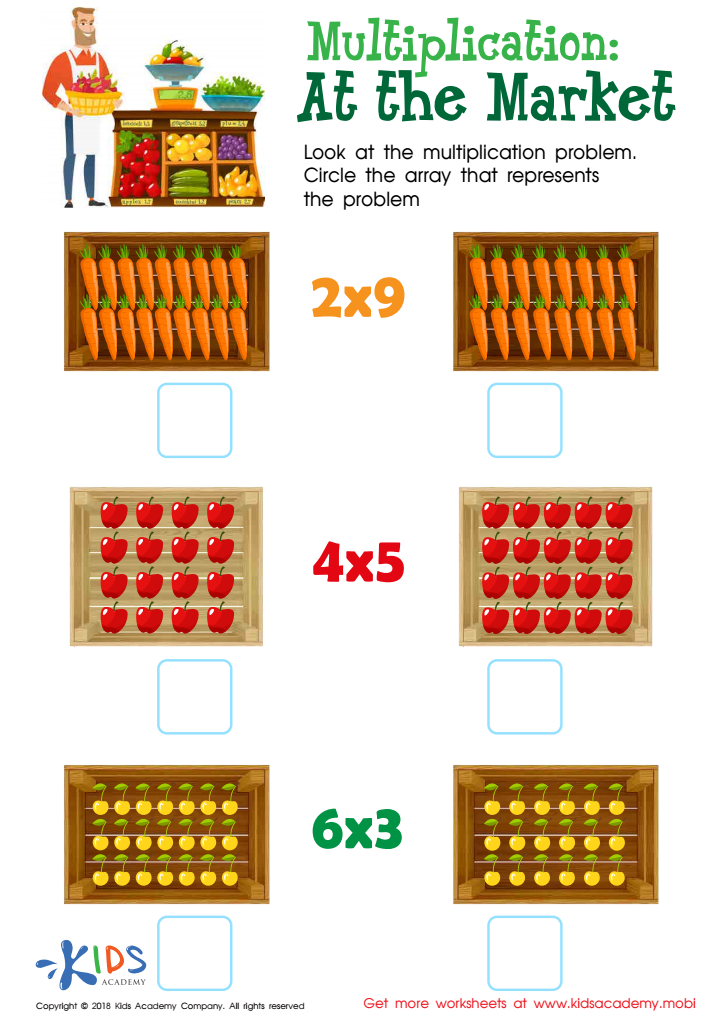
At the Market Worksheet
Head to At the Market! This attractive worksheet features arrays of delicious fruits and veggies that'll have 3rd graders working on their multiplication. Solve the problems, choose the correct answer, and learn while having fun!
At the Market Worksheet
Worksheet
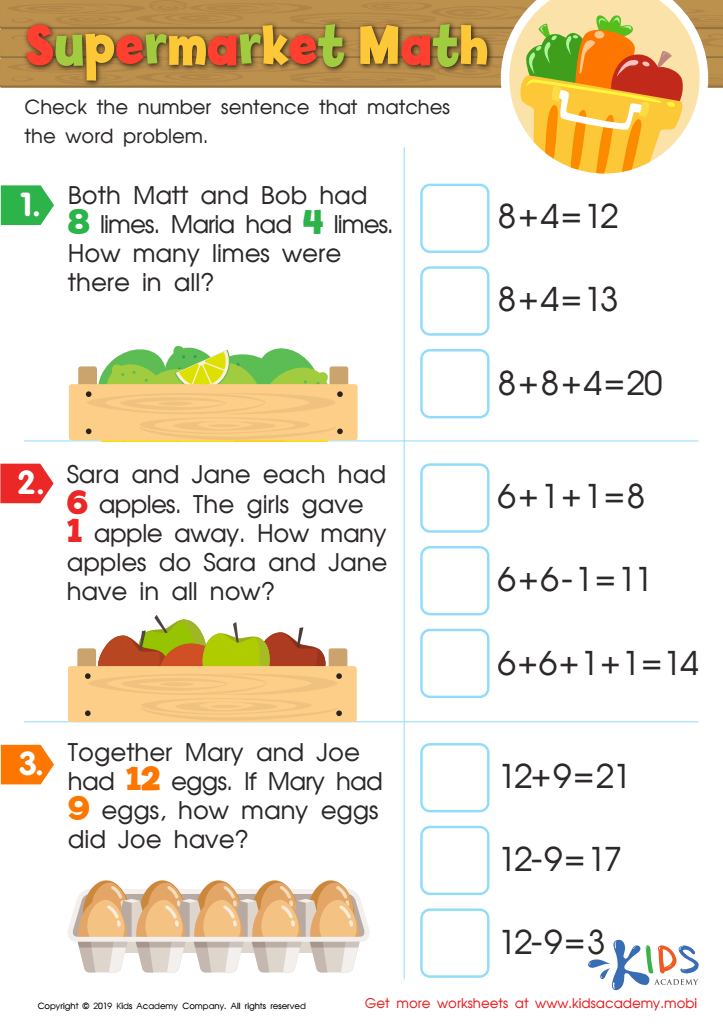
Supermarket Math Worksheet
Take your kids to the supermarket and ask what they're looking forward to buying. Help them solve the three questions in the worksheet by interpreting each one into an equation, then choose the right answer.
Supermarket Math Worksheet
Worksheet
Join Kids Academy for Free
Who is primarily going to use this learning content?





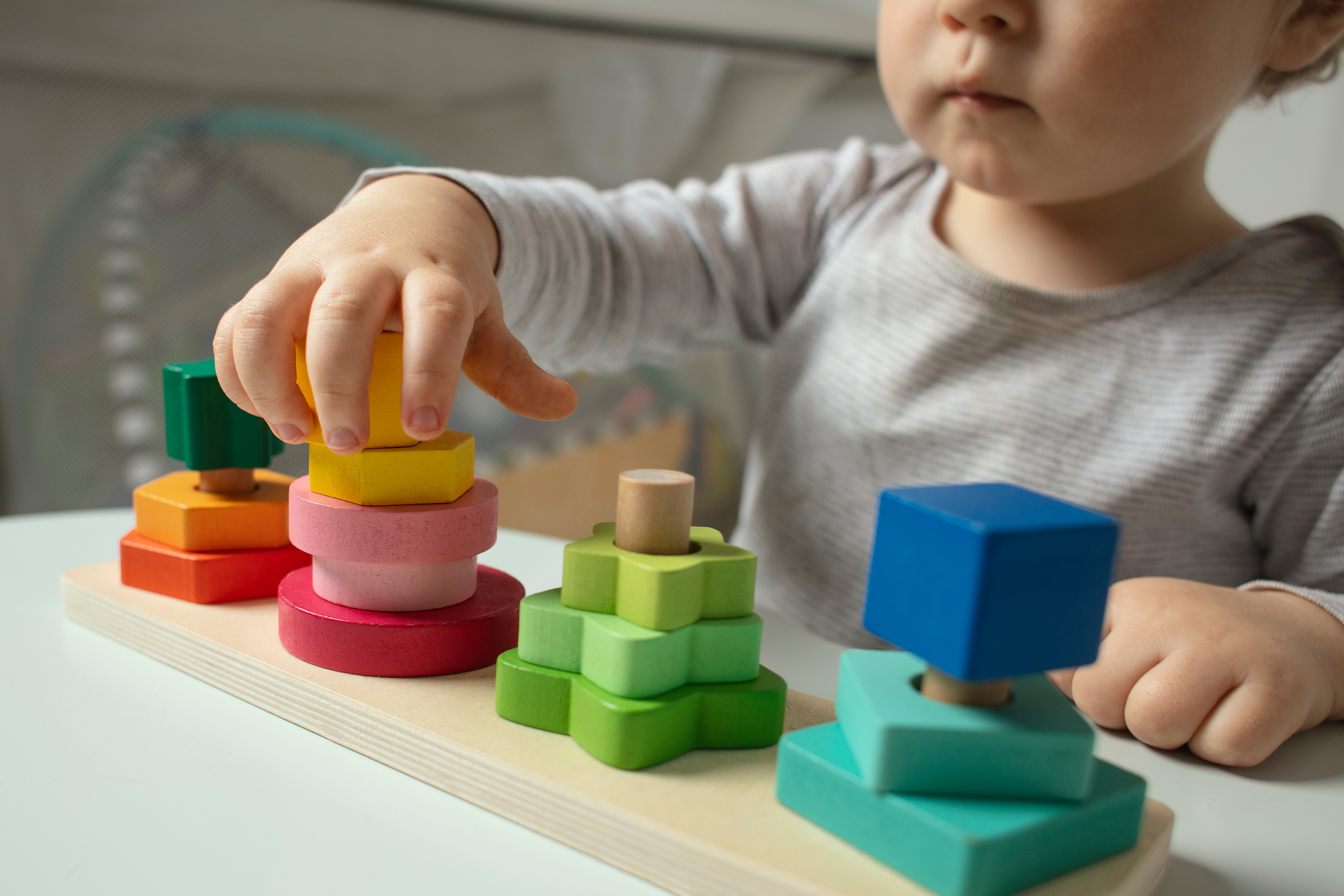

Basic arithmetic serves as a foundation for all future mathematical learning, making it crucial for children between the ages of 4 and 8. At this formative stage, young minds are extraordinarily receptive and capable of acquiring fundamental skills that will support more complex problem-solving tasks later in their academic and everyday lives.
First, mastering basic arithmetic—addition, subtraction, multiplication, and division—builds critical thinking and analytical abilities. These skills are essential not only in mathematics but in subjects like science, engineering, economics, and even the arts.
Moreover, proficiency in basic math fosters self-confidence. When children can solve numerical problems on their own, it instills a sense of accomplishment. This can lead to a positive attitude towards learning and an eagerness to tackle new challenges.
From a practical standpoint, basic arithmetic is encountered daily—whether counting change, measuring ingredients for a recipe, or telling time. Early familiarity with these concepts makes children more adept at managing everyday tasks efficiently.
Finally, early intervention in mathematical learning ensures that children can keep up with their peers and the curriculum. Struggling with math can lead to frustration and a lack of interest in school in general. Thus, for parents and teachers, emphasizing basic arithmetic ensures not only academic success but also the holistic development of problem-solving skills, self-sufficiency, and lifelong learning.








