Geography knowledge Normal Math Worksheets for Ages 4-8
6 filtered results
-
From - To
Enhance your child's understanding of geography with our engaging Normal Math Worksheets tailored for ages 4-8! These worksheets seamlessly integrate math skills with geography concepts, making learning both fun and educational. Children will explore maps, locations, and geographical features while developing essential math abilities. Our carefully designed activities help young learners grasp foundational geography knowledge, encouraging critical thinking and spatial awareness alongside basic numeracy. Each worksheet is colorful, age-appropriate, and aligns with early education standards, ensuring that your child builds confidence in both geography and math. Perfect for classroom use or homeschooling, our resources promote a well-rounded education for your budding scholars!
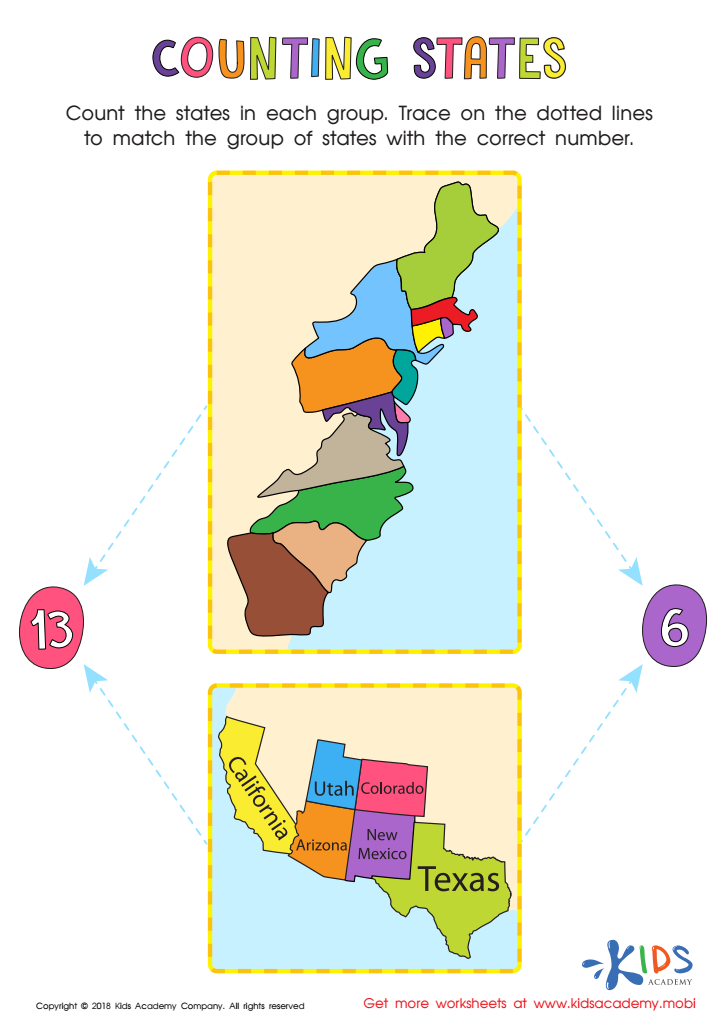
Counting States Worksheet
 Assign to My Students
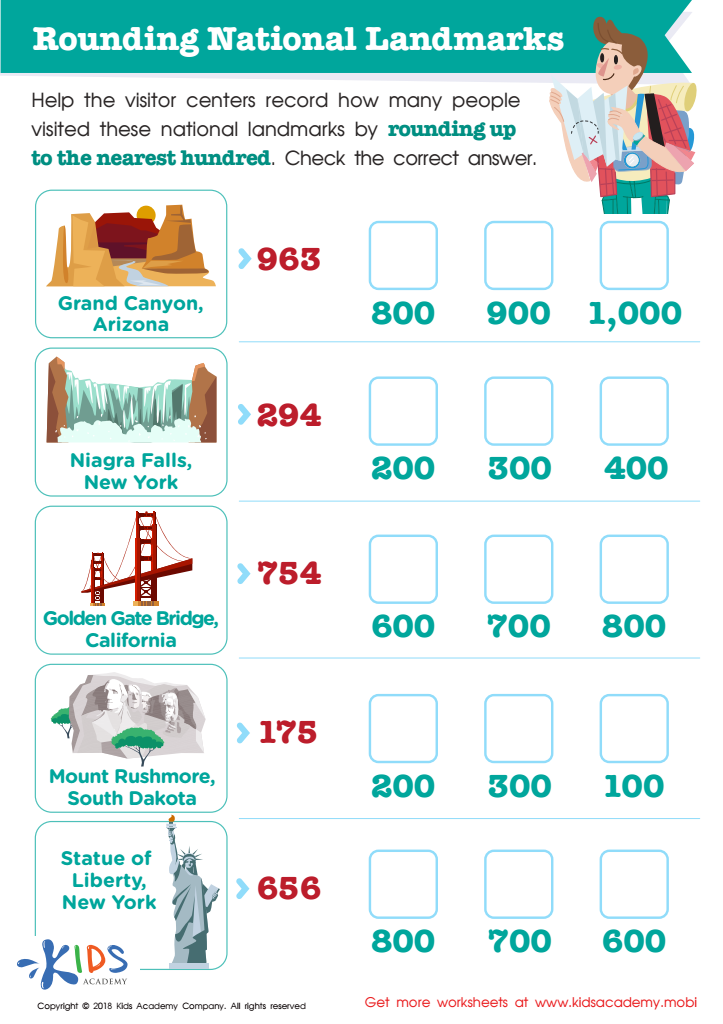
Rounding National Landmarks Worksheet
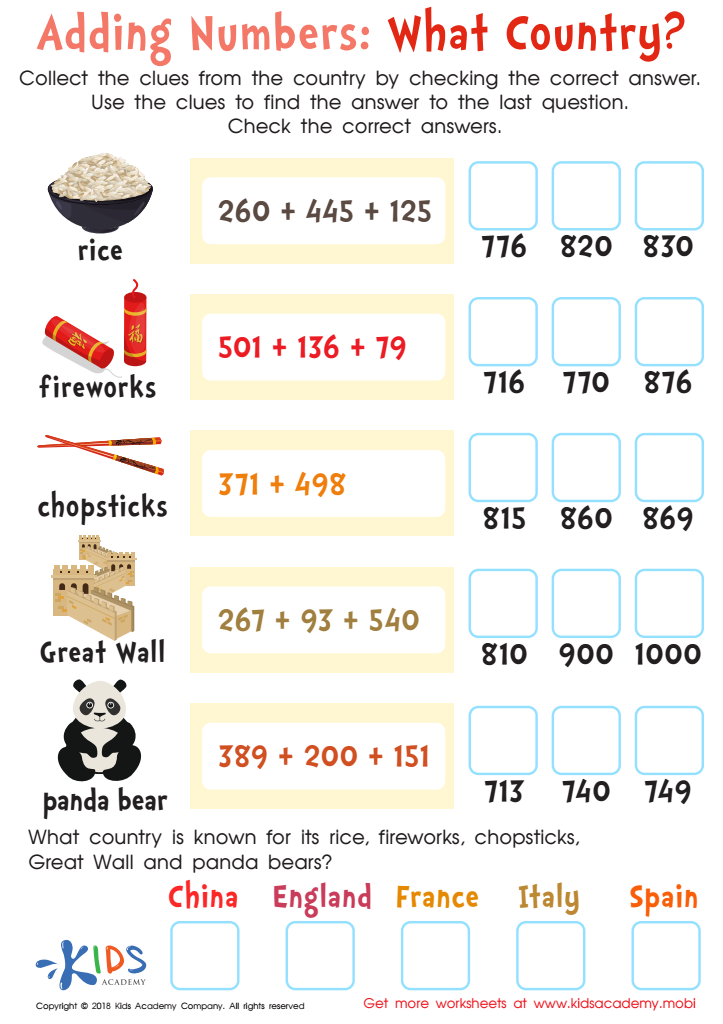
Adding Numbers: What Country Worksheet
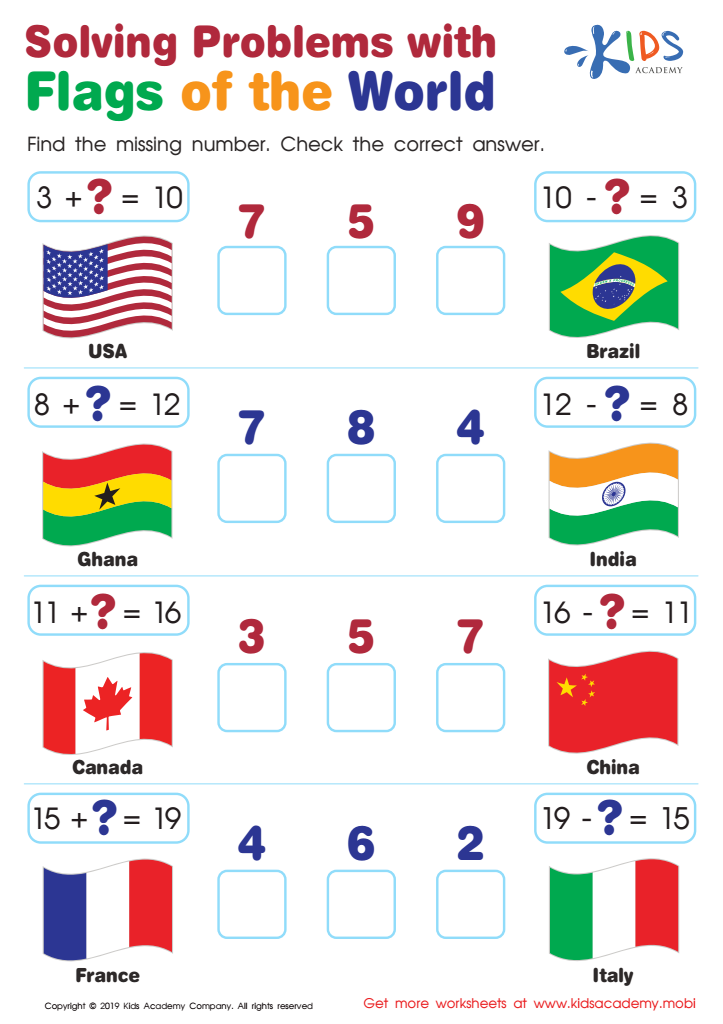
Solving Problems with Flags of the World Worksheet
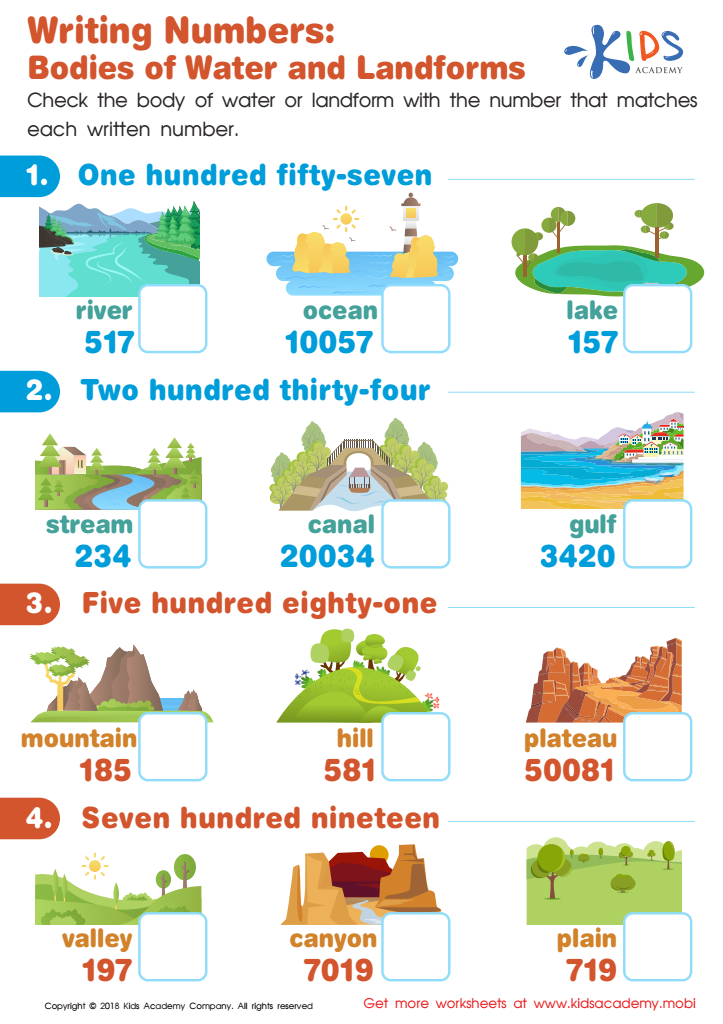
Bodies of Water and Landforms Writing Numbers Worksheet
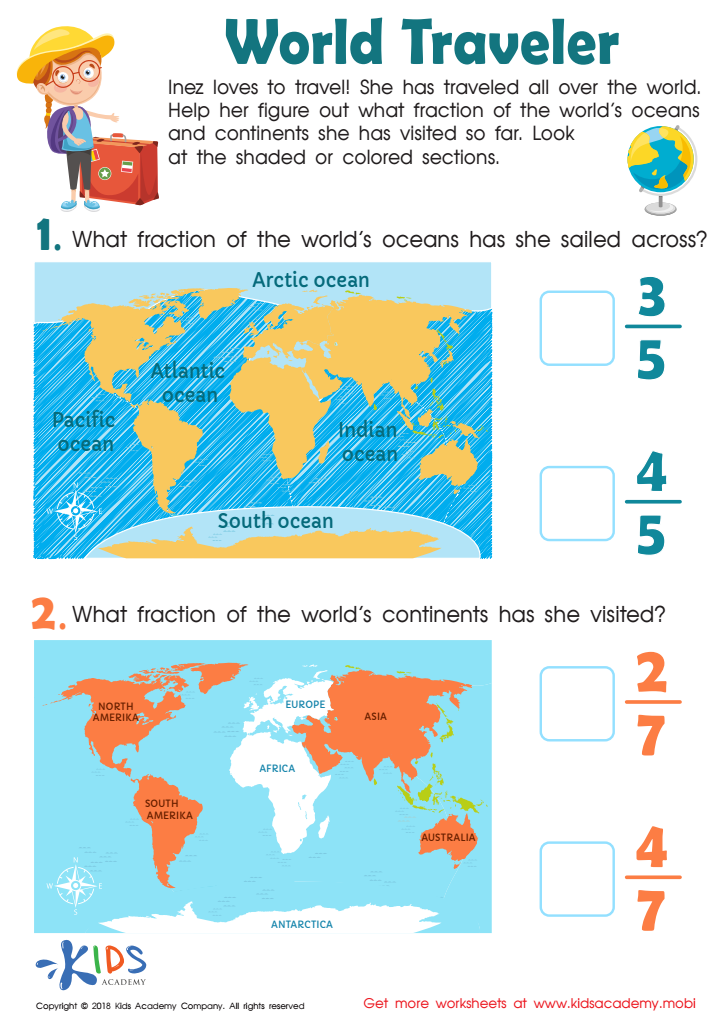
World Traveler Worksheet





Understanding geography knowledge and basic math concepts is essential for children aged 4-8, as it lays the groundwork for their critical thinking and problem-solving skills. At this age, children are naturally curious about their world, making this the perfect time to introduce them to geography. Familiarity with maps, the concepts of space, distance, and direction enhances their spatial awareness and helps them make connections between their environment and the world at large.
Conversely, early math competency establishes foundational skills in numeracy. Recognizing numbers, counting, and understanding simple mathematical operations not only bolsters their cognitive abilities but also enables them to recognize patterns and relationships in everyday life.
For parents and teachers, nurturing these skills is crucial because they serve as gateways for more complex learning in the future. Integrating geography into math activities—like measuring distances on maps or counting objects in nature—creates an engaging, hands-on learning experience. Together, these subjects empower children with a comprehensive understanding of their surroundings and the quantitative skills necessary for later academic success. In fostering these skills, adults play a key role in shaping informed, capable, and enthusiastic learners who are better prepared for future challenges.








