Understanding Quantities Normal Math Worksheets for Ages 4-8
3 filtered results
-
From - To
Welcome to our "Understanding Quantities Normal Math Worksheets" designed specifically for children ages 4-8! Our engaging worksheets foster foundational math skills by helping young learners grasp the concept of quantity in a fun and interactive way. Through vibrant illustrations and age-appropriate activities, children will explore counting, comparing amounts, and identifying numerals. These worksheets not only support early numeracy but also build confidence and problem-solving skills. Perfect for both in-class and at-home learning, our resources make math enjoyable and accessible. Start your child's journey to math mastery today—download our printable worksheets and watch them thrive!
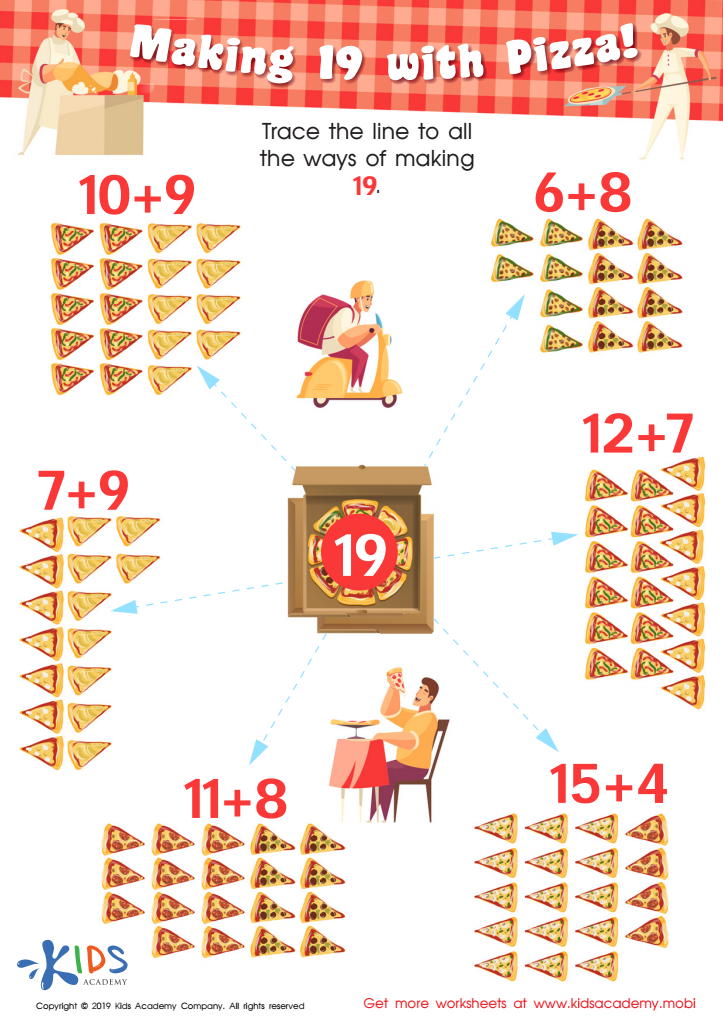
Making 19 with Pizza! Worksheet
 Assign to My Students
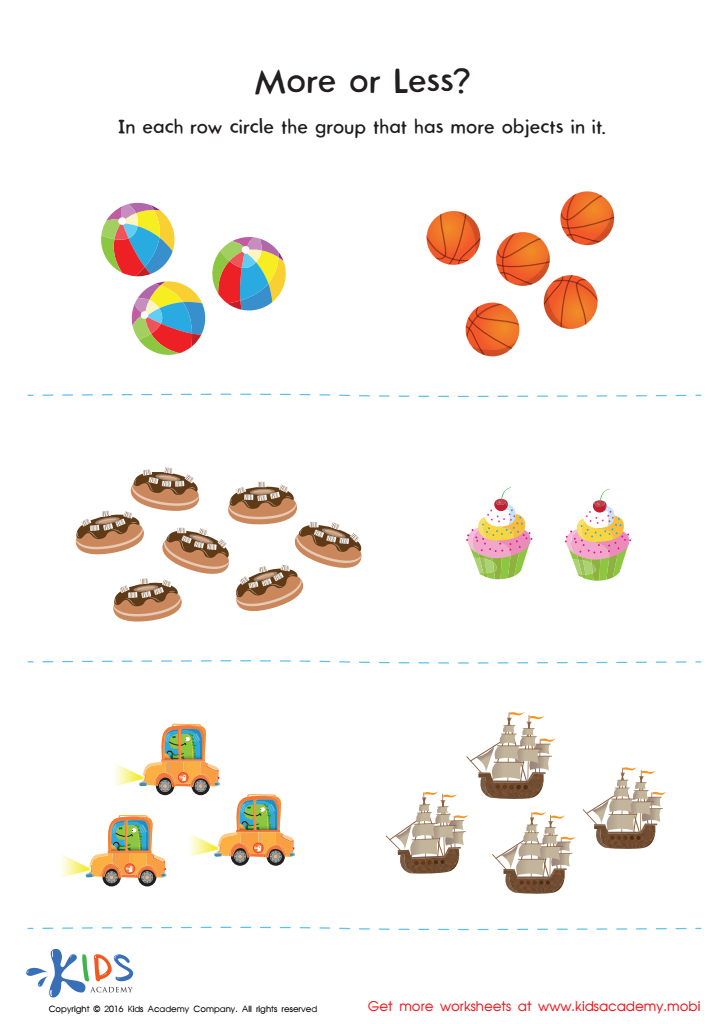
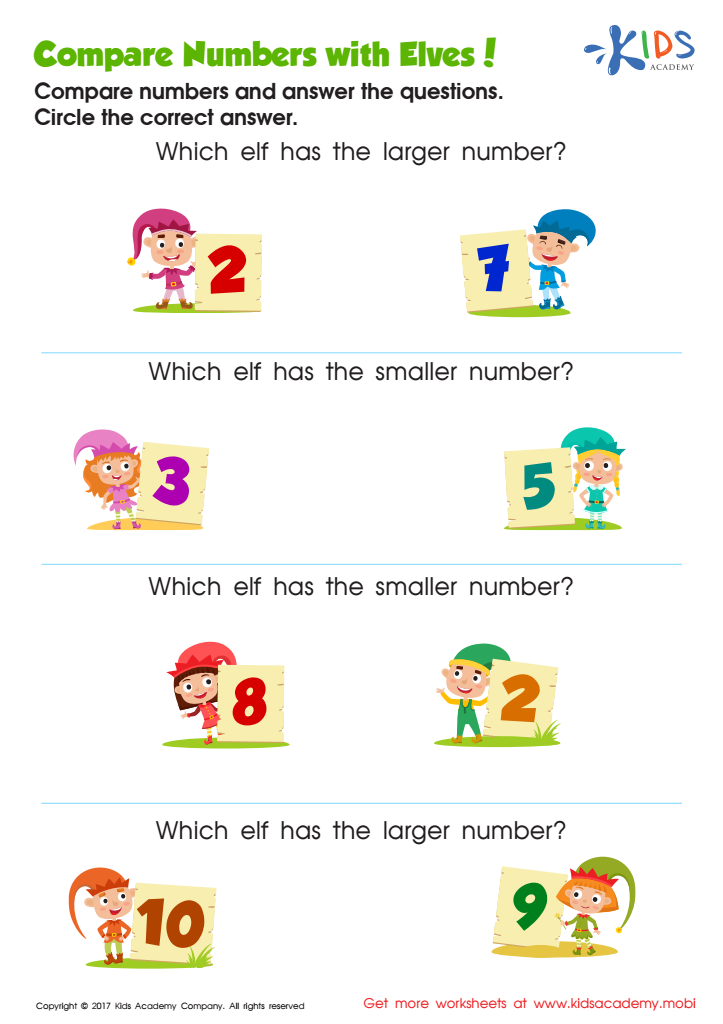
Comparing Numbers Worksheet for Kindergarten







Understanding Quantities is a fundamental concept in early math education for children aged 4-8. At this developmental stage, children are naturally curious and eager to learn, making it an optimal time to instill a solid foundation in mathematical concepts. Grasping the idea of quantities helps children comprehend a variety of key skills such as counting, comparing, and basic addition and subtraction.
When parents and teachers emphasize Understanding Quantities, they equip children with essential tools for critical thinking and problem-solving. This foundational understanding not only aids in future mathematics but also fosters cognitive skills such as measurement, estimation, and pattern recognition. Engaging with quantities can also enhance language development, as children learn to articulate their thoughts about numbers and relationships.
Moreover, fostering a positive attitude towards math early on helps to mitigate math anxiety later in life. Incorporating hands-on activities, such as manipulatives or real-life examples, strengthens children's connections to quantities, making math more relatable and enjoyable.
Ultimately, prioritizing Understanding Quantities in early education nurtures a child's confidence and competence in mathematics, setting the stage for academic success and lifelong learning. Parents and teachers play a crucial role in this journey, influencing children’s attitudes towards math and shaping their educational paths.








