Vocabulary expansion Normal Math Worksheets for Ages 4-8
4 filtered results
-
From - To
Boost your child's vocabulary with our engaging Vocabulary Expansion Normal Math Worksheets designed specifically for ages 4-8. These fun, printable worksheets seamlessly integrate language development with essential math skills, ensuring a holistic learning experience. Young learners will explore new words and associations while solving age-appropriate math problems, enhancing both their vocabulary and critical thinking abilities. Our worksheets cover a range of topics, making learning interactive and enjoyable. Ideal for home or classroom settings, they provide teachers and parents with a valuable resource to nurture confident, articulate students. Download our Vocabulary Expansion Math Worksheets today and watch your child flourish!
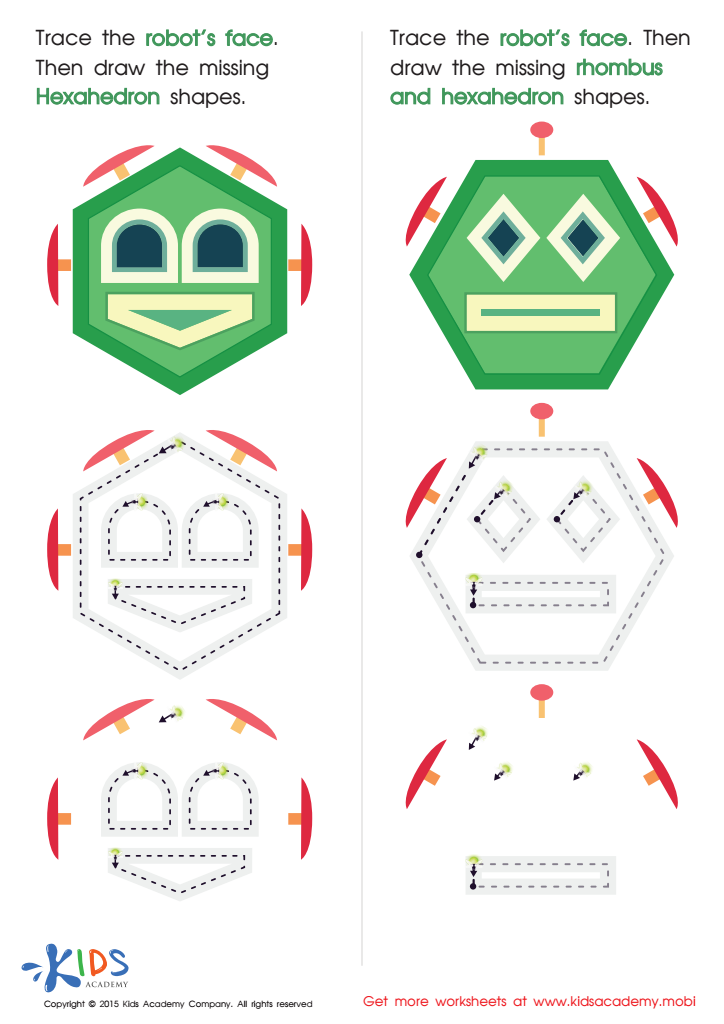
Practice Drawing Hexahedrons And a Rhombus Worksheet
 Assign to My Students
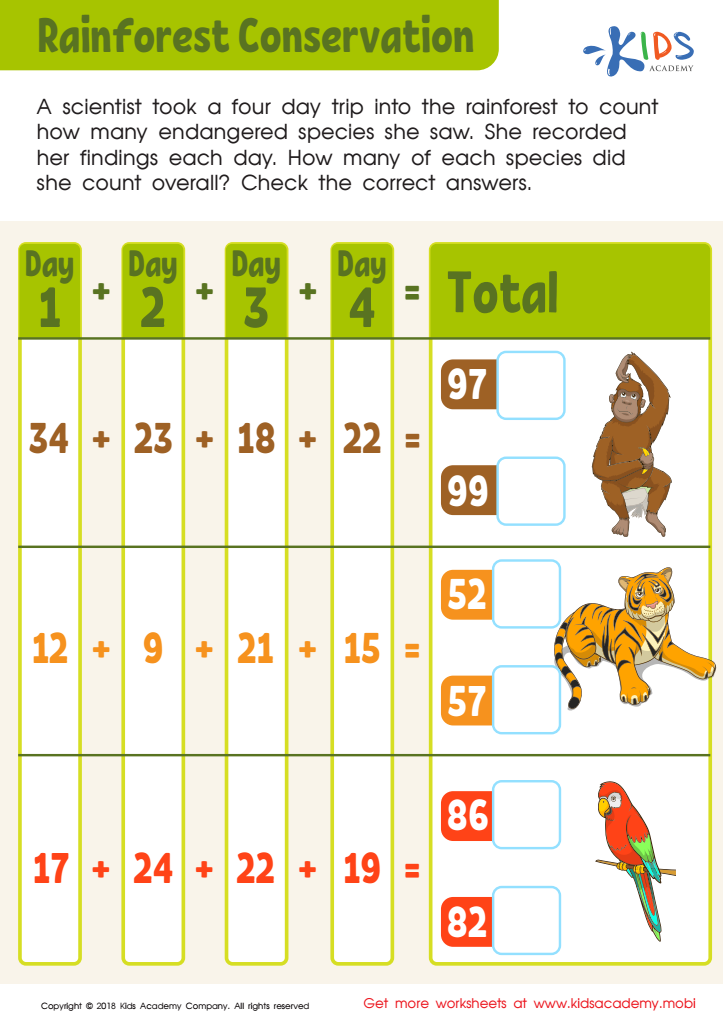
Rainforest Conservation Worksheet
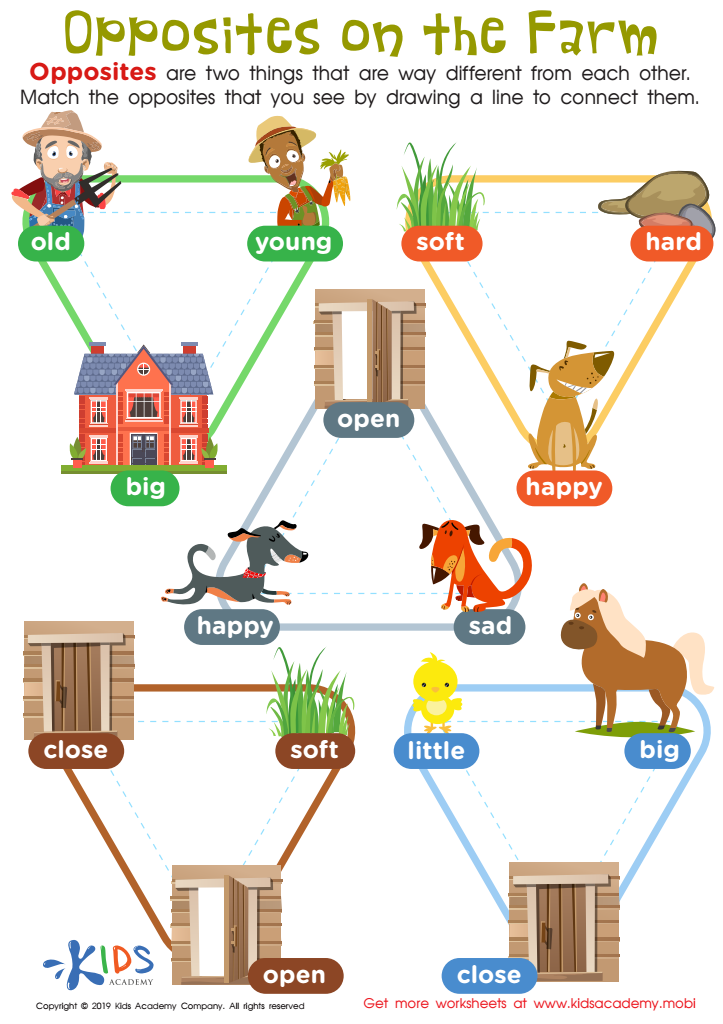
Opposites on the Farm Worksheet
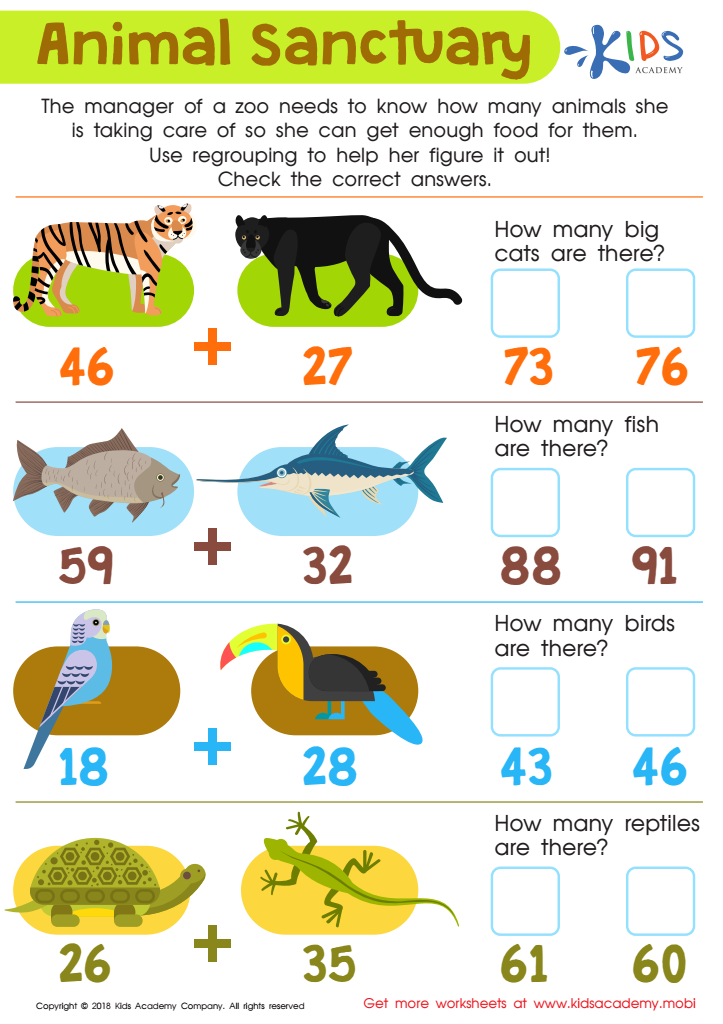
Animal Sanctuary Worksheet








Vocabulary expansion is vital for children's overall development, especially in the realm of mathematics from ages 4 to 8. During these formative years, children begin forming connections between language, numbers, and mathematical concepts. A rich vocabulary enhances their ability to articulate mathematical ideas, fosters better comprehension, and improves problem-solving skills.
When parents and teachers actively support vocabulary development in mathematics, children learn to navigate various mathematical terms—such as "add," "subtract," "greater than," and "equal to." With a broader vocabulary, children are better equipped to understand instructions, solve word problems, and explain their reasoning. This sets the groundwork for more advanced mathematical concepts down the line, as language is a crucial tool for intellectual engagement.
Moreover, vocabulary expansion in math promotes confidence in classroom participation and discussions. When students feel comfortable expressing their thoughts, they are more likely to engage in collaborative learning and utilize critical thinking skills. This foundation not only enhances mathematical abilities but also contributes to overall academic success.
In short, parents and teachers should focus on vocabulary expansion to empower children, helping them feel competent and confident in both math and other academic fields. Ultimately, fostering a strong mathematical vocabulary aids in building lifelong learners equipped for future challenges.








