
Enhancing observation skills Normal Measurement Worksheets for Ages 4-8
3 filtered results
Difficulty Level
Grade
Age
-
From - To
Subject
Activity
Standards
Boost your child's observation skills and foundational understanding of measurements with our specialized worksheets designed for kids ages 4-8. These engaging activities enhance visual discernment and promote critical thinking as children explore concepts of length, weight, and volume. Each worksheet is crafted to be age-appropriate, interactive, and fun, ensuring your child stays motivated and excited to learn. Perfect for both classroom settings and home practice, these resources provide the essential skills needed to recognize and compare various measurements in everyday life. Give your child the tools they need to succeed with our comprehensive Normal Measurement Worksheets.
Favorites
With answer key
Interactive
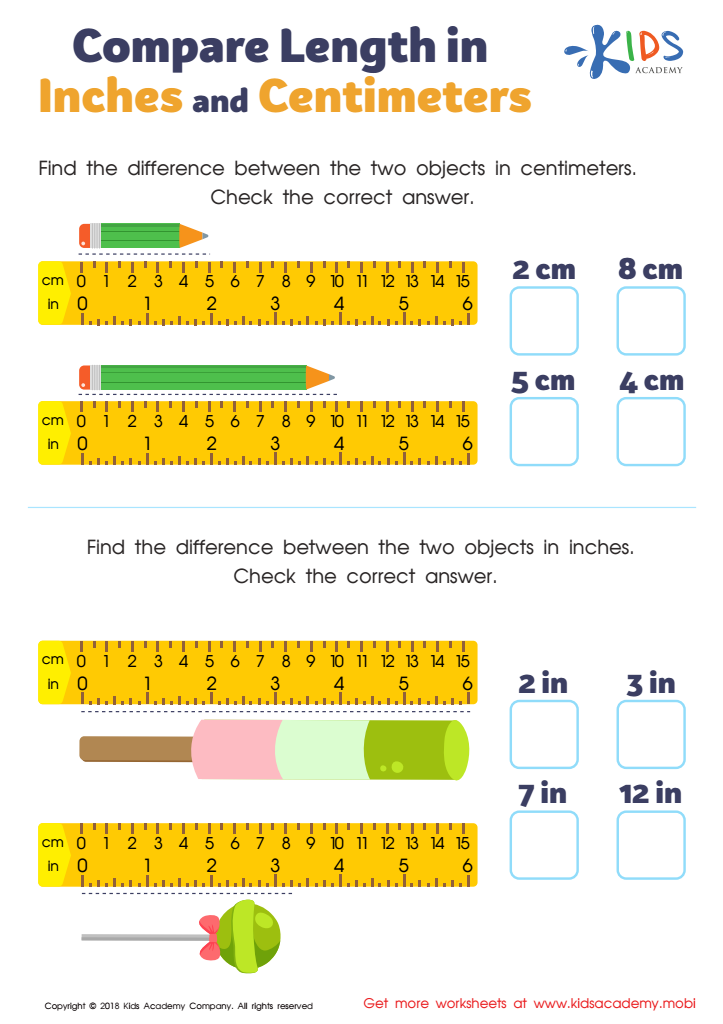
Compare Length in Inches and Centimeters Worksheet
This worksheet has your child measuring objects in both centimeters and inches. The first task requires measuring both objects in centimeters, then finding their difference. The second task is the same but in inches.
 Assign to My Students
Compare Length in Inches and Centimeters Worksheet
Worksheet
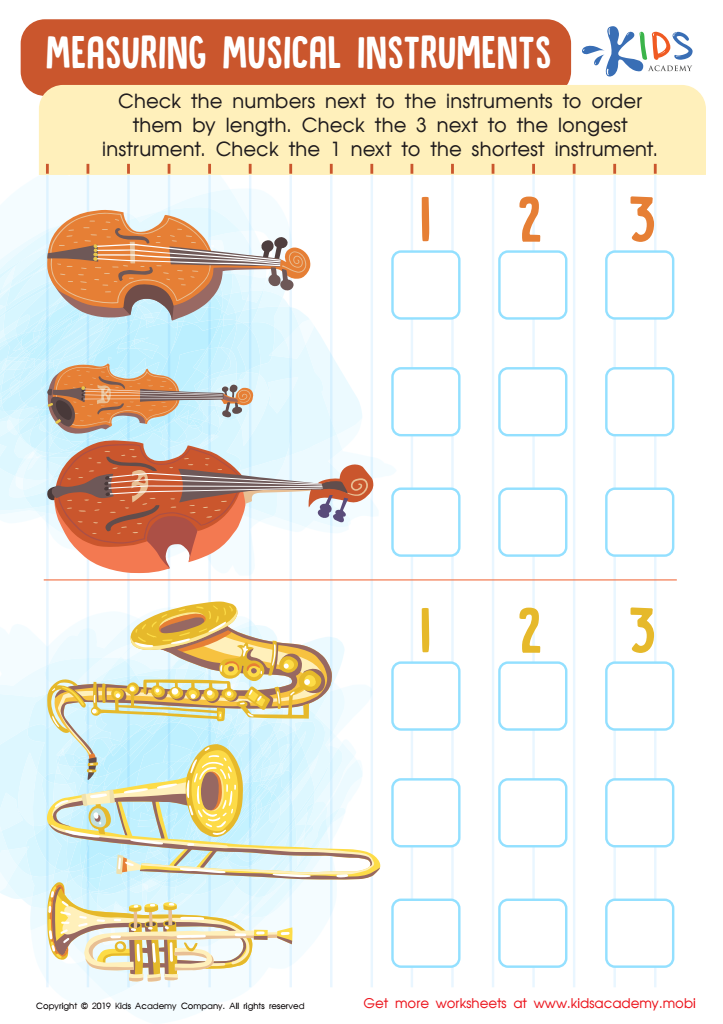
Measuring Musical Instruments Worksheet
Learning measurements can be tricky, but this worksheet makes it easy. Ask your child to identify the instruments in the pictures. Then, order them by length using the numbers. 3 is the longest, 1 is the shortest. Simple exercises like this will help them understand the different metric systems.
Measuring Musical Instruments Worksheet
Worksheet
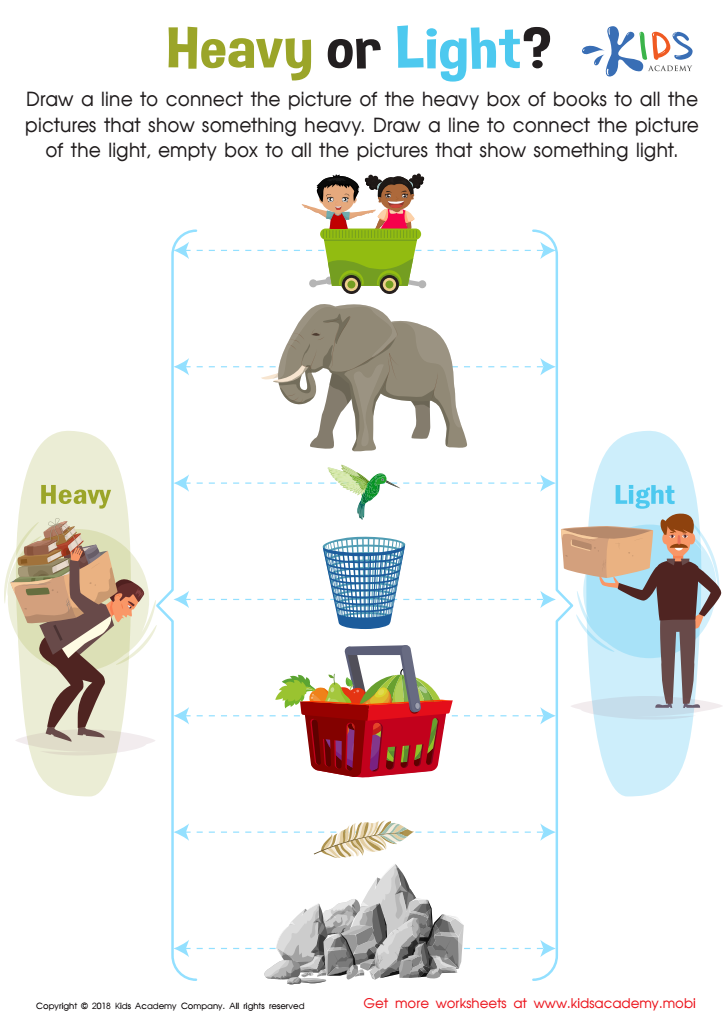
Heavy or Light? Worksheet
Kids can struggle to understand weight comparison, as size and mass matter. This free PDF helps develop fine-motor and hand-eye skills as kids trace lines to match pictures. The familiar pictures create concrete representations, ideal for learning more complex concepts.
Heavy or Light? Worksheet
Worksheet
Join Kids Academy for Free
Who is primarily going to use this learning content?








Enhancing observation skills in children aged 4-8 is crucial for their cognitive and personal development. At this age, kids are naturally curious and keen observers of their environment. When parents and teachers focus on improving these skills, they foster growth in critical areas like attention, memory, and sensory awareness.
First, strong observation skills help in academic readiness. Children who carefully observe their surroundings pick up on details, notice patterns, and develop problem-solving skills, all of which are foundational for math, science, and reading. These observational abilities also contribute to a child's ability to follow instructions and understand sequences in activities and stories.
Second, observation skills enhance social interactions. Children learn to read facial expressions and body language, which helps them communicate better and form healthy relationships. Empathy and cooperation among peers are often built on these non-verbal communication cues.
Finally, fostering observation skills can spark creativity and imagination. As children notice the details and nuances in their surroundings, they gain ideas for drawing, storytelling, and other forms of creative expression.
In essence, sharpening observation skills not only supports academic achievement but also improves social skills and nurtures creativity. For these reasons, it is essential for parents and teachers to invest time in activities and routines that stimulate and develop these vital skills.








