Pattern recognition Normal Patterns Worksheets for Ages 4-8
5 filtered results
-
From - To
Elevate your child's learning experience with our engaging "Normal Patterns Worksheets" designed for ages 4-8. These user-friendly worksheets facilitate the development of essential pattern recognition skills, crucial for early math proficiency. Young learners will enjoy identifying, completing, and creating patterns through fun and age-appropriate activities that spark their creativity and logical thinking. Our carefully crafted materials not only enhance cognitive skills but also foster confidence in problem-solving. Perfect for both classroom and home use, these worksheets encourage independent practice and exploration. Equip your child with the foundational skills they need for academic success with our delightful pattern recognition resources!
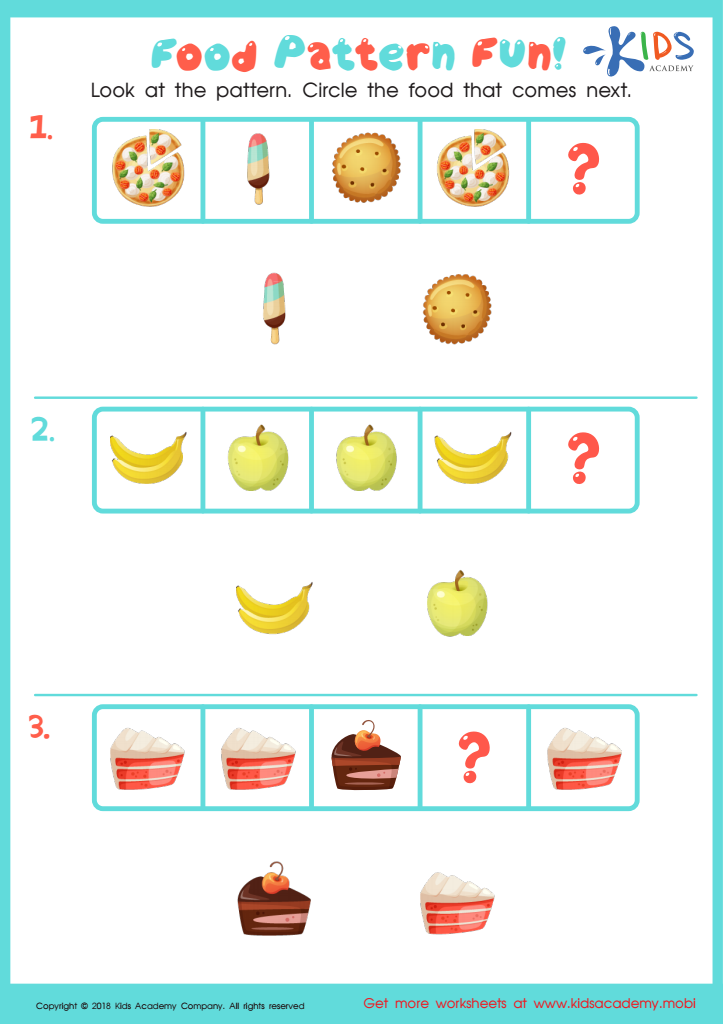
Food Pattern Fun Worksheet
 Assign to My Students
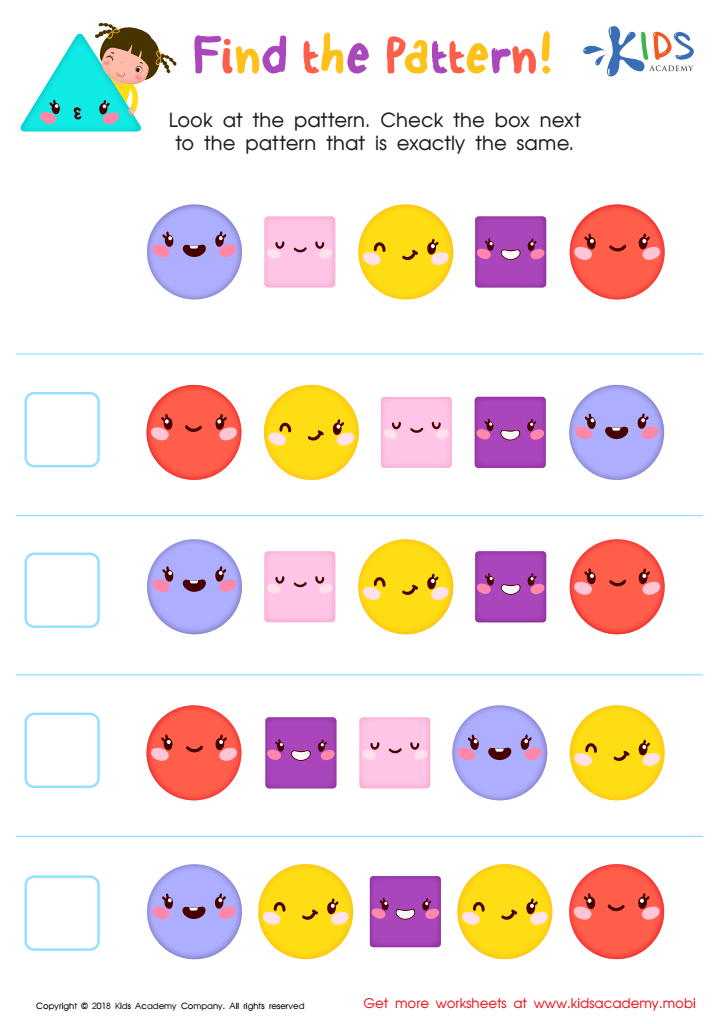
Find the Pattern Worksheet
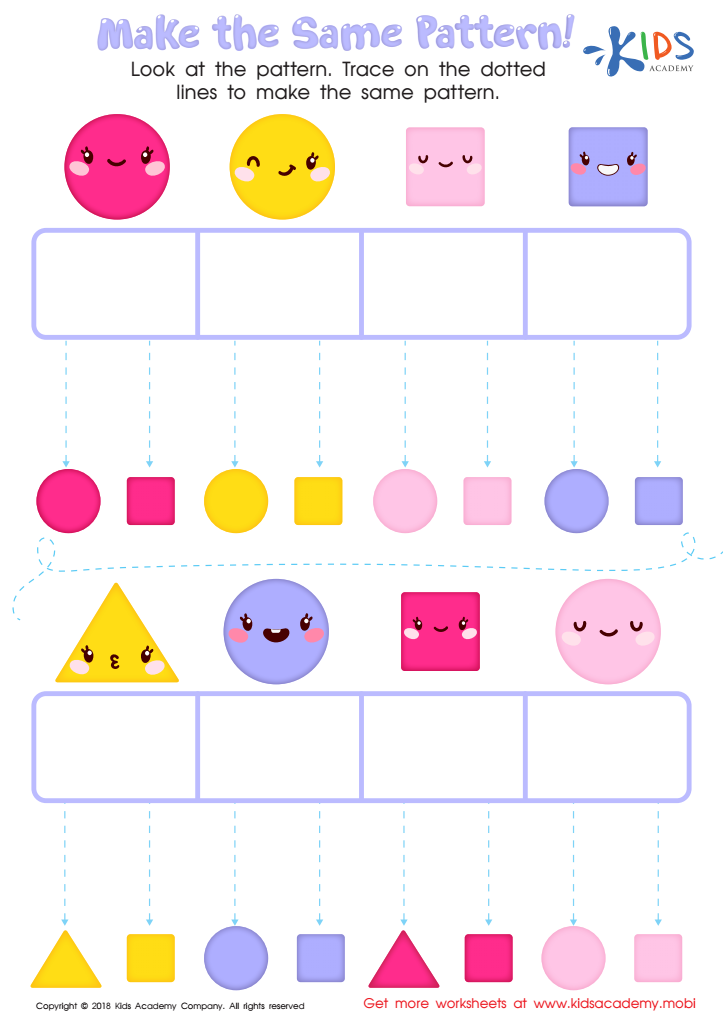
Make the Same Pattern Worksheet
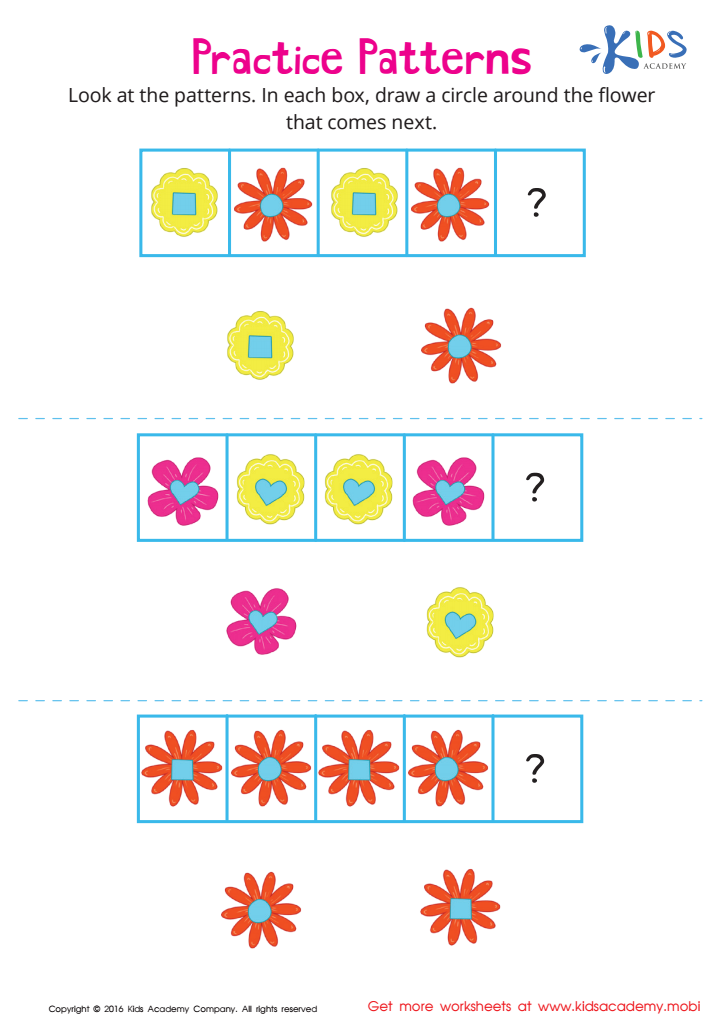
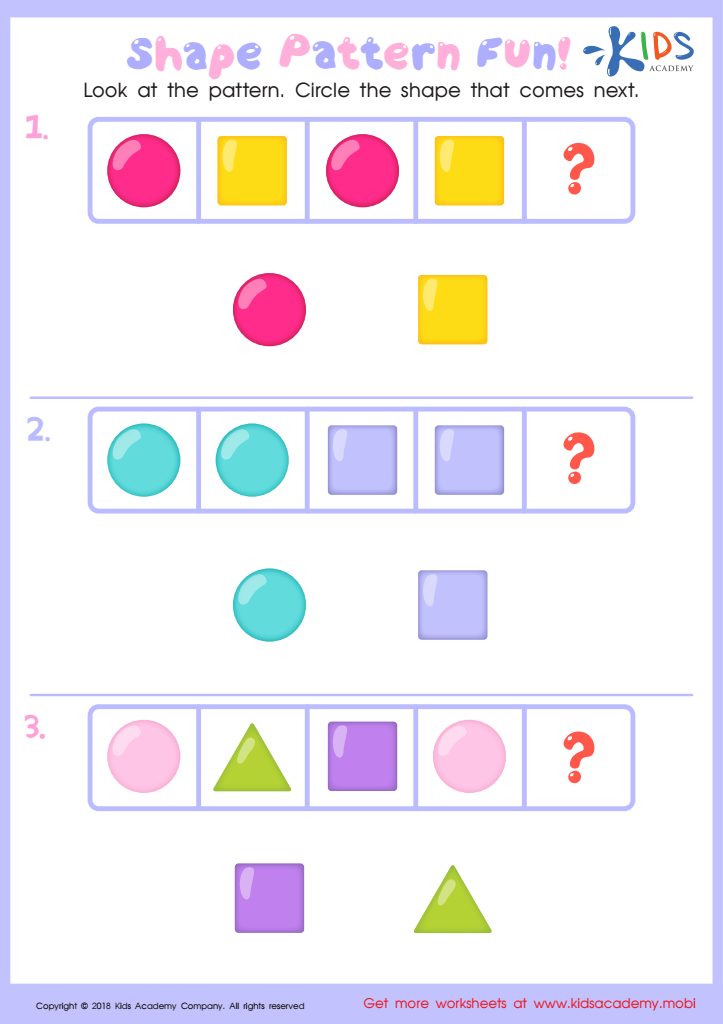
Shape Pattern Fun Worksheet








Pattern recognition is a crucial developmental skill for children aged 4-8, significantly impacting their cognitive growth. Understanding normal patterns aids in laying the foundation for advanced problem-solving skills, critical thinking, and mathematical abilities. Parents and teachers should prioritize this skill because it supports children’s ability to observe and interpret the world around them.
When children recognize patterns—whether in nature, daily routines, or mathematical sequences—they develop predictive abilities which enhance their learning and comprehension. This not only boosts academic performance but also fosters creativity as they begin to think outside the box. For instance, recognizing color, shape, or sound patterns helps children in arts and sciences alike.
Additionally, pattern recognition fosters confidence and independence. Children learn to identify and create their own patterns, which bolsters self-esteem and a sense of accomplishment. It also promotes collaboration and communication as children share their findings with peers.
In essence, fostering pattern recognition experiences in early education helps cultivate a well-rounded learner equipped with essential life skills, making it vital for parents and teachers to engage and support children in this area. Early exploration of patterns ultimately builds a strong foundation for future learning and intellectual growth.








