Number Recognition Normal Skip Counting Worksheets for Ages 4-8
3 filtered results
-
From - To
Introduce your child to the exciting world of number recognition with our Number Recognition Normal Skip Counting Worksheets, specially designed for ages 4-8. These engaging and interactive worksheets help children develop essential counting skills, enhancing their ability to recognize patterns and sequences. By practicing skip counting, children can sharpen their math proficiency while having fun. Each worksheet is crafted to encourage playful learning, making it easier for young learners to grasp foundational number concepts. Perfect for home or classroom use, these resources support early math education and set your child on a path to mathematical confidence and success. Start counting today!
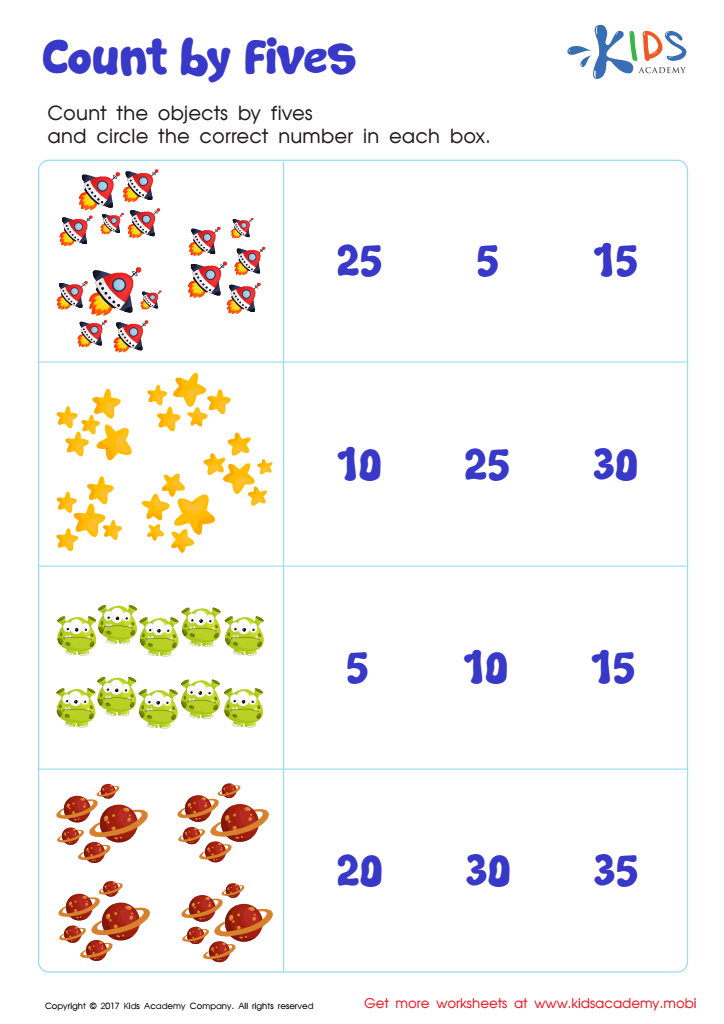
Skip Counting by 5s: Space Math Printable
 Assign to My Students
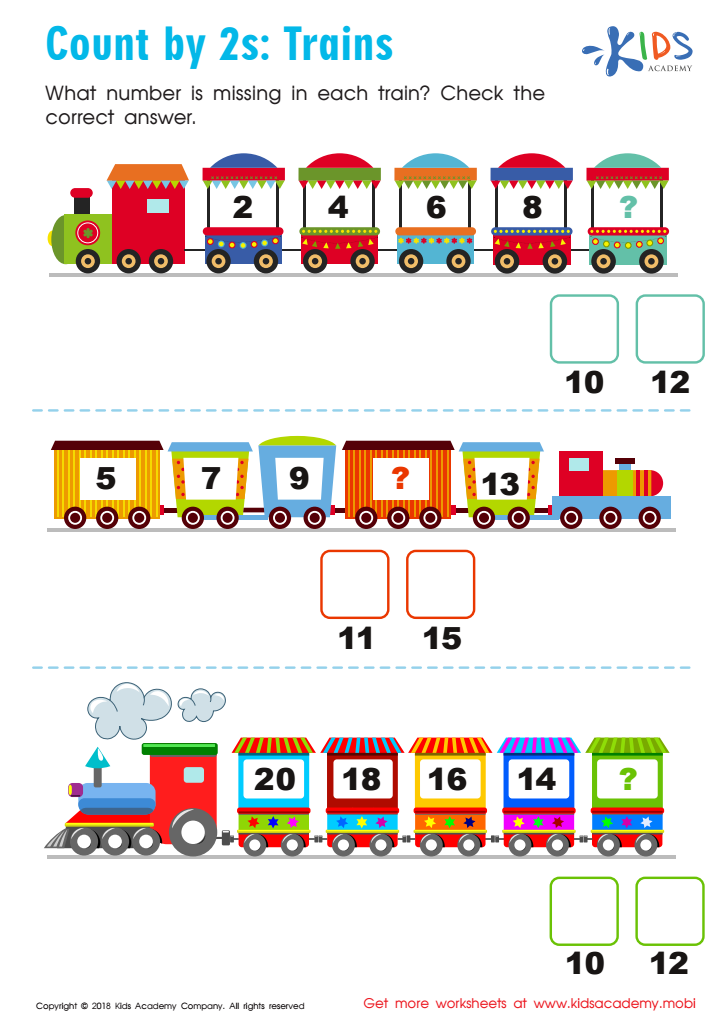
Count by 2's: Trains Worksheet
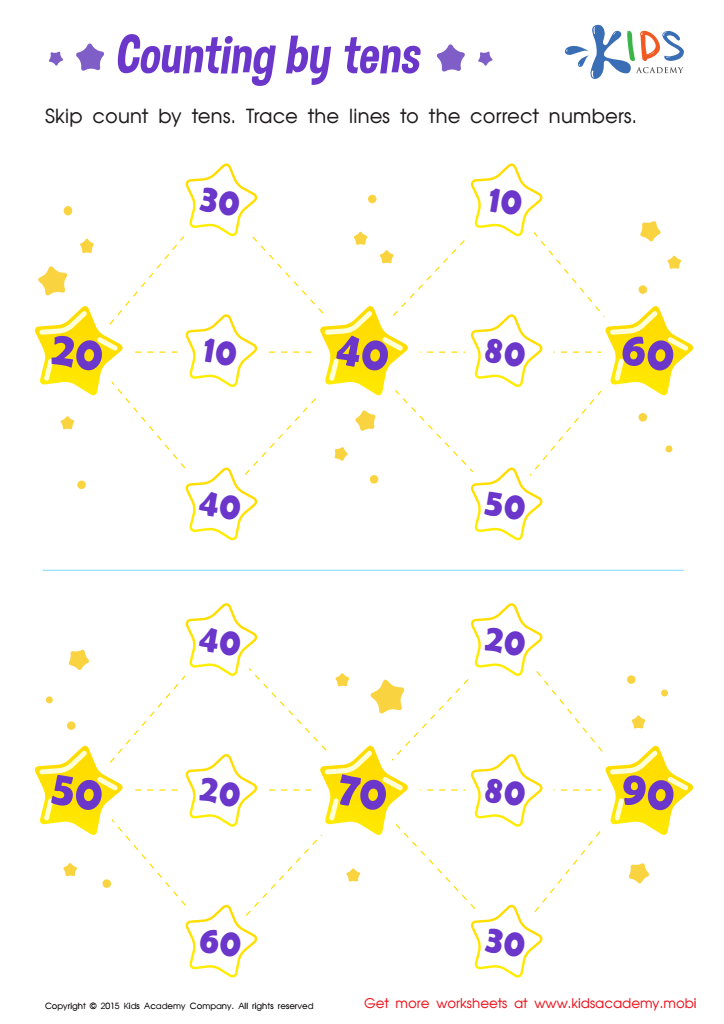
Learn Dozens: Counting by Tens Printable




%20(1).jpg)
.jpg)


Number recognition and skip counting are foundational skills crucial for young children's mathematical development. For ages 4-8, these skills serve as building blocks for more complex mathematical concepts later on. Parents and teachers should care about number recognition because it helps children identify and understand numbers, which plays a vital role in their ability to perform basic arithmetic. Recognizing numbers is the first step in fostering confidence in mathematics, leading to better academic outcomes as they progress through school.
Skip counting, or counting in a pattern (such as by twos, fives, or tens), reinforces understanding of number sequences and introduces concepts of grouping and multiplication. This technique not only aids in later mathematical operations but also helps children develop their problem-solving skills. Moreover, skip counting has practical applications—whether counting objects, telling time, or handling money.
By nurturing these skills at a young age, parents and teachers can pave the way for successful learning experiences, set positive attitudes toward math, and reduce future anxiety associated with the subject. Encouraging number recognition and skip counting can create a solid mathematical foundation, equipping children with essential skills they will use throughout their education and everyday life.








