Understanding perspectives Normal Reading Worksheets for Ages 4-8
3 filtered results
-
From - To
Explore our "Understanding Perspectives Normal Reading Worksheets" designed specifically for children ages 4-8! These engaging, educational resources help young learners develop critical thinking skills by encouraging them to recognize and analyze different viewpoints in stories. With a variety of exercises that promote comprehension and empathy, kids will enhance their reading abilities while having fun. Our worksheets include colorful illustrations and age-appropriate texts, making learning enjoyable and interactive. Ideal for classrooms or at-home practice, these materials foster essential literacy skills and promote a deeper understanding of narrative contexts. Empower your child's reading journey with our thoughtfully crafted worksheets today!
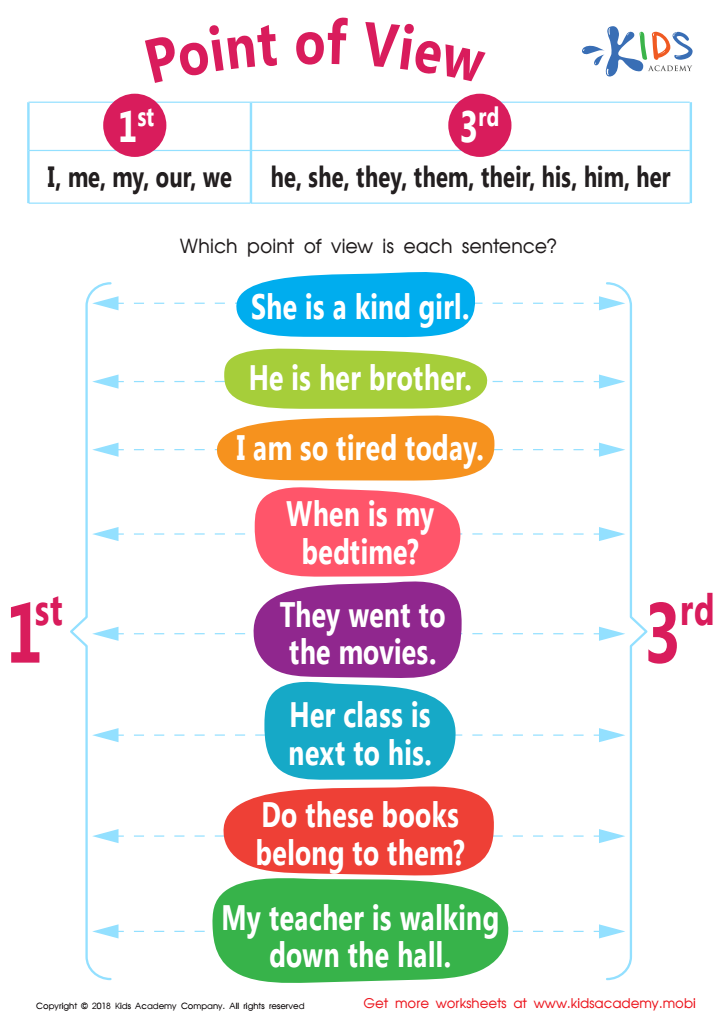
Point of View Worksheet
 Assign to My Students
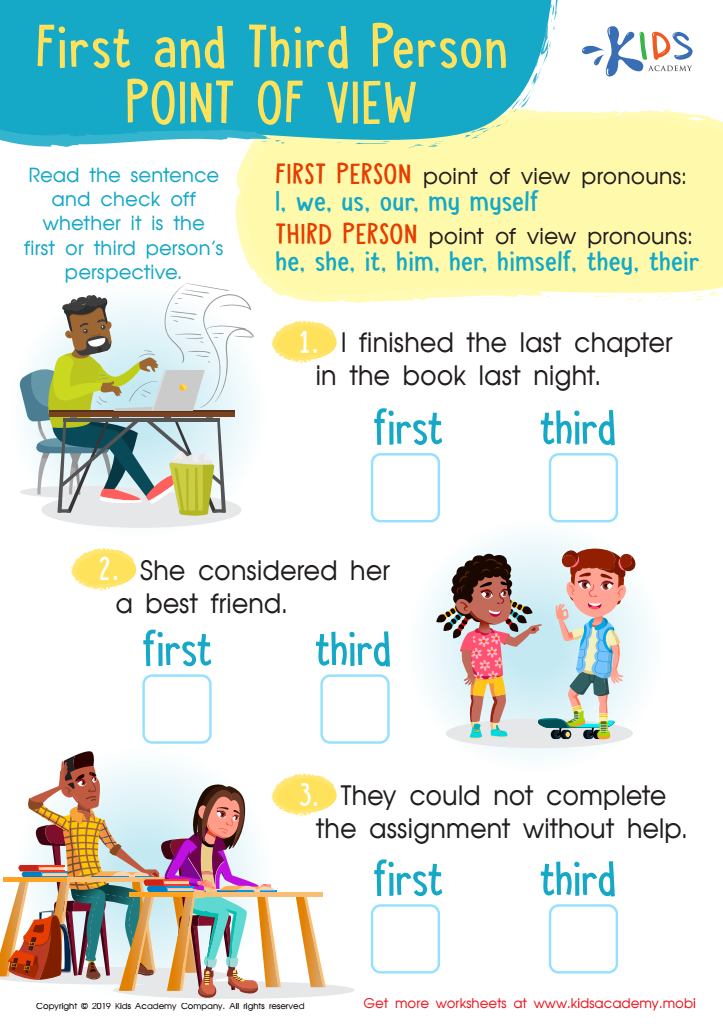
First and Third Person Point of View Worksheet
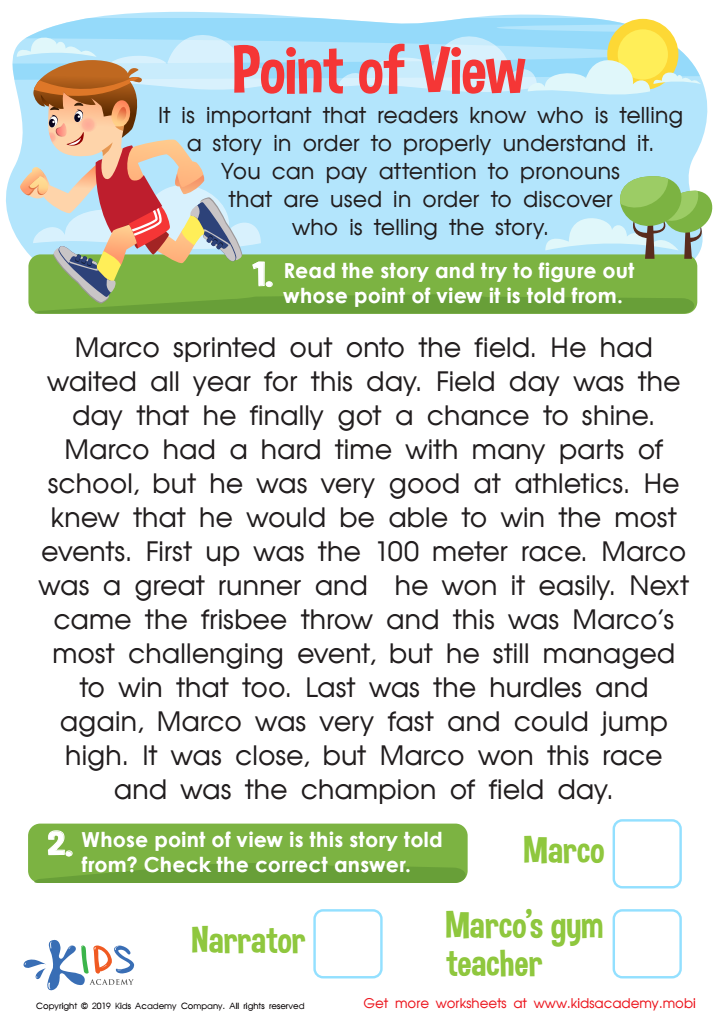
Point of View Worksheet








Understanding perspectives is crucial for children aged 4-8 as it lays the foundation for empathy, social skills, and critical thinking. When parents and teachers emphasize perspective-taking, they help children recognize and respect differences in thoughts, feelings, and views, fostering a more compassionate environment. This skill encourages imaginative play, as children learn to put themselves in others’ shoes, enhancing their creativity and storytelling abilities.
Furthermore, understanding perspectives aids in conflict resolution. Children equipped with this skill can approach disagreements more thoughtfully, considering the viewpoints of their peers, which promotes cooperation and stronger relationships. In an increasingly diverse world, cultivating this ability early can help children appreciate cultural differences, preparing them for inclusive interactions as they grow.
Moreover, integrating perspective-taking into reading activities enhances comprehension skills. When children analyze characters’ motivations and emotions, they become more engaged readers, improving literacy outcomes. This understanding not only enriches their reading experience but also strengthens their ability to connect stories to real-life scenarios.
Teachers and parents should prioritize this aspect of development, as it shapes interpersonal skills and builds emotional intelligence, essential for children's future success both in and out of the classroom. Ultimately, fostering an ability to understand perspectives is an investment in a child's holistic growth and success.








