Identifying story elements Normal Reading Fiction Worksheets for Ages 4-8
3 filtered results
-
From - To
Explore our engaging "Identifying Story Elements" worksheets designed for young readers aged 4-8. These captivating activities help children delve into the fundamental components of fictional stories, including characters, setting, plot, and themes. By encouraging comprehension and critical thinking, our worksheets provide a fun way for kids to connect with literature. Ideal for classroom use or home learning, these resources inspire creativity and improve literacy skills. With colorful illustrations and age-appropriate content, your children will enjoy learning to identify story elements while developing a love for reading. Dive into the world of fiction and watch your child’s imagination flourish!
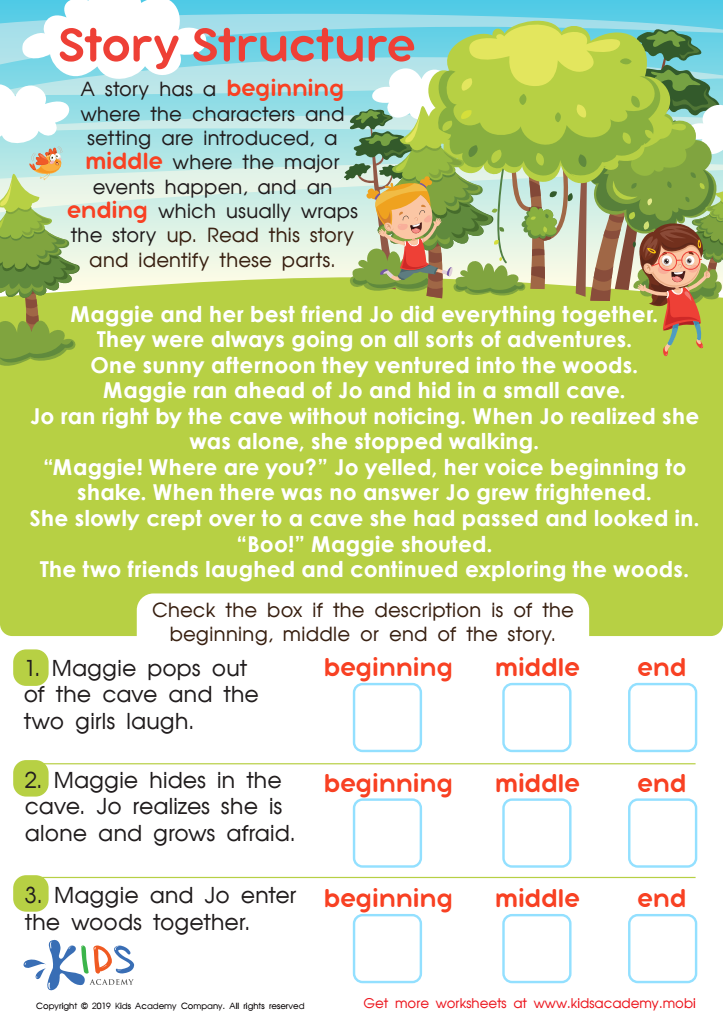
Story Structure Worksheet
 Assign to My Students
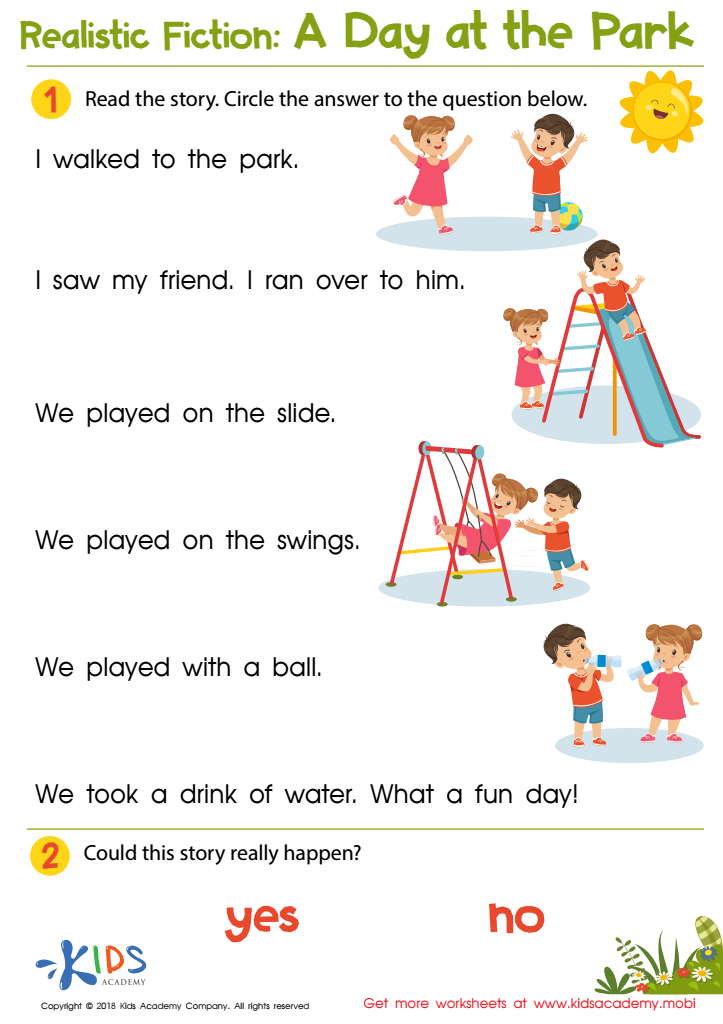
A Day at the Park Worksheet
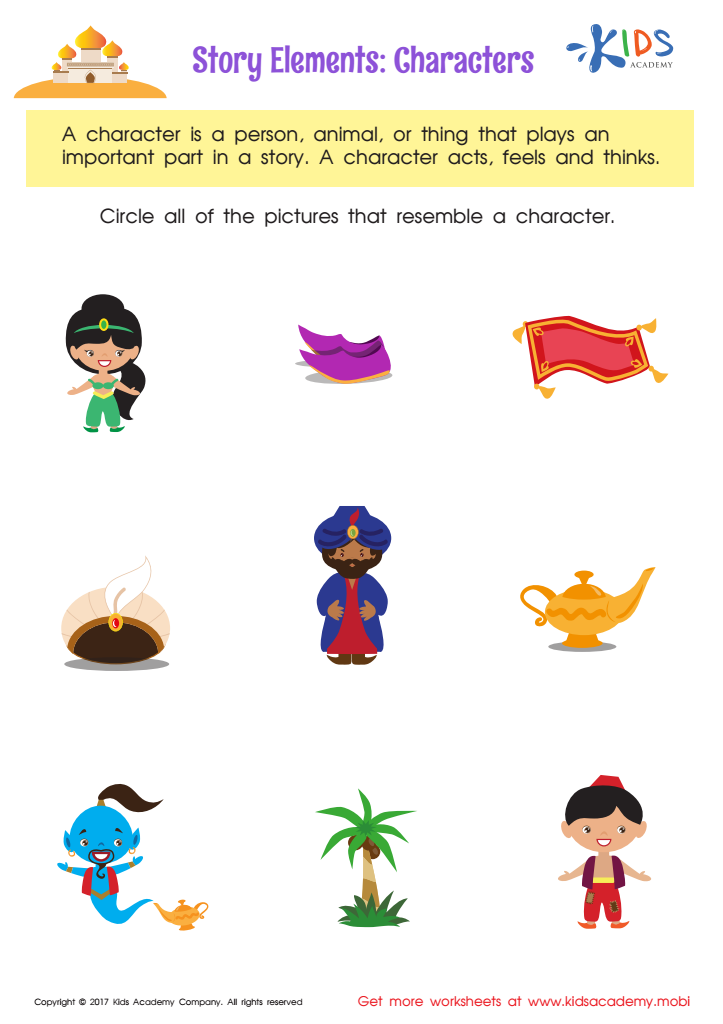
Story Elements Printable








Identifying story elements is essential for children aged 4-8 as it lays a strong foundation for literacy development and critical thinking. Understanding elements such as setting, characters, plot, conflict, and resolution enables young readers to engage more deeply with texts. When parents and teachers guide children in recognizing these components, they foster a love for reading and help children make connections between stories and their own experiences.
By identifying story elements, children enhance their comprehension and retention of narratives. This skill not only improves their ability to follow and predict storylines but also promotes creative thinking, as they learn to visualize scenarios and emotions. Moreover, discussion around these elements encourages vocabulary expansion and language skills, crucial at this developmental stage.
Additionally, identifying story elements cultivates empathy and perspective-taking, as children explore different characters and their motivations. This understanding enriches social interactions, as children learn to relate to others' feelings and viewpoints. In short, by focusing on story elements, parents and teachers empower young learners to become confident readers and thoughtful communicators, setting them on a path for future academic success and personal growth. Thus, their awareness and involvement in this process are pivotal.







