
Learning about ecosystems Normal Animals Worksheets for Ages 4-8
3 filtered results
Difficulty Level
Grade
Age
-
From - To
Subject
Activity
Standards
Explore the fascinating world of ecosystems with our "Learning about Ecosystems: Normal Animals Worksheets for Ages 4-8." Perfectly tailored for young learners, these engaging worksheets help children understand the roles various animals play in their habitats. Through fun and educational activities, kids will discover the importance of each animal in maintaining the balance of their ecosystem. Designed to spark curiosity and inspire learning, these worksheets combine scientific concepts with interactive exercises, making science both enjoyable and accessible. Ideal for both classroom and at-home education, our resources offer a captivating way to nurture your child's love for nature and science.
Favorites
With answer key
Interactive
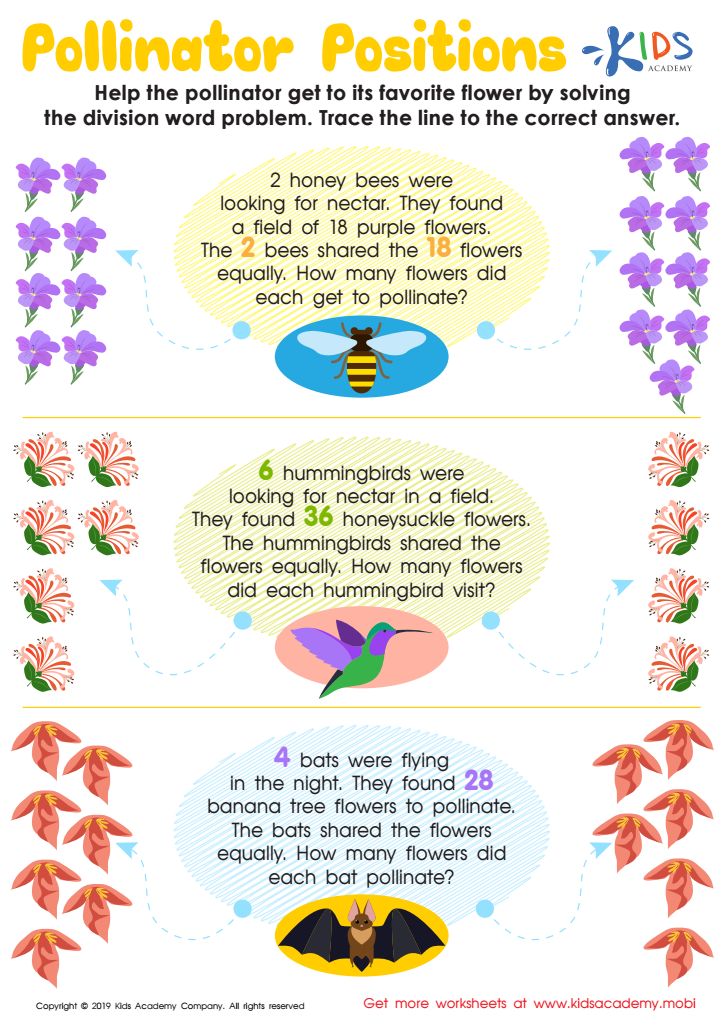
Pollinator Positions Worksheet
Kids will love learning about pollinators and how vital they are. Help their favorite friends get to the right flowers with this fun PDF. Children can solve the problems without even knowing they're doing division; just read the word problems and use the highlighted numbers. Finish by tracing the lines to the correct quotient!
 Assign to My Students
Pollinator Positions Worksheet
Worksheet
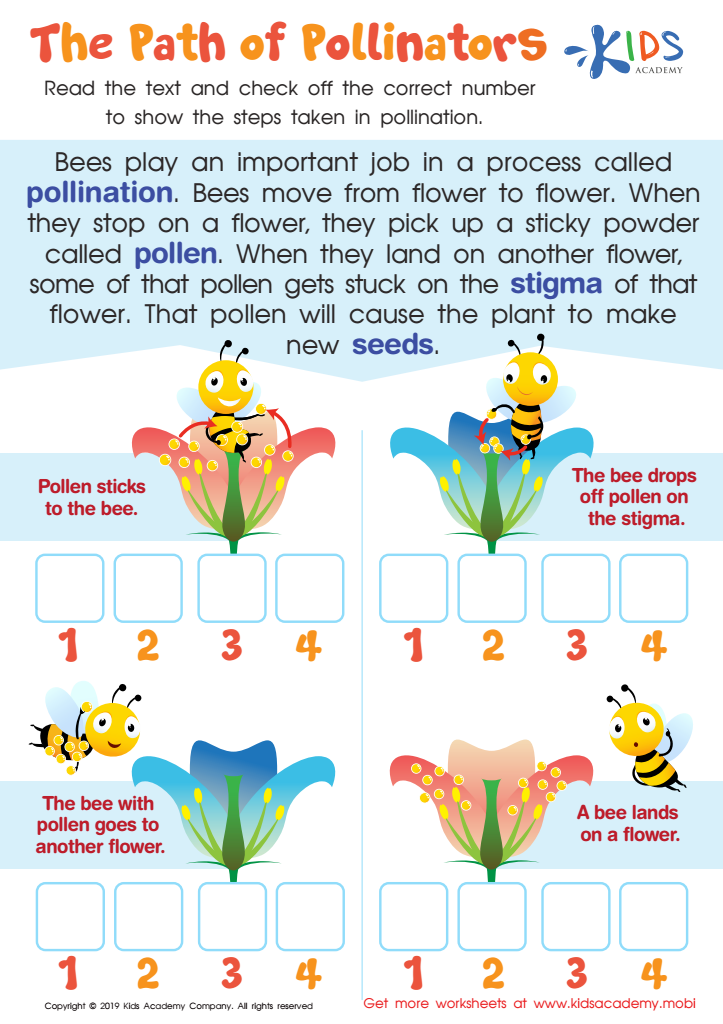
The Path of Pollinators Worksheet
Bees play a vital role in pollination: they transfer pollen between flowers, allowing them to produce new seeds. Without bees, we'd have less flowers and vegetation. Explain the process to your students and have them check off the right number to show the steps in pollination.
The Path of Pollinators Worksheet
Worksheet
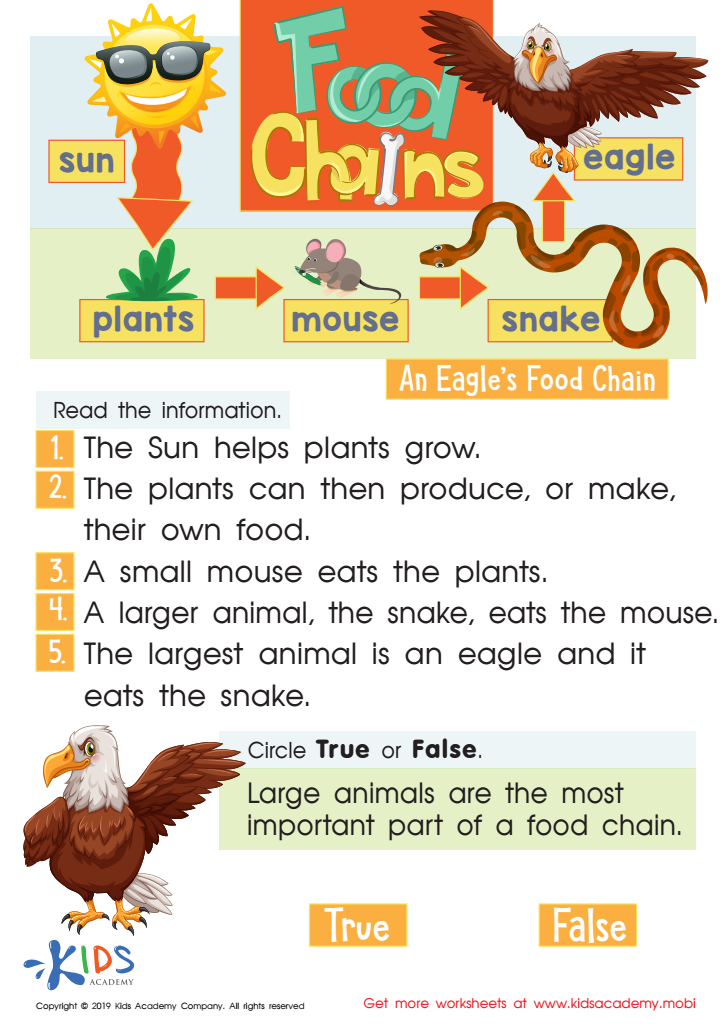
Food Chains Worksheet
This worksheet gets your child thinking about the sun's key role in the food chain. Read the info on the page, then discuss the true/false question. Are large animals the most important? Explain that without the sun, the other organisms would not exist. Have them circle the correct answer to finish.
Food Chains Worksheet
Worksheet
Join Kids Academy for Free
Who is primarily going to use this learning content?








Understanding ecosystems and their normal animals is crucial for children aged 4-8 as it lays a foundation for environmental stewardship and scientific curiosity. At this formative age, children are naturally curious about the world around them. Introducing them to ecosystems—communities of living organisms interacting with their physical environment—can ignite a lifelong interest in nature and science.
Through learning about ecosystems, children start to appreciate the delicate balance of nature and develop a sense of responsibility towards its preservation. Recognizing how animals fit into their ecosystems helps kids understand concepts like food chains, habitats, and biodiversity. For instance, learning about bees’ role in pollination or earthworms in soil health shows kids the intricate dependencies that sustain life on Earth.
Additionally, early education about ecosystems fosters empathy and respect for living creatures. Children who understand that animals play vital roles in their environments are more likely to show compassion towards them. This empathy can translate into pro-environmental behaviors as they grow older, such as recycling, conservation, and animal protection.
In essence, teaching young children about ecosystems and animals nurtures critical thinking, responsibility, and a caring attitude towards the natural world, equipping them with the knowledge and values needed for a sustainable future.








