Critical Thinking Normal Physical Science Worksheets for Ages 4-8
3 filtered results
-
From - To
Enhance your child's critical thinking skills with our engaging Normal Physical Science Worksheets, specially designed for ages 4-8. These thoughtfully crafted worksheets encourage young learners to explore essential concepts in physical science while fostering analytical thinking. Each activity promotes problem-solving, observation, and reasoning, allowing children to make connections between scientific ideas and real-world applications. With vibrant illustrations and age-appropriate questions, your child will enjoy exploring topics such as forces, matter, and energy. Perfect for classroom use or at-home learning, these resources are an excellent way to boost your child's confidence and curiosity in science! Discover the joy of learning today!
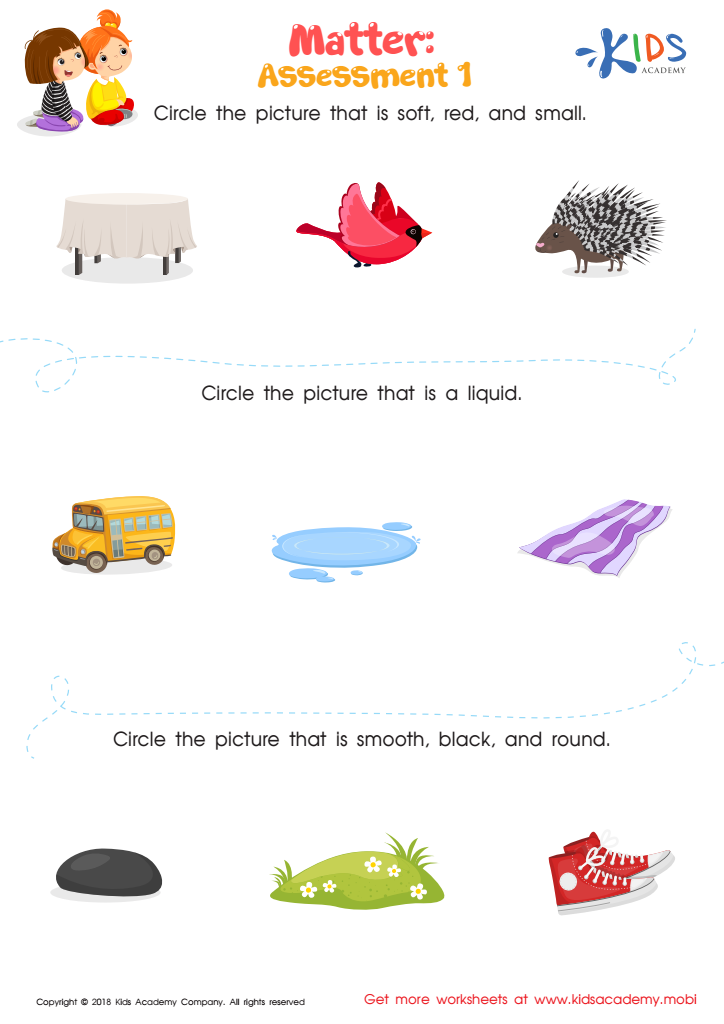
Matter: Assessment 1 Worksheet
 Assign to My Students
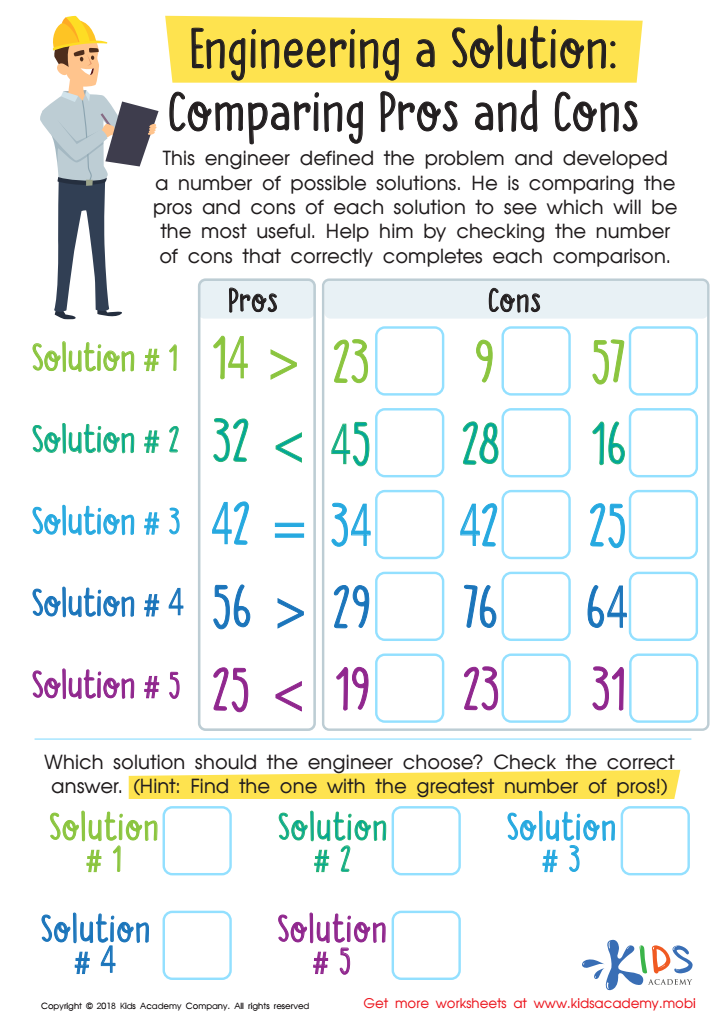
Engineering a Solution: Comparing Pros and Cons Worksheet
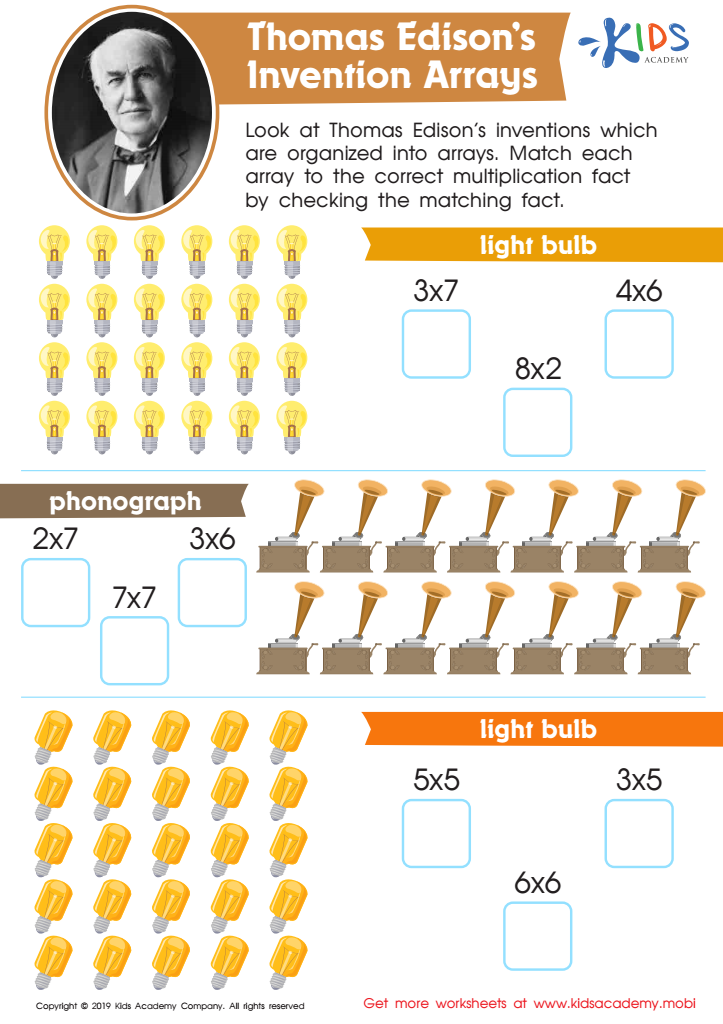
Thomas Edison’s Invention Arrays Worksheet








Parents and teachers should care about Critical Thinking in Normal Physical Science for children aged 4-8 as it lays the foundation for curiosity, inquiry, and problem-solving skills. This early exposure helps young learners develop the ability to analyze and evaluate information, fostering a mindset that values exploration and understanding.
During these formative years, children are naturally curious about the world around them. Engaging them in physical science concepts encourages them to ask questions about how things work, understand basic principles, and conduct simple experiments. This hands-on approach nurtures critical thinking by allowing them to hypothesize, observe, and draw conclusions based on evidence.
Additionally, critical thinking skills benefit children beyond science; they enhance their ability to approach challenges in mathematics, language arts, and everyday life. By cultivating these skills early, educators and parents can instill a love for learning and equip children with the competencies necessary for future academic success.
Incorporating critical thinking in Normal Physical Science also supports social skills through group activities and discussions, promoting collaboration and communication. Ultimately, prioritizing critical thinking in young learners positions them for lifelong learning and prepares them to navigate the complexities of a rapidly changing world.







