
Animal identification Normal Plants and Animals Worksheets for Ages 4-8
3 filtered results
Difficulty Level
Grade
Age
-
From - To
Subject
Activity
Standards
Discover our engaging Animal Identification worksheets designed specifically for children aged 4-8! These fun and interactive resources help young learners explore the fascinating world of plants and animals. Packed with vibrant images and easy-to-follow activities, our worksheets encourage kids to identify various animals, understand their habitats, and recognize their unique characteristics. Designed to enhance critical thinking and observational skills, these printables are perfect for classroom settings or at-home learning. Foster a love for nature and enrich your child's scientific knowledge with our exciting animal identification worksheets today! Visit the link to download and start learning!
Favorites
With answer key
Interactive
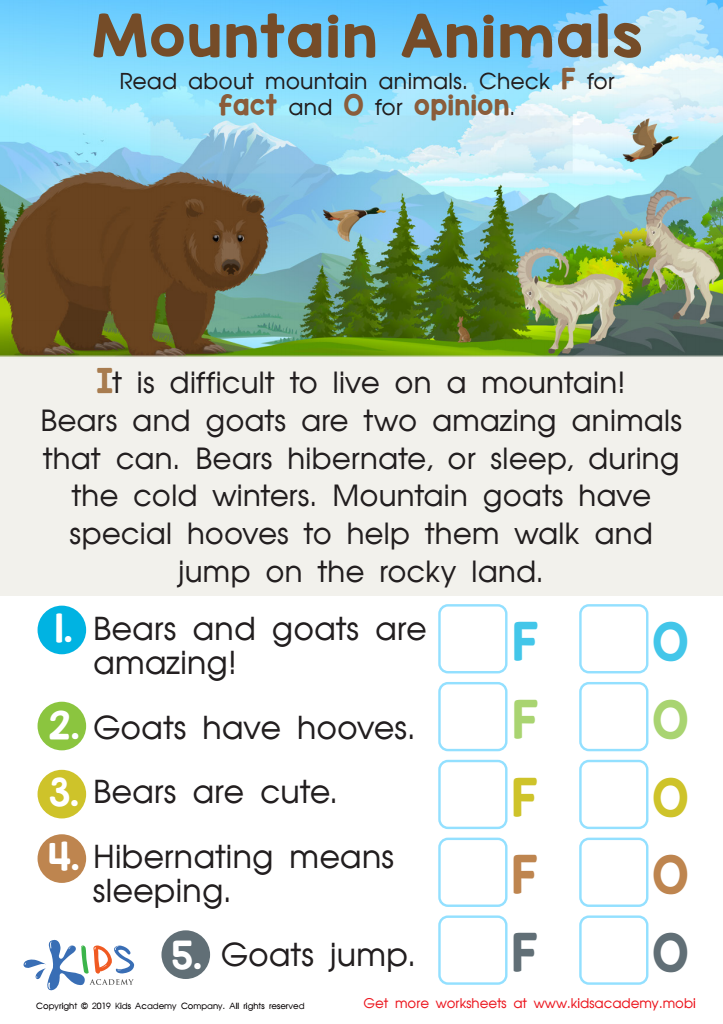
Mountain Animals Worksheet
Is mountain wildlife amazing? Fact or fiction? Help your child sharpen critical-thinking skills with this engaging worksheet. Featuring a fun nonfiction passage about animals like bears and goats, your child will read through the text and identify each statement as fact or fiction. Perfect for boosting reading comprehension and analytical abilities!
 Assign to My Students
Mountain Animals Worksheet
Worksheet











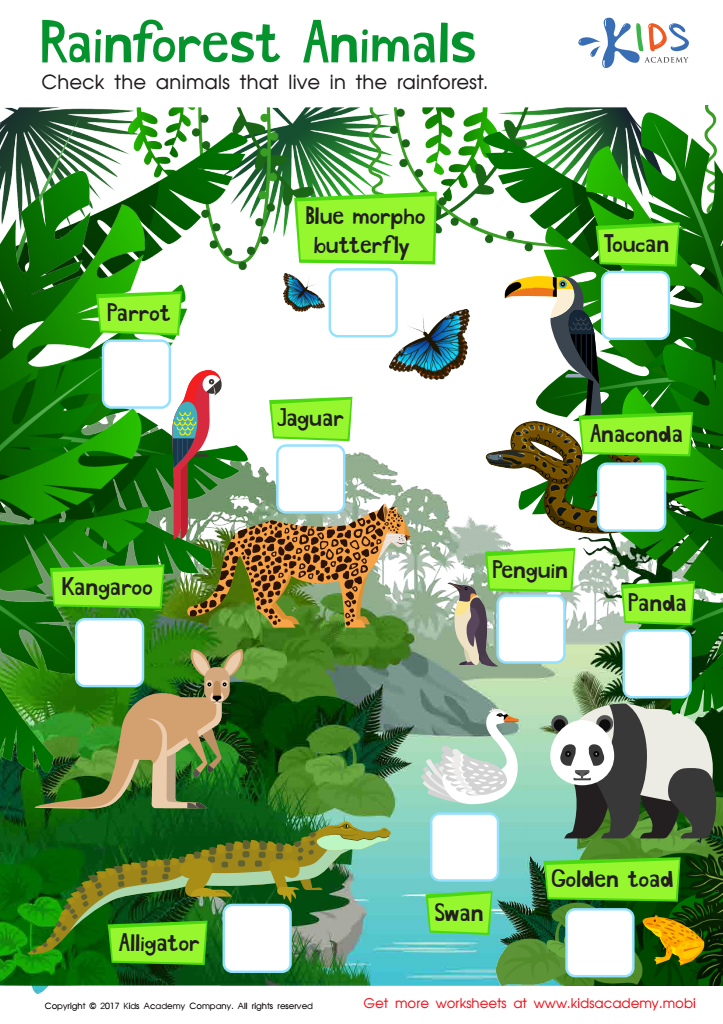
Rainforest Animals Worksheet
Kids love the bright, vivid pics of rainforest animals in this worksheet. It fuels their interest in life science and brings joy to their learning. It encourages them to study these animals in detail.
Rainforest Animals Worksheet
Worksheet
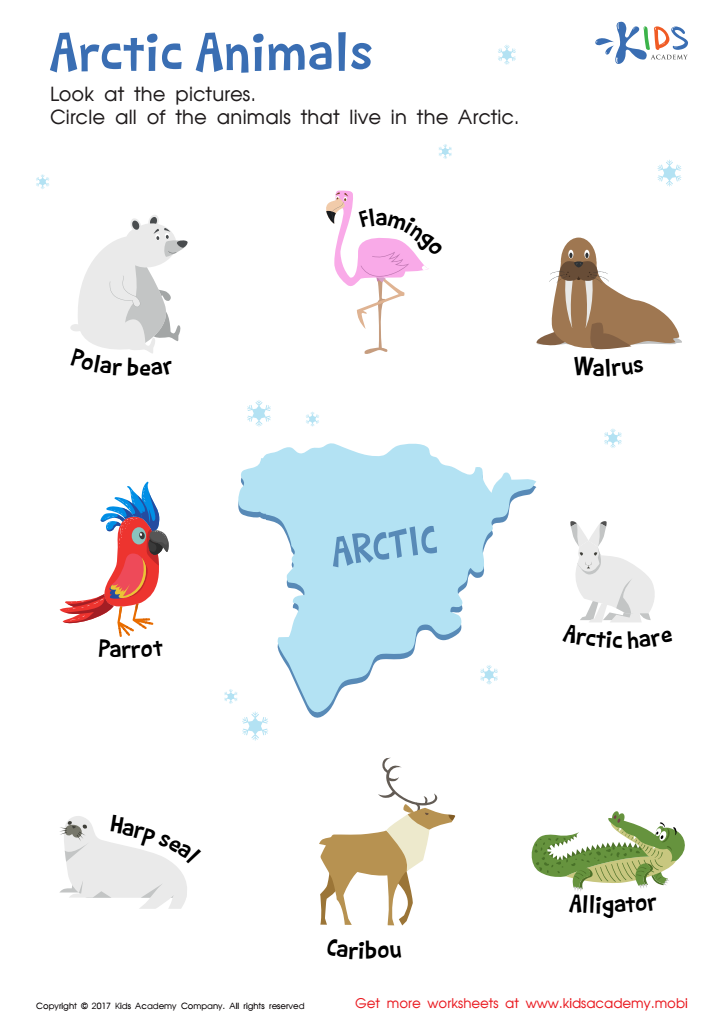
Arctic Animals Worksheet
Kids love animals and this worksheet is a great way to teach them where they live. It reinforces classification skills and introduces new animals, like the Arctic hare. Use it to discuss the Arctic climate and how these animals live, then ask your child where other animals live to keep the conversation going.
Arctic Animals Worksheet
Worksheet
Join Kids Academy for Free
Who is primarily going to use this learning content?








Teaching children aged 4-8 about animal identification and the differences between normal plants and animals is crucial for several reasons. First, it fosters curiosity and encourages a love for nature. At this stage, children are naturally inquisitive, and providing them with knowledge about animals and plants can spark a lifelong interest in biology and the environment.
Understanding how to identify different animals and plants also enhances cognitive skills. Engaging in activities like sorting, categorization, and observation allows young learners to develop critical thinking and observation skills. Moreover, recognizing various species helps cultivate respect for biodiversity, demonstrating the importance of every living organism within ecosystems.
Furthermore, such knowledge plays a vital role in instilling environmental stewardship. When children learn to appreciate plants and animals, they become more aware of environmental issues and the importance of conservation. This education can lead to responsible behavior towards nature, encouraging sustainable practices as they grow.
In summary, teaching animal identification and differentiating plants and animals empowers young learners, enhances cognitive and observational skills, and fosters respect for the environment. This foundational knowledge is necessary for nurturing compassionate, informed future citizens who value our planet.







