Color Identification Normal Social Studies Worksheets for Ages 4-8
3 filtered results
-
From - To
Discover an engaging collection of Color Identification Normal Social Studies Worksheets designed for children ages 4 to 8. These worksheets offer a perfect blend of fun and education, helping young learners develop essential color recognition skills while exploring social studies concepts. Each worksheet is thoughtfully crafted to promote interaction, creativity, and critical thinking, making learning enjoyable. Kids will enhance their understanding of colors through various activities, including matching, coloring, and identifying objects associated with different hues. Perfect for classroom settings or at-home learning, these worksheets contribute to a well-rounded educational foundation. Download them today and watch your child's skills flourish!

Fireman Worksheet
 Assign to My Students
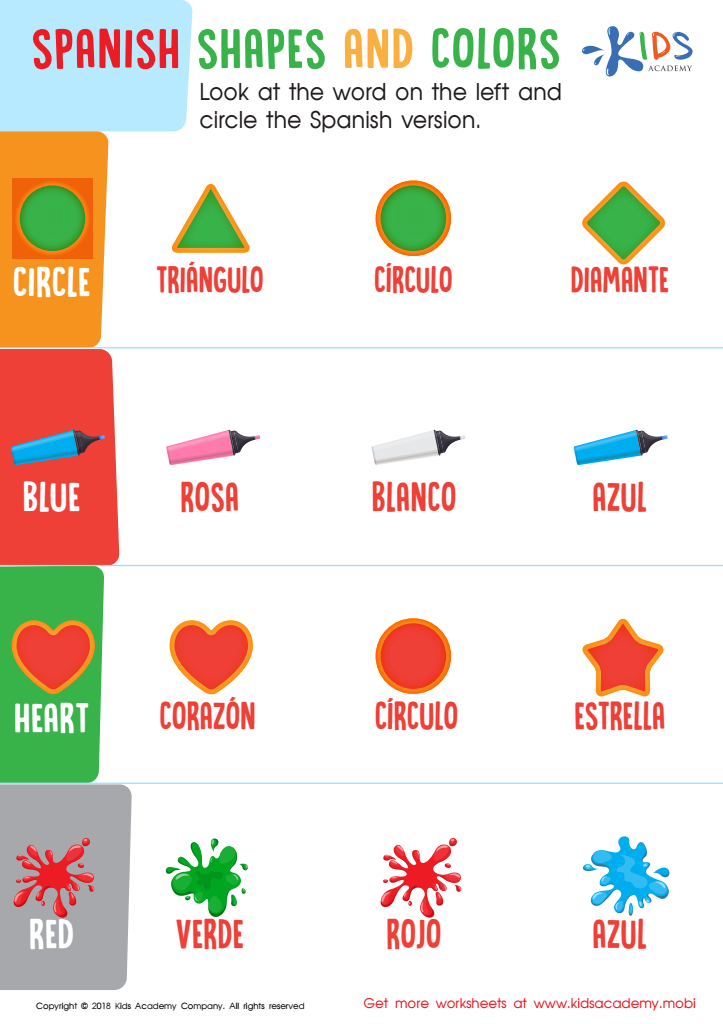
Spanish Shapes and Colors Worksheet

Playground Worksheet








Color identification is a crucial aspect of early childhood development, particularly within the social studies curriculum for children aged 4-8. Understanding colors not only enhances cognitive skills but also plays a significant role in social and emotional development. When children learn to identify and name colors, they gain foundational vocabulary that aids in communication, fostering better social interactions with peers and adults.
Additionally, color recognition is linked to identifying patterns and differences in their environment, which is fundamental in developing their analytical skills. In social studies, understanding colors can help children categorize cultures, understand flags, and recognize the diversity in their local communities.
By integrating color identification into social studies, parents and teachers can create a more engaging and inclusive learning experience. The vibrant exploration of different cultures through colors can spark curiosity and open discussions about diversity, promoting inclusivity and respect for others. Parents and teachers caring about color identification thus play a pivotal role in equipping children with the tools needed for effective communication, social understanding, and a lifelong appreciation for the richness in diversity around them. Investing time in this foundational skill today helps build a more respectful and empathetic society for tomorrow.








