Enhancing Reading Comprehension Normal Social Studies Worksheets for Ages 4-8
12 filtered results
-
From - To
Enhance your child's reading comprehension skills with our tailored Social Studies worksheets, designed specifically for ages 4-8. These engaging, age-appropriate activities encourage young learners to connect with essential social concepts while developing critical reading skills. Each worksheet promotes interactive learning through fun exercises that challenge children to comprehend information, interpret texts, and think critically about the diverse social world around them. Ideal for both home and classroom settings, our resources foster curiosity about cultures, history, and community. Empower your child's learning journey today with our meticulously crafted worksheets that make understanding reading a playful adventure!
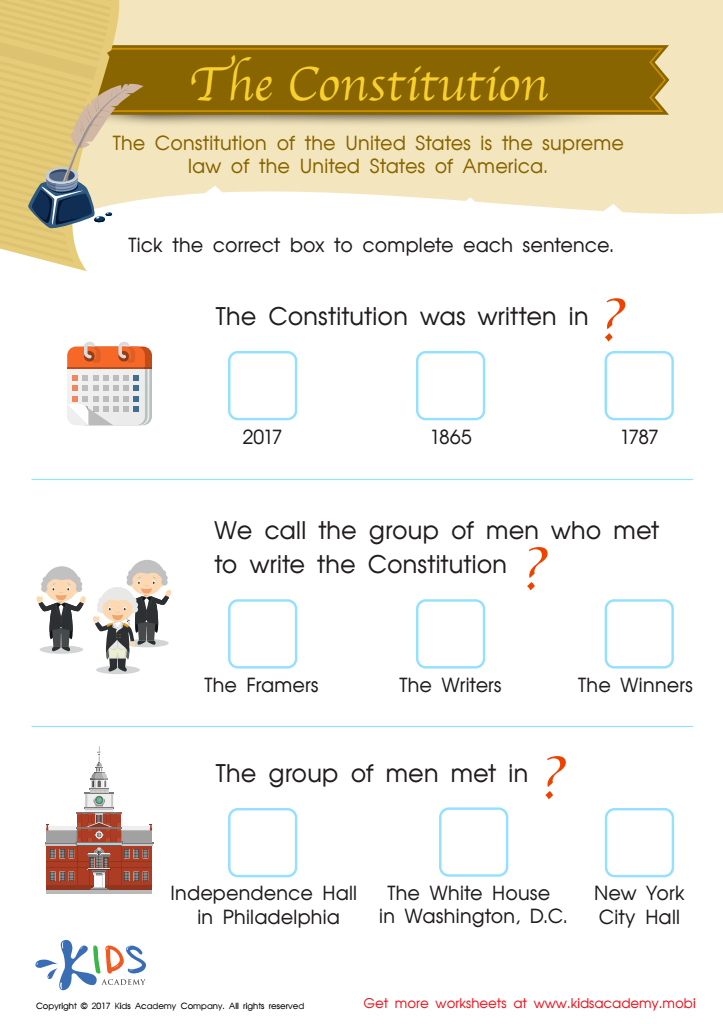
The Constitution Worksheet
 Assign to My Students
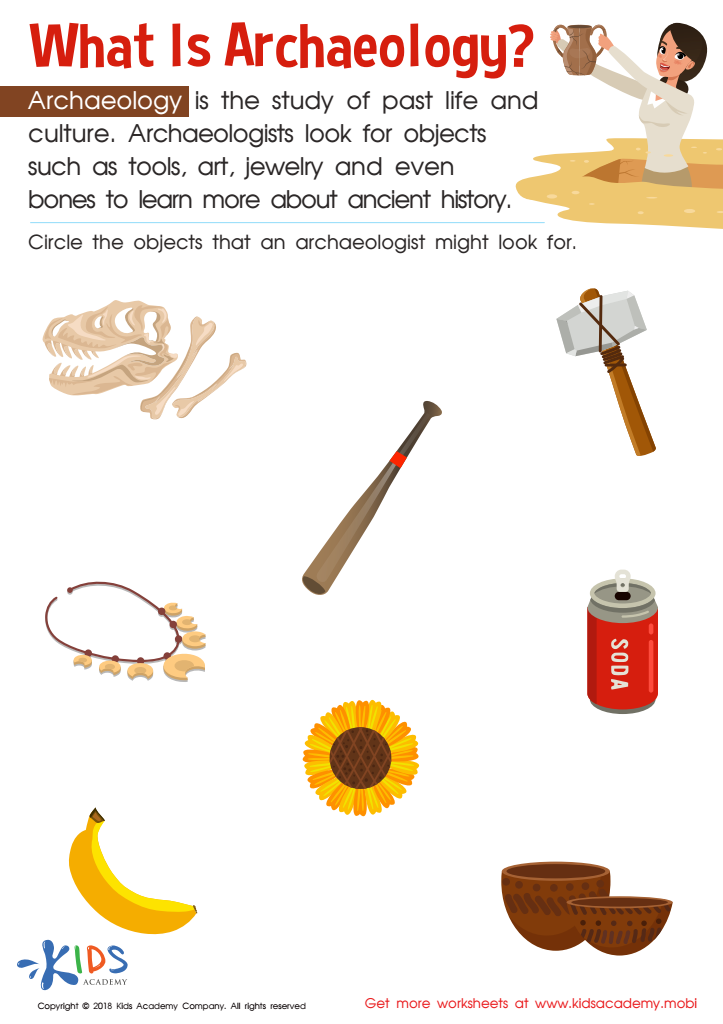
What Is Archaeology? Worksheet
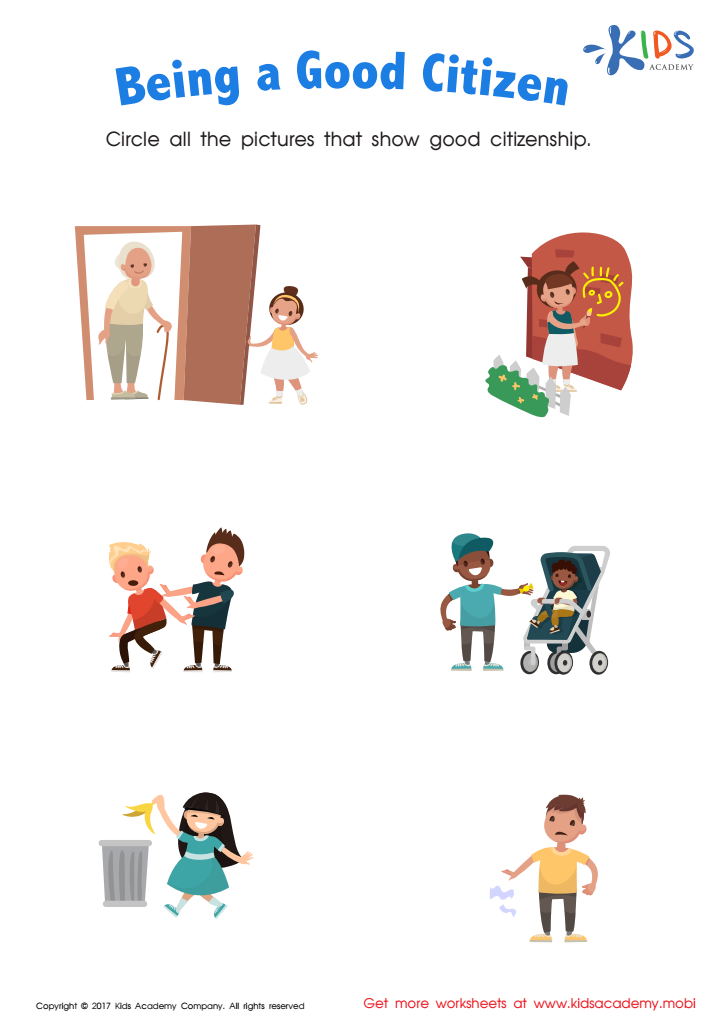
Being a Good Citizen Printable
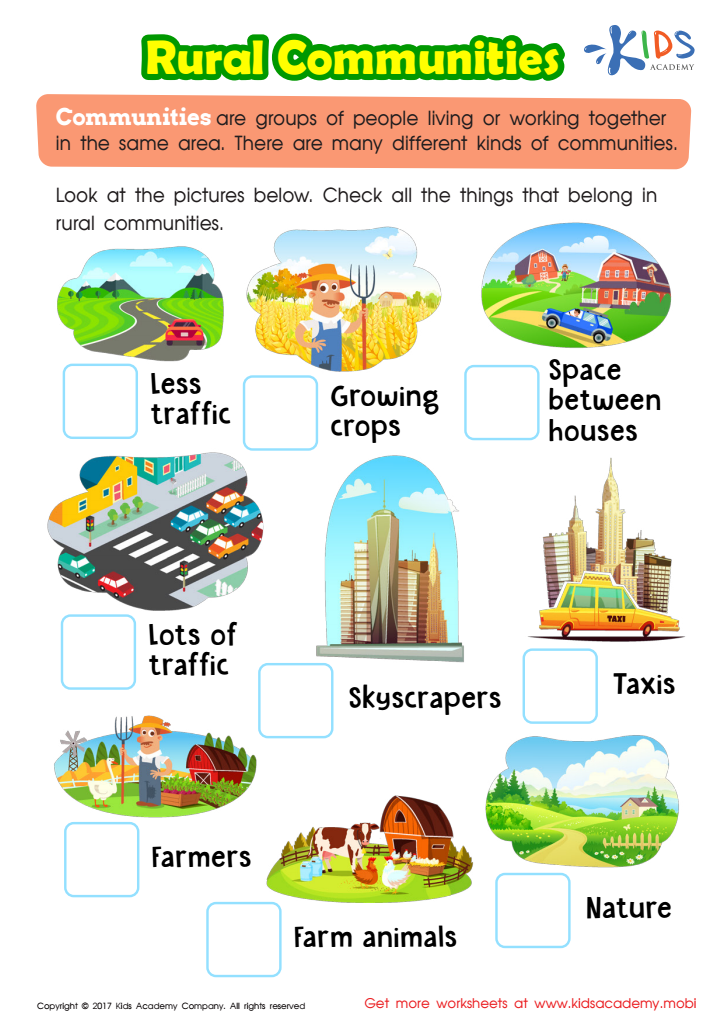
Rural Communities Printable
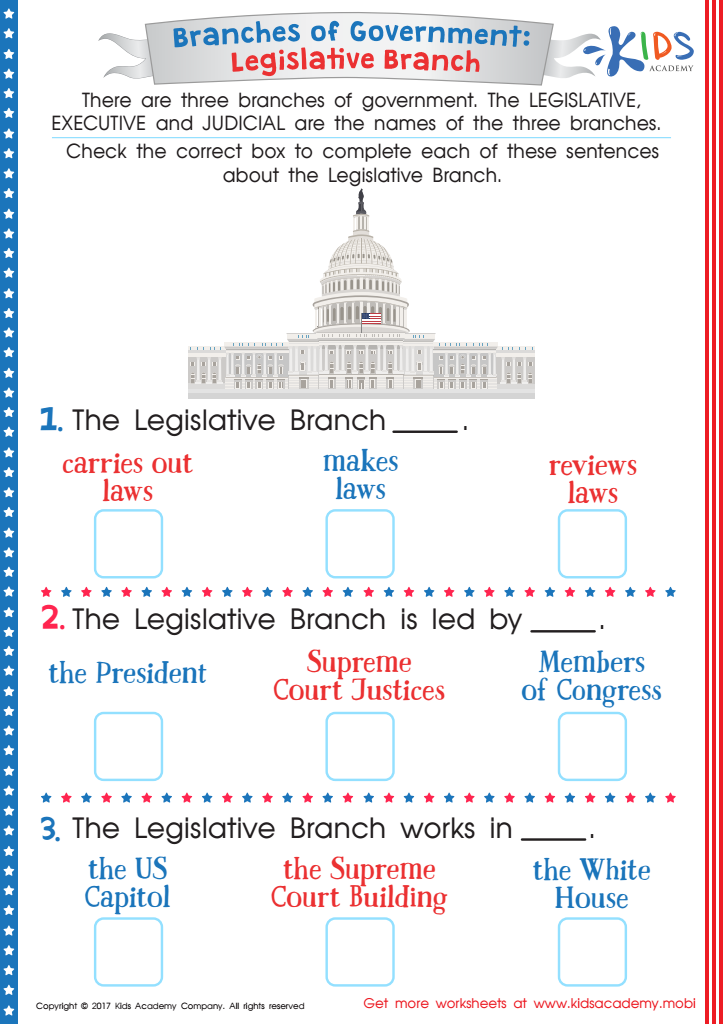
Branches of the Government: Legislative Branch Worksheet
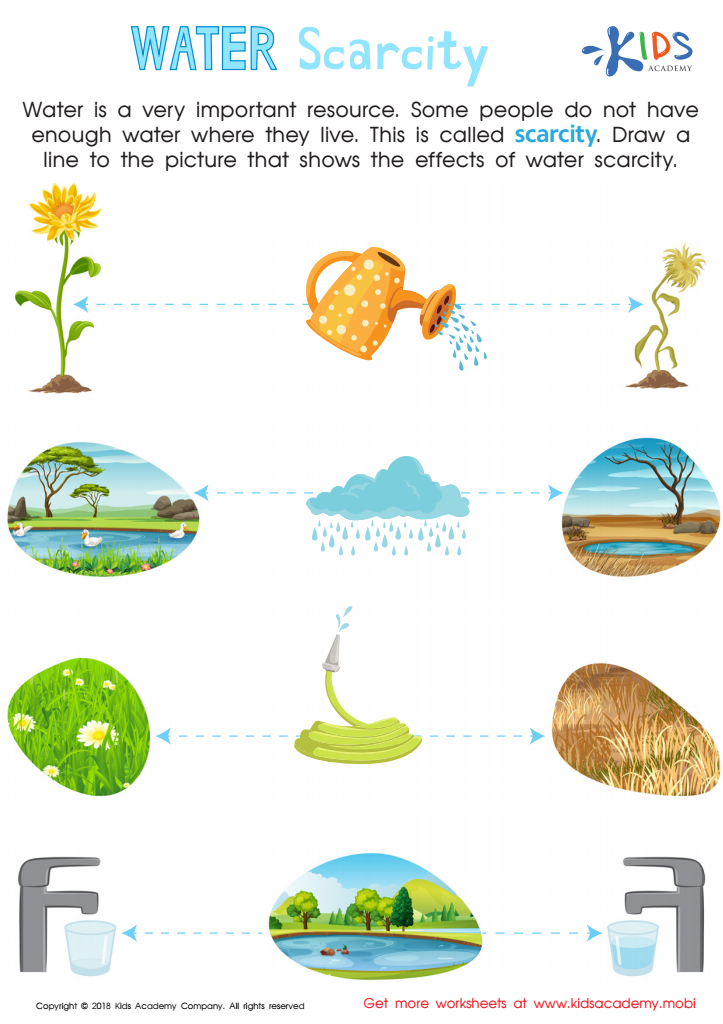
Water Scarcity Worksheet
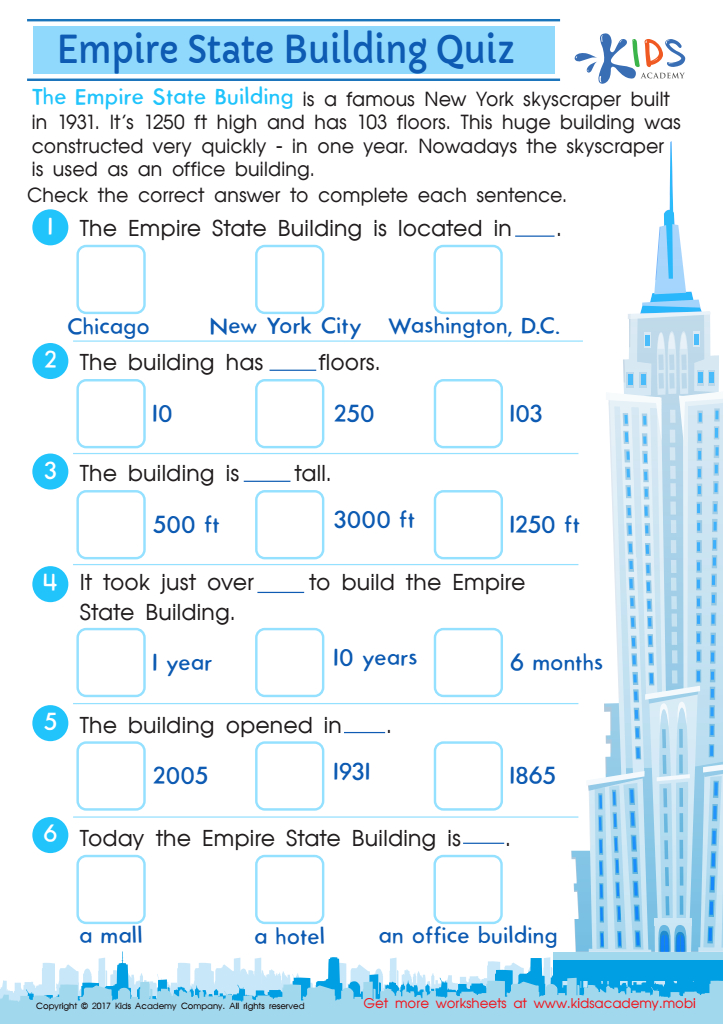
Empire State Building Printable Worksheet
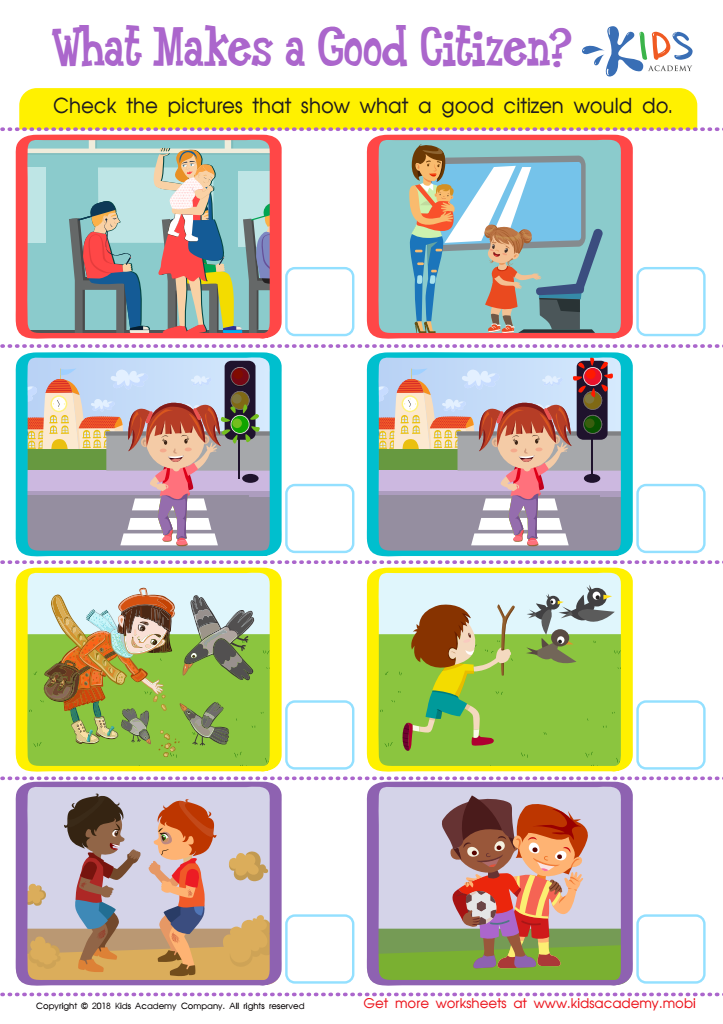
What Makes a Good Citizen? Worksheet
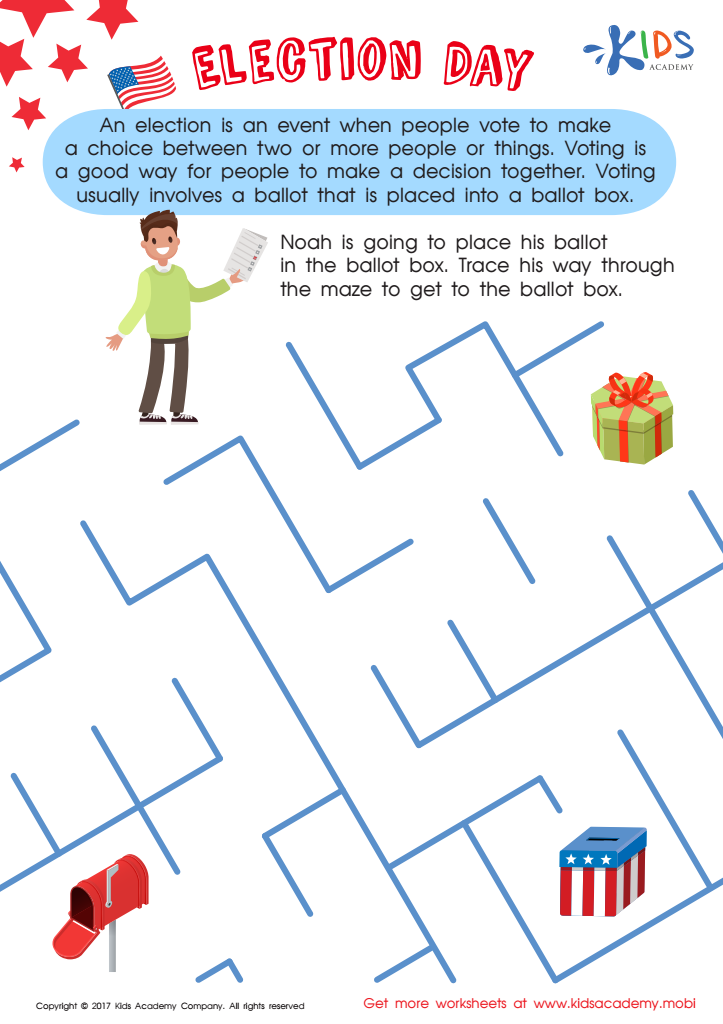
Election Day Worksheet
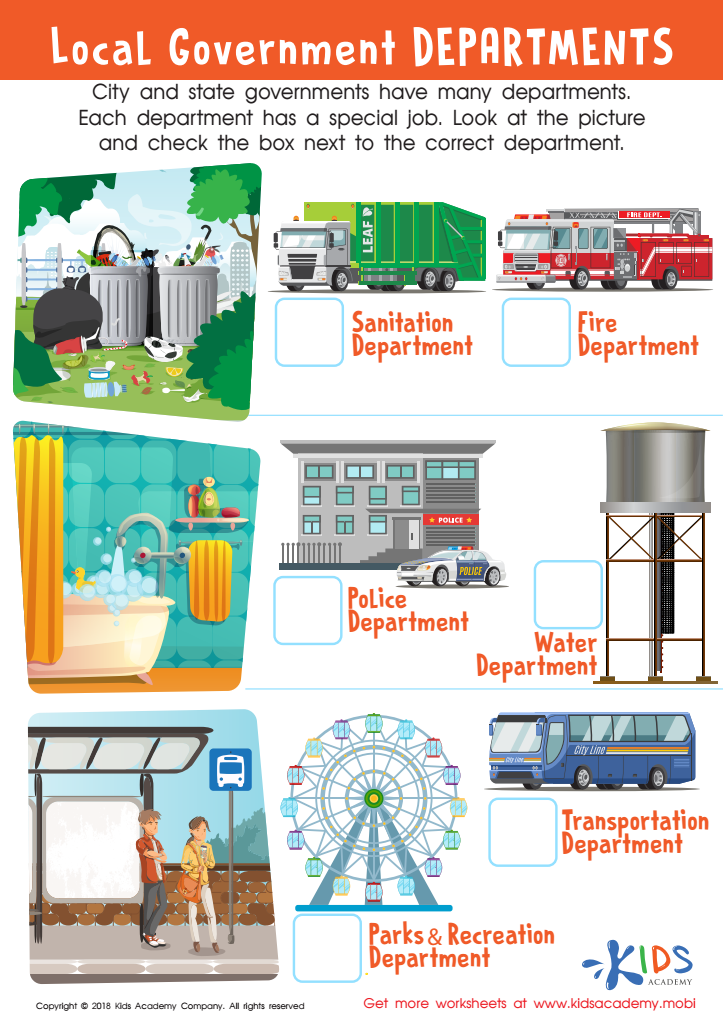
Local Government Departments Worksheet
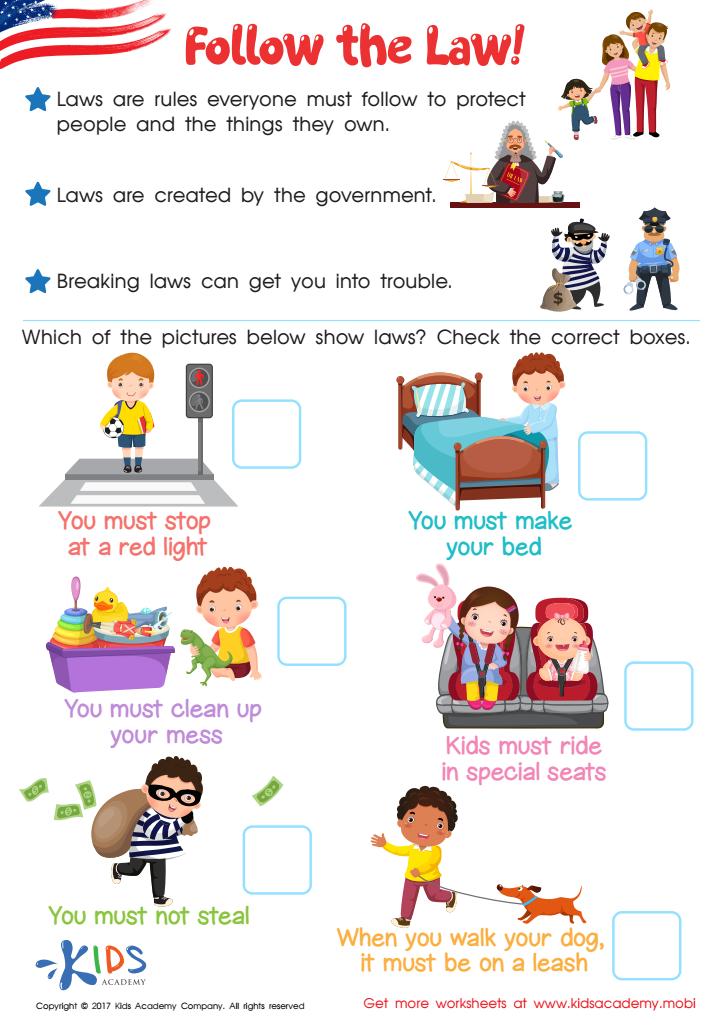
Follow the Law Worksheet
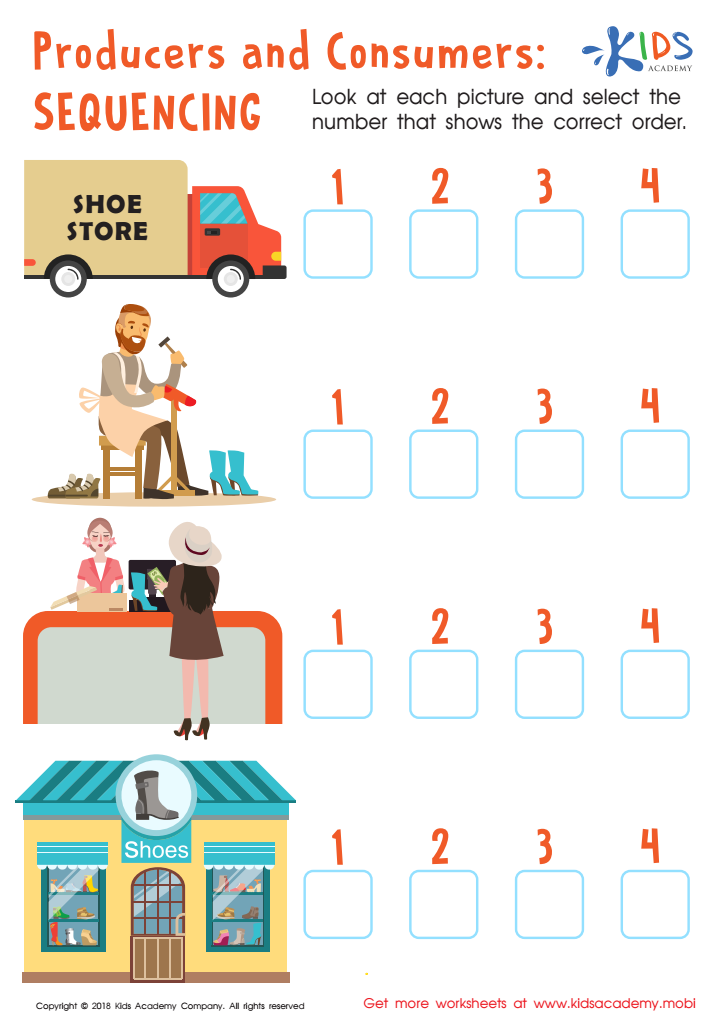
Producers and Consumers: Sequencing Worksheet








Enhancing reading comprehension in social studies for children aged 4-8 is crucial for several reasons. First, early literacy skills lay the foundation for lifelong learning; if children struggle with reading comprehension early on, it can hinder their overall academic progress. Social studies introduces children to their community, culture, and history, fostering critical thinking and a sense of identity. When children comprehend what they read in social studies, they can better engage with their environment and understand their role within it.
Furthermore, engaging with social studies content enhances vocabulary, promotes discussion about diverse perspectives, and encourages empathy by exposing young learners to different cultures and histories. These skills are essential for developing socially aware citizens who can interact positively with others in increasingly diverse societies.
Additionally, enhancing reading comprehension through social studies makes learning more meaningful and fun. By integrating engaging stories, discussions, and activities, teachers can enrich children's learning experiences. Overall, focusing on reading comprehension in social studies not only supports academic achievement but also cultivates informed and empathetic individuals, better preparing them for a complex world. Parents and teachers should work collaboratively to prioritize this aspect of education for children’s holistic development.