Critical Thinking Normal Writing Worksheets for Ages 4-8
3 filtered results
-
From - To
Unlock your child's potential with our engaging Critical Thinking Normal Writing Worksheets, crafted specifically for ages 4-8. Designed to enhance writing skills while stimulating cognitive development, these worksheets encourage young learners to explore ideas, solve problems, and express their thoughts creatively. Each activity is tailored to resonate with early learners, fostering critical thinking abilities through fun, interactive tasks. With colorful visuals and age-appropriate challenges, your child will enjoy every moment spent developing essential skills. Empower your little one to think independently and communicate effectively, paving the way for academic success and lifelong learning. Perfect for home or classroom use!
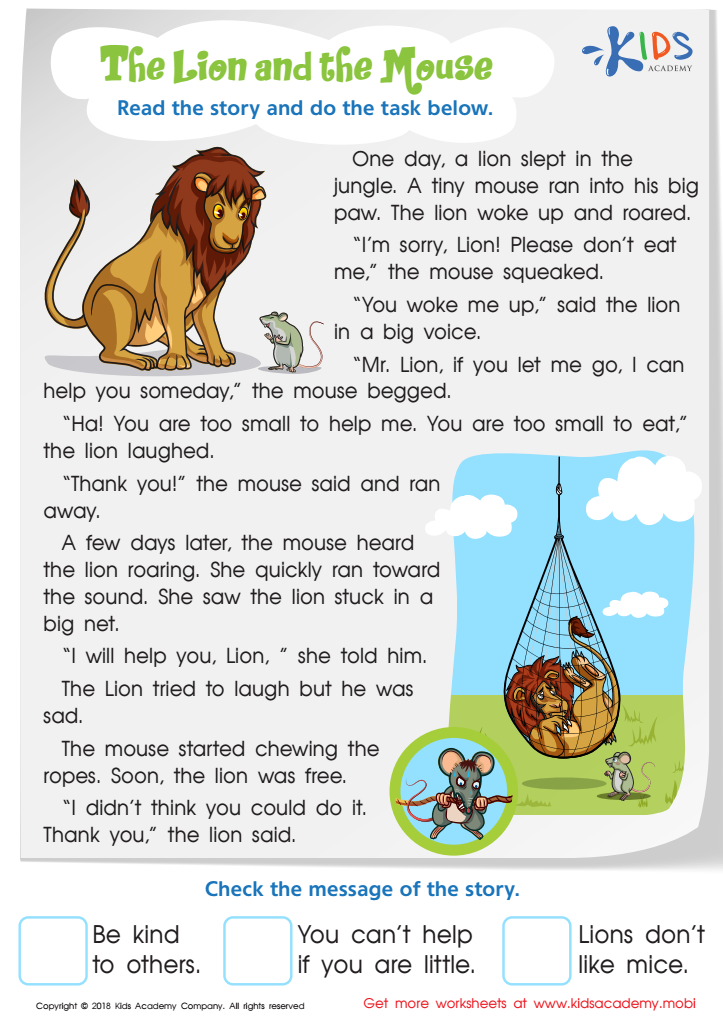
The Lion and the Mouse Worksheet
 Assign to My Students
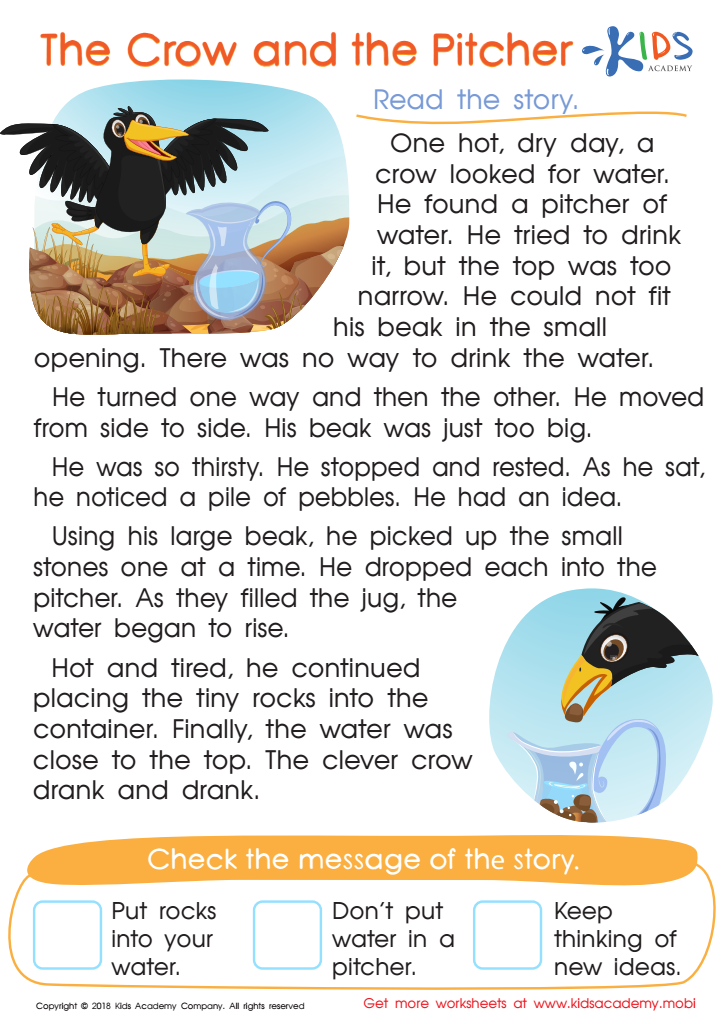
The Crow and the Pitcher Worksheet
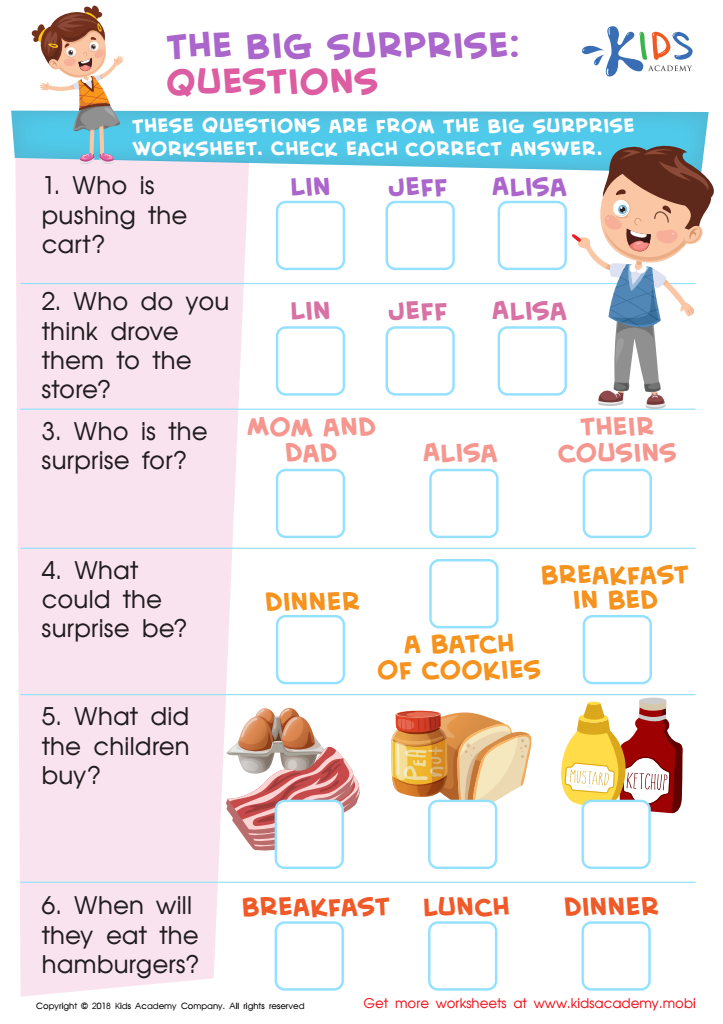
The Big Surprise: Questions Worksheet


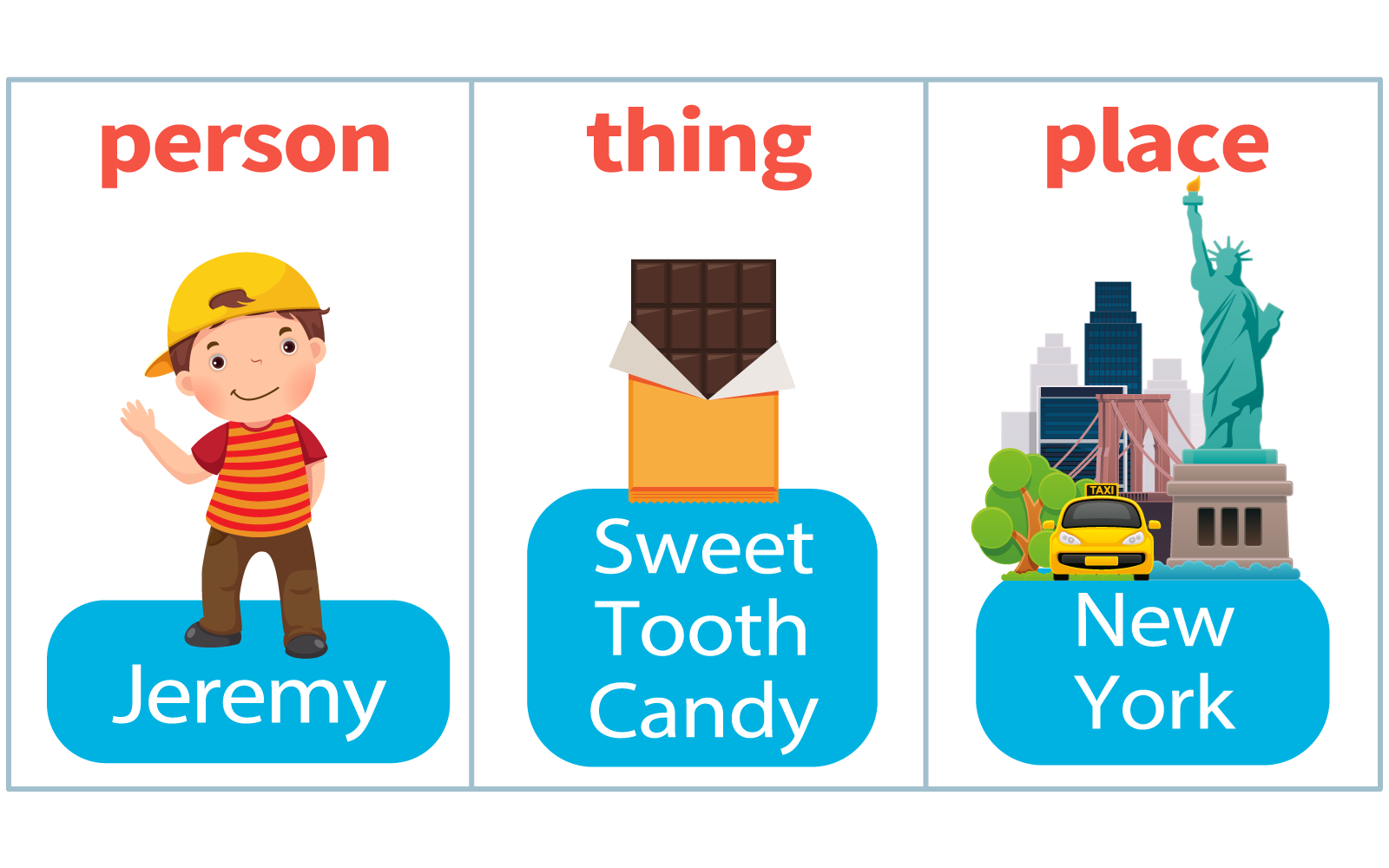





Critical thinking skills are vital for children aged 4-8 as they lay the foundation for effective learning and future success. Parents and teachers should prioritize teaching critical thinking because it encourages children to analyze, evaluate, and synthesize information, fostering independent thought and problem-solving skills. At this developmental stage, young learners are naturally curious and eager to explore their surroundings. Engaging them in activities that promote critical thinking—such as open-ended questions, puzzles, and discussions—helps to cultivate their imaginative and analytical skills.
Furthermore, critical thinking enhances language development and communication skills. When children articulate their thoughts and reasoning, they learn to express themselves clearly, listen to diverse perspectives, and engage in meaningful conversations. This skill set not only supports academic achievement but also equips children with essential tools for social interactions and relationships in the future.
Additionally, cultivating critical thinkers helps prepare children for a rapidly changing world where creativity and innovation are paramount. As they learn to approach problems strategically and consider multiple viewpoints, they become better equipped to navigate challenges, both in school and daily life. Thus, emphasizing critical thinking in early education ensures that children become confident, capable individuals ready to tackle complex issues as they grow.