Grammar skills improvement Normal Writing Worksheets for Ages 4-8
5 filtered results
Difficulty Level
Grade
Age
-
From - To
Subject
Activity
Standards
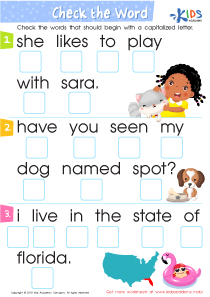
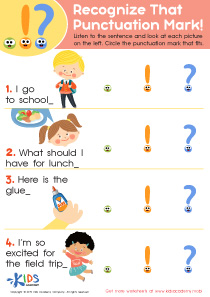
Enhance your child's grammar with our "Grammar Skills Improvement Normal Writing Worksheets for Ages 4-8" by Kids Academy. These engaging and educational worksheets are designed to make learning fun, focusing on foundational grammar skills essential for young learners. With a variety of exercises that cover parts of speech, sentence structure, punctuation, and capitalization, your child will build confidence and competence in writing. Perfect for early grade students, these worksheets combine playful illustrations with easy-to-follow instructions, helping children develop strong grammar skills. Download now for a seamless learning experience that supports school curriculum and fosters a love for writing.
Favorites
With answer key
Interactive
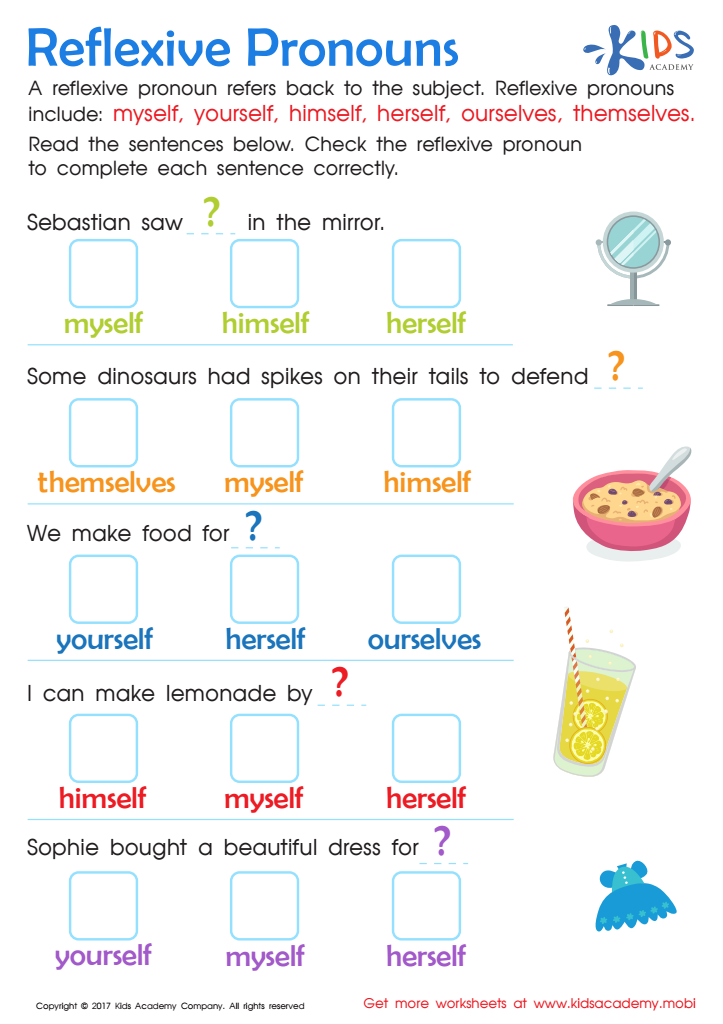
Reflexive Pronouns Worksheet
The 2nd grade reflexive pronouns worksheet by Kids Academy offers clear explanations and fun activities to help master reflexive pronouns.
Kids Academy's 2nd grade reflexive pronouns worksheet has everything you need to brush up on reflexive pronouns. It includes a brief explanation and fun activities with sentences and pictures to check your understanding. Master reflexive pronoun usage in no time!
 Assign to My Students
Reflexive Pronouns Worksheet
Worksheet
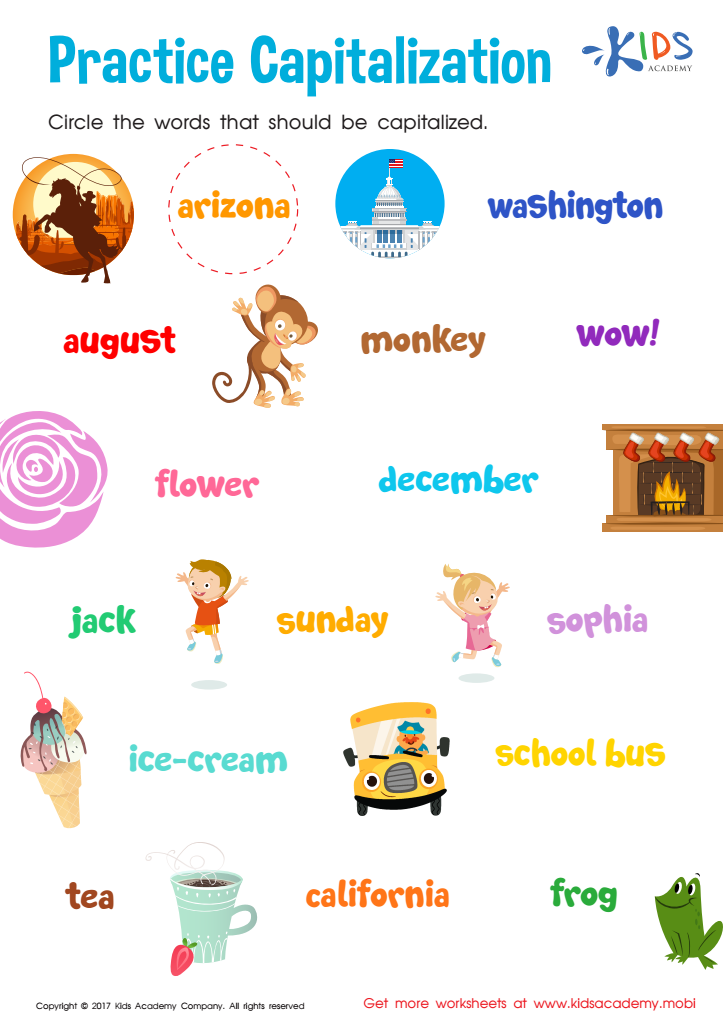
Practice Capitalization Printable
Test your child's knowledge of capitalization with this fun worksheet! It's up to them to choose which words need to be capitalized and which don't. Get your printable Practice Capitalization worksheet today! (80 words)
Practice Capitalization Printable
Worksheet
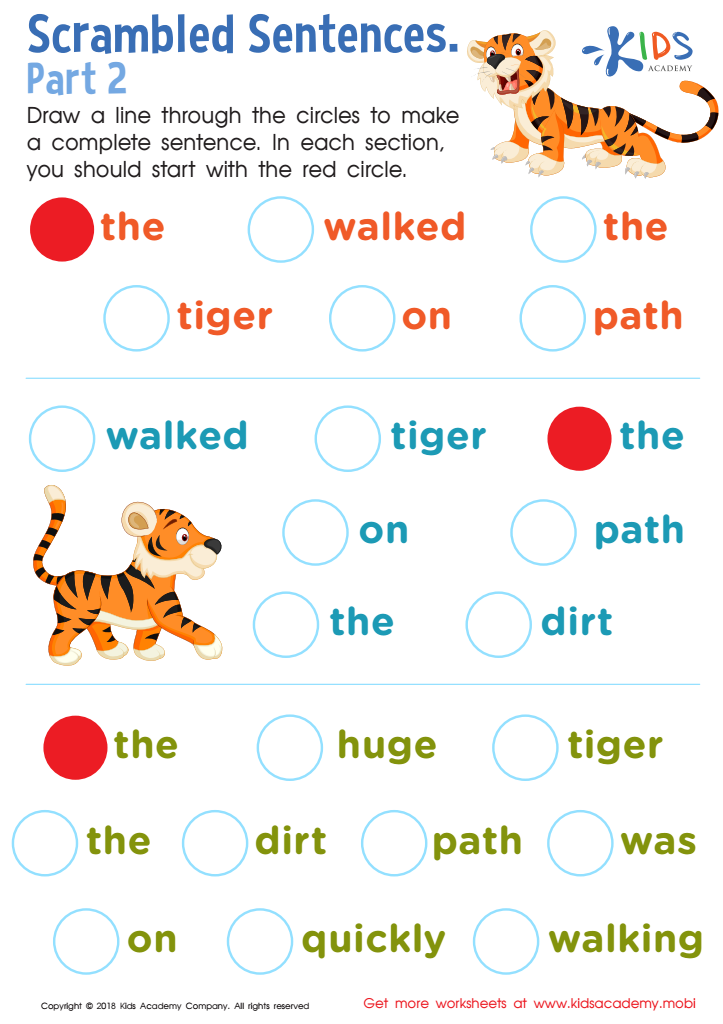
Scrambled Sentences Part 2 Worksheet
This printable worksheet helps kids construct simple, correct sentences. Introduce them to making sentences if they're new to it. Have them draw a line through the circles to form a sentence, starting with the red circle. After completing this exercise, they'll be able to craft short sentences with confidence.
Scrambled Sentences Part 2 Worksheet
Worksheet
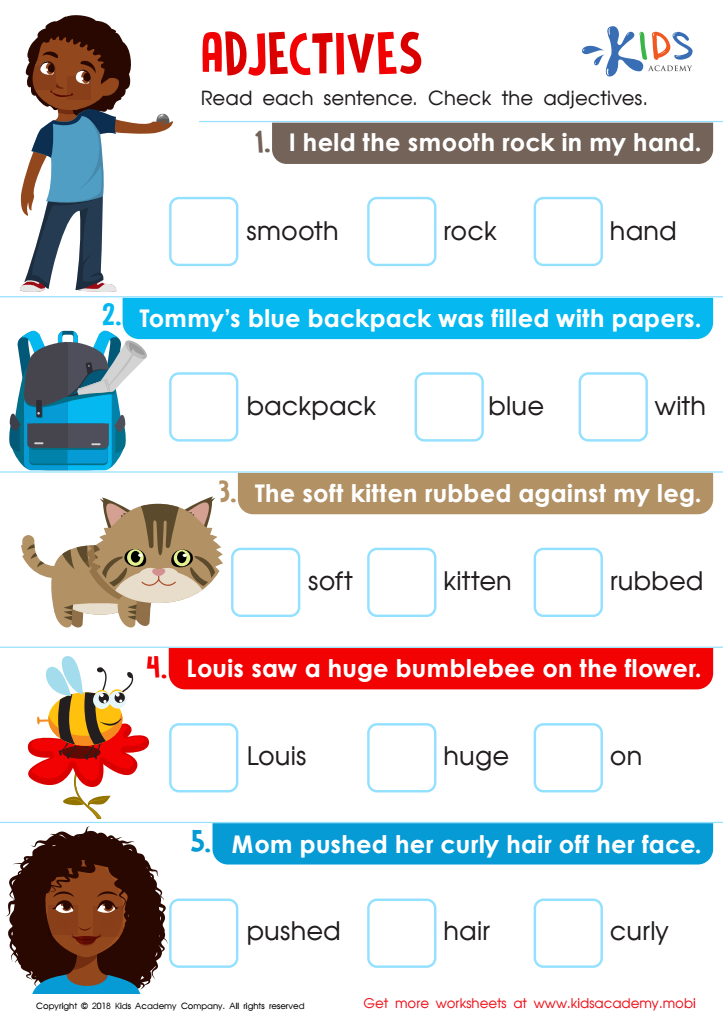
Adjectives Worksheet
Adjectives are words that describe a noun. Examples include "beautiful" and "good". Ask your students to use these adjectives in a sentence and have them identify the adjectives in five sentences on a worksheet. Point out that adjectives are essential to understand, and have them check their answers.
Adjectives Worksheet
Worksheet
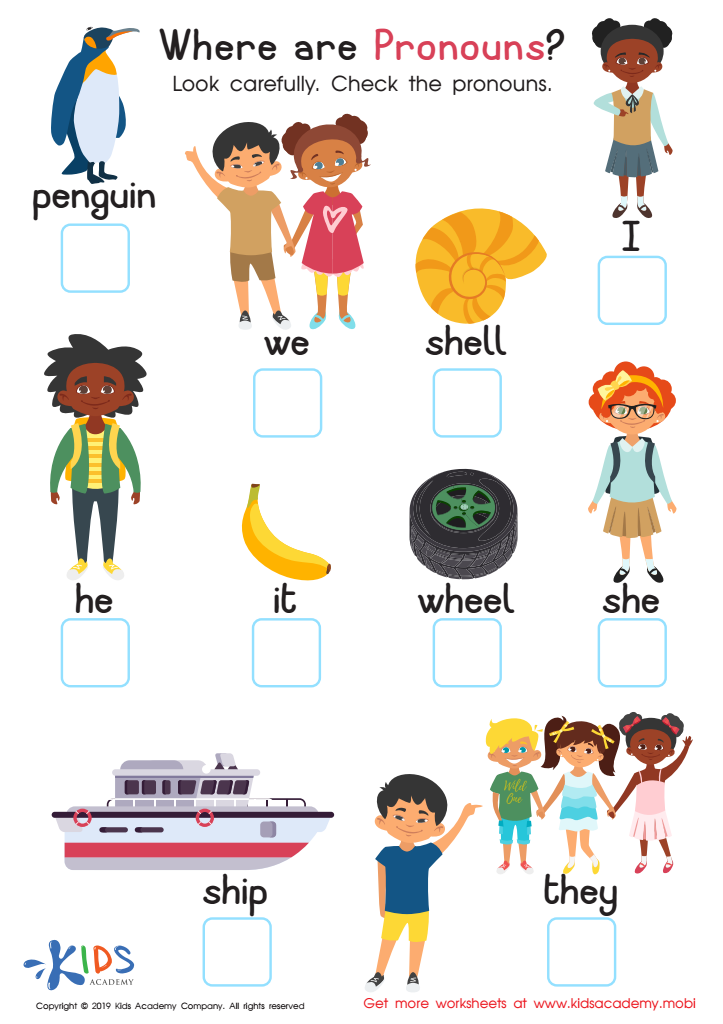
Where Are Pronouns? Worksheet
Pronouns make language flow, substituting "he" or "she" for names. Kids know and use them in their speech, but identifying pronouns in grammar helps build writing skills. This worksheet challenges kids to pick out pronouns from other nouns. Go through the worksheet, view the pictures and read the words. Ask kids to check boxes in front of pronouns to mark answers.
Where Are Pronouns? Worksheet
Worksheet
Join Kids Academy for Free
Who is primarily going to use this learning content?








Grammar skills in early childhood are essential building blocks for effective communication, impacting a child's success in school and beyond. For children aged 4-8, mastering basic grammar rules helps them express ideas more clearly and understand instructions better, both in classroom settings and daily interactions. By fostering grammar skills, parents and teachers can significantly enhance a child's reading and writing capabilities.
Strong grammar skills contribute to better comprehension when children read books, follow directions, or solve problems. This foundation in clear communication supports their academic growth across all subjects, as they can convey their thoughts more accurately and understand peer-reviewed expectations.
When parents and teachers prioritize grammar, they also boost the child's confidence. As children become more adept at forming sentences and conveying messages, they feel more competent and are more likely to participate actively in class. This early success is crucial for fostering a positive attitude towards learning, which can last a lifetime.
Moreover, good grammar habits established early reduce the likelihood of difficulties in more advanced language and literacy tasks in later years. Thus, investing time in improving grammar skills for children aged 4-8 has long-term benefits, setting the stage for academic and social success.