Understanding adjectives Normal Writing Worksheets for Ages 4-8
3 filtered results
-
From - To
Discover our engaging "Understanding Adjectives Normal Writing Worksheets" designed specifically for children ages 4-8! These fun, educational worksheets help young learners explore and identify adjectives, enhancing their descriptive writing skills. Through a variety of interactive activities, kids will boost their vocabulary while developing their ability to describe objects, people, and places. Each worksheet features colorful visuals and kid-friendly tasks that encourage creativity and critical thinking. Perfect for both home and classroom settings, our worksheets support early literacy development and make learning about adjectives an enjoyable experience! Start your child on the path to expressive writing with our effective worksheets today!
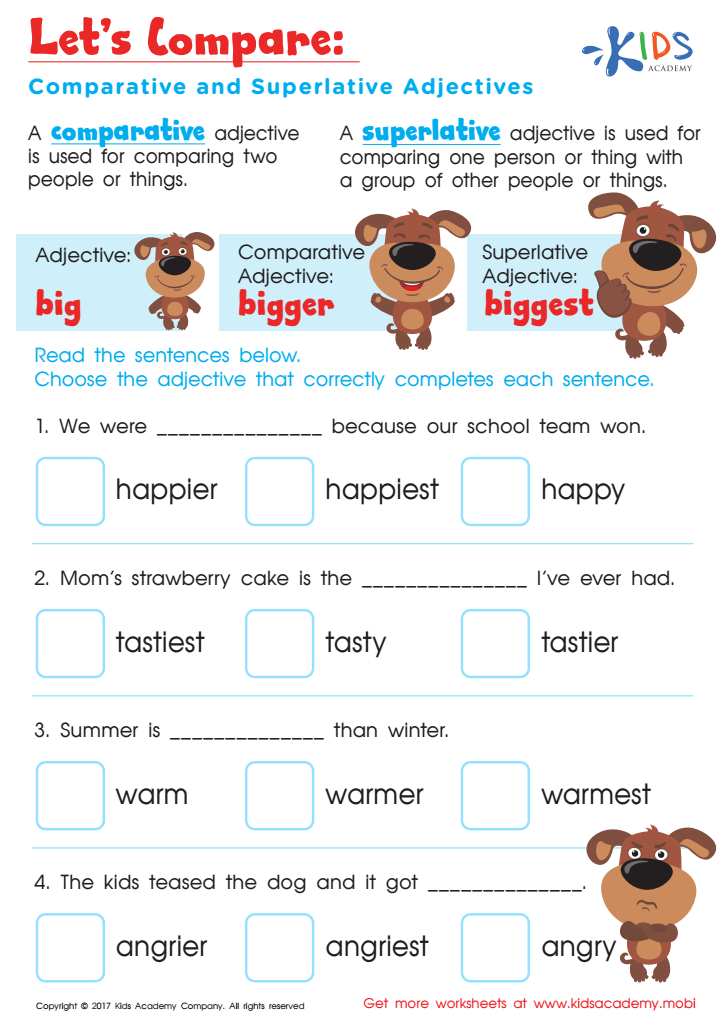
Comparative and Superlative Worksheet
 Assign to My Students
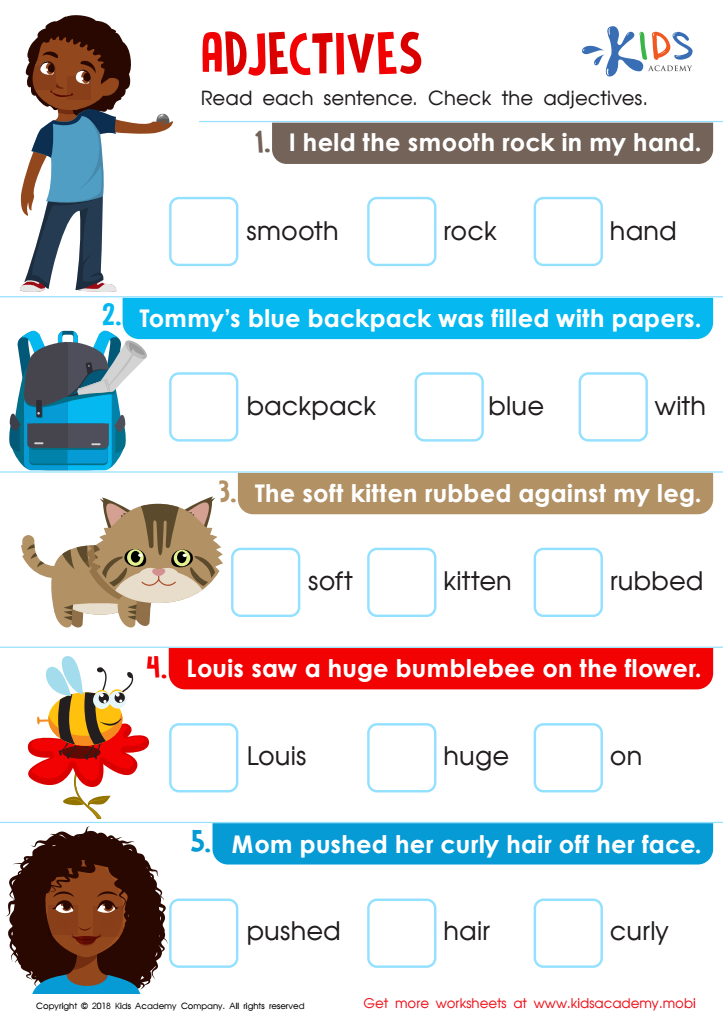
Adjectives Worksheet
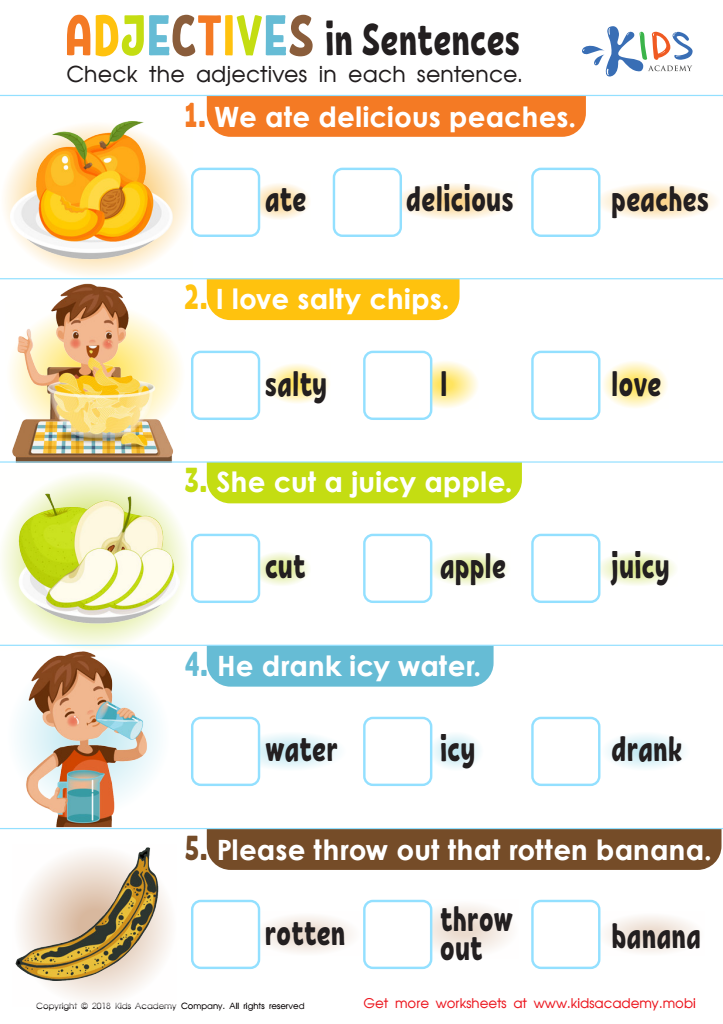
Adjectives in Sentences Worksheet






.jpg)

Understanding adjectives is crucial for children aged 4-8 as it significantly enhances their language development and comprehension skills. Adjectives, which describe nouns, help young learners articulate their thoughts more clearly. For parents and teachers, fostering this understanding allows children to express themselves with greater precision and creativity.
By learning about adjectives, children can enrich their vocabulary, making their writing and conversation more vibrant. This enrichment often translates into better storytelling skills—essential in both academic settings and personal expression. Furthermore, the ability to identify and use adjectives contributes to reading comprehension. When students can describe characters, settings, or emotions, they engage more deeply with the material, leading to a more meaningful learning experience.
Encouraging children to explore adjectives in various contexts promotes critical thinking by prompting them to categorize and compare. This mastery not only boosts language skills but also encourages curiosity about the world around them. Overall, understanding adjectives helps lay a solid foundation for literacy, communication, and cognitive development, making it a vital area of focus for parents and educators alike. By supporting children as they grasp this concept, adults can empower them to become more effective and confident communicators.